Global airline body IATA plans COVID travel pass for end of March

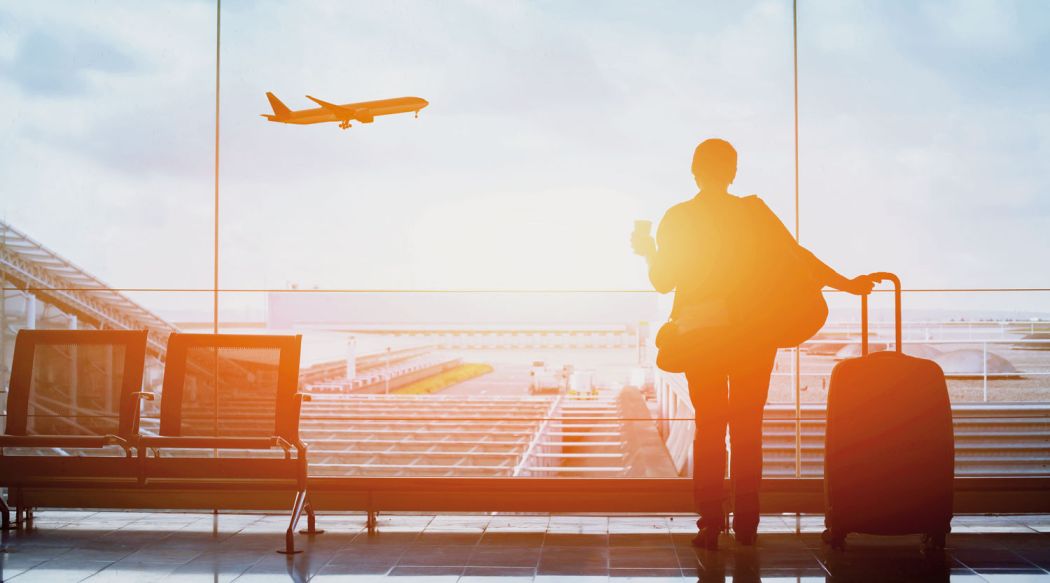
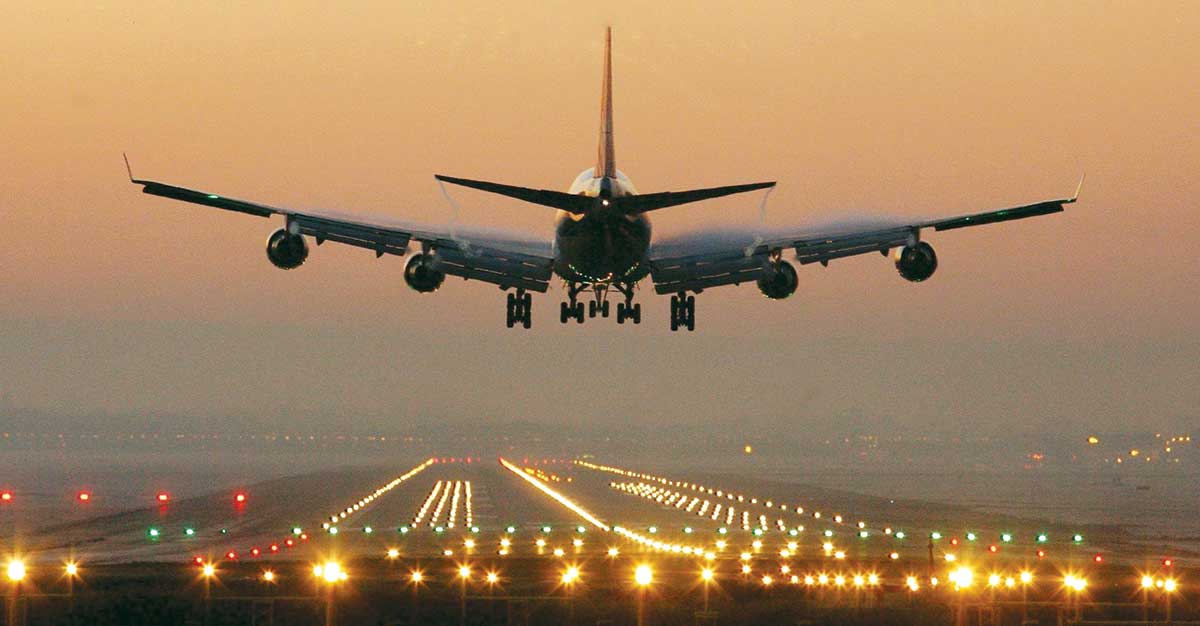
Global airline industry body IATA warned that the outlook for airlines had weakened since its December forecasts, and due to tightening travel restrictions it now expected the sector to still be bleeding cash by the fourth quarter of this year. IATA raised its forecast for total airline cash burn for 2021 to between $75 billion and $95 billion, up from the $48 billion it had forecast in December. While many countries have started rolling out vaccines to tackle the novel coronavirus, the emergence of more infectious variants in countries such as Britain, Brazil and South Africa has forced many governments to ban all but essential travel. This summer is make-or-break for many airlines and holiday companies which are struggling to survive with close to a year of almost no revenue due to pandemic restrictions. Without it many will need extra funds after burning through cash reserves. Britain’s Heathrow Airport said on Wednesday it had plunged to a 2 billion pound loss in 2020 and that digital health checks were now vital to building any kind of recovery in international travel. IATA also said on Wednesday it planned to launch a COVID-19 travel pass at the end of March, bringing into use a digital system for test results and vaccine certificates which will help facilitate travel.

Read more

J-K admin submits INR 198-cr development plan for Mansar to Centre

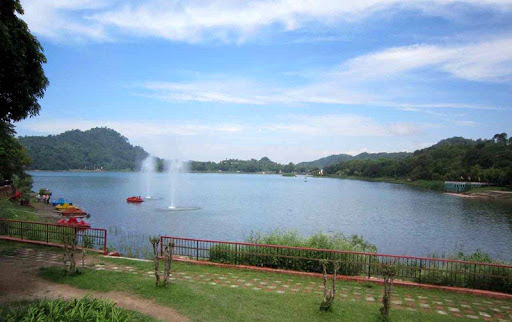
The Jammu and Kashmir administration has submitted a INR 198-crore plan for the development of Samba district's famous Mansar belt to the Centre under the Swadesh darshan scheme, officials said. This was revealed by the officials at a meeting headed by Advisor to the Lieutenant Governor Baseer Ahmad Khan to review the ongoing projects of the tourism department, they said Khan said the LG has called for up-gradation of the existing infrastructure in the Jammu Kashmir Tourism Development Corporation and the same needs to be done at the earliest to cater to the increasing tourist influx, an official spokesman said. He had a detailed assessment of the robust development plan worth Rs 198 crore for Mansar which has been submitted to the government of India, to be funded under the Swadesh Darshan Scheme, the spokesman said. Besides, some of the works have already been sanctioned under capex budget which included the development of view points along Sidhra-Mansar and Samba-Mansar routes, construction of gender-based toilets, procuring boats, life jackets and installation of high power illumination etc, he said. "The LG government is according focused attention on development of various religious and tourist attractions of Jammu region like Shiv Khori, Uttar Behni and Purmandal for their inclusion in larger tourism circuit of the region," Khan said.

Read more

Tourists return to Valley, Gulmarg hotels booked until end of April

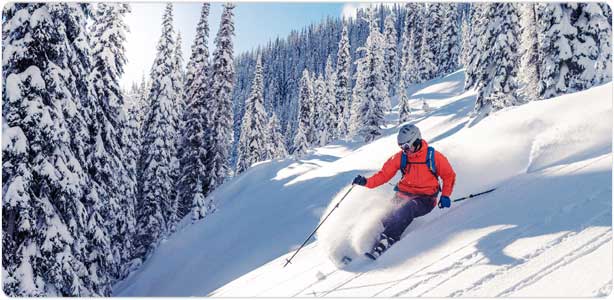
It seems the good days are back again. Tourists are returning to the militancy-hit Jammu and Kashmir. The Valley’s famed ski resort of Gulmarg is sold out, as all hotels are booked till the end of April. With heavy snowfall this year, the tourist resort of Gulmarg at an altitude of 8,000 feet has been a major attraction this winter and witnessed 100 per cent occupancy on Christmas and New Year eve. Mushtaq Shah, spokesman of Gulmarg Hoteliers Club, said all hotels are booked. “Over 900 hotel rooms including J&K Tourism Department huts in Gulmarg are booked till April-end. All classes of tourists including high-spending tourists and budget tourists are coming to Gulmarg,” he said. Gulmarg was always a four-season destination but in the the last few years, it witnessed lesser footfall in the winters. According to Shah, after the Khelo India Winter Games in Gulmarg last year, the national skiers got first-hand information about the place and its beauty. “It sent a positive message and players and people realised that Gulmarg has got the infrastructure that is available in other parts of the world.” He said since people can’t visit foreign countries due to Covid-19, Indian travellers are coming to Gulmarg in bigger numbers. The second edition of Khelo India National Winter Games will be held in Gulmarg from February 26 to March 2 and hoteliers are hopeful it will be an additional boost for the tourism sector. “It sends a message that Kashmir is a safe tourist destination. And it had always been a cheaper option compared to other parts of the world,” said another hotelier. Director of Tourism Kashmir, GN Itoo said packed hotels is a positive development. “Gulmarg used to be a winter tourism destination and after snowfall, footfall to the ski resort would drop considerably. But due to Khelo India, publicity programmes and roadshows, Gulmarg is agian emerging as a favourite tourism destination,” he said.

Read more

Thailand plans waiving quarantine for covid-vaccinated tourists

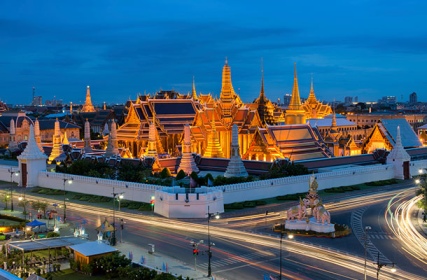
Thailand may scrap its two-week mandatory quarantine for foreign visitors with proof of Covid-19 vaccination as the Southeast Asian nation seeks to revive its pandemic-hit tourism industry. Prime Minister Prayuth Chan-Ocha said on Tuesday his government will consider allowing visitors who can produce a vaccination certificate to skip the quarantine and authorities will come up with a plan to track them during their stay in the country. The plan to ease rules for tourists signal a shift in Thailand’s stance after months of insisting all visitors must stay in quarantine in the absence of enough evidence that inoculations can prevent virus transmission. If implemented, the move could bolster Thailand’s tourism sector that contributed about one-fifth to the nation’s pre-pandemic economy. “If this goes ahead as planned, it will be a big boost to tourism and economy," Nattaporn Triratanasirikul, an economist at Kasikorn Research Center in Bangkok, said adding the government may need to weigh health concerns too. “There is still a very high uncertainty on the economic outlook this year, pending all the issues related to the outbreak from local infections, vaccine rollouts and border reopening plan." Thailand’s central bank has singled out an uncertain recovery in tourist arrivals as “a major risk" to the medium-term growth outlook, with Governor Sethaput Suthiwartnarueput saying it would be very difficult for the economy to return to pre-pandemic levels without tourism. The economy, which shrank the most since 1998 last year, will expand this year “at somewhat a lower rate" than the central bank’s December projection of 3.2%, it said this month. While Thailand has reopened its borders to most foreign visitors since October, strict quarantine rules have kept most tourists away. The local industry has been calling for relaxed quarantine rules to attract tourists from countries that have started vaccine rollouts, such as China, Singapore and the U.K. Shares gain Shares of Thai hotel and restaurant operators and Airports of Thailand Pcl gained on Tuesday as investors cheered the relaxation of restrictions that were put in place to curb a flare-up in new infections and the approval for vaccine made by Sinovac Biotech Ltd. Thailand is set to receive its first doses of vaccines on Wednesday that will allow it start a national inoculation program within a week. Thailand, which aims to inoculate 50% of its population by the end of this year, has also approved AstraZeneca Plc’s vaccine for emergency use. The nation has ordered 61 million doses of AstraZeneca vaccine, to be locally produced by Siam Bioscience Ltd. through technology transfer. The country will eventually allow registration and imports of several brands of Covid-19 vaccines as long as they meet local rules, and private hospitals will be permitted to administer the shots, Prayuth said. The government will control the distribution of vaccines only in the early stages, he said. “Many companies have shown interest to register but their documents are not completed yet," Prayuth said. “It is good that we will have more vaccines than the 65 million doses planned by the government now."

Read more

Aviation sector fast reaching pre-Covid passenger levels

The worst is over for India's civil aviation sector as passenger traffic is fast reaching pre-Covid levels. Civil Aviation Secretary Pradeep Singh Kharola said that the worst is over for the aviation sector which has successfully transformed its image as an elitist mode of transportation to that of a bare essential one. The sector played a pivotal role in repatriation, transporting essential medicines, PPE kits, agricultural produce and equipment during the lockdown phase. Even now, it is ferrying temperature controlled vaccines for the world's largest inoculation programme. "The worst seems to be behind us. Daily passenger numbers are rising, but we will wait till it reaches the mark of 3.85 lakh per day. At that level, the current traffic rate would have reached the per-Covid levels. Only after reaching that mark and seeing a consistency in that trend will we be able to lift the fare and capacity cap," Kharola said. Notably, the 3.85 lakh daily passenger mark is the average of 2019 traffic. After reaching that mark, the Centre will wait to see that it is being met on a consistent basis before removing the caps. Presently, the Centre has expanded the airfare cap by increasing the lower fare band by 10 per cent, while the upper limit has been raised by 30 per cent. These fare bands came into force with effect from May 21, 2020. Under the fare structure, air routes are divided into seven sections based on travel time. Each section has its minimum and maximum fare. For instance, Delhi-Mumbai ticket price has been fixed at Rs 3,000-Rs 13,000. Currently, the airlines can operate up to 80 per cent of their pre-Covid capacity. "These steps were important to protect the industry. No airline in India went burst and the reason for this is the calibrated way in which the whole process was conducted," he said. On February 19, 2,90,518 passengers had traveled on 2,360 flights. Since the resumption of operations on May 25 last year, domestic air traffic continued to sequentially improve in January 2021. Domestic passenger traffic rose 5.55 per cent sequentially in January to 77.34 lakh passengers from 73.27 lakh reported for December 2020. However, on a year-on-year basis, the January numbers stood 39.50 per cent lower than 127.83 lakh reported for the corresponding period of the previous year. In terms of growth hinderances, the industry faces challenges such as new state specific flight acceptance and quarantine norms along with a limited flight deployment capacity. Nevertheless, easing travel restrictions, and initial revival in business sentiment has triggered the growth cycle of the industry.

Read more

Train services resume in Kashmir after 11 months; 1,100 travel on first day

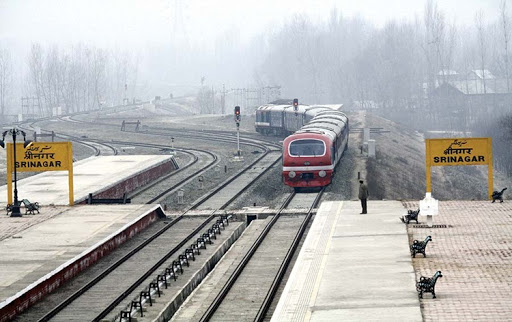
Nearly 1,100 people travelled between Banihal and Baramulla railway stations as train services resumed in Kashmir on Monday after remaining suspended for around 11 months due to the COVID-19 pandemic, officials said. Two trains chugged on the railway tracks in Kashmir as the railway authorities resumed the services partially, they said. The officials said nearly 1,100 passengers used the service on the first day after the resumption of the service. "We will be following this schedule -- one train up from Banihal and one down from Baramulla -- for the time being," they said. Taking to Twitter, Railway Minister Piyush Goyal said the resumption of the train service will enhance ease of movement and provide a “big boost” to the tourism sector. “Railways to resume train operations in Kashmir Valley on Banihal-Baramulla section from 22nd February, with two services operating initially,” Goyal tweeted. At present, the railway services in Kashmir operate between Banihal in Ramban District and Baramulla only. The work is going on to connect Udhampur railhead to Banihal station for uninterrupted train service between Jammu and Kashmir regions. The train services, which were launched in Kashmir in 2008, have been disrupted several times as it bore the brunt of violent protests in 2010 and 2016. The services were affected during the 2014 floods, while they were suspended for some time after the nullification of Article 370 by the Centre in 2019. The Railways said that no date has yet been fixed for the resumption of all passenger train operations across the country. The Indian Railways has been increasing the number of train services in a graded manner. “Already more than 65% trains are running. Over 250 plus trains were added in January alone and more will be added gradually,” a spokesperson said. Currently, only special trains which are fully reserved are in operation across the country along with some suburban train services. All regular train services were cancelled since March 25 when the coronavirus lockdown was announced.

Read more