Scotland likely to reopen for tourism from July 15

Scotland is likely to reopen for tourism from July 15. As per the latest reports, this will, however, depend on the progress toward phase 3 of the route map of the Scottish government. Tourism Secretary Fergus Ewing hinted that the date might be changed depending on the status of COVID-19 spread. The Tourism Secretary announced that they will appoint a new task force that will check on the recovery needs of the tourism sector. The task force will also keep a check on the actions taken by the UK Government, apart from developing a new domestic visitor marketing campaign. Mr Wing added that in addition to the £2.3 billion package to support businesses across Scotland, which included measures specific to the hospitality and tourism sector, such as specific grant schemes among other things. He further stated that the Coronavirus outbreak has presented challenges across the entirety of Scottish economy, and it is quite clear that the exceptional circumstances of this sector need to be recognised. The Tourism Secretary stated that the Scottish Government was also asking the UK Government to push in more reliefs like reviewing VAT rates, and also consider extensions to certain schemes such as the Coronavirus Job Retention Scheme. Businesses need to start preparing themselves for a provisional return to trading; however, with appropriate safety measures in place on July 15, the Tourism Secretary added. Although the date is not definitive, and will depend on the progression to phase three of the route map. Therefore, businesses now need to use this time to get in place all necessary regulations and, at the same time, adapt to a new way of living. Reportedly, the Scottish Government has confirmed that this announcement applies to hotels, pubs, and restaurants.

Read more

Weekend, holiday travel curbs in Punjab

Restrictions on public movement are back in Punjab with a surge in Covid-19 cases and reports of community spread amid projections that the pandemic peak in the state is still two months away. Chief Minister Capt Amarinder Singh today ordered stricter lockdown on weekends (Saturdays and Sundays) and public holidays, restricting movement to e-pass holders. Till Thursday evening, the state had reported 2,887 cases, while the number was 2,415 on June 4. Such surge was not witnessed earlier, said a government spokesperson, adding the restrictions would come into effect immediately and the decision would be reviewed as per the prevailing situation later. All citizens, barring medical staff and essential service providers, would be required to download e-passes from state government's COVA app, the CM said during a meeting held via video-conferencing to review preparedness. Industry, however, would be allowed to function normally on all days, he said, asking the state police to ensure strict implementation of the directives to prevent large gatherings. The CM said tough measures were necessitated on account of spiralling cases across the world. Stringent curbs could help delay the peak, which experts say would hit in two months. With no early vaccine or treatment in sight, following strict protocols is the only way out, the CM observed. A decision on stricter curbs on those coming from Delhi would be taken after a review by experts, said the spokesperson. Pointing out that many of those who had come from outside had behaved irresponsibly and not reported to the health authorities, the CM said tough measures would have to be taken. The CM asked health experts to consider imposition of stricter conditions, including mandatory testing certification for entrants from Delhi, where cases are rising substantially. On an average, 500-800 vehicles from Delhi were entering Punjab every day, said DGP Dinkar Gupta. The CM suggested those coming from other states should be tested a week after their arrival and during the period, they must adhere to self-quarantine. Referring to complaints of overcharging by private hospitals, the CM directed the Health Department to ensure strict application of the CGHS rates. Data on the availability of beds, etc., must be put in public domain, he added.

Read more

Austria lifts travel restrictions for Italy from mid-June

Austria announced Wednesday it would reopen its border with Italy from June 16 and allow free travel from most other European nations from that date as the country eases coronavirus restrictions. Last week Austria had already relaxed restrictions for travel to some neighboring states but had excluded Italy, one of the countries worst hit by the coronavirus pandemic in Europe. "Yes, we are opening the border. Yes, travelling to Italy, to Greece, to Croatia for example will be possible," Foreign Minister Alexander Schallenberg told a press conference on Wednesday. From June 16, Austria will welcome travelers from 31 countries without restrictions, including most of Europe. Notable exceptions are Sweden, Spain, Portugal and the United Kingdom, Schallenberg said. Travelers from those countries will still have to show a negative coronavirus test or undergo a two-week home quarantine. Sweden is on the list due to steeply rising infection numbers in recent days, Health Minister Rudolf Anschober explained. "It's surprising and quite sad because I would have liked the congenial way (Sweden) has handled the crisis to have met with success, but sadly that's not the case," he said. Portugal had also recorded a clear uptick in recent new infections while the UK was the third worst European country in terms of new infections per capita, Anschober added.

Read more

The World Travel & Tourism Council Is Giving Their Stamp of Approval to Hotels, Cruise Lines Around the World

In an effort to assure future travelers around the globe, the World Travel & Tourism Council will certify hotels, cruise lines, tour operators that adhere to consistent health and safety standards. The new safety designation — a Global Safety Stamp of Approval — comes as countries have begun to reopen their borders and air travel has started to gradually return. The safety stamp, which appears as a green circle with a company’s logo on it as well, will be backed by a comprehensive set of hygiene protocols for different industries, including enhanced sanitation and disinfection standards at hotels, mandating the use of face masks and limiting movement on planes, and having tour operators seek out venues that follow good sanitation practices. “We have learned from past crises that global standard protocols and consistency provides confidence for the traveler,” Gloria Guevara, the WTTC president and CEO, said in a statement. “Our new global safety stamp is designed to help rebuild consumer confidence worldwide.” So far, more than 1,200 companies and more than 80 destinations — including Cancun, Portugal, and Barcelona — have embraced the new protocols, according to the group. “Now travelers will be able to recognize the businesses and destinations worldwide which have adopted the new set of global protocols that will encourage the return of ‘Safe Travels’ around the world,” Guevara added. “It will, in turn, help the Travel & Tourism sector to reopen for business and move in a coordinated approach.” For its part, the United Nations World Tourism Organization has also backed the stamp, saying it will help with “restoring confidence” as travelers start to venture out into the world. “This is key to build trust and we will only succeed if we work together,” Zurab Pololikashvili, the UNWTO secretary-general, said in a statement. “We are united in the common goal of tourism’s come-back to generate benefits going far beyond our sector. Trust and tourism will catalyze consumer demand, investments, and jobs, thus generating opportunities for all.”

Read more

Europe to Open External Borders to Tourists Starting July 1

The European Commission is recommending the lifting of restrictions on non-essential travel across the European Union’s (E.U.) external borders, beginning July 1. That means that, for the first time in four months, international visitors—not just those inside the E.U. bloc—will be able to start vacationing in Europe. But, lifting the blanket ban on foreign tourism doesn’t necessarily mean that E.U. countries will be welcoming everyone equally. At the outset, travelers from high-risk areas, including the United States, may not be permitted entry. The current expectation is that travelers from low-risk countries will be the first green-lit for entry into Europe, as the COVID-19 infection rate wanes. European Commission Vice President, Josep Borrell, expressly encouraged more of "a gradual and partial lifting" of the ban during today’s press briefing. Extending the current ban through the end of June was a move intended, “to prepare for a gradual opening thereafter,” said Terezija Gras, Croatian State Secretary for European and International Affairs. After member countries begin dissolving their own internal borders on June 15, the two-week window is meant to provide a little time to readjust to relaxed practices. Remember, when COVID-19 gripped the continent, the land and air borders between nations in the normally passport-free Schengen zone were slammed shut. Now, at last, the time is coming to return to some semblance of normalcy. Still, the process should not be rushed, said Gras. “This reopening to travelers from countries outside the Schengen area and the E.U. must be done in a coordinated, proportionate and non-discriminatory manner,” she said. Ultimately, the decisions about whom to allow through their individual borders will rest with the E.U.’s constituents, albeit based upon guidance from the Brussels-based European Commission. Borrell explained that nations are working together to devise a unilateral approach, which factors in certain shared “criteria” so that their policies will, “be based on a common, coordinated approach.” But, according to France 24, Home Affairs Commissioner Ylva Johansson stated last week that not all E.U. countries are in agreement about the shared criteria for reopening themselves to the rest of the world, and some seem to be in more of a hurry than others. By initially turning away high-risk travelers, the Commission presumably aims to alleviate concerns held out by some countries in the Union, including most of the Nordic members, which haven’t yet shown an interest in allowing entry to any except their immediate neighbors. The exception being Iceland, which is welcoming all Europeans from June 15 and is ready to test all inbound travelers for coronavirus, so they might avoid having to quarantine. Reportedly, the Commission is set to release a detailed blueprint for E.U. border reopenings sometime later this week.

Read more

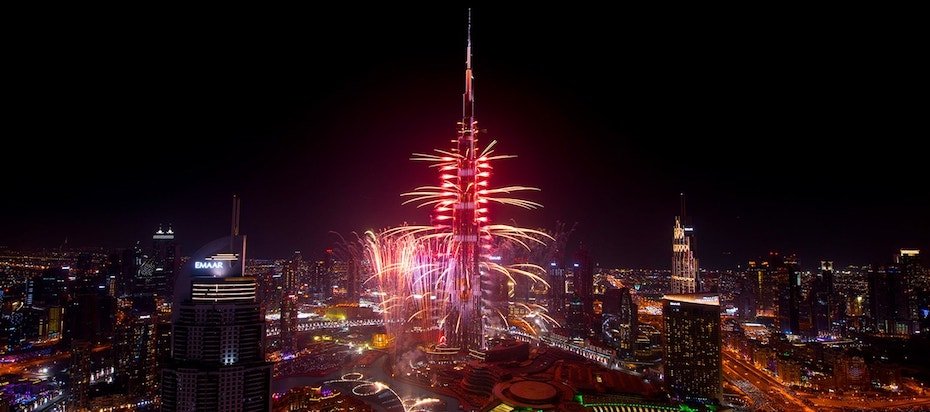
Dubai Is Getting Ready To Welcome Back Tourists Soon

A new video from Dubai Tourism shares just how excited the emirate is to soon welcome back tourists and the steps it's taking to ensure everyone’s safety and wellbeing. Every year 16 million people from all over the world travel to Dubai but with the recent the reduction of flights and mandatory 14-day quarantine period, many are holding off on their plans to visit the emirate in the near future. Nevertheless, Dubai wants all aspiring tourists and holidaymakers to know that it cannot wait to welcome them back to the emirate.Dubai Tourism recently released a heart-warming video on Instagram, in order to reassure travelers it will soon reopen its borders to all who wish to visit in the near future. The video, titled 'We Will See You Soon', was posted on the Visit Dubai Instagram account, showcasing breathtaking elements of Dubai that make it the city of dreams. Famous landmarks, fun activities, and luxuries the emirate is known for were all incorporated in the video, as well as the precautionary safety and health measures being taken to keep the emirate as COVID-19-free as possible. In just over 24 hours the video already amassed over 745,000 views which can only mean that indeed everyone is longing for their next trip to emirate – which hopefully can happen sooner than later.

Read more