
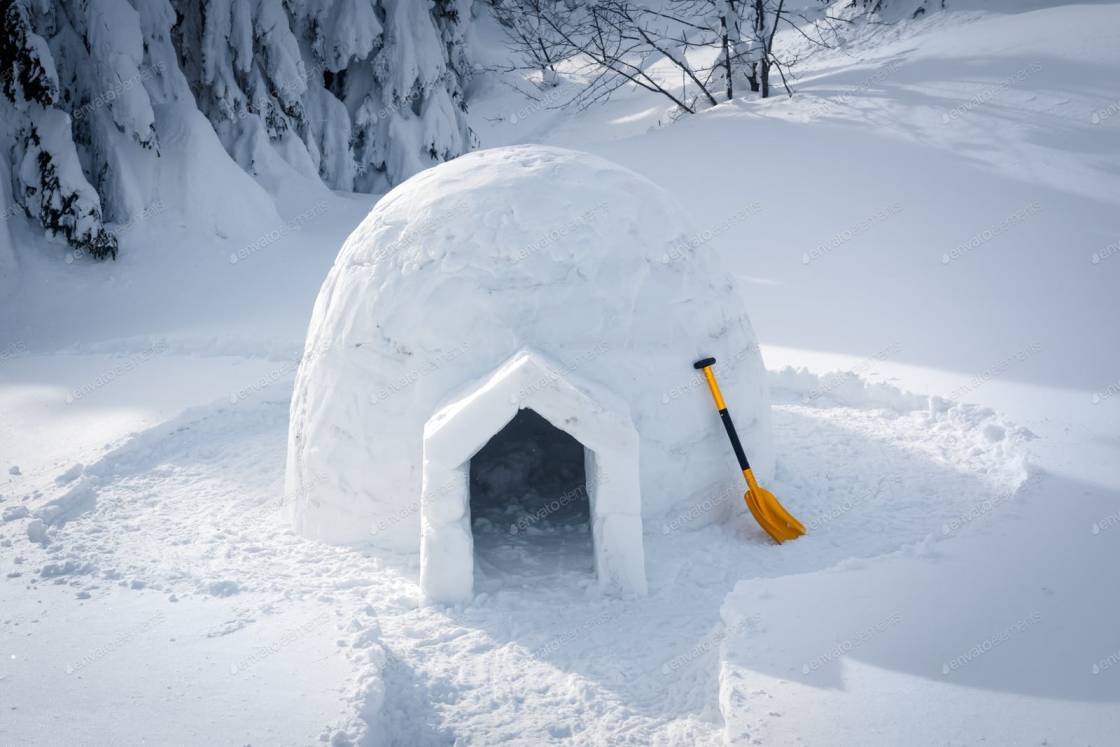
Manali Igloo Hotel Ready to Host Tourists
- Dec 25,2020
- Financial Express
Get ready for an eskimo experience! As the eventful year comes to an end, people who have been stuck at home through most of the year due to the pandemic-induced lockdown have been wanting to go out to travel. While everyone is looking up for places to go to, the Igloo Hotel Stay in Manali has opened up again. The first igloo hotel stay in India has now returned for another season, ready to entertain guests and provide them with an adventurous experience so that the year can end on a good note. As the holiday season begins and guests start trickling in, Vikas Kumar of the Keylinga Himalayan Adventures caught Financial Express Online’s Bulbul Dhawan up to the progress so far. The igloo hotel stay offers a unique experience in the Hamta valley near Manali every year during winter. This year, the snow came a little early, allowing Vikas and his team of five men to start the work on building sturdy igloos in the first week of December. By December 10, the first igloo was up and running, ready to be booked. Out of five igloos that the group builds, four are now functioning, and the fifth one would be coming up within a few days. Though things are finally starting to look up for Vikas and his team, the pandemic highly affected their tourism business this year. “Last season, the snow had been good and the conditions were favourable enough that we could have operated the igloo stay till mid-April, but due to the news of rising cases, we closed down on March 17, and a few days after that, the nation-wide lockdown was announced. Because of that, we had no business for our base hotel either during the summer, and we were totally free,” Vikas told Financial Express Online in an interaction. Not all was lost, though. Vikas decided to look at things in a positive light. “We are originally farmers and own apple farms. Because we had no work in the tourism industry, we got back to tending to our farms which were being neglected for a few years. Not only that, we also grew vegetables during the summer, because we had a lot of free time. That led to a good yield. The income from tourism was nil, so we were living on whatever we were growing. The pandmeic taught me an important lesson. If I have my farm and if I am connected to the Earth, I can grow and eat,” he said. While they survived their summers on farming, things have taken a turn for the better for them. The igloo stay is completely booked for December, which Vikas says is the peak time for them. There are not many queries for January, yet. Still, he is hoping for a better turnout this year. Counting day adventurers, the group had last year entertained over 200 guests. This season so far, the number of visitors has crossed 100. “This time, people are wanting to get out more because of being cooped up in their houses for the majority of the year. Still, due to infrequent flights, most of our guests are from north India itself, specifically Delhi and Punjab. We do not have many guests from south India yet,” Vikas said. When asked about the situation in Manali, Vikas said that it doesn’t seem like there is a pandemic. Everything has been reopened, and things are normal, with no coronavirus cases in the area. He says it might be due to the fact that people living in the mountainous areas have a stronger immunity. So with no cases and everything looking like normal, the igloo stay is an ideal vacation spot! Preparations for this season The Manali igloo hotel is managed by six people, who prepare the food, guide the tourists and also help them during adventure activities. In case of rush during the day time due to the influx of day tourists, they reach out to local boys from the village for help in return for some payment. “Instead of relying on already trained personnel from other areas, we decided to train local villagers in such activities so that they have some mode of earning and we also have help when needed. Our aim was to generate employment opportunities for the people of our village. We have been continuing to train them, so that when tourists need help, they know what to do,” Vikas said. Apart from ensuring that they have trained personnel at hand whenever needed, before setting up the igloos, they need to clean the entire patch of the barren land which they lease for the season. For the remaining portion of the year, the land is used as a grazing spot for cattle, so come winter, the place is full of bushes as well as cow dung. If left uncleaned, the grass, fallen branches and cow dung would pose a problem once the snow falls as they could cause obstructions or hurt tourists. Thus, before the snowfall, Vikas and his team get to work cleaning the land and making it completely even for the season. They also need to repair the water connection at the campsite for the hotel, in case it got damaged during the off-season. Apart from that, cylinders for the igloo site have to be arranged so that food and beverages can be prepared there in their make-shift kitchen.
Read more
Karnataka government withdraws night curfew order
- Dec 25,2020
- Hindustan Times
The Karnataka government on Thursday withdrew the night curfew order, hours before it was scheduled to be implemented. In a statement, chief minister BS Yediyurappa’s office said that the decision has been taken after feedback from public. “In view of the public opinion that there was no need for night curfew, the decision was reviewed and after consulting with cabinet colleagues and senior officials it has been decided to withdraw the night curfew,” the statement from the CMO said. Yediyurappa appealed to the people to exercise self-restraint by wearing face masks, hand hygiene and social distancing to prevent the spread of the coronavirus. The night curfew was meant to be imposed in the state between 11 pm and 5 am, effective from December 24. It was supposed to be in place till January 2. The decision to impose it was taken on Wednesday and withdrawn today. The government decided to imposed the night curfew in the light of a new variant of Sars-CoV-2 virus detected in the United Kingdom. The government had even issued Standard Operating Procedures (SOPs) for the night curfew. Karnataka health minister K Sudhakar had said earlier in the day that the Technical Advisory Committee (TAC) had advised the government about imposing a night curfew after which the decision was taken. On the possibility of a new variant of coronavirus coming to Karnataka, the minister said the lab test reports of about 300 to 400 people was likely to arrive on Thursday. Some other states are going ahead with their decision to impose a night curfew to check the spread of the disease. Maharashtra was one of the first states to do so after the news of the new strain of the virus surfaced. Iqbal Singh Chahal, the commissioner of Mumbai’s civic body BrihanMumbai Municipal Corporation (BMC), said, “This is not a normal new year which is why we cannot have normal celebrations. The curfew is being imposed to ensure that such violations are not repeated”. Punjab, Manipur, Gujarat and Himachal Pradesh are the other states where night curfew and other measures are being implemented to ensure the people of the state remain safe.
Read more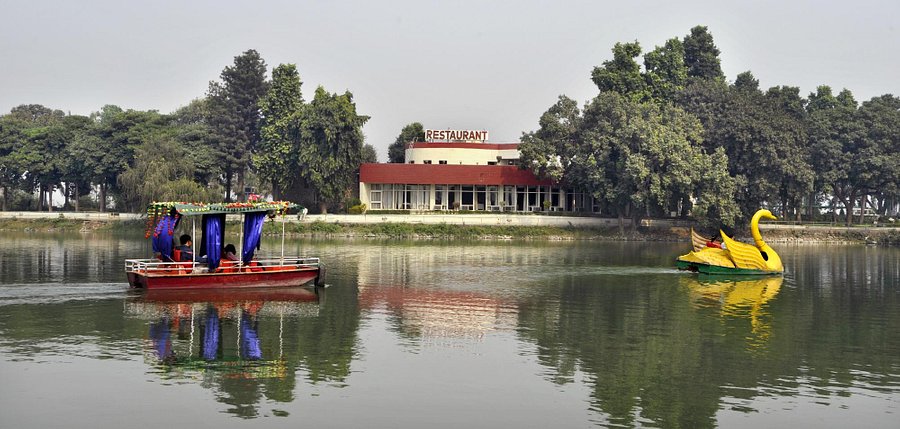
Haryana Tourism Department approves Karan Lake’s facelift
- Dec 24,2020
- The Tribune
The Haryana Tourism Department has given its nod to the project of facelift and renovation of Karan Lake, presently spread on 17 acres, to Karnal Smart City Limited (KSCL), a special purpose vehicle looking after the Karnal Smart City project. The green signal was given to the KSCL in a recent meeting between RS Verma, Director, Tourism Department; Nishant Kumar Yadav, Deputy Commissioner-cum-CEO KSCL; and other officials of the smart city. Now, the KSCL will prepare a detailed project report and will call the tenders. The authorities are hopeful that the work will commence in January. The existing infrastructure of the lake will also be incorporated in the proposed plan, said Nishant Kumar Yadav, CEO. “We have chalked out a plan to develop or renovate the Karan Lake. The Tourism Department is already constructing the banquet hall. For beautification, we will erect fancy lights as well as proper signage. Three layers of tracks will also be laid on the periphery of the lake which is around 1.3 km. One will be for pedestrians, second for cycling and third one for vehicular movement,” said Yadav. A grand fountain would also be installed in the lake and proper sitting arrangements for tourists would also be made. Besides, a light and sound show would also be organised in the evenings, he said. A food court would be made and a beautiful island would also be developed to attract tourists, he added. Presently, Karan Lake is dependent on Western Yamuna Canal for water, which is seasonal and gets water from July to August. “To ensure round-the-year supply of water, two tube-wells will be installed. Automatic water gauges will also be installed to check the water level in the lake,” Yadav said. Apart from these, ancient sculpture would also be installed on the pathway from National Highway-44 to Karnal Lake to beautify the entrance, the DC asserted. The KSCL has also planned to attract local residents apart from the travellers on NH-44 for which it will develop a corridor from Shrimad Bhagvad Gita Dwar to Karan Lake. Light-and-sound show will be planned - For beautification, fancy lights as well as proper signage will be erected - Three layers of tracks will be laid on the periphery of the lake - Besides, a light-and-sound show will also be organised in the evenings - A fountain will be installed and sitting arrangements will be made - A food court will be made and an island will also be developed - The existing infrastructure of the lake will be incorporated in the plan
Read more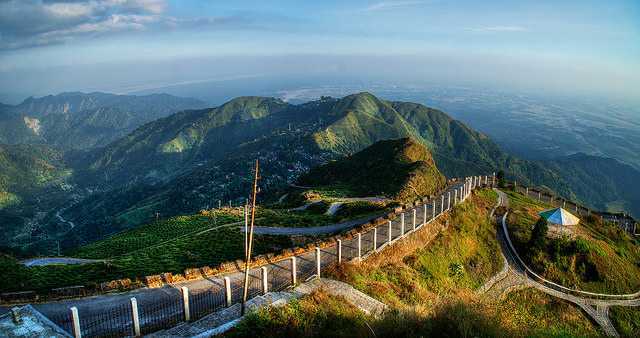
Pandemic push to domestic tourism as Bengal gives in to intra-state wanderlust
- Dec 24,2020
- Times Of India
KOLKATA: Hotels and guest houses at most popular destinations across Bengal have been witnessing more than 80% occupancy in the last two-three months, higher than the average occupancy of 60%-70% seen in the last couple of years. And this unexpected boom is thanks to the pandemic, specifically the curbs on foreign travel and a preference for nearby places, both for holidaying and staycations. The current occupancy at some of the 30 operational properties of West Bengal Tourism Development Corporation (WBTDCL) is 100%, state tourism secretary Nandini Chakraborty told TOI. “We have done extensive promotion on social and other media about our properties and the state as a whole, and the response has been phenomenal,” she added. The top-draw tourist destinations in the state for the last two-three months include Darjeeling, Digha, Mandarmani, Bolpur-Santiniketan, Mukutmanipur, Jhargram, Mayapur, Gar Panchakot, Murshidabad, Tajpur, Bakkhali, Raichak, Mirik, Kurseong, Diamond Harbour, Lataguri and Taki, among others. Kaushik Bhattacharya, the managing director of WBTDCL, said the corporation had made an operational profit of Rs 2 crore in the second quarter (July-September) of this fiscal after almost zero revenue in the first quarter (April-June) due to the lockdown. The corporation started opening properties in a phased manner from June. As tourists were avoiding long travel, this was an ideal opportunity for local stakeholders to enhance business, said Debjit Dutta, state chairman, India Association of Tour Operators (IATO) and Association of Domestic Tour Operators. Even some leading foreign tour operators have shown interest in the state’s domestic travel, as foreign tours are now out of bounds and may remain so for some more time. Around 20 of them are now visiting the state to assess the possibilities. Loveleen M Arun, head of the Bengaluru-based Panache World, an outbound tour operator, was in the Sunderbans on Wednesday. “We are looking for fresh locations in India, as most tourists have already visited Rajasthan, Goa, Agra and the south Indian circuits, and are looking for fresh domestic locations,” she said. Darjeeling hoteliers said most of their guests were arriving in their own cars to avoid unnecessary contact. “Our occupancy rate is high, despite the pandemic,” said Rajesh Rajak, general manager of Pinetree Resort. Badal Majumdar, who manages the Elgin Resort, said all 35 rooms were occupied till January 2. “We are getting tourists mostly from Kolkata who have chosen to bring their own vehicles, even though we have pick-up and drop facilities,” he said. Government bungalows, WBTDC and WBFDC resorts, private resorts along Gorumara National Park, Chapramari Wildlife Sanctuary and homestays at Jayanti in Buxa Tiger Reserve forest are fully booked till the first week of January. The iconic Hollong bungalow has no room empty. Purulia’s tourist hotspots in and around the famous Ayodhya Hills are booked, too. All government and private hotels, lodges and resorts in Bagmundi, Matha, Ayodhya, Kumatikanon and Murguma are going to be packed with guests this entire winter, owners and managers said. The coastal hubs of Digha, Mandarmani and Tajpur, too, are looking forward to a revenue boom this winter, particularly from Christmas through January, after an almost nine-month lull.
Read more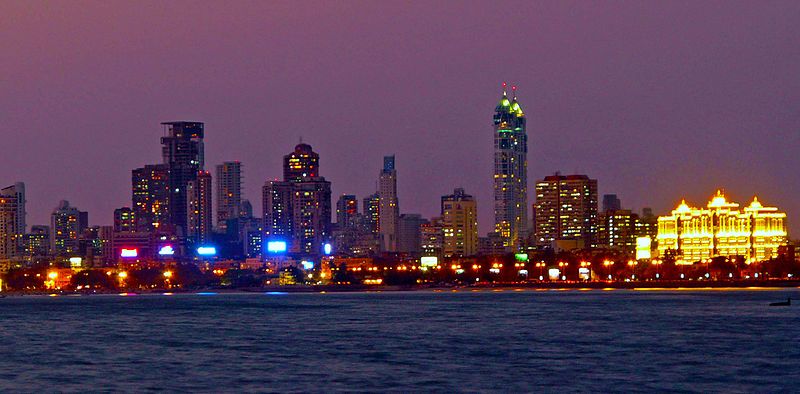
The new normal: Mumbai to follow Thailand time to ring in New Year
- Dec 24,2020
- The Economic Times
The Hotel and Restaurant Association of Western India (HRAWI) has asked its members to gear up for early celebrations on New Year’s Eve. With Maharashtra announcing a curfew post 11pm, hotels and restaurants have decided to ring in the New Year Eve celebrations an hour and half early. The HRAWI has opined that ending the year earlier is a fitting tribute to hospitality Industry's never-say-die attitude. The association has also stated that while the curfew will disrupt industry’s plans, it appreciates government’s pre-emptive measures to allay any threat of the pandemic’s second wave. “Like every year, Mumbai will have its celebrations this year too, albeit a little earlier. The government is doing its best to help keep its citizens safe and we see the intent behind the decision. But if it’s celebrations that Mumbaikars want, we will give it to them while ensuring that all norms and safety measures are adhered to. This is probably even better as people will get to be at their homes at midnight to bring in the New Year with their families,” says Sherry Bhatia, President, HRAWI. The industry is confident about business and member establishments are planning to align celebrations with Thailand and may even host virtual celebrations synchronized with them. “The industry wants to put the last eight months behind and instead look forward to the remaining eight days left in the year. We have braved the storm and have decidedly put the worst behind us. Nothing is going to dampen our spirits and we will emerge stronger than before. We welcome Mumbaikars to come join us in the last celebrations of the season, to bid farewell to 2020 and to usher in 2021 with lots of optimism, faith and hope,” concludes Pradeep Shetty, Sr. Vice President, HRAWI.
Read more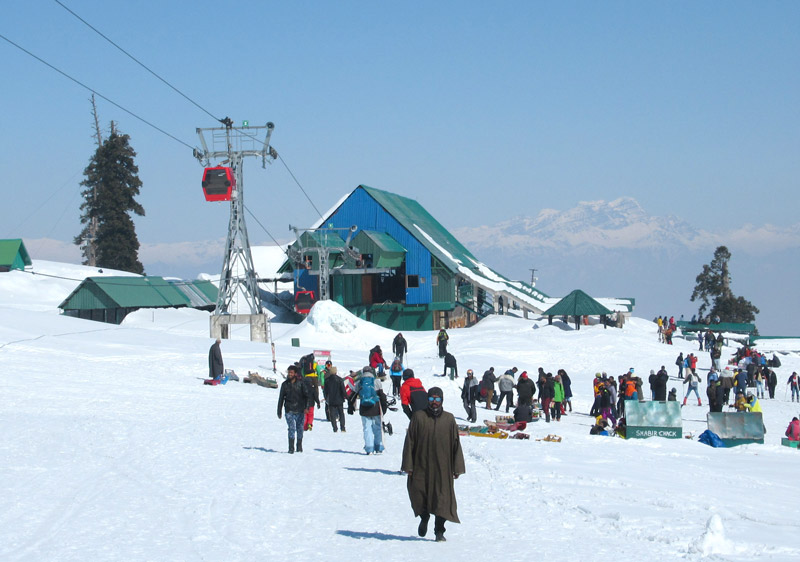
India's ski resorts glide through tourism slippery slope
- Dec 24,2020
- Times Of India
As foreign holiday plans remain frozen in Covid time, home is where the ski slopes are for those wanting to perfect their slalom this winter. The Khyber-Himalayan Resort & Spa in J&K's Gulmarg is fully booked till January-end on the strength of domestic demand alone. The guests are mostly skiing enthusiasts who would usually head out to Courchevel in France, Zermatt in Switzerland or Kitzbuhel in Austria for some snow action around Christmas-New Year, said Umar Shahid Tramboo, chairman and MD of the resort. Tramboo expects the entire season to be "sold out" at the 85-room luxury property, which is surprising given the fact that 90-95% of The Khyber's winter traffic normally comprises foreigners. Over the past few years, a growing number of affluent Indians have been flying out to winter resorts abroad to spend Christmas and New Year skiing or just trekking through snow. This season, with even regulation foreign holiday destinations other than Dubai and the Maldives shut for tourists, skiing in the Himalayas seems to have caught on among the uninitiated, too. Besides Gulmarg, domestic ski resorts in Auli, Munsiyari and Solang Nala are running to capacity. Such is the rush that some properties expect full occupancy till mid-February. Rajeev Kale, president & country head — leisure travel and MICE at Thomas Cook (India) isn't surprised by the surge in domestic demand as people try to break through the shackles of the pandemic. "Winter and snow experiences like skiing, sleighing, snowboarding, trekking, ice skating and tobogganing had been gaining popularity for a few years. What is more heartening to see is Kashmir tourism re-emerge strongly for the upcoming year-end winter break," he said. With early snowfall converting Gulmarg into a winter wonderland, Thomas Cook's 72-hour holiday flash sale saw a surge in bookings for Kashmir packages and a 20% jump in average daily sales. A majority of bookings and enquiries came from adventure seekers looking for a ski experience within the country. Daniel D’souza, president & country head of leisure at SOTC Travel, believes skiing in India as a kind of adventure tourism is poised for a big leap. “Manali, Shimla, Nainital, Mussoorie, Gulmarg and the Himalayan range are top choices for ski holidays among Indians,” he said. For Anirudh Sharma, who runs the popular online trekking community Trekkers of India, the last few years have been spent educating people about winter treks in India and highlighting how Auli and Chopta are no less than any Swiss destination. "From what looked like a complete whitewash till a couple of months ago, the snow-covered destinations are now attracting tourists from around the country," he said. Almost 500 people have joined him in each of his snow treks this year. Seerat Seero Khanka, who quit her job in Delhi to start a trekking service called Avintahimalayas in her native village of Sankri in Uttarkashi district of Uttarakhand, said pandemic-induced global tourism meltdown had ironically been the best thing to have happened to snow adventure activities in India. “From Kedarkantha and Brahmatal to Nag Tibba and Chopta-Chandrashila, winter treks through snowy landscapes have become the holiday activity of choice for many." While Auli and Munsiyari have always been popular winter destinations, Uttarakhand tourism minister Satpal Maharaj sees skiing and snowboarding holidays creating an entirely new sector. “Even during this pandemic, we are witnessing a huge influx of tourists, which is why we have opened all adventure activities by ensuring safety and other guidelines are adhered to," he said
Read more