Digital travel brands want the same bailouts from governments as hotels and airlines

Global distribution systems, online travel agencies and other players in the digital travel sector are calling on the European Commission to include them in plans for financial support resulting from the coronavirus outbreak. Governments in member states and the commission itself are being urged to consider the "whole leisure and business travel ecosystem" when the time comes to bailout airlines and hotels. Companies in this vast, additional area would include those involved in marketing, distribution and support travel suppliers - many of which will be suffering a similar downturn in business as their consumer-facing partners. Lobbying organization EU Travel Tech (formerly ETTSA), which includes the likes of Amadeus, Travelport, Booking.com, Expedia Group, Skyscanner, Tripadvisor and eDreams ODIGEO as members, says the COVID-19 outbreak represents an "exceptional challenge across our society and economy." The brands it represents "are providing information and adapting the way they do business with their suppliers, big and small, be it airlines, hotels, short-term rental hosts, restaurants, bus companies and tourist guides," it says. It says the European Commission should provide "efficient and immediate support" to those brands working behind the scenes. Secretary General of EU Travel Tech, Emmanuel Mounier, says: "Our members support efforts to back airlines, hotels and other suppliers. "However, it is of utmost importance that the European Commission and Member States include exceptional measures to assist the whole industry. "This means policies that support the entire travel ecosystem, including travel agents (online and offline), technology solutions providers such as global distribution systems, travel platforms for accommodation, metasearch and travel management companies."

Read more

Great Wall of China's Badaling section reopens to visitors

A small section of the Great Wall of China has reopened to visitors as of March 24, a sign that life in China is slowly returning to normal following the coronavirus epidemic. The Badaling section of the Great Wall, which stretches from Bei Liu Lou to Nan Wu Lou Ban, will be open daily from 9 a.m. to 4 p.m. Around 70 kilometers (43 miles) from Beijing, it's the most popular section of the wall for tourists, to the point that officials instituted a cap of 65,000 visitors per day as of June 2019. Chinese officials said in a statement that they will only permit 30% of the usual number of visitors into the area for the time being. To be permitted entry, visitors must first book a ticket in advance, either on the Badaling Great Wall's official website or through China's WeChat app. Then, upon arriving at the Great Wall, they will have their temperatures checked.Visitors must have a registered Health QR code -- a system through the AliPay or WeChat app that is connected to their ID card -- that shows as green, or healthy, before being permitted entry. Visitors also must wear face masks and stay at least one meter away from each other at all times. Medical staff and active military personnel will get free entry -- but will also have to follow the same set of rules. Otherwise, tickets cost 35 RMB ($5) during the off-peak season, which ends March 30, and 40 RMB ($5.65) during peak season from April 1 - October 1. All other sections of the Great Wall remain closed, as do the cable car and China Great Wall Museum in Badaling. Normally, more than 10 million people visit the Great Wall every year. The UNESCO World Heritage Site was closed to visitors on January 25 as the coronavirus epidemic began to ramp up. Many other sites throughout China remain closed, including the Forbidden City complex in Beijing and Shanghai Disneyland.

Read more

All entertainment venues in Singapore to close, gatherings outside work and school limited to 10 people

Bars, cinemas and all other entertainment outlets will be closed from Thursday (March 26) 11.59pm till April 30 as Singapore's fight against Covid-19 enters a new phase amid a wave of imported cases to the country. In announcing its strictest measures yet, the multi-ministry task force also said on Tuesday (March 24) that: - All centre-based tuition and enrichment classes will be suspended to reduce the intermingling of students from different schools and enhance the safety of students. - All religious services will be suspended. - Malls, museums and restaurants must reduce crowd density to stay open. - All Singapore residents returning from Britain and the United States from Wednesday (March 25) 11.59pm will have to stay in hotels to serve their 14-day stay-home notice (SHN). - Those who breach the SHN will face fines of up to $10,000 or jail of up to six months or both. - Any Singapore resident or long-term pass holder who leaves Singapore from March 27 will be charged unsubsidised rates should they be hospitalised in public hospitals for Covid-19 treatment.They also won't be able to claim from MediShield Life or Integrated Shield Plans for these treatments at public and private hospitals. The measures come as 49 new Covid-19 cases were reported on Tuesday, including 32 imported cases. This brings the total of patients to 558.The measures are pre-emptive but come at a time of real risk, said National Development Minister Lawrence Wong at a press conference. "All over the world, millions of people are living in a different reality. Workplaces are closed, shops are empty, roads are empty, everyone is asked to stay home," he said. "We are not experiencing this in Singapore - not yet, but we cannot be complacent." Despite efforts to isolate imported cases, the risk of local transmission will rise as Singapore sees more imported cases, he said. "So we have to take seriously the measures to protect our family members and the people around us," he said. The measures on entertainment venues cover bars and entertainment venues like night clubs, discos, cinemas, theatres, and karaoke outlets. Other public venues such as retail malls, museums and attractions, where contact is more transient, may remain open. But operators must make sure the venue does not have more than one person per 16 sq m of usable space. This is to significantly reduce the density of crowds in these venues, especially during peak periods, said the Ministry of Health. Groups must not exceed 10 persons. Indoor and outdoor shows within attractions and open atrium sales events are suspended. Retail malls and attractions that are unable to adhere to these requirements must be closed and additional penalties may be imposed on those found to have been a place of transmission if they had not adhered to requirements. The ministry said existing measures for food and beverage venues continue to apply. While related diners can be seated together at one table, tables must be spaced out. Groups of diners should also be limited to 10 persons or fewer. Patrons of places with fixed seating - for example, hawker centres - must use alternate seats. On religious gatherings, the ministry said that while services will be suspended, places of worship may remain open for private worship and essential rites, subject to group sizes of 10 persons or fewer at any one time.

Read more

Flight bookings to the UK for January 2021 up 229% and to Spain they've soared 171%

Silver linings amid the coronavirus crisis are hard to come by right now for the travel industry – but they haven’t disappeared altogether. Analysts have revealed that travellers are showing signs of confidence for January 2021 and the end of the year. There has been a 229 per cent year-over-year increase in global flight bookings made in the past 14 days to the UK for January 2021 and a 171 per cent increase for bookings to Spain. It explains that when it looked at flight searches made in the past 14 days, it’s ‘the Middle Eastern, Western and Eastern European, and North American travellers who appear keener to reinstate their travel plans as soon as they can and are showing interest in travelling to the UK towards the end of the year’. It continued: ‘Eastern and Western Europe show a very early increase in year-over-year travel intent for January 2021, with an above-average year-over-year increase of 144 per cent and 85 per cent (up from eight per cent and nine per cent last week) respectively compared to the same time last year.’ Travellers from Asia are more pessimistic about future travel to the UK, the data shows. Sojern’s explanation for the upturns is that it ‘could be a result of some airlines announcing their winter timetables early and also releasing a more flexible cancellation and booking policy'. This may have led to an increase in consumer confidence for booking trips for a date when it's felt the pandemic could be in the recovery phase, the firm says. Right now, though, the picture is bleak. Sojern says: ‘Analysing consumers’ travel plans gives some sense of the gravity of the situation and it will come as no surprise that global flight bookings to Europe have declined drastically, with Italy seeing almost a 94 per cent year-over-year decline in flight bookings last week. This is to be expected given the travel restrictions currently in place as a result of the ongoing pandemic. The UK showed a 63 per cent decline in year-over-year flight bookings last week, down from 37 per cent the previous week.’ Chris Blaine, VP of EMEA at Sojern, said: ‘The covid-19 outbreak clearly presents a significant threat to the travel industry as a whole and it is unlike anything I have previously witnessed. ‘However, this isn’t going to last forever. The industry will recover, but it will take time. Travel marketers need to be prepared and ready for this recovery and while there is likely to be plenty of pent-up demand, travellers will also be initially very cautious. We are likely to see domestic tourism recover first and long-haul following later. It’s important to base your strategies on real-time consumer behaviour, which will inevitably follow the path to recovery.’

Read more

Travel companies, airlines to give only credit notes, no cash refunds

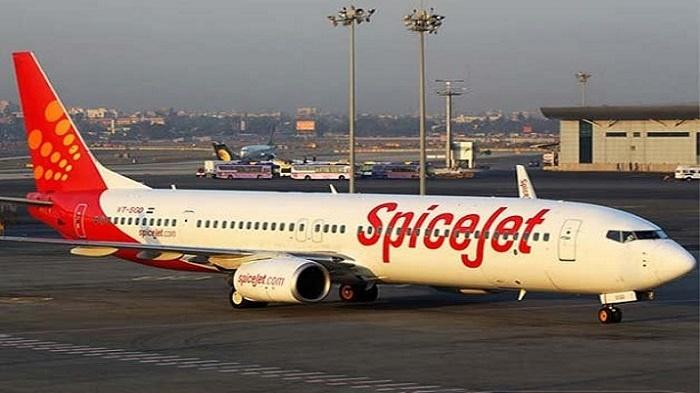
Chennai: Airline and travel planners are offering credit notes to customers whose travel plans have been cancelled due to corona virus pandemic, as full refund is becoming a stretch on their finances. Upon directions from the aviation regulator, DGCA, flights from 00:00 hours on March 25, 2020 to 23:59 hours on March 31, 2020 have been suspended. Following the order, a few airlines offered passengers with credit account in the same PNR with the same ticket value for later date, while others offered free rescheduling. Travel planners on the other hand are willing to pass on credit notes against tour bookings to customers. Indigo in a statement said, “Please be assured that your Booking Reference/PNR, will stay safe as a credit account in the same PNR with the same ticket value. The credit account can be used for travel before September 30, by the same passenger.” AirAsia India offered flexibility credit options for its passengers, which included booking to a new date for free and Spicejet said it will give credit notes with a one year validity. Travel companies are facing acute cash flow issues. “With 90% bookings cancelled over the last few days, we do not have the resources to provide refund, thus we are offering credit share with customers. There is no expiry date for this credit, so one can use it for their next travel with us. For people who fear travel for the long run may use our other services like visa and passport, rail passes, cruise,” said Seema Ahmed, general manager of Gainwell Travel. “At present, we have about 2%-3% of credit notes passed on to our customers, and expect it to go up going forward,” said Hari Ganapathy, co-founder of Pickyourtrail, which offers personalised travel packages. “As a traveller, one may not want to go to the same hotel, or destination once this chaos ends. Thus, we do not recommend or offer hotel credits since it will not work on customers,” he said. Pickyourtrail has formed a recovery team to explain customers on trip cancellation and rescheduling. Some are pushing their vacation to September and beyond. “Some customers are willing to reschedule holiday trips post October for countries like New Zealand, Australia, Bali, Singapore. However, everyone wants to cancel trips to Europe,” Ganapathy added.

Read more

Google adding coronavirus travel advisories, flight cancellation information

The entire travel industry is facing a downturn due to the ongoing COVID-19 pandemic. Given an uptick in searches about travel advisories and trip cancellation policies, Google’s travel offerings are directly integrating coronavirus-related information. Queries for flights, hotels, and activities in impacted destinations will be accompanied by coronavirus-related travel advisories or restrictions. Appearing at the top of Google Search, there will be a bright red “COVID-19 alert” badge with the card linking to relevant information from your country’s travel authority “when possible” — like the US State Department. This information will also be available at the top of google.com/travel and in Google Maps when searching for hotels. Meanwhile, Google Flights and searching for flights with a specific airline on the main site will direct users to a Help Center table that links to carriers offering travel flexibility. This is in response to many airlines adjusting fee and cancellation policies. Given the constantly updating nature, it’s recommended customers visit first-party sites directly. These Google coronavirus travel advisories are rolling out this week.

Read more