Vaishno Devi: Vande Bharat train service between Delhi-Katra to resume soon; daily visitor limit raised to 7000

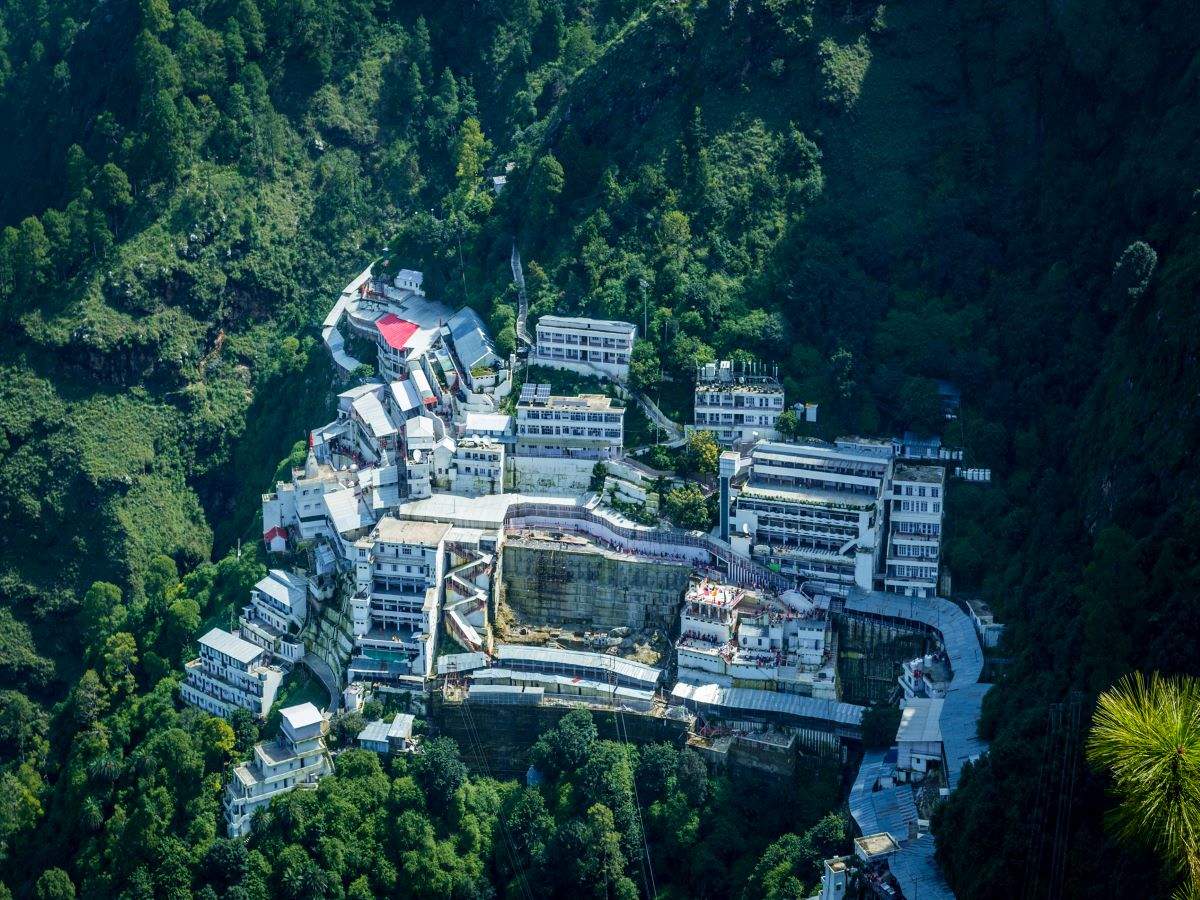
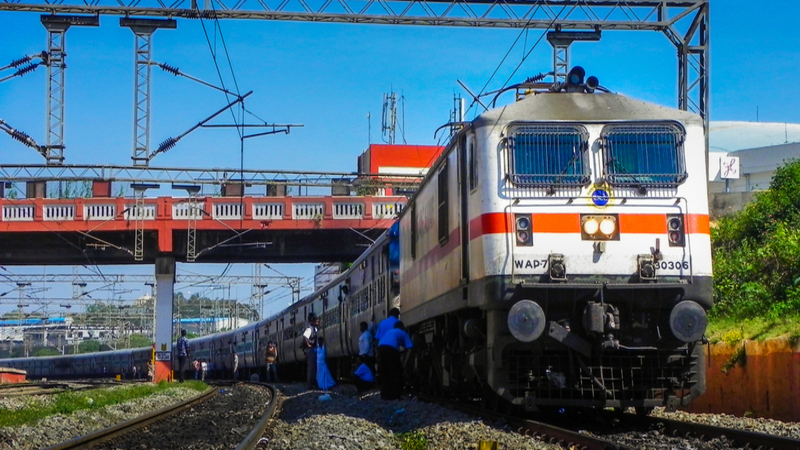
Good news for all those who have been planning a Vaishno Devi Yatra. As per the news reports, Indian Railways will soon be resuming its Vande Bharat Express train services from Delhi to Katra. Referring to this, Union Minister Jitendra Singh said that the matter of resuming the said train services from Delhi to Katra in Jammu and Kashmir ahead of the Navratri festival has already been discussed with Railway Minister Piyush Goyal. He added that resuming the said train services will benefit pilgrims, who have been planning to visit the shrine during Navratri from across the country. Reportedly, Delhi-Katra train services remained suspended since March, after lockdowns were imposed across the country to contain the spread of the Coronavirus. The lockdown is now lifting in a phased manner; recently, IRCTC announced the first ‘private’ Tejas Express train services to resume operations from this month. The Ahmedabad-Mumbai Tejas Express and Lucknow-New Delhi Tejas Express will be resuming services from October 17, 2020. Moreover, Indian Railways is also set to introduce 39 special trains to facilitate travel of people during the festive season. Apart from the train services resuming operation on the Delhi-Katra route, the cap on the daily number of pilgrims visiting the shrine has also been increased. Reportedly, in view of Navratri starting from November 17, the administration has raised the cap on the number of pilgrims to the shrine up to 7000 from October 15. Also, the task of fixing the ceiling for pilgrims from outside J&K has been entrusted to the CEO of the Shrine Board. The online registration for the yatra will, however, continue to remain the same as before. Further, the CEO, after reviewing the situation, will take a decision on whether to start the palanquin and pony services. Large religious gatherings and processions will not be permitted yet.

Read more

IRCTC announces 39 special trains for the festive season in India

Owing to the upcoming festive season in India, the Indian Railways has announced more special trains across the country. According to latest reports, a total of 39 special trains will be started by the Indian Railways soon. The trains will commence at the earliest possible date. It is believed that most of these special trains will be air-conditioned ones, such as the Rajdhani, Shatabdi, and Duronto. Apart from the 39 special trains, there have been more developments in the railway sector. The Indian Railway Catering and Tourism Corporation Limited, which is also known as IRCTC, has announced that Tejas Express will resume its operations soon. The train was suspended due to the outbreak of the pandemic, but will restart from October 17. This is mainly to meet the demand of passengers during the festive season. IRCTC, which is a PSU of the Ministry of Railways has gone through extensive training in order to help adapt to the times, so that operations can be run smoothly without any hiccups. Standard Operation Procedure has been put in place in order to ensure the safety of passengers during their journeys. Here is a list of the 39 special trains that are expected to run during the festive season - Kamakhya to Loymanya Tilak - Weekly Kamakhya to Yesvantpur - Weekly Nizamuddin to Pune - Weekly New Delhi to Katra - Daily Barmer to Yesvantpur - Weekly Loymanya Tilak Terminus to Haridwar - Bi-weekly Loymanya Tilak Terminus to Lucknow - Weekly Ajni to Pune - Weekly Ligampalli to Kakinada town - Tri-weekly Secundrabad to Vizag - Weekly Nagpur to Amritsar -Weekly Anand Vihar to Naharlagun - Weekly Secunderabad to Shalimar - Weekly Chennai to Madurai - Tri-weekly Bandra Terminus to Bhuj - Tri-weekly Santragachi to Chennai - Bi-weekly Howrah to Yesvantpur - Weekly Bhubaneswar to Anand Vihar - Weekly Bhubaneswar to Delhi - Weekly Nizamuddin to Pune - Bi-weekly Howrah to Pune - Bi-weekly train Bengaluru to Chennai - All days, except Tuesday Mumbai Central to Ahmedabad - All days, except Sunday Chennai to Coimbatore - All days, except Tuesday New Delhi to Habibganj - Daily Chennai to Nizamuddin - Bi-weekly Dibrugarh to New Delhi - Weekly Visakhapatnam to Tirupati - Tri-weekly Dibrugarh to New Delhi - Bi-weekly Mumbai Central to Nizamuddin - Daily Bandra to Nizamuddin - Weekly Howrah to Ranchi - All days, except Sunday New Delhi to Shri Mata Vaishno Devi Katra - All days, except Tuesday Jaipur to Delhi Sarai Rohilla - Daily New Delhi to Amritsar - Daily New Delhi to Dehradun - Daily New Delhi to Amritsar - All days, except Thursday Ahmedabad to Mumbai Central - All days, except Sunday Chennai to Bengaluru - Daily

Read more

International flights: Travel bubbles likely to continue till March-April, says Hardeep Singh Puri

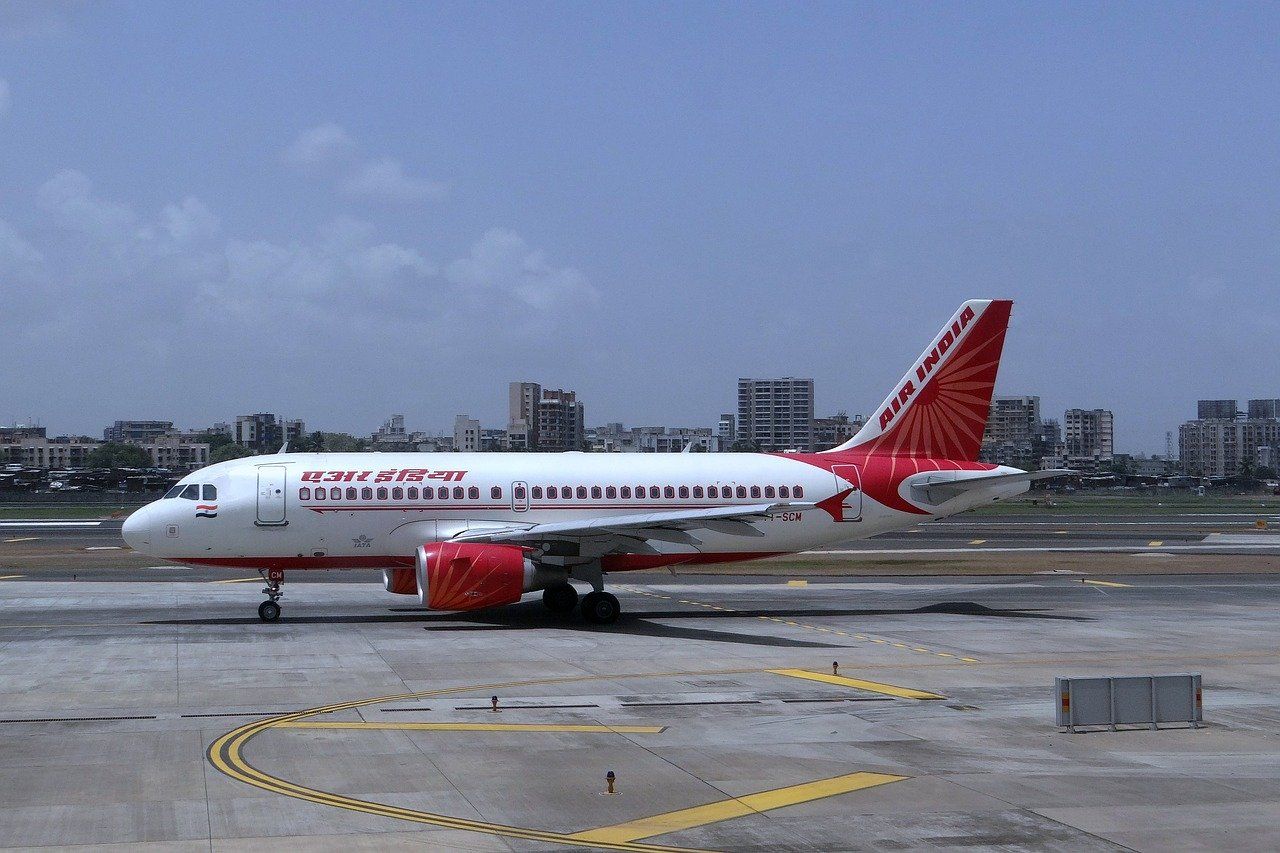
Union civil aviation minister Hardeep Singh Puri on Thursday said the future of international flights is now depending on the availability of a vaccine. Answering a question on whether travel bubble arrangements will continue till March-April, the minister said, “It is difficult to say as there is no country which has completely opened its borders for all. It depends on the availability of a vaccine as countries will feel more confident once a vaccine is there.” Air bubbles are specific arrangements between countries to allow airlines of both the countries to carry passengers. Regular international passenger flight services have been suspended till October 31. The minister hinted that this suspension is likely to be in place till March-April. “There are basically three issues to consider before resuming regular international flights. One, resuming domestic connectivity connecting bigger cities to smaller town, which we have already done. Second, the nature of the virus on which I can’t comment and the third is international restrictions. Every country wants their people to return, but for others there are plenty of restrictions,” Puri said. Domestic airlines will soon be allowed to increase their capacity to 75 per cent. At present, they are operating at 65 per cent capacity, after domestic flights resumed operations on May 25 — following a gap of two months of lockdown. “There is no deadline. But this can happen soon as the domestic numbers are going up. Before this I said that the pre-covid domestic number will be achieved between Diwali and New Year. Now I am confident that by the first quarter next year, we will be able to surpass the pre-covid number,” the civil aviation minister said. “This marks the beginning of the second phase of domestic travel as we are now gearing up to face the challenge of welcoming more people in the airports as the festive season is almost upon us. We had a meeting with the airlines recently in this regard,” Pradeep Singh Kharola, civil aviation secretary said.

Read more

Nearly all of India will welcome tourists from October

If you have been down with cabin fever, here’s some relief. Most Indian states are emerging through the haze of lockdowns and unlocks and now welcoming tourists. Hotels and homestays are back in business, with strict health protocols. E-passes are nearly gone. Flights to major destinations in India are back and most tourist attractions are reopening. Here’s a quick round-up in case you are finally ready to venture beyond your pincode. Ready and waiting Goa, Himachal Pradesh, Karnataka have already started taking tourists with very minimal restrictions, if at all. Uttarakhand is even willing to pay for a room-night if you come visiting. Rajasthan hotels have been open for a few months now. Madhya Pradesh has rolled out workation programmes, in case your boss feels you are indispensable. Next door, nearly all tourist attractions in Agra, Uttar Pradesh are now fully open—including the Taj Mahal. Maharashtra is unlocking cautiously: hotels and homestays are back in business and the state has also launched a campervan rental programme. The state’s premier tiger reserve in Tadoba reopens on 1 October, with a new set of rules. The forests of West Bengal reopened to tourists on 23 September after an extended closure. While these forests are locked down every year for two months during the monsoon—from 15 July to 15 September—this year, they have been out of bounds for tourists since March. Darjeeling, the state’s favourite hill-station, is also now accepting visitors. Tamil Nadu’s state of lockdown continues till October, but its hill-stations are open, with some exceptions. The Union Territory of Puducherry is also taking visitors and the Himalayan heights of Ladakh are also open (here’s what it is to holiday there right now). Even the Andaman & Nicobar islands have restarted some tourist activities. As a result, flights from the mainland will increase to 14 per week from now. Kerala was expected to reopen its tourist experiences in September or October, but there is no word on it yet. Tourist places opening in October in India Most of India’s eastern states will start welcoming tourists at some point in October. Odisha has decided to open up the beaches of Puri and Gopalpur, temples of Bhubaneswar and Konark, Chilka Lake and other experiences to tourists from October, though it has yet to announce a date. The government has launched the ‘Odisha by Road’ campaign to urge travellers to explore the state’s tourist circuit by road. Sikkim will reopen to tourists from 10 October. The state government has allowed hotels, homestays and other tourism-related services to resume operations and will also open the state border with West Bengal for unrestricted travel by road from 1 October. Bookings for hotels and homestays resumed from 27 September. Inner Line Permits for foreign tourists with valid visas shall be issued from 10 October. Tripura will also reopen all tourist spots in the state from 1 October. To promote tourism, the state will construct a helipad near the popular Dumbur Lake in the Chabimura region, famous for its rock carvings along the River Gomti. The tourism department has introduced water scooters as well as floating jetty and speed boat services at Dumbur Lake. The chief minister of Arunachal Pradesh Pema Khandu has indicated that the state will reopen for tourists after October, given how crucial tourism is to the local economy. In short, most of India is open for tourists. But remember that there are strict rules in place—masks are mandatory everywhere you go; physical distancing is obligatory and the need to respect local sensitivities and concerns is now more than ever.

Read more

India’s longest steel bridge on Manali-Leh highway to open soon

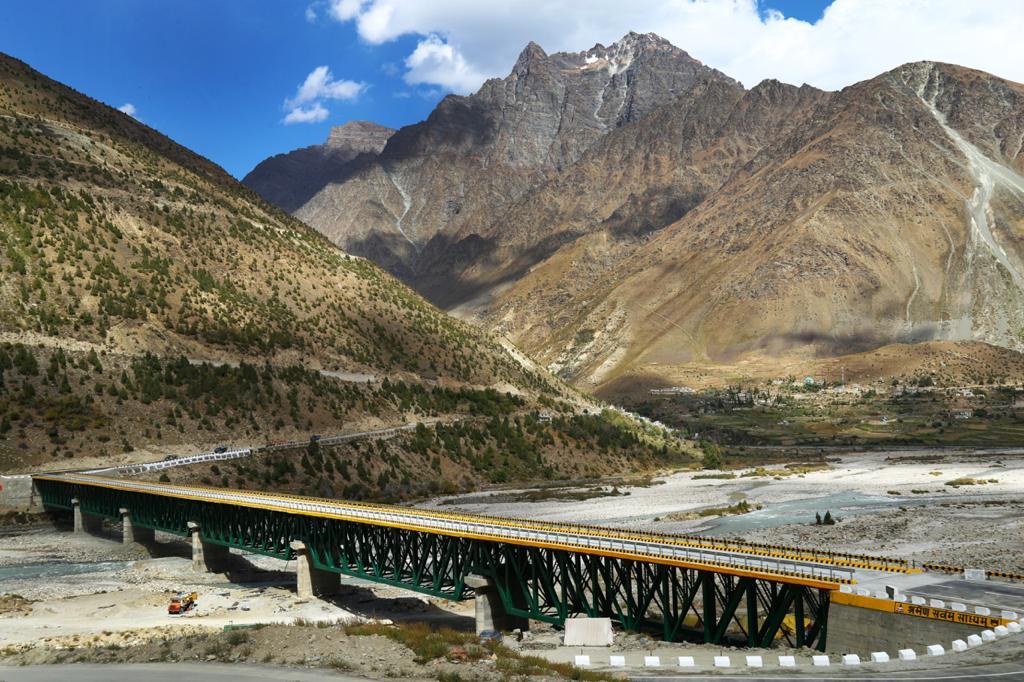
After opening Atal Tunnel for public traffic last weekend, Himachal Pradesh is now ready to inaugurate the longest bridge on the Manali-Leh highway this month. Besides improving the flow of traffic, the new bridge, Barsi Bridge, is expected to prove helpful in increased load carrying ability. The bridge, spanning 360 m, took around 10 years to be ready for use. The difficulties arose during the construction in the form of difficult terrain, limited working season and inclement weather due to the winter season. Barsi Bridge runs over Bhaga river at Darcha and is the second longest bridge in the country; the first one being Col Chewang Rinchen Setu on Shyok river, enroute world’s highest landing ground in Ladakh at Daulat Beg Oldie. Darcha is located in Lahaul region, about 33 kms ahead of Keylong, at a height of 11020 ft. It is the last permanent settlement on this route in the state. News has it that the bridge is a steel truss structure, and has a load-bearing super structure made of a rigid assembly of steel beams. The bridge has abutments on both the ends and additionally, the length is held by five piers emerging from the river bed. The project has been accomplished by 70 Road Construction Company of the Border Roads Organisation (BRO) that has also constructed the 100 m steel truss bridge that links the north gate of Atal Tunnel under the Rohtang Pass.

Read more

Gulmarg Gondola opens for tourists after six months

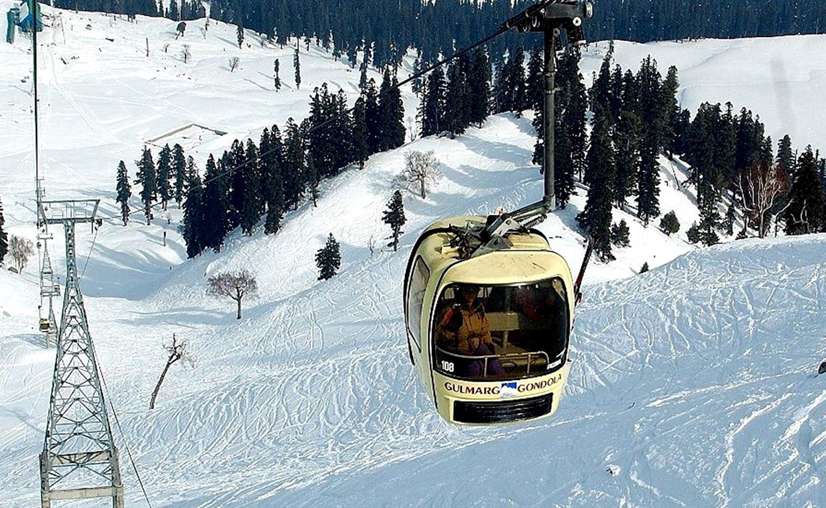
Gulmarg Gondola, one of Asia’s largest and highest cable cars surrounded by pine forests and Himalayan mountain peaks in the ski resort of Gulmarg in Jammu and Kashmir, has opened for tourists this week after remaining shut for six months due to the Covid-19 pandemic. Officials said that tourists have started trickling in amid proper Covid-19 protocols of social distancing and masks, to enjoy the breathtaking beauty offered by the mountainous meadow. The first phase of the Gondola was opened for a day on September 27, World Tourism Day and then it resumed daily operations from Saturday taking tourists to Kongdori Mountain at a height of 8,530 ft. “We had decided to operate the Gondola on weekends but then the government decided to open the first phase everyday from Saturday,” said Assistant Manager Gulmarg Gondola Project, Fayaz Ahmad. He said that the tourists both locals and visitors from different states of the country have started coming in. “On an average, around 50 people ride the ropeway every day. Over the weekend, the number was around 150. Around 30 percent of visitors were from different states of the country,” he said. The Gondola was closed after the government imposed lockdown to contain the spread of Covid-19 in mid-March. On normal days, the cable car records a daily footfall of 2000 to 3000 people generating daily revenue of Rs 35 to 40 lakh. Each ticket costs Rs 740 per person for the first phase and Rs 950 for the second phase which takes a person to a height of 12,293 ft. Proper Covid-19 protocols are in place to avoid any congestion or close contact of the visitors with each other. Instead of six in normal days, only three tourists are allowed to ride in a single Gondola car. There is sanitization of cabins before and after boarding and de-boarding of passengers besides compulsory wearing of masks. The tourism industry nosedived in Kashmir since August 5, 2019 when the special status of the erstwhile state was revoked and restrictions imposed on movement of people and communication shut for months. Two days before the revocation of Article 370, around 20,000 to 25,000 tourists were present in Kashmir and they all were asked to leave the Valley along with Amarnath pilgrims. The situation was then aggravated by the Covid-19 lockdown since March 2020. Ahmad said that the Gondola project has been facing a slump since August 5, 2019. “Later Covid-19 shut it completely,” he said. He hoped that the number of tourists would increase in the coming days. “Gulmarg and Gondola have become synonymous and people have started coming despite Covid-19. Winter is approaching and travel agents have told us that bookings are being made for October end. Let’s hope for the best,” he said.

Read more