
Technology Can Help Restore Tourism And Retail
- May 07,2020
- Business World
Countries like India should rapidly embrace new technologies to widen the consumer base and enthusiasm, without fearing that this will necessarily snatch away the opportunities available in our service sector for tourist guides or salespersons. When the war against the corona pandemic is finally won, what will be its legacy? A sorrowful one of corporate obituaries? Or can we harness this moment to innovate and create a winning strategy? One of the worst affected industries today is the tourism industry. But, virtualization can come to its rescue. Tourism can be taken to a new level using tools such as augmented reality which superimposes computer-generated data such as video, graphics and GPS on top of the real-world view, augmenting the viewer's perception of reality and of the surrounding environment. Within an AR-enhanced context, information becomes interactive and easily manipulated in a digital manner. This has been done by the tourism authorities of some European cities such as Florence in Italy. In the Indian context, a visitor to Sanchi using an AR application on his smartphone could, for instance, see the existing Stupa with a parallel scene of how it would look like with Buddhist monks from Ashokan period worshipping or meditating there and an automatic translation of the Brahmi inscriptions in the preset language of his choice as he traverses the complex. These experiences can be further personalized and curated to suit individual tastes using artificial intelligence – for example, if somebody wants a more detailed immersive experience of the Jataka stories depicted there. Governments can allow multiple private entities to design virtual tourism apps where the government provides access for shooting the tourist assets and making available historical literature, art objects and the internet infrastructure. The private party can create the AR content and curate the experience. This can be undertaken on a revenue-sharing basis under a public-private partnership framework. This would augment overall revenues and ultimately improve the feel and upkeep of the tourist sites. Hotels too can deploy augmented reality to overlay additional tourist information to otherwise static maps. So if the smartphone is moved over say, Chanderi, on a map of Madhya Pradesh it can display its history and other interesting features. In a restaurant, an item on the menu can be displayed as it actually appears, the reviews it has got and as it has been earlier served to customers. Trekkers can point their smartphones and get names of various hills and peaks and suitable camping spots. This way, the overall attractiveness of tourism can be enhanced and will compensate for any losses due to the pandemic. Another badly affected sector is the non-food retail and consumer durables sector. It is being said that malls will no longer be favoured. Here again, virtualization can help if malls themselves become aggregators of the retail outlets that are located there. So each mall can create its own virtual portal which should allow the visitor to browse through each shop located within that complex. Apps can be designed to facilitate 3D product visualizations deploying augmented reality of the items kept inside shops for a try-before-use experience. Audi enables customers to create colour schemes and to experience the car without even having to visit a showroom. Ikea the furniture maker has created the Ikea Place, an application that allows the user to see realistically rendered, true-to-scale 3D products. It notes the dimensions of the room that a product is meant to be put in, and permits the potential customer to visualize how it would look like if actually placed there, thereby encouraging the customer to make an informed purchase decision – a decision that he is more likely to be happy with, and for a longer time period. Countries like India should rapidly embrace new technologies to widen the consumer base and enthusiasm, without fearing that this will necessarily snatch away the opportunities available in our service sector for tourist guides or salespersons. The government should free itself from more mundane roles like managing hotels and restaurants and refocus on creating appropriate technology platforms and enabling environment for business.
Read more
How Turkey and Europe plan to reopen for tourism
- May 07,2020
- TRT World
Tourists will eventually flock back - but with masks, sanitisers and perhaps a lot of anxiety. One thing is for sure, the coronavirus pandemic will alter tourism as we know it. Forget the communal dance by the pool or that careless barefoot stroll around the hotel lobby. Gone is that carefree motion of grabbing a roll from an all-you-can-eat buffet. Oh and forget the spas too! Covid-19, the viral respiratory disease caused by the novel coronavirus, has exposed the vulnerability of hospitals and manufacturers who depend on global supply chains, which are now disrupted. But perhaps its biggest casualty will be the tourism and hospitality industry. By the end of April, every tourism destination in the world - around 270 in total - has put some sort of travel restriction in place, jeopardising the livelihood of millions of workers, says the World Tourism Association, a UN agency. “The cure can become deadlier than the virus itself,” Tom Jenkins, the CEO of the London-based European Tourism Association (ETOA), told TRT World, speaking about the reluctance of governments to ease restrictions. It remains difficult to predict what will happen even after a few months as customer demand for travel and leisure has plunged, he said. Airlines around the world have suspended flights due to travel restrictions and hotel rooms are empty. Global passenger traffic in March dropped more than 52.9 percent compared to the same month a year ago, according to the International Air Transport Association (IATA). In other words, global air travel numbers are back to what they were in 2006 - years of growth just wiped out in a couple of months. Tourism, from a distance Some countries such as Cyprus, Spain, Bulgaria and Turkey are aiming to reopen their resorts. But that will happen with a lot of precautions as concerns remain over a second wave of infections. The United Kingdom, Italy, Spain and France - all popular tourism destinations - have been hit hard by the coronavirus with each of them recording more 25,000 deaths from the virus. Turkey has managed to keep the fatalities low at 3,520 with aggressive testing and contact tracing. Tourism accounts for 12 percent of the Turkish economy with more than 2.5 million workers affiliated with the industry. One major concern is the fate of temporary workers, which number around half a million and who travel to places like Antalya in the summer to make a living. “Tourism defines not just the cities but countries. If you remove tourism from Istanbul a lot of businesses will find their variability jeopardised. Same is true for London or Paris,” says Jenkins of ETOA. From the roadside vendors who sell smoked chestnuts to the owners of small Kampir outlets at the Ortakoy Sahil, tourism plays a crucial role in the economy. Last year, 51.8 million tourists visited Turkey and its tourism income was more than $34.5 billion. In March 2020, the number of tourists dropped by more than 50 percent, according to Turkish Statistical Institute. Authorities here have now put in place a system to gradually reopen some places popular among the tourists. For instance, hotels and transport companies would need special certifications saying they have properly disinfected the facility, tourists will have to wear masks and meals at buffets will be served from behind glass panels. But Jenkins says social distancing is going to make it very tricky. “It's hard to imagine how an industry that relies on airports and airlines can function with social distancing restrictions.” However, now industry representatives are urging governments to lift lockdowns in a gradual manner. Travel groups such as Germany’s TUI AG, the world’s biggest, have urged European governments to come up with a timetable to lift the travel bans. Tourism accounts for 10 percent of Europe’s GDP with 27 million direct and indirect jobs linked to hotels, transport services and other related businesses, many of which are small. Hoteliers and travel companies are taking consolation in the slow opening within China, one of the world’s biggest markets for tourists. But within the European Union, the borders remain closed and it remains unclear when travelling goes back to how it was in December last year. How Turkey plans to deal with the situation Following are the key points of the plan to gradually reopen tourism destinations in Turkey. 1. Maximum hotel occupancy to not pass 60 percent 2. Body temperature of visitors to be checked 3. Everything in a room from air conditioners to televisions to be disinfected every time someone checks out 4. At least 12 hours of room ventilation required after check out 5. Crowding of spaces such as the lobby to be discouraged 6. Guests will wear masks and maintain a minimum 4.5 feet distance from each other 7. No fitness centres or spas this season
Read more
Loss forecast for India's tourism sector doubles to Rs 10 lakh crore: FAITH
- May 06,2020
- Money Control
Apex sectoral body Federation of Associations in Indian Tourism & Hospitality (FAITH) on Tuesday doubled its loss guidance for India's tourism sector to Rs 10 lakh crore on account of impact of COVID-19 pandemic. The earlier forecast, which was shared with the government in March 2020, had put tourism's economic value at risk at around Rs 5 lakh crore, FAITH said in a statement. The federation has revised its guidance given the way tourism supply chains are breaking down in India across all its key inbound, domestic and outbound markets, it added. "We would like to double the earlier guidance of Indian tourism economic value at risk from Rs 5 lakh crore to Rs 10 lakh crore," a FAITH spokesperson said. FAITH said it has shared the revision of loss guidance with an inter-ministerial group of the government. It has already requested help from the government for the survival of the tourism and hospitality sector. For the revival of any demand in tourism, the tourism supply in India has to first remain intact, the statement said.
Read more
Abu Dhabi tourism Launches ‘Abu Dhabi Specialist Programme’ for Industry Partners
- May 06,2020
- BW Hotelier
The Department of Culture and Tourism – Abu Dhabi (DCT Abu Dhabi) announces the launch of the ‘Abu Dhabi Specialist Programme’, an e-learning platform which will educate travel trade industry professionals with all destination-related information about the emirate through a series of online courses. The programme will be rolled out in three phases in several languages across 17 markets, including the United Kingdom, USA, Canada, India, Australia, New Zealand, China, South Korea, Germany, France, Italy, Ireland and Russia, as well as GCC countries. The first phase has been launched on May 4th, in the USA, UK, Ireland, Canada, Australia, New Zealand and India. Designed specifically for industry partners such as tour operators, travel agents and wholesalers, the Abu Dhabi Specialist Programme will equip travel trade professionals with accurate and relevant information about Abu Dhabi, supporting and encouraging them to promote the destination to consumers within their markets. The initiative comes as part of DCT Abu Dhabi’s response to the COVID-19 crisis, which brought all workshops and other forms of physical training to a halt. The new training and education programme aims to reach a wider audience of travel trade agents worldwide. DCT Abu Dhabi has already conducted a series of virtual workshops and meetings since the coronavirus situation unfolded. “The Abu Dhabi Specialist Programme is a significant step forward and through it, we will be able to reach a larger number of travel trade agents across the globe, including previously untapped markets like Canada and New Zealand. This training and education platform ensures that all participating industry partners have easy and quick access to the latest content on Abu Dhabi, thus making the destination promotion aspect of their job much easier,” said HE Saood Al Hosani, Acting Undersecretary at DCT Abu Dhabi. The courses encompassed in the programme cover information related to key attractions in Abu Dhabi, local events, accommodation options and much more. Additionally, it includes a rewards section featuring incentive programmes, exclusively available for ‘Abu Dhabi Specialists’ – travel trade agents who graduate from the main programme. The Abu Dhabi Specialist Programme will be available for travel trade professionals on the website from May 4, 2020. For the Indian Travel Industry, upon successful completion of two modules, the travel trade agents can win an Amazon gift voucher of Rs 10,000. And upon successful completion of the Specialist programme, four lucky winners can win the latest smartphones and five lucky winners can win a trip to Abu Dhabi (T&C apply)
Read more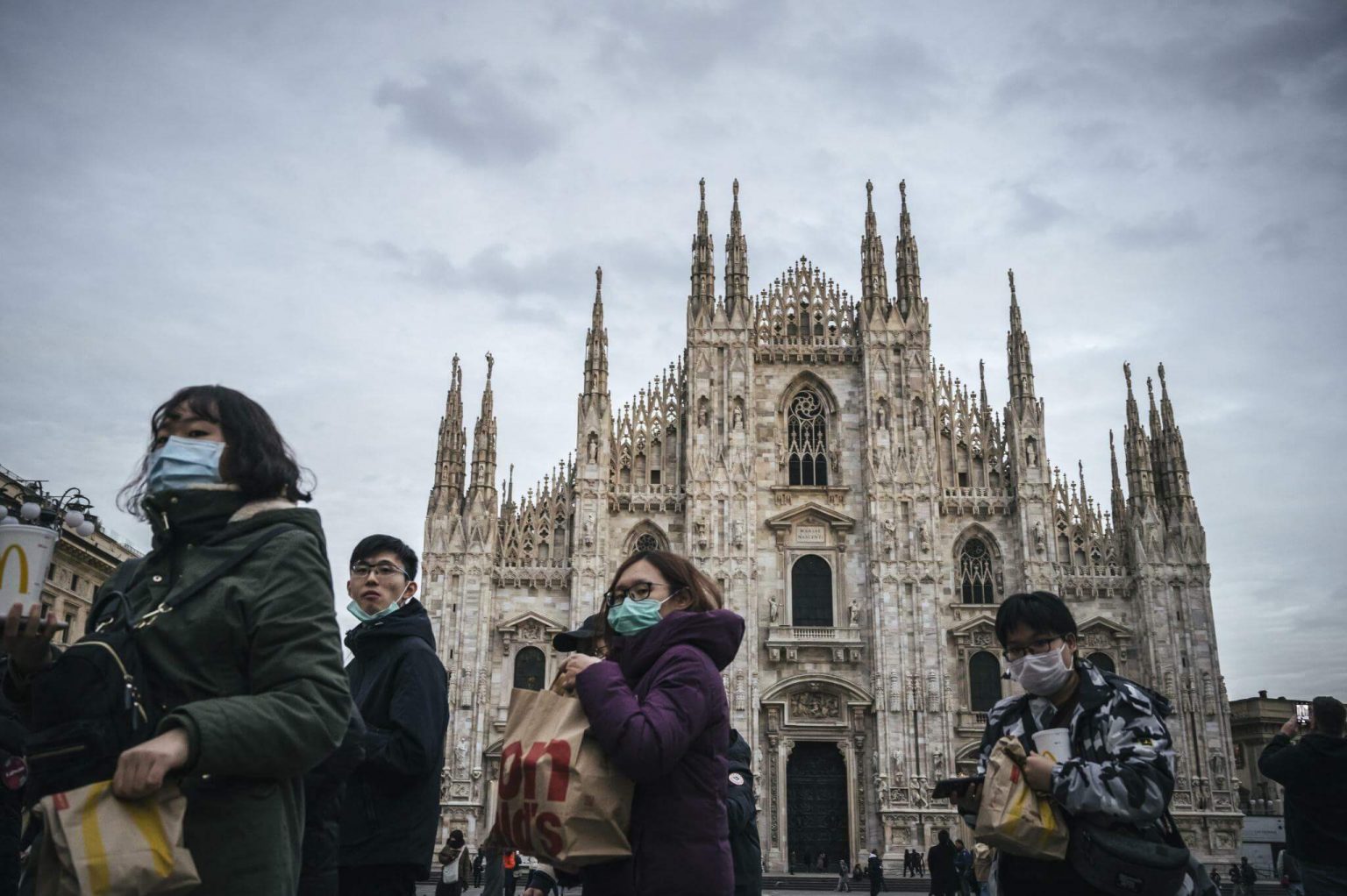
“Italy Will Not Close off to Tourism This Year”
- May 06,2020
- Schengen Visa Info
The president of the Italian National Tourist Board (ENIT) Giorgio Palmucci, says that Italy will not close off to tourists this year. Palmucci’s announcement came in after reports that Italy was going to shut down its borders to tourists, until 2021, SchengenVisaInfo.com reports. “Tourism in Italy will start again, with all precautions and in maximum safety, Dario Franceschini, (minister of cultural heritage, activities and tourism) did well to clarify that no border closure is expected. Those who love Italy must be allowed to return to enjoy it, in compliance with governmental and regional guidelines,” he pointed out. Italian National Tourist Board’s president clarified that he never said that Italian borders should remain closed to tourists, even though Italy is the third most affected country from the Coronavirus outbreak. “I have never spoken, nor ever thought, of closing the Italian borders to tourists for 2020. I am working on the exact opposite. I proposed at the meeting of Tourism Ministers of the European Union, a European uniformity of the safety rules with respect to the risk of contagion, allowing the free movement of tourists within the European Union,” Palmucci added. He said that during this delicate phase is essential to defend Italy also through correct communication. According to him, misinformation and fake news risk creating serious damage and “unjustified alarmism”. The head of ENIT said that its important to follow institutional sources and reliable news as much as possible, such as those provided by the Italian National Tourist Board, which provides an official bi-weekly update on the situation in Italy and the world. As Italy is starting to see signs of slowing in infections, there have been reopened three border crossing points between Italy and Canton Ticino, which have been closed since mid-March as part of efforts to halt the spread of Coronavirus outbreak (COVID-19). According to the announcement, from now on, crossing points at Ponte Cremenaga, Brusino and Ligornetto will be opened from Monday to Friday and will be passable at specific periods.
Read more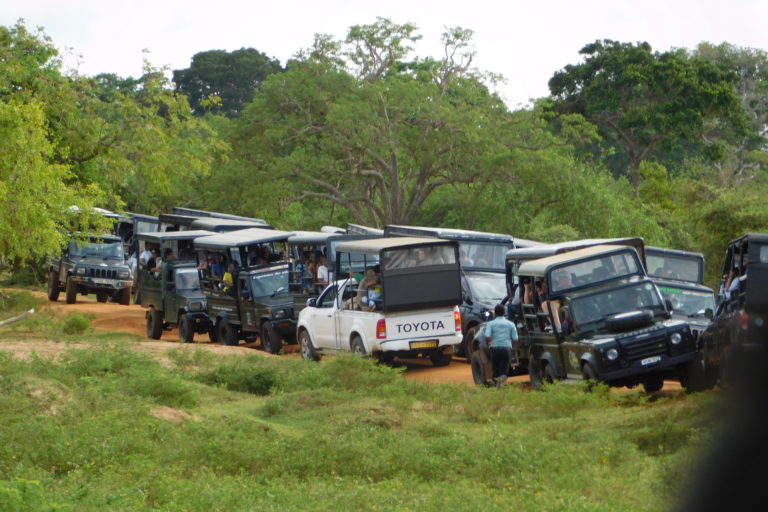
Wildlife tourism workers in limbo as Sri Lanka’s COVID-19 shutdown continues
- May 06,2020
- Mongabay
TISSAMAHARAMA, Sri Lanka – Yala National Park in southern Sri Lanka is the most visited wilderness area in the country. From the nearby town of Tissamaharama, would-be visitors leave before sunrise to reach the ticketing counter early. At a makeshift food outlet along this route, an elderly couple starts making crispy hoppers, a pancake-like snack, at 4 a.m. every day to serve these early birds. But since Sri Lanka closed its national parks in response to the COVID-19 pandemic in mid-March, the couple has lost their regular clientele, and their regular income. “There are a lot of people like this elderly couple who make a living by serving tourism that centers around Yala,” said H.G. Bandara, better known as Ali Banda, who works in the area as a safari jeep driver. “From curd sellers to those who repair safari jeeps, [people] are affected due to closure of the national park. I don’t have work these days, so I stay at home and plant some vegetables as it would at least help fulfill some of our daily needs.” More than 700 safari jeeps offer tours inside Yala National Park. Most are financed through leasing facilities, leaving the owners struggling to pay the installments due to loss of income. This is despite the Sri Lankan government giving a grace period for such payments, P.D. Keerthi, the president of Independent Jeep Drivers Association, told Mongabay. According to Keerthi, half of the jeep drivers depend on the income they make daily, and are now adversely impacted by the shutdown. “Some of them have begun working as day laborers to earn some money,” he said. The volunteer guides of the island’s Department of Wildlife Conservation of Sri Lanka (DWC) are another group hit by the closure of parks. Chaminda Ranamukage, secretary of the Voluntary Guide Union, said there are 354 such guides islandwide who earn a daily stipend of about 700 rupees ($3.70). They often get even more than that in tips from tourists. “Voluntary wildlife guides are given the facility to report to the closest regional DWC unit and be paid for days reporting to work. But there are no tourists these days, so the additional income is lost,” Ranamukage said. According to the Sri Lanka Tourism Development Authority, wildlife parks earned a combined revenue of rupees 2.14 billion ($11.3 million) in 2018, accounting for 17% of total tourism receipts. Some 47% of all foreign visitors to the island also visited a national park in 2018. While workers engaged directly in wildlifepark operations may qualify for some form of compensation due to the COVID-19 shutdown, those in informal jobs and dependent on park visitors may have to bear their losses on their own. A complete collapse The employees and owners of small guesthouses, bungalows and camping sites close to national parks are one such group affected by the current situation. Namal Kamalgoda operates a small luxury camping site near Wilpattu National Park. He said that currently he employs four fulltime workers at the site and continues to pay them their basic salaries with the intention of retaining them. “We used to source our needs such as vegetables and fruits locally and employ local people for all the other work ranging from laundering to cutting grass at the camping site,” he said. He has had to stop using their service, he said, as have other hotels in the area, “causing them loss of employment.” While he remains stuck at his Colombo home, Kamalgoda says he also fears for the condition of his campsite. “Our tents need regular maintenance, and in the absence of humans, wild rodents such as rats and squirrels try to damage the interior,” he said. Kamalgoda, a well-known figure in the environmental community, said the loss of livelihoods may turn some of the people affected toward illegal activities such as poaching as a means of survival. A group of wildlife lovers is donating relief supplies for those affected in Wilpattu. The supplies are expected to last two weeks for a family of four. “Wilpattu National Park has 45 day-waged families living in close proximity to the park, 55 jeep drivers and 21 volunteer guards,” said group member Raajiv Dyiya Wanigasekera. “The response was really great where wildlife lovers who regularly visit these parks came forward enlisting to provide necessary relief within few hours.” Like those working close to the terrestrial parks, other Sri Lankans engaged in whale- and dolphin-watching operations are also reeling from the impact of the COVID-19 shutdown. Prabanath Piyadigama in the southern coastal town of Mirissa sold his 35-seater boat and took out a loan in January to buy a new 70-seater cruiser specially designed for whale-watching. “As there are no tourists now, I must anchor the boat at the harbor and also employ a guard at night. When boats are not used, they also require servicing more often,” Piyadigama told Mongabay. “In a way, recovery for the daily wager may be easier than those of us who invest a lot of money in the industry.” Sri Lanka’s tourism industry had been on a steady rise since the end of 30-year-old civil war in 2009, but was hit hard by the Easter Sunday terrorist bombings in April 2019. “Even though foreign visitors dried out, we had local tourists to earn some money that helped us to keep our nose above the water,” Banda, the jeep driver at Yala National Park, told Mongabay. “But this pandemic is worse than bombs as it impacted everybody, so we fear that COVID-19 would drown us this time.” Sumith Pilapitiya, a former director-general of the Department of Wildlife, said jeep drivers should be allowed to find employment within the closed parks, undertaking different jobs for the time being, such as maintaining water sources, weeding out invasive plant species, and repairing safari tracks.
Read more