
Airbnb offers online travel experiences from hosts around the world
- Apr 10,2020
- nzhearld.nz.co
With communities around the world staying home to protect their own health and the health of others, the travel and tourism industry has suffered some of the most immediate impacts. Travellers can't leave home, and those employed in the industry can't work. A new initiative from Airbnb hopes to offer some help for both sides. "Human connection is at the core of what we do," says Catherine Powell, Head of Airbnb Experiences. "With so many people needing to stay indoors to protect their health, we want to provide an opportunity for our hosts to connect with our global community of guests in the only way possible right now, online." The company has today launched Airbnb Online Experiences, an extension of its popular Airbnb Experiences platform, which have been suspended at least until the end of April. It's hoped this temporary solution will help hosts continue to earn, while also allowing those stuck at home in lockdown to learn a new skill, safely connect with others, or pursue an interest. There are already more than 50 experiences available to be booked from hosts based in more than 30 countries, including meditation with Buddhist monks, cooking lessons from a Moroccan family, and workout routines from Olympic athletes. Thousands more are expected to come online in the coming months. All will be hosted on Zoom.
Read more
ADARA Announces Tourism Dashboard Offering for Destination Marketers
- Apr 10,2020
- finance.yahoo.com
ADARA, the world's travel data co-op and leading provider of customer intelligence, today announced a new data product for destinations. As part of the COVID-19 response, ADARA has created the ADARA Tourism Dashboard. The ADARA Tourism Dashboard will be integrated into the company's new COVID-19 Resource Center and will provide continuously updated destination trends and projections by country and by state. The new product helps destinations and tourism marketers track how searches and bookings are trending and offers projected changes in behavior in the future in order to accurately assess changes in demand and plan future visitation accurately. "Destinations everywhere are in a state of suspended animation as the coronavirus pandemic limits travel and tourism around the globe. The Tourism Dashboard is designed for destinations to have the real-time insights they need to assess changes in demand now and in the coming weeks, so that they act with full confidence," said Piyush Shrivastava, Director Product Management - Analytics at ADARA. "With this new offering, destinations can see accurate timing in the inflection between downward and upward trends by origin, aiding both accommodation and marketing plans." The moment travel restrictions ease, destinations will want to act, the Tourism Dashboard helps them understand the trends around the globe, so they can act according to the volume of the rebound and the origins that are rebounding first, helping them manage their messaging and demand planning as accurately and effectively as possible. Currently, data indicates major decreases in search and booking behavior to destinations affected by COVID-19 restrictions, with a rebound projected in the coming weeks. Bookings are down 89% year-over-year for worldwide travel to the US from all global originations for the week of March 30th. Demand for travel continues to decline week over week with searches down 37%. Looking at the demand for the future 20 weeks we are seeing an uptick from week 10 onwards indicating more confidence as the summer progresses.
Read more
FAITH Meets Commerce Ministry To Discuss Measures On Tourism Exports
- Apr 10,2020
- Traveltrendstoday.in
Industry association FAITH has asked for survival support from the Ministry of Commerce. The support includes rating the SEIS @ 10% and crediting it immediately on the basis of previous financial year, deemed export status, SEIS on gross forex earnings, zero rating of tourism exports & GST refunds to tourists, strategic focus on mice sector, EPCG on tourist vehicles and relaxing export obligations among others. Most of the tourism enterprises support their infrastructure (hard & soft) by managing different tourist seasons. As all global source markets are hit, it will be domestic business of India which will keep India tourism businesses running. Thus, FAITH also has requested the Ministry of Commerce to request Mr. Piyush Goyal, who is both, the Commerce and the Industries Minister to take up the request for the survival support for the whole tourism travel & hospitality industry with the PM. These include deferment of all statutory liabilities, setting up a COVID 19 Tourism relief fund for interest free 10 year working capital loan for salaries & establishment costs , increase of banking moratorium period to 12 months without any interest for or for direct benefit transfer to affected employees and a national legislative tourism task force of central and state governments. FAITH has also requested ESI funds to be used for compensating employees as ‘stay at home’ is a forced and mandatory curative medical need to fight the virus. They have also requested PF coverage of all tourism travel & hospitality employees as under the PM Rozgar Pradhan Yojana. FAITH has also shared examples from the US & UK, Thailand and Indonesia where salary support, taxes exemption and stimulation of domestic travel is being extended by governments for tourism, travel & hospitality.
Read more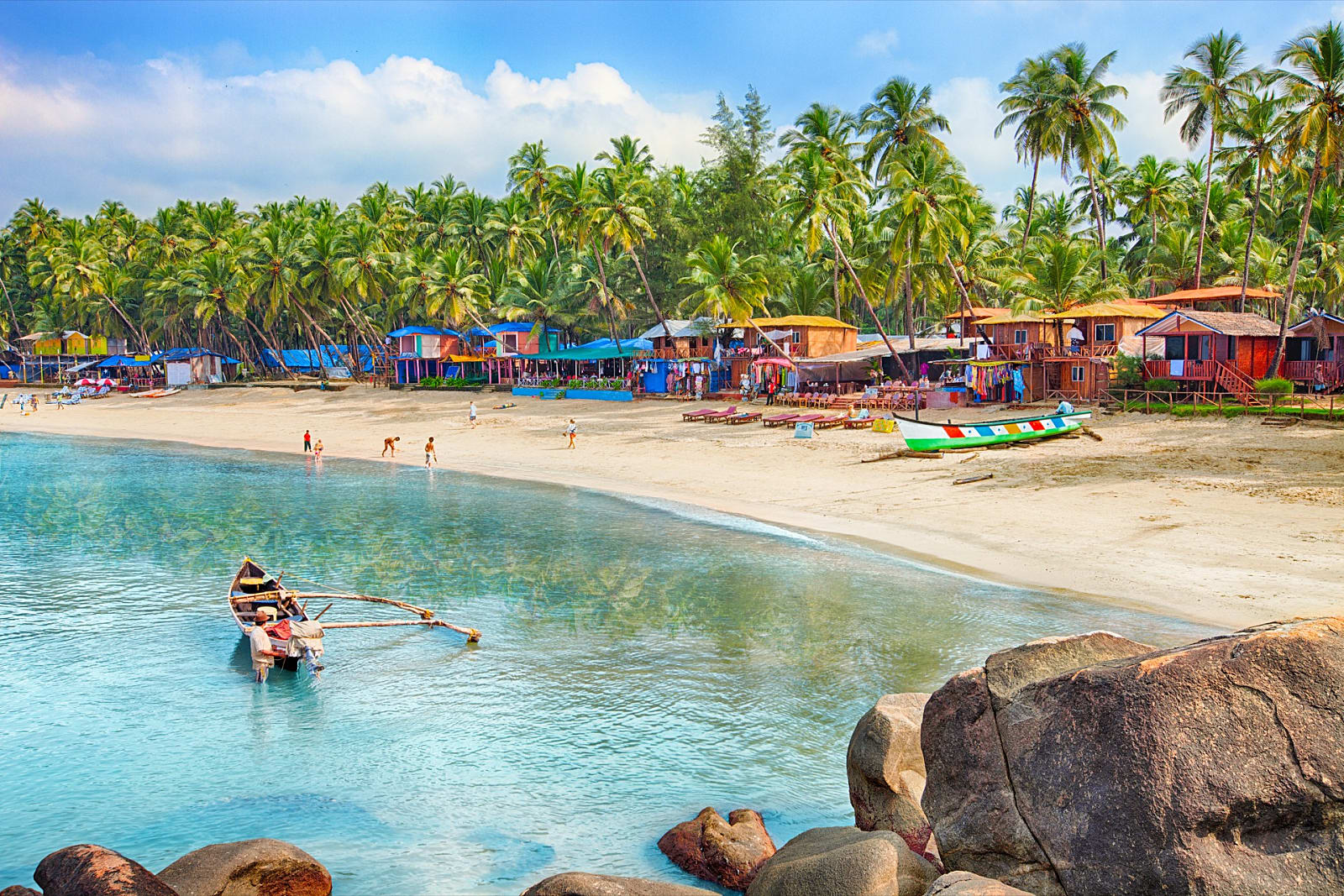
Goa’s tourism industry should be allowed to operate under these protocols, says minister
- Apr 09,2020
- Timestravel
The state Ports Minister Michael Lobo has announced that Goa tourism industry will become active again only after the lockdown is lifted and the pandemic Coronavirus is under complete control in India. The minister also said that mass assemblies should not be permitted in Goa for the upcoming months to check the transmission of COVID-19. Goa thrives primarily on the tourism business, and sees tourists from India and abroad, who visit the coastal state to explore and enjoy its beaches, spice plantations etc. According to the statement given by the minister, Goa’s government cannot open its state borders even after the lockdown period is over. It would only be after the government is assured about the strict abidance of health protocols, that the decision to resume tourism industry businesses in the state can be taken. News has it that when the government of Goa permits the tourism industry to restart operations, everyone entering the state via airport, railway or road will be allowed entry only after going through a mandatory health check-up. Private labs may be deployed to perform COVID-19 tests of the entrants, and only those who test negative will be allowed entry. Michael Lobo is a BJP MLA, in-charge of Calangute constituency in North Goa district. The above suggestions will be presented by him before Pramod Sawant, the Chief Minister of Goa, on April 14. Meanwhile, news has it that Goa’s ministers have been asking the government to extend the lockdown in the state till April 30.
Read more
Hotel Association of India writes to PM Modi; requests a 5-point revival plan for the industry
- Apr 09,2020
- Hotelier India
The Hotel Association of India (HAI) has written to India’s Prime Minister Narendra Modi, not just highlighting the impact of COVID-19 on the beleaguered Indian hospitality industry, but requesting for urgent relief measures. In a letter written to the prime minister on March 30, 2020, HAI states they are standing united in their fight against COVID-19 “and has deep appreciation and support for all the initiatives taken by the government”. All HAI member hotels across the vast swathe of the country are following the protocols as laid out by ICMR and the government, by ensuring complete sanitization and exclusive accommodation blocks in their hotels, with hygienic meals for all incoming domestic and foreign tourists and travellers, besides local state authorities. They have also taken the onus to provide “hygienic food packets for distribution to the poor and needy as required”. However, with no air or road traffic, empty hotels, and all restaurants and recreational facilities shut, “the likelihood of the revival in the short term is uncertain,” states the letter to the prime minister. “The hotel industry is a key pillar of both domestic and international tourism. Globally, it is considered as a major contributor to GDP, foreign exchange earnings, creation of jobs as well as the biggest multiplicator of jobs. In India especially, the hotel industry is a key driver of jobs especially through 90% of its inventory which is in the economy, budget or mid-market hotels. In the current scenario, almost 70% of the jobs are in danger directly within the hotel sector and several in other hotel related support sectors.” HAI’s letter to the PM requesting for help and a revival package can be viewed in the light of the above situation, given the number of people it employs and the impact any job loss would cause on India’s unemployment figures. In the letter HAI requests for 5-point relief measures, which “are practical and could help the industry to both survive and revive”. The Top 5 revival plan: • The deferment of all statutory liabilities, including EMIs, to a minimum of 12 months at the centre, state and municipal levels. • Subsidise employment for three months by the government, contributing 50% of the salary per employee. • Lease, license, rentals and excise fees, as well as property taxes should be suspended effective 11th March, till the end of COVID-19 period. • Enable GST collected to be used as working capital for six months. • Utility costs such as electricity to be charged on actuals versus the load. The sheer size and potential of the hospitality industry: To put things in perspective: Industry body Confederation of Indian Industry (CII) has stated that more than half of the tourism and hospitality industry can go sick with a possible loss of over 20 million jobs across both industries if the recovery in the industry stretches beyond October 2020. HAI itself, in its ‘Mitigating the Impact of COVID-19’ report, predicts about 5.7 million jobs just in the hospitality sector. The report states that India’s hospitality industry size in FY2018/19 was US$247bn, it contributed 9.2% to the GDP, had a CAGR of 8.5% from FY 10-18, employed 43 million people and reported forex earnings of US$29billion, the third-largest foreign exchange earner in the country. The report talks about the huge potential of the Indian travel and tourism industries. Stimulus packages and support could help unlock the huge population, predicted to grow to the tune of $250bn by 2030. It predicts $96bn is the direct spend on tourism such as F&B, accommodation, travel (air & road), recreation and shopping; the incremental potential is driven majorly by international tourism (assuming India attracts 2.5% of the world’s international tourists, up from 1.4% in FY19); and travel and tourism estimated to be 11% of GDP. The other significant figures about how the industry supports India’s vast middle class the most to bolster their request: 87% of hotels fall within the categories of unbranded and alternate accommodation, including guesthouses, homestays, etc, while the mid-market enjoys a 19% market share, and budget about 16%, with luxury just enjoying a 12% market share and Upper Upscale and Upscale about 29%. What other countries are doing: Across the world, the hospitality and travel and tourism industries are considered the backbone of the global economy, creating 10% of total global employment and 1 out of 5 of all new jobs in the last five years. They are expected to create 100mn new jobs in the next ten years and contribute 10.4% of the world GDP. They have the potential of becoming a $13 trillion industry by 2029. In a bid to drive home the need for help and support from the Indian government, HAI’s report makes some pertinent points: • International travel could be adversely impacted by up to 25% in 2020, which equals to almost three months of travel. • As per IATA, global airlines would need US$200bn emergency funds. • As per WTTC, the pandemic would lead to 50million jobs being slashes, a 14% reduction in travel and tourism jobs. • The industry could take almost 10 months to recover after the lockdown is withdrawn and the outbreak is over. • There is very little chance of revival of inbound travel, while corporate travel business could be delayed due to travel bans. Hotels, which are a capital intensive business, will face the biggest brunt with high-fixed costs such as license and lease fees, salaries, etc. • The impact of the bank, according to the HAI report: potential loss of 5.7 million jobs; drop in occupancy levels to 15-20%; potential revenue loss of US$10 billion; revenue pick-up down by 50%, and high risk of bankruptcy. The report also has references to the stimulus packages offered by other governments: While the US has pledged almost $2000 billion, China has pledged $182 billion, Germany $170 billion, Australia $117 billion, Canada $97 billion, Malaysia $57 billion, UK $50 billion, Singapore $34 billion, Singapore $25 billion, India $23 billion and Indonesia $2 billion. The report talks about how major central banks have front-loaded rate cuts to make capital cheaper: the US has brought the rates down from 1.75 to 0.25%, Bank of India from 0.75 to 0.10%, People Bank of China from 4.15 to 4.05, Reserve Bank of Australia from 0.75 to 0.25% and BoK from 1.25 to 0.75%. Also mentioned is RBI, which has dropped rates from 0.75 to 0.25%. Among the stimulus packages offered by the different countries, to the economy in particular, and in some cases to hotels in particular: • Canada has offered a Liquidity Program Options for hotels, offering deferred income tax payments for six-month payment mortgages, US$55bn in temporary tax relief, and working capital loans of up to US$2. Hotels also qualify for up to $100k, 10% wage subsidy program for small business employers, and emergency support program of up to $5 billion in support to workers who are not eligible for EI. • Scotland has offered 75% rates relief for retail, hospitality and leisure sectors (rateable value up to £69,000). • Brazil’s Ministry of Tourism has offered US$80 mn financial support and reduction of interest rate by 2%. • Malta has offered a moratorium on loan repayments to the hospitality industry. • The UK has promised a 12-month business rates holiday, funding of £25000 for businesses with property, with a rateable value of £51,000, statutory Sick Pay Relief Package for SMEs, and a Coronavirus Business Interruption Loan Scheme offering loans of up to £5 million for SMEs. • HongKong’s US$700mn package for HKG Tourism Board offers subsidies to travel agents and tourism promotion plans. • Singapore has waived license/leasehold fees for hotels for the rest of the year. Travel agents and tourist guides will not need to pay to renew their licenses/leases. It has set up a Tourism Recovery Action Task Force. The Skills Future Singapore and government will co-fund 75% of wages. • Malaysia’s US$ 0.8 million and Philippines US$118 mn economic tourism packages would help spur tourism. • Indonesia has announced a US$8bn stimulus package and US$725mn incentive for consumer spending and the country’s tourism sector. • Thailand’s tax measures include an extension of the filing of tax returns and reduction of the policy rate by 0.25%, supporting charter flights for high-spending tourists. • Australia has extended $1 bn support to sectors impacted worst, including tourism. It includes a waiver of fees for tourism operating in certain areas, targeted measures to promote domestic tourism and a US$430 mn aid, package comprising refunds and forward waivers, on fuel taxes and domestic air navigation. Shoring up against the economic shock: Given the threats that the hotel and travel industries are facing due to the COVID-19 pandemic and the huge potential the industries offer for growth and employment, HAI has stated, in the letter to the prime minister, that the “potential shock to the livelihood of millions working in our industry is enormous and we will need to think in terms of forming a task force together with the industry and the government to establish a path for normalcy in general and build confidence in this industry in particular”. HAI is an industry body, with Mr PRS Oberoi, Executive Chairman, EIH Ltd. as founder-chairman, Puneet Chhatwal, MD&CEO, IHCL as President, KB Kachru, Chairman Emeritus & Principal Advisor – South Asia of Radisson Hotel Group as the body’s VP and Fellow Member, and other hoteliers such as Patu Keswani, Chairman & MD, Lemon Tree Hotels as Treasurer and corporate member.
Read more
Deutsche Bank Suggests Travel with ‘Health Certificate’ Could Help Tourism
- Apr 09,2020
- Gtp
In efforts to keep the travel and tourism sector above water after the coronavirus pandemic subsides, Deutsche Bank suggests a number of actions to ensure a balance between health risks, economic damage control and travel. One proposed action sees vacationers presenting special medical or immunity certificates to the destinations they visit. According to the Deutsche Bank study, tourism makes a significant contribution GDP in many Mediterranean countries – in Italy and Spain above 13 percent in 2018 and in Greece at a 20.6 percent share. near to impossible and impacting all forms of business linked to tourism. Mostly impacted are traditional tourist destinations particularly in the Mediterranean, which stand to suffer major economic losses particularly as the progression of the pandemic is highly unclear. Measures destinations could take Bank analysts expect the main holiday season in the northern hemisphere to begin in about three months. At the current moment, tourism sector stakeholders and local administrations at tourist destinations can begin to take measures which may help holidaymakers travel at acceptable risks even during coronavirus times. One measure suggested by Deutsche Bank is for vacationers to present special medical or immunity certificates to confirm that they do not pose a renewed risk at the destinations. This option is currently being examined by a number of countries, with Austria, Thailand, and France already requiring these documents upon arrival. Other proposed measures by Deutsche Bank, include canceling mass events; stocking up on disinfectants and trying to ensure an adequate distance between guests; restricting access to certain tourist attractions; and capping the number of visitors by capacity regulation. Analysts go on to note that these steps may increase holidaymakers’ willingness to visit areas which are currently hit hard by the virus.
Read more