London crowned world's best city for 10th consecutive year

In the annual World's Best Cities rankings, London has regained its position as the world's best city, holding the top spot for ten years in a row. If reports are to go by, the British capital outperformed other big cities worldwide, including New York, Paris, and Tokyo, and further solidified its status as a cultural and economic powerhouse. The rankings, compiled by Resonance, a leading global advisor in real estate, tourism, and economic development, assess cities with populations exceeding one million. London has led the list from the start, continuously demonstrating its attraction and tenacity in the face of changing standards. Public perception was included in the rankings this year in collaboration with renowned pollster Ipsos. The study gained a fresh perspective by including input from over 22,000 individuals across 30 nations. Conventional metrics like nightlife, dining, shopping, cultural vibrancy, and the quality of the natural and architectural environments were also included in resonance. London's reputation was enhanced by the presence of esteemed universities, infrastructure, and connectivity through regional airports. Chris Fair, president and CEO of Resonance, highlighted the changing preferences for cities. "The pandemic has accelerated the trend of people looking for places that are not only affordable but also lovable," stated Fair. He acknowledged that there was an inherent Western bias in the rankings due to their reliance on websites such as TripAdvisor. Nonetheless, London's timeless appeal cannot be denied. The CEO of London & Partners, Laura Citron OBE, highlighted London's distinct advantages. London is a global leader thanks to its famous attractions, booming financial sector, and emerging tech industry. "Our iconic attractions, world-class financial sector, and fast-growing tech industry showcase our city's strength, but it's the diversity of our people and ideas that drives the innovation and opportunities shaping our future," she stated. Citron also added the emphasis in drawing Chinese visitors, highlighting how much they contribute to the city's economic and cultural life. The smooth fusion of London's rich history, contemporary conveniences, and excellent standard of living is what makes the city so alluring. Both locals and tourists are drawn to it because of its capacity to innovate and adapt while preserving its ancient appeal. New York, Paris, Tokyo, Singapore, Rome, Madrid, Barcelona, Berlin, and Sydney complete the top 10. London's ten-year dominance is evidence of its unparalleled attraction on a global scale, as cities around the world compete for recognition.

Read more

India's only train offering free rides for 75 years!

Ever sneaked on a train without a ticket? While many might have thought about it, boarding a train without a ticket in India usually leads to a hefty fine, or worse, imprisonment. However, for your information, there’s one exceptional train in the country where passengers can board without ever worrying about paying a fare— the Bhakra-Nangal train. This train, which has been in service for 75 years, travels 13 km between Nangal, Punjab, and Bhakra, Himachal Pradesh, passing over the picturesque Sutlej River and the Shivalik Hills. This train is unique because it has never collected a single cent from its passengers. Originally used to move labourers and supplies for the Bhakra-Nangal Dam's construction, the train has been in operation since 1948. The train was first propelled by steam engines, but in 1953 it received a major upgrade when American-imported diesel engines took their place. With wooden coaches made in Karachi, the train nevertheless manages to preserve a lot of its old appeal, bringing back memories of colonial-era railway travel. Despite their simplicity, the seats are an integral part of the experience, reflecting the lengthy history of the train. The Bhakra-Nangal train has remained free for several reasons. While the Bhakra Beas Management Board (BBMB) considered charging a fare due to the operational costs—approximately 18 to 20 litres of fuel are consumed every hour—the decision to keep it fare-free was made in honour of the train’s legacy. It represents more than just a means of transport; it is a living piece of history and tradition. Over 800 people use the train every day, and it remains a popular way for them to travel while enjoying the stunning beauty of the region. Visitors can witness the stunning Bhakra-Nangal Dam, one of India's tallest dams, and the picturesque Shivalik Hills as the train travels through six stations and three tunnels.The train, which is run by the Bhakra Beas Management Board rather than Indian Railways, provides a genuinely exceptional chance to enjoy the allure of vintage travel at no cost. Travelling on the Bhakra-Nangal train offers a window into India's rich industrial past in addition to a journey. The Bhakra-Nangal train is a must-try for everyone looking for a unique experience, whether they are locals or tourists.

Read more

1,800-year-old ‘Jesus is God’ inscription discovered, hailed as greatest find since Dead Sea Scrolls

Experts are buzzing with excitement over a groundbreaking discovery that could reshape our understanding of early Christianity. The Megiddo Mosaic, an 1,800-year-old inscription, is being hailed as the "greatest discovery since the Dead Sea Scrolls" and is believed to be the earliest physical proclamation of Jesus Christ as God. This remarkable find, which was uncovered beneath the floor of the Megiddo Prison in Israel in 2005, is now housed at the Museum of the Bible in Washington D.C., where it has attracted global attention. The mosaic, which dates back to 230 AD, was originally part of a private chapel and is considered the "earliest known house of prayer," according to Gil Lin, the head of the Megiddo Regional Council. The inscription in Greek reads, "The god-loving Akeptous has offered the table to God Jesus Christ as a memorial." This inscription is significant because it marks the first known instance of referring to Jesus as God in an archaeological context. This early declaration of Christ’s divinity predates Christianity’s official adoption as the state religion of the Roman Empire, offering new insights into the beliefs and practices of early Christians. The mosaic itself is a large, 581-square-foot floor decoration that was painstakingly excavated over four years by the Israel Antiquities Authority. In addition to the inscription, it has early Christian symbols like fish, which are well-known for being connected to Christ's miracle of feeding 5,000 people with two fish and loaves of bread in the Gospel of Luke. The discovery also clarifies how early Christians and Romans interacted. The name of Gaianus, a Roman officer who is said to have commissioned the artwork, is included on the mosaic. This, together with the mosaic's closeness to a Roman camp, implies that Romans and Christians lived and interacted more amicably than was previously thought. Carlos Campo, the CEO of the Museum of the Bible, has referred to the mosaic as "the greatest discovery since the Dead Sea Scrolls," while Alegre Savariego, the director of the exhibition, highlights that it offers revolutionary proof of early Christian activities. In addition to showing the devotion of early Christians, the mosaic also emphasises the importance of women in the early church because it bears the names of various women, including Akeptous, who donated the table. After its exhibition in Washington D.C. ends in 2025, the Megiddo Mosaic will return to Israel, where it will be displayed at the site where it was originally uncovered, continuing to captivate those interested in the origins of Christianity and its historical context.

Read more

Travel from Delhi to Golden Temple, Vaishno Devi via the newly opened expressway

There’s a new expressway for travellers and pilgrims planning a trip to the Golden Temple in Amritsar and Vaishno Devi in Jammu. The Delhi-Amritsar-Katra Expressway was inaugurated recently and is all set to revolutionise travel. The Haryana section of this expressway has just opened and offers an important link in the Delhi-Amritsar-Katra corridor. The corridor has reduced the travel time also significantly. Prime features: A significant feature of the expressway is its ability to cut down the travel time between Delhi and Katra. It’s a 135 km stretch connecting the Kundli-Manesar-Palwal (KMP) Expressway to the Punjab border in Kaithal district. It will make the journey faster and more convenient. The expressway runs through Haryana's Jhajjar district and has been designed with safety and aesthetics in mind, with robust railings along the roadside to prevent animals from straying onto the highway. A green median is also there to enhance the visual appeal. The expressway is access-controlled, meaning only authorised vehicles can enter, and is designed with four lanes for high-speed travel. Light vehicles can travel at speeds up to 120 km/h, while heavy vehicles are restricted to 80 km/h. This modern expressway also features an innovative toll collection system that eliminates traditional toll booths, streamlining the payment process and reducing delays. The road's design includes fountains for aesthetic appeal and for irrigation purposes along the central divider. The highway accommodates both light and heavy vehicles but prohibits motorcycles and auto-rickshaws. For convenience, clear signage is placed every 100 metres to ensure safety and to keep drivers informed of any restrictions or updates. Toll Rates for the KMP-Kaithal Section: Light Motor Vehicles (Cars, Jeeps): ₹240 for one-way, ₹360 for round trip. Light Commercial Vehicles: ₹385 one-way, ₹580 for return journey. Two-Axle Buses and Trucks: ₹805 one-way, ₹1,210 for a round trip. Three-Axle Commercial Vehicles: ₹880 one-way, ₹1,320 for both directions. Once fully operational, the Delhi-Katra Expressway, which spans approximately 669 km, is expected to make the journey from Delhi to Katra a breeze, reducing the travel time to about six hours. Travellers can now leave Delhi at 6 AM and reach Katra by noon.

Read more

Thailand Focuses on Accessibility and Incentive Experiences at IBTM 2024

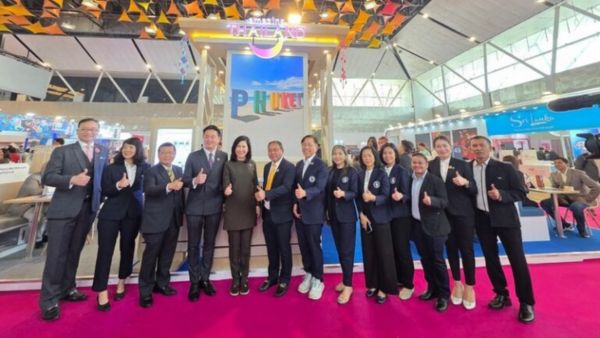
The Thailand Convention and Exhibition Bureau (TCEB), along with 25 exhibitors from Bangkok and Phuket, participated in IBTM 2024 in Barcelona from November 19 to 21. Promoting Thailand as a premier destination, TCEB showcased a variety of innovative developments, including improved accessibility, new event venues, sustainable practices, low-carbon MICE travel options, and engaging incentive experiences. These initiatives aim to transform events in Thailand into exceptional and eco-conscious experiences. At a press briefing, Mr. Chiruit Isarangkun Na Ayuthaya, President of the Thailand Convention and Exhibition Bureau (TCEB), highlighted key advancements aimed at enhancing accessibility. These include the opening of a third runway at Suvarnabhumi Airport to boost flight capacity, the adoption of biometric systems for smoother passenger processing, a visa-free policy for travelers from 93 countries and territories, and expedited immigration services for MICE groups at both Bangkok airports. He also unveiled high-profile developments, such as the reimagined Dusit Thani Hotel and the ambitious One Bangkok project. The latter features 190,000 square meters of retail space, five planned luxury hotels, and an event venue with a seating capacity of 6,000. On the sustainability front, Mr. Chiruit emphasized the collaboration between TCEB and the International Congress and Convention Association (ICCA) in creating the Bangkok Protocol for Sustainable Gastronomy. This initiative, inspired by real-world food management practices during the ICCA Congress 2023 in Bangkok, provides a framework for sustainable food practices at future ICCA and Thai events. To further promote sustainable tourism, he introduced the Carbon Neutral Tourism (CNT) Initiative, developed in partnership with eight public and private organizations. This initiative aims to offer eco-friendly travel experiences in Thailand for international visitors. Adding to this, Ms. Supanich Thiansing, Director of TCEB’s Meetings and Incentives (MI) Department, discussed the low-carbon MICE routes created by the Thai Ecotourism and Adventure Travel Association (TEATA) under the CNT initiative. These routes, available in MICE cities such as Bangkok, Chiang Mai, and Phuket, focus on ecological and cultural experiences, showcasing Thailand’s rich local heritage and sustainable practices. Ms. Supanich introduced a fresh concept called the “Mindful MI Experience” to the European market, featuring a range of engaging activities. These include Eco-Inspiration, which focuses on designing low-carbon MICE routes; Local Immersion, where participants explore and embrace local lifestyles through cultural and culinary journeys; and City Exploration, which involves hosting events across two cities within the same trip to provide diverse and enriching experiences. At the Thailand Pavilion, TCEB has curated three interactive activities for buyers and visitors to experience a taste of Thailand: “Time for Tea from Thailand”, “Where am I in Thailand?”, and “THAI NUMBER BINGO”. “I am confident that a series of new development in Thailand will deliver higher return on experience for overseas MICE travelers. We are aware of the evolving needs and requirements of business travel amidst the challenging economic landscape. For this reason, we are always working in partnership with stakeholders in crafting new and high-value choices for planners and travelers”, concluded Mr. Chiruit.

Read more

Mumbai’s New Transport Era Begins With Water Taxis And Electric Buses

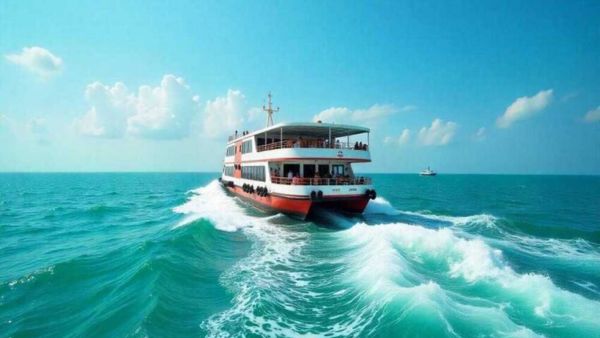
Mumbai is set for a transport revolution with water taxis, seaplanes, and electric buses, promising faster, cleaner, and more efficient travel options. Union Minister Nitin Gadkari recently revealed plans to launch water taxi services in Mumbai, marking a significant step in transforming the city’s transportation network. The water taxis are planned to link different areas of Mumbai with the Navi Mumbai International Airport, drastically reducing travel time to just 17 minutes. This initiative aims to address Mumbai’s chronic traffic congestion and combat air pollution by utilizing the city’s vast coastline and maritime routes. Infrastructure development is already underway, with jetties constructed near the airport to support the project. The first phase of this innovative service is set to commence by March 2025, coinciding with the anticipated opening of the Navi Mumbai International Airport. Beyond water taxis, amphibious seaplanes are also being planned to provide unique connectivity options. These aircraft will have the capability to land on water bodies, such as Thane’s lakes, eliminating the need for conventional runways. Additionally, the New Delhi-Mumbai Expressway is undergoing extensive upgrades to improve traffic flow and significantly reduce travel times between Mumbai and Pune. In line with the city’s focus on sustainable transport, Mumbai will also introduce state-of-the-art electric intercity buses. These high-speed buses, offering a premium flight-like experience, can accommodate up to 135 passengers and travel 40 kilometers on a rapid 30-second charge. As India’s financial hub, Mumbai attracts millions of travelers annually for business and leisure. Its Chhatrapati Shivaji Maharaj International Airport alone handles over 50 million passengers each year. The city boasts iconic attractions such as the Gateway of India, Marine Drive, Elephanta Caves, Juhu Beach, Sanjay Gandhi National Park, Siddhivinayak Temple, Haji Ali Dargah, Hanging Gardens, and Chowpatty, cementing its reputation as a must-visit spot for both tourists and residents.

Read more