Track construction in Gujarat progressing swiftly, rail welding begins on viaduct

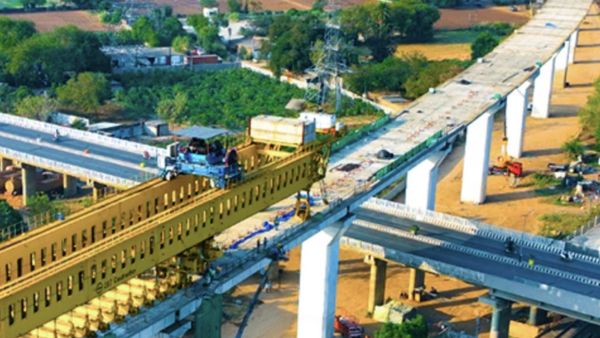
The National High Speed Rail Corporation Limited (NHSRCL) has announced that the track construction work for the Gujarat portion of the Mumbai-Ahmedabad Bullet Train project is progressing “swiftly”. In its latest update on the project, the NHSRCL said that the welding of rails on the viaduct in Gujarat has started. It added that the rails for the project have been procured from Japan, each measuring 25 metres. The rails are welded together by fusion welding (FBW) machines on the MAHSR viaduct. Together they will make 200 metres long rail panels. So far, 298 rails panels have been welded, constituting around 60 kilometres of rails. The NHSRCL emphasised that the rail welding process is crucial for maintaining passenger comfort, as well as the durability and safety of the track for high-speed travel. Before welding, the rail ends are grinded and undergo surface preparation to ensure a smooth, pristine surface for the critical joining of the rails. Each rail is inspected to ensure it meets the dimensional specifications required for welding.

Read more

Paris bags the prestigious title of 'World’s Most Attractive City' in 2024

And Paris did it again and how! The ‘City of Lights’ and the capital of France, Paris has been crowned with the prestigious title of the World’s Most Attractive City in 2024, according to the Top 100 City Destinations Index 2024 by Euromonitor International. However, this is not the first time that Paris has received this prestigious title but for the fourth consecutive year. The French capital overall appeals to travellers from across the globe. The rankings are determined through a thorough evaluation of 55 key metrics, spread across six essential pillars, and these are: Economic and Business Performance Tourism Performance Tourism InfrastructureTourism Policy and Attractiveness Health and Safety, and Sustainability The 2024 report also reveals some key trends in global urban tourism: Domination of European cities: European cities are maintaining their dominance, with six out of the top ten destinations located in Europe. Madrid secured the second spot, followed by Tokyo, Rome, and Milan rounding out the top five. Emerging destinations on the rise: There is a growing trend toward less-visited, third-tier cities as travelers seek more unique and personalized experiences. These emerging destinations are gaining popularity due to their charm, cultural uniqueness, and often more affordable offerings compared to established tourist hubs.

Read more

Noida International Airport hits major milestone with Airbus A320 test flight

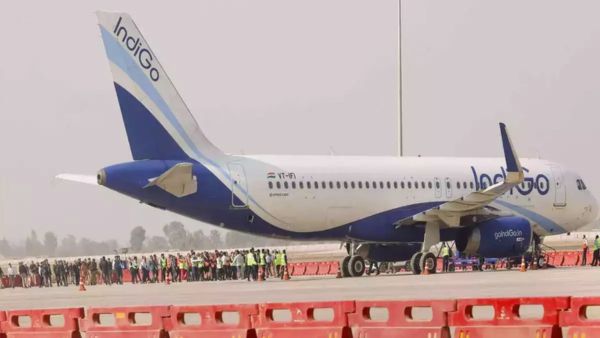
Noida International marked a crucial milestone recently when an Airbus A320 landed here from Delhi's Indira Gandhi International Airport. If reports are to go by, flight operations are scheduled to start from April 2025 from Noida Airport, which would transform connectivity for Greater Noida and beyond. Once operational, it will be the second major airport in the National Capital Region (NCR), after IGI Airport. Developed along the Yamuna Expressway, the airport spans 1,334 hectares and is being constructed in four phases at an estimated cost of INR 29,650 crore. With an INR 10,056 crore investment, the first phase will have a single runway and a terminal that can accommodate 12 million people a year. The airport is expected to handle 70 million passengers annually once it is fully constructed. The airport’s concessionaire, Yamuna International Airport Private Limited—a subsidiary of Zurich International Airport AG—has undertaken this ambitious project under a public-private partnership model with the Uttar Pradesh government. The validation flight conducted by IndiGo Airlines tested critical infrastructure, including navigational aids and air traffic control systems. Such tests are necessary for obtaining aerodrome certification from the Directorate General of Civil Aviation (DGCA). Christoph Schnellmann, CEO of Noida International Airport, described this achievement as “a proud moment,” emphasising the team’s meticulous planning and dedication to meeting the project’s timeline.

Read more

After Mumbai-Ahmedabad, Bullet Trains to Connect Bengaluru, Pune, and Chennai

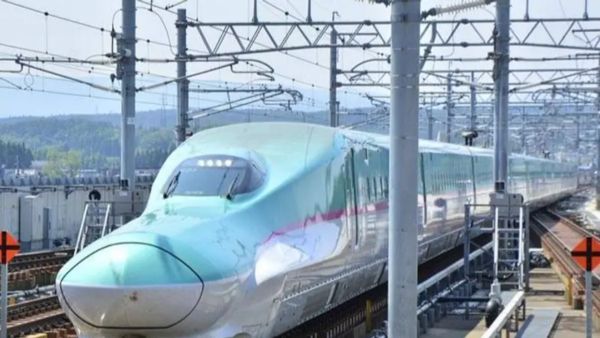
Mumbai-Ahmedabad Bullet Train: India is set to change the way people travel with the development of its first high-speed rail network. The Mumbai-Ahmedabad bullet train project is at the forefront, aiming to revolutionize travel and improve connections across the country. As construction moves forward, this project will not only provide faster trains but also bring greater convenience, speed, and sustainability to India's infrastructure. Mumbai-Ahmedabad Bullet Train The Mumbai-Ahmedabad High-Speed Rail (MAHSR) project is India's first-ever high-speed bullet train network, spanning a total distance of 508 kilometers. This flagship project aims to connect two of India’s most important cities—Mumbai in Maharashtra and Ahmedabadin Gujarat. The bullet train will offer travelers a faster, more efficient, and eco-friendly alternative to current modes of transport. Key Details of the Project Distance: 508 kilometers Speed: The bullet train will travel at speeds of up to 320 kilometers per hour. Travel Time: The project will reduce travel time between Mumbai and Ahmedabad from 7 hours to just 2-3 hours. Number of Stations: The train will pass through 12 stations, including major cities and towns like Thane, Virar, Boisar, Vapi, Surat, Vadodara, and Ahmedabad.

Read more

First look of the prototype of Vande Bharat Sleeper Train

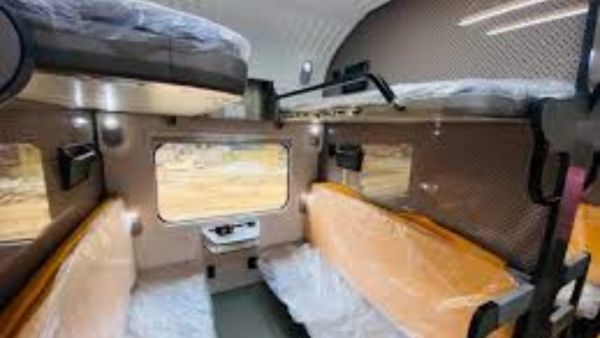
The Indian Railways has unveiled the first look of the prototype of Vande Bharat Sleeper Train. With this, the IR has achieved a major leap in railway modernization. The train is all set to undergo field trials soon. These trains promise to transform long-distance travel with cutting-edge technology. First Prototype: The first prototype of the Vande Bharat sleeper train is here and it looks absolutely amazing. The development is a prime milestone in India's efforts to modernise its railway system. Trials to begin soon: Railway Minister Ashwini Vaishnaw confirmed that the Vande Bharat sleeper train will undergo extensive field trials in the coming months. The successful completion of these trials is crucial for the train's rollout and eventual introduction to passengers. Perfect for long-distance travel: The sleeper trains are designed for long and medium-distance travel. Unlike the existing trains, the sleeper version will offer comfort and efficiency to the next level. Features: These trains come equipped with advanced technology. Some of the prime features include the Kavach automatic train protection system, which enhances safety by preventing collisions, and a regenerative braking mechanism that improves energy efficiency.

Read more

Bengaluru-Chennai Expressway: Karnataka Stretch Cuts Travel Time in Half

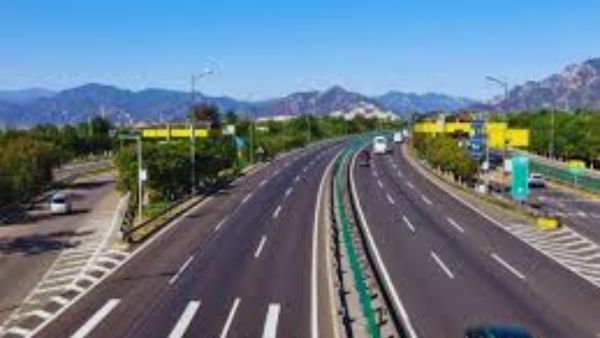
The newly opened Karnataka section of the Bengaluru-Chennai Expressway is set to revolutionize travel in Southern India. Stretching over 71 kilometers, this section is currently toll-free, allowing smoother and quicker travel between Karnataka and Tamil Nadu. While the work on other parts of the expressway is still ongoing, the project is a major step toward improving connectivity between these two major cities. Once fully completed by August 2025, the 260-kilometer expressway will reduce the travel time between Bengaluru and Chennai from six hours to just three, offering a significant boost to regional mobility. The expressway, which will eventually span across Karnataka, Andhra Pradesh, and Tamil Nadu, will feature a speed limit of 120 km/h, ensuring a fast and seamless journey. For commuters in Karnataka, key exit points include Malur, Bangarpet, and Bethamangala, making it easy to access the expressway from various points along the route. The Karnataka section of the expressway has been completed in three packages and here are the whole: Hoskote to Malur (27.1 kilometers) Malur to Bangarpet (27.1 kilometers) Bangarpet to Bethamangala (17.5 kilometers) Once the full expressway is operational, the travel time between Bengaluru and Chennai will be cut in half, offering travelers a faster and more efficient route. The ongoing construction of the remaining sections in Andhra Pradesh and Tamil Nadu is expected to be completed by mid-2025, paving the way for the full realization of this crucial infrastructure project.

Read more