

UP opens eco-tourism in core tiger reserve zones, defying NTCA directive.
- Nov 09,2024
- Times of India
The Uttar Pradesh (UP) Government has recently launched new tourism initiatives in the core zones of its tiger reserves, despite directives from the National Tiger Conservation Authority (NTCA) to remove tourism structures from these protected areas. Established to ensure minimal human interference, core zones within tiger reserves are intended to serve as safe habitats for tigers and are generally off-limits to tourism activities, as per a 2019 NTCA order, which followed a Supreme Court order from 2012, prohibiting any new permanent tourism facilities in these core areas. On the other hand, UP's strategy involves creating ecotourism infrastructure and boating amenities inside these protected areas. For example, in an effort to draw tourists, a boating site has been established in the central area of Pilibhit Tiger Reserve, and a bamboo cabin has been built on Chukha Beach beside the Sharda River. Reports add that the state has also set aside INR 38 lakh to construct a lawn and parking spots at Ranipur Tiger Reserve as part of its efforts to enhance visitor amenities. The jungle safari services at Dudhwa Tiger Reserve have also been revived, and plans are underway to expand ecotourism in additional wildlife sanctuaries in Uttar Pradesh. These initiatives come just after the UP Government officially opened the eco-tourism season for 2024-25 across its tiger reserves, including Pilibhit, Amangarh, and Dudhwa, on November 6—nine days earlier than usual.
Read more
US Airport Introduces Llama Therapy to Ease Passenger Anxiety
- Nov 08,2024
- NDTV
Portland International Airport is taking a unique approach to passenger comfort. Their newest employees aren't humans, but rather a herd of therapy llamas! These fluffy friends, provided by Mountain Peaks Therapy Llamas and Alpacas, wander the airport concourse, offering comfort and joy to stressed travellers. The llamas, dressed in adorable "I heart PDX" neckerchiefs, are part of a larger effort to create a more relaxing airport experience, alongside other calming features like natural light and live trees. These llamas are part of a non-profit run by Lori Gregory and Shannon Joy, a mother-daughter team that provides therapeutic visits with their five llamas and six alpacas. The duo brings their llamas to Portland's airport to offer comfort to anxious travellers, providing pets, head scratches, and occasional cuddles for those needing a bit of calm before their flights. Dressed in "I heart PDX" neckerchiefs, cosy coats, and pompom headbands, these "fluffy professionals" wander through the airport terminal, offering a smile to everyone they meet. Alongside therapy dogs, the llamas are part of the airport's initiative "just to make you smile" and make air travel less stressful. Therapy animals differ from service animals in that they don't perform specific tasks but provide a calming presence to those experiencing stress or anxiety. According to UMass Chan Medical School, these animals bring a sense of comfort that can alleviate some symptoms of anxiety and mental health challenges.
Read more
Indian Airlines Gain Share in International Travel
- Nov 08,2024
- Skift
Indian airlines have been upgrading their fleets and efforts to cater to the growing demand for inbound and outbound international travel. Indian airlines accounted for 45.69% of the international traffic in india in the April-june quarter this year. That's up from close to 44% last year and just 34.79% pre-pandemic. A total of over 17.6 million passengers traveled to and from India during the quarter. Of this, domestic airlines carried over 8 million travelers international traffic in india during the quarter increased 13.5% compared to pre-pandemic lajeis Indian Airlines and International Travel, indian airlines have been upgrading their fients and efforts to terto the arena demand for inbound and outbound nternational Travel Air India and ind Go have laced farge order to inches in their fleets
Read more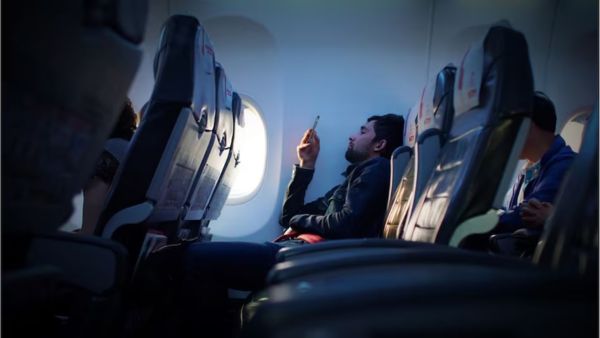
Government Sets New Rule for In-Flight Wi-Fi on Indian Domestic Airlines
- Nov 08,2024
- Gadgets360
The Indian Department of Telecommunications (DoT) announced a new rule for in-flight and maritime Wi-Fi connectivity recently. With the new rules, the government department has specified the criteria under which travellers will be allowed to access Internet connectivity. It is believed that with this rule change, Indian airlines such as Air India, Indigo, and SpiceJet might finally be able to offer the service to passengers travelling domestically. Notably, currently, only Vistara offers in-flight Wi-Fi to travellers on international flights. DoT India issued the rule change in an e-Gazette published on October 28. The rule amends the Flight and Maritime Connectivity Rules, 2018. Under rule 9, sub-rule (2) was changed to include, “Notwithstanding the minimum height in Indian airspace referred to in sub-rule (1), internet services through Wi-Fi in aircraft shall be made available when electronic devices are permitted to be used in the aircraft.” Notably, the sub-rule (1) stated that aircraft in Indian airspace can offer passengers access to the Internet via Wi-Fi at a minimum altitude of 3,000 metres. This rule was added to avoid interference of in-flight connectivity with ground-based mobile and broadband connectivity. It appears that the previous rule did not encourage airlines and network providers enough to provide the service to travellers. This could be due to the edge cases where despite attaining the prerequisite altitude, the in-flight network could still cause an issue for ground-based systems. The DoT India highlighted that the new rule change shall be called the Flight and Maritime Connectivity (Amendment) Rules, 2024. Posting about the rule change, the official handle of the department on X (formerly known as Twitter) posted, “The Flight and Maritime Connectivity Rules have been amended to make internet connectivity available on flights via Wi-Fi.”
Read more
Vande Metro Completes First Trial Run from Ahmedabad to Mumbai at 130 km/hr
- Nov 08,2024
- Financial Express
The first successful trial run of the Vande Metro Train, part of the high-speed rail project between Ahmedabad and Mumbai, was completed earlier this week. According to a report in The Indian Express, the train, traveling at a speed of 130 km/h, arrived in Mumbai on Monday afternoon after passing through Surat. Inspired by the Vande Bharat train, the Vande Metro is designed for faster intercity travel. The trial run was overseen by a team from the Railway Research Design and Standards Organisation (RDSO), who evaluated key performance factors, including vibration and shock levels. The Vande Metro features 12 coaches with a total of 1,150 ergonomically designed seats and is equipped with advanced technologies like fully air-conditioned coaches, CCTV surveillance, a talk-back system, and passenger information display boards, according to sources in Western Railway. One of the standout features of the Vande Metro is its ability to accelerate and decelerate quickly, enabling faster travel between mid-distance cities. With a maximum speed of 130 km/h, it outpaces the typical electric multiple unit (MEMU) trains.
Read more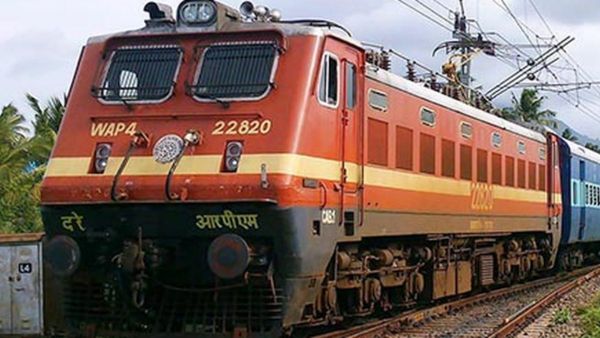
Railways to ply over 500 special trains to accommodate festival return rush
- Nov 08,2024
- The Hindu
The Railway Board said that the rush for Chhath Puja is set to begin after sunrise on November 8 and that it has arranged for 164 special trains to accommodate the high passenger flow on that day The Railway Board on Wednesday (November 6, 2024) said it has arranged for more than 500 special trains to handle the return rush of travellers away in their home towns, beginning November 8 with the ending of Chhath Puja. "Special trains have been announced to accommodate returning passengers, with additional trains planned from the Samastipur, Danapur divisions and other divisions as needed to meet local demand," the Board said in a press statement. It said that the rush for Chhath Puja is set to begin after sunrise on November 8 and that it has arranged for 164 special trains to accommodate the high passenger flow on that day. "Following this, Indian Railways has planned 160 special trains for November 9, 161 for November 10, and 155 for November 11, ensuring sufficient capacity to manage the expected surge in travelers during the festive period," it added. According to the Railway Board, on November 4, Indian Railways carried a record number of passengers in a single-day, transporting 120.72 lakh people. "This included 19.43 lakh reserved passengers and 101.29 lakh unreserved non-suburban passengers - the number exceeding the combined populations of Australia and New Zealand. On the same day, suburban traffic reached a record 180 lakh passengers, making it the highest single-day passenger figure of the year," the Board said. It also claimed to achieve a remarkable feat by transporting 65 lakh passengers on 4,521 special trains in last 36 days. "These additional services have played a crucial role in facilitating smooth travel during the ongoing Durga Puja, Diwali and Chhath Puja celebrations," it said. According to the Board, to meet the increased travel demand during the festival period from October 1 to November 30, Indian Railways announced a total of 7,724 special trains, marking a 73% increase compared to the last year's 4,429. "This substantial expansion aims to ensure seamless travel during the peak festival season. Indian Railways has operated an average of 175 special trains per day over the past four days to carry passengers to their destinations for Chhath Puja," the Board said. Published - November 07, 2024 11:55 am IST Related Topics railway / indian railways / festivals Most Popular Kerala firecracker accident: Cabinet sanctions ₹4 lakh each to victims Kerala firecracker accident: Cabinet sanctions ₹4 lakh each to victims Donald Trump and the art of fostering ‘false consciousness’ Donald Trump and the art of fostering ‘false consciousness’ Special train from Yesvantpur to Muzaffarpur for Chhath puja Special train from Yesvantpur to Muzaffarpur for Chhath puja Heavy post-festival rush in railway stations, bus stands in southern districts Heavy post-festival rush in railway stations, bus stands in southern districts Cuba left reeling after Category 3 hurricane ravages island and knocks out power grid Cuba left reeling after Category 3 hurricane ravages island and knocks out power grid Thousands gather for Chhath Puja at Bathukamma ghats Thousands gather for Chhath Puja at Bathukamma ghats Hindu temple in Canada’s Brampton suspends priest for spreading ‘violent rhetoric’ ‘Shocking’: Ananya Panday, Sonam Kapoor, Manish Malhotra, mourn demise of fashion designer Rohit Bal SMIFS Limited | Sponsored by Taboola Become an Authorised Partner - Franchise Opportunities Gonda train accident: Station Master failed to act on time due to lack of training, says report Shah Rukh Khan meets fan from Jharkhand who waited for him outside Mannat for 95 days Skip AdDiscoverRead More Personalized Modular Kitchen Interiors built to your budget. HomeLane | Sponsored Play War Thunder now for free War Thunder | Sponsored This Rs.1999 Smartwatch surprises the whole country! CrossFit | Sponsored Get stunning interior solutions for your home with HomeLane. HomeLane | Sponsored Join new Free to Play WWII MMO War Thunder War Thunder | Sponsored Top traders did $8M! Can you make it this year? iFOREX | Sponsored Every Indian Should Get This Incredible Rs.1999 Smartwatch CrossFit | Sponsored Stock Broking Franchise - High Revenue Sharing Model SMIFS Limited | Sponsored Top Public Speaking Course for Children Planet Spark | Sponsored Shooter Action MMO Crossout | Sponsored Secure Your Child’s Future with Strong English Fluency Planet Spark | Sponsored Crossout 2.0: Supercharged Crossout | Sponsored This Man Revealing His Strategy To Earn 3K-5K Daily Income thefutureuniversity | Sponsored Deepika Padukone, Ranveer Singh name their daughter Dua, share first glimpse The Hindu ‘Ghaati’ reveals first look on Anushka Shetty’s birthday The Hindu Unseen 2022 Unsold Car Prices in Haryana (Limited Time) Unsold cars | search ads | Sponsored Wife won't let go of dog, husband finds out why and calls police - watch! Happy in Shape | Sponsored Kheri Khurd: 2022 Car Clearance Event (See Offers) Unsold Cars Clearance | Search Ads | Sponsored 90% Stock Trader's Not Know the "Power of Commodity Trading" TradeWise | Sponsored Unmissable Deal On Premium Watches Greatwave | Sponsored MOST POPULAR U.S. Elections 2024 results: ‘We concede the election but not the fight,’ says Kamala Harris The Hindu MOST POPULAR These women auto drivers from Chennai took IIM by storm The Hindu Stop Worrying About Indian Parents. Highly Affordable 1 Crore Health Insurance At Just ₹390/Month Best Health Insurance! | Sponsored A cruise ship encounters pirates: look what the captain does! Happy in Shape | Sponsored New Small Electric Car For Seniors. Prices Might Surprise You. Small Electric Car | Search Ads | Sponsored Top News Today Premium What Trump 2.0 means for India and South Asia Suhasini Haidar Suhasini Haidar Trump’s vow to ‘liberate’ U.S. resonated with voters Varghese K. George Varghese K George A win that will affect the global economy Kunal Shankar Maharashtra Maharashtra police register case against online marketplaces for selling apparel idiolising Bishnoi, Dawood Kerala Political row erupts as food kits with images of Congress leaders seized in Wayanad ahead of bypoll Premium In America, surviving the messiah India Senior Union Minister calling up business leaders to say good things about PM Modi, says Rahul Congress leader asserts that the government is doing this after his newspaper article on match-fixing monopoly groups was published The Hindu Bureau Sharing a video statement on his X handle on November 7, 2024, Congress leader Rahul Gandhi said: “I am pro-Jobs, pro-Business, pro-Innovation, pro-Competition. I am anti-monopoly. Our economy will thrive when there is free and fair space for all businesses.” Photo: X/@RahulGandhi Delhi HC permits man to buy ‘The Satanic Verses’ after Centre fails to produce notification banning the book Salman Rushdie holds a copy of the newly-published paperback version of his controversial novel “The Satatanic Verses”, during a speech in Arlington, Virginia on March 24, 1992. India was one of the first countries to ban the book’s import and sale, citing concerns over its content being offensive to the Muslim community. Photo: AP/PTI India says Canada blocked Australian media outlet for reporting Jaishankar's presser PTI R.G. Kar rape and murder | SC refuses to transfer case out of Bengal Latest News 25 mins ago - India Cancelling consular camps in areas where Canada failed to provide security: MEA 26 mins ago - Manipur Manipur CM reminds Mizoram counterpart of State’s integrity 54 mins ago - Maharashtra Assembly Shiv Sena (UBT)’s manifesto promises to scrap reservation cap, Adani’s Dharavi project 1 hour ago - Odisha Naveen Patnaik targets Mohan Majhi’s government over mango kernel death case 1 hour ago - India Delhi HC permits man to buy The Satanic Verses after Centre fails to produce notification banning the book 1 hour ago - Kolkata Not in favour of genetically modified tea, says Asia Tea Alliance 1 hour ago - India Cannot change rules of the game once recruitment to public services commences: SC 2 hours ago - Assam Hyderabad-based environmentalist to get first Jadav Payeng International Award READ MORE STORIES Return to frontpage Google PlayApple Store The Hindu About Us Code of Editorial Values News Archive Sitemap Print Subscription Digital Subscription Subscribe to Newsletters Rss Feeds Readers Editor-Terms of Reference Authors & Contributors Frame Front page Contact us Contact Us Social Media Advertise With Us Group News Sites Business Line BL on Campus Sportstar Frontline இந்து தமிழ் திசை The Hindu Centre Young World Club The Hindu ePaper Business Line ePaper Crossword + Free Games Other Products RoofandFloor STEP Images Classifieds - Print Bookstore & Special Publications Popular Sections Elections Israeli–Palestinian conflict 2023 Latest News National News International News Videos Life & Style Food Podcast Showcase Opinion Editorial Columns Comment Cartoon Letters Interview Lead Business Agri-Business Industry Economy Markets Budget Sport Cricket Football Hockey Tennis Athletics Motorsport Races Other Sports Sci-Tech Science Technology Health Agriculture Environment Gadgets Internet States Andhra Pradesh Karnataka Kerala Tamil Nadu Telangana Cities Bengaluru Chennai Coimbatore Delhi Hyderabad Kochi Kolkata Kozhikode Madurai Mangaluru Mumbai Puducherry Thiruvananthapuram Tiruchirapalli Vijayawada Visakhapatnam Trending on The Hindu News Top News: Attack on Hindu temple in Canada US election results 2024 LIVE Private property verdict, Supreme court news Chandrachud, CJI news Kerala’s Neeleswaram temple fireworks accident Morning digest Nov 4 MiG-29, Agra news Sensex, Nifty and Stock market news today Kapil Dev meets AP CM Chandrababu Naidu Trending on Group sites Stock Market Live Updates Stocks to buy today Domestic cricket Mogun Bagan Paralympics 2024 Gold Rate Today Silver Rate Today Sexual Harassment in Telugu Film Industry Mango: The Michael Jackson of Fruits Frontline Current Issue Terms of Use Privacy Policy Copyright© 2024, THG PUBLISHING PVT LTD. or its affiliated companies. All rights reserved. BACK TO TOPBack to Top
Read more