Sri Lanka tourism gets a boost with 200,000 Indian visitors in 2024
- Jul 13,2024
- Times Of India
In early 2024, Sri Lanka's tourism sector witnessed a significant influx of Indian tourists, with nearly 200,000 visitors from India. Sri Lanka Tourism has intensified efforts targeting the Indian market, with various strategies to showcase the country's diverse attractions. An important factor of this campaign was a networking event held aboard a cruise on the Ganges in Kolkata on July 10, 2024. Attended by Kolkata's travel agents, industry leaders, and a delegation from Sri Lanka including the Sri Lanka Convention Bureau (SLCB) and the Sri Lanka Tourism Promotion Bureau (SLTPB), the event aimed to foster closer ties and promote Sri Lanka's tourism offerings. Representatives from 30 Destination Management Companies, leading hotels, resorts, homestays, tour operators, and service providers from Sri Lanka participated, highlighting the breadth and quality of tourism services available. Earlier in June 2024, Sri Lanka organized a series of B2B roadshows and networking events across Indore, Vadodara, and Surat, targeting potential travelers from Madhya Pradesh and Gujarat. These initiatives positioned Sri Lanka as a year-round destination, emphasizing its diverse attractions and the robust growth of its tourism sector. Harin Fernando, Minister of Tourism, Lands, Sports, and Youth Affairs, expressed gratitude for India's ongoing support in advancing Sri Lanka's tourism sector. Highlighting Sri Lanka's economic progress, he noted tourism revenues exceeding USD 2 billion in 2023 and surpassing USD 1.25 billion in the first four months of 2024. The Minister set ambitious goals, aiming to attract 2.5 million tourists in 2024, buoyed by the extension of visa-free entry for Indian travellers. Chalaka D Gajabahu, Chairman of the Sri Lanka Tourism Promotion Bureau, emphasized tourism's pivotal role as the island's third-largest revenue stream. He highlighted the sector's evolution beyond beach-centric tourism to encompass sports, culture, spirituality, and history. Recent years have seen Sri Lanka significantly enhance its presence in India through strategic B2B engagements and participation in global travel trade shows, aiming to consolidate its appeal in key markets worldwide. The emphasis on MICE (Meetings, Incentives, Conferences, and Exhibitions) tourism also garnered attention, with Thisum Jayasuriya, Chairman of the Sri Lanka Convention Bureau, noting India's importance as a primary target market. The MICE sector's share of total tourist arrivals is expected to rise from 9.5% in 2023 to 12% in 2024, with revenue targets set at USD 550 million for 2024 and USD 1.36 billion by 2026. As Sri Lanka continues to expand its tourism offerings and strengthen its appeal across diverse segments, travelers are encouraged to explore tailored Sri Lanka Tour Packages, such as the enriching 10 Days Sri Lanka Culture Tour Itinerary or the comprehensive 12 Days Sri Lanka Experience Itinerary, ensuring an unforgettable journey through this captivating island nation.
Read more
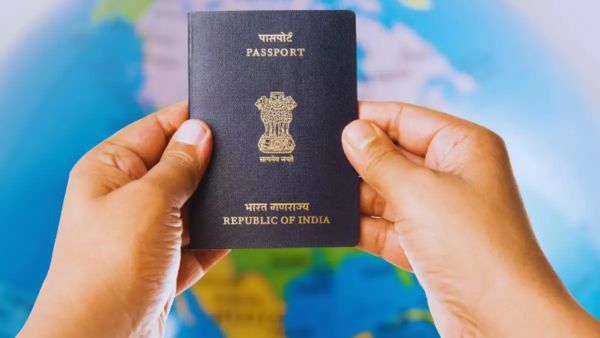
Indonesia Working Towards Visa-Free Entry For India, China And More
- Jul 12,2024
- Outlook
Indonesia Working Towards Visa-Free Entry For Indians. Indonesia is expected to join the list of visa-free destinations for Indians very soon. As per reports, the Southeast Asian country has stated that the work towards extending its visa exemption project is on track. Under this project, tourists from 20 countries, including India, will be allowed to enter Indonesia without a visa. India, China, Australia And More To Get Visa-Free Entry As per an announcement made by Tourism Minister Sandiaga Uno, the project to extend the visa exemption policy is on track. The minister added that the policy is expected to be finalised before the elections in October 2024. Which Countries Will Be Eligible? As per reports, a total of 20 countries will be cleared for visa-free entry into Indonesia. These are - Australia China (PRC) India South Korea USA UK France Germany Qatar United Arab Emirates Saudi Arabia The Netherlands Japan Russia Taiwan New Zealand Italy Spain Along with these nations, two countries from the Middle East have also been recommended for this exemption. As of now, tourists from ASEAN countries such as Brunei Darussalam, Cambodia, Laos PDR, Malaysia, Myanmar, Philippines, Singapore, Thailand and Vietnam are allowed visa-free entry to Indonesia. The tourism minister has added that this visa exemption policy aims to boost local economy by allowing more visitors. The government is looking for more "quality tourist arrivals, people who stay longer and spend more on the local economy". Presently, Indian tourists are allowed visa-free entry to a total of 61 countries. These include - Thailand, Bhutan, Nepal, Angola, Vietnam, Myanmar, the Caribbean Islands and more.
Read more
KSRTC to launch new long-distance air-conditioned sleeper bus services from Bengaluru to Ahmedabad, Puri: Report
- Jul 12,2024
- Hindustan Times
The Karnataka State Road Transport Corporation (KSRTC) is set to launch its longest daily bus services to date, connecting Bengaluru with cities like Ahmedabad and Puri, which are both around 1,500 kilometres away from the Karnataka capital, the Deccan Herald reported. Currently, KSRTC's longest bus routes are the Bengaluru-Mumbai and Bengaluru-Shirdi services, both covering around 1,000 kilometres. KSRTC Managing Director V. Anbukumar spoke to the publication and said, “There is strong demand for bus services from Bengaluru to far-off places. The KSRTC has the largest fleet of Volvo buses and has a proven track record. We want to explore new routes.” While several private operators already provide bus services from Bengaluru to distant destinations like Ahmedabad, Indore, Bhopal, Jaipur, Jaitaran, Jodhpur, and Jaisalmer, there is currently no direct bus service from Bengaluru to Puri, a renowned pilgrimage destination in Odisha, the report said. To launch these new services, KSRTC must secure approvals from the Road Transport Corporations (RTCs) of Gujarat, Maharashtra, Odisha, and Andhra Pradesh, the states through which the routes will pass. “Talks have been initiated with the RTCs and are at an advanced stage. We are hopeful for a positive outcome soon,” Anbukumar added. Typically, RTCs are open to the introduction of new services as long as they are limited in scope. Each route will operate with two buses — one for the outbound journey and one for the return trip. These air-conditioned sleeper buses will not include toilet facilities, and the fare is expected to be around ₹2,500, the publication further stated. The estimated travel time for each journey will be between 27 and 28 hours.
Read more
Spain's sacred Camino de Santiago pilgrimage draws both devout, secular tourists
- Jul 12,2024
- Hindustan Times
In her early 30s, Rachael Sanborn found herself in a bad relationship and dreaming of an escape to the Camino de Santiago in Spain, a pilgrimage her father had undertaken that had profoundly changed his life. Sanborn, a rebel and adventurer by nature (she dropped out of college to meditate in India for a year), quit her job, gave up health insurance and pooled her savings to take two months to walk the Camino. By the third day of her walk, she promised herself she’d return every year. Nine months later, she was back, guiding her first group of eight pilgrims. A decade later, now 45 and residing in the Bay Area, she leads grief walks and walking meditations on the Camino with the travel company she founded, Red Monkey Walking Travel. The red monkey is a nod to Hanuman, the Hindu god of joyful service. Raised Tibetan Buddhist, Christian and Jewish, Sanborn considers herself all three. She believes everyone can find a way for the Camino to work for their religion. “We have had everyone from devout Catholics to atheist Chinese nationals,” said Sanborn. “The Camino for the last 1,000 years was always open to everyone from all religions. Some of my first Camino friends walked from Iran. Iran! And stopped in or outside every locked church and read Rumi poems.” Sanborn represents a growing trend of non-Catholic — even non-Christian — pilgrims venturing on the Camino. In 2023, nearly half a million people walked the Camino de Santiago in Spain. About 40 percent of those walked for purely religious reasons, according to statistics released by the pilgrims’ office. While it’s traditionally a Catholic pilgrimage, ending at the shrine of the apostle James in the Cathedral of Santiago de Compostela, secular pilgrims today embark on the Camino for all kinds of motivations beyond religion: health, grief, transition, cultural exploration, history and adventure. Sharon Hewitt of St. John’s in Newfoundland, Canada, walked part of the Camino in the fall of 2016 with two friends. Her motivation was to spend time with friends and take a “purposeful” vacation. Hewitt doesn’t consider herself religious but recognized a type of devotion in the rituals and challenges of the eight days of walking. “I didn’t do it for religious reasons, but there is overlap,” says Hewitt. “A lot about religion is discipline, just like the Camino. After a hard night, you still get up and go on.” This synthesis of religious and secular motivations is profound for people like Nancy Mead, president of The Friends of the Anglican Centre in Santiago de Compostela, an ecumenical religious organization. Mead, an Episcopalian who lives in Rhode Island, says there are as many reasons why people walk the Camino as there are people who walk it. While the Camino is a religious experience for her, she has also learned life lessons along the way that apply to everybody, religious or not. She’s walked seven different routes on the Camino and has to remind herself each time to lighten her load; makeup and extra clothes are just added weight on the journey. The number of “spiritual but not religious” pilgrims on the Camino has increased over the past two decades as the demographic has grown and with the emergence of “secular spirituality.” Jacqui Frost, whose research at Purdue includes health and wellbeing among the nonreligious, says researchers are increasingly using the language of spirituality to talk about secular experiences of feeling connected to something greater than yourself — something that, she says, often happens in nature. “We have started to secularize a lot of what used to be religious rituals,” said Frost. “Think about meditation, yoga or even atheist churches. A lot of people are interested in rituals and finding meaning in these collective events.” As this growing spiritual but not religious group borrows religious rituals and beliefs, there is a question of how to do so without appropriating them. Many of the reasons nonreligious people go on the Camino are similar to why religious people go. In a 2019 study in the “Sociology of Religion” journal, researchers examined atheists’ versus religious pilgrims’ motivations to walk the Santiago way and found overwhelming overlap across motivations; most were looking to connect to nature and one’s deeper self. The only two measures that differed were community and religious motivations, which were both higher for religious pilgrims. Religious ethics expert and author of the forthcoming book “The Religion Factor: How Restoring Religion to Our Spirituality Makes It More Meaningful, Responsible, and Effective,” Liz Bucar, says the growing number of spiritual but not religious pilgrims represents a need for meaning-making, even when you’ve rejected religion. But she doesn’t think it’s as easy as just dropping the religion part and isn’t so sure you can still get the same benefits without it. “If you want to get the real meat out of pilgrimage, you have to engage with the religion of it,” says Bucar. “Spirituality is what they are calling the pieces of religion that they like. Religion is part of the secret sauce.” After all, Bucar says, pilgrimage is spiritual tourism. She describes the Camino today as a “curated, socially constructed experience with institutions involved.” Bucar used to lead college students on the Camino but came to believe the trip fed into an idea that you can access this spiritual connectedness or transcendence through participating in a temporary experience. She says the Camino falls into this category, which her new book is about, of these spiritual hacks and shortcuts people take when they “don’t want to do religion.” Bucar required the students to write an application essay for the class, and most cited the desire to have a transformative experience as their reasoning for wanting to walk the Camino. “They’re looking for a quick fix, an experience that will change their life,” she said. She’s not opposed to taking students again. But she’d do it differently. Instead of focusing on the inward journey, she’d encourage her students to study the historical context of the routes and the contentious parts of history that the official Spanish tour guides might be leaving out. After all, St. James is also known as Santiago Matamoros, the “Moor-slayer.” You won’t hear about the story of Matamoros helping Charlemagne murder Muslims from a tour guide. She would put the construction of historical narratives front and center. “I’d make it less fun for them and less of an ‘experience.’ It’s much more valuable to have these experiences be uncomfortable and disorienting,” said Bucar. “You have to engage with the religion of it.” For Sanborn, Christianity will always be at the heart of the Camino — even for those bringing a different religion or no religion to their pilgrimage — though she agrees with Bucar that Christianity on the Camino has not always been beautiful. “I think it’s important to honor the Christianity of the Camino, and appreciate the traditions and amazing art and architecture of the Camino. But the Camino also walks over both where over 80 people were taken from their mountain homes and the city where they were burnt at the stake. So I think it’s important to see the best and worst of religion,” said Sanborn. “Each time I step into a church or cathedral on a hot day, it feels impossible to not be awed.” However, Sanborn resists the idea that non-Catholic pilgrims — “sometimes people call them tourist-pilgrims” — are unable to experience what the Camino has to offer. “Everyone I have ever met along the Camino is getting more than they expected, so it’s probably best not to judge,” she said. “The Camino is just so special in ways I don’t pretend to understand, which is part of the great mystery of life. It’s magic.”
Read more
Indian Railways And DMRC Join Hands To Promote One India-One Ticket Initiative
- Jul 12,2024
- News18
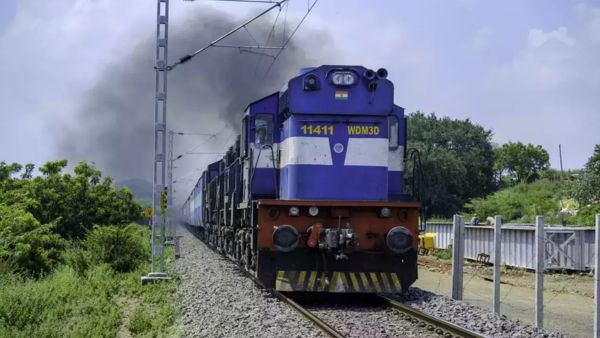
Indian Railways, Delhi Metro Rail Corporation (DMRC) and the Centre For Railway Information System (CRIS) have joined hands to promote the One India-One Ticket initiative for the ease of travellers. It will help the passengers of the main railway line and commuters of the Delhi/NCR area. Under this, the travellers of the metro can now book metro tickets from the IRCTC website or app. The token with the Delhi Metro QR code will be visible on the passenger’s online train ticket as soon as it is booked. Now, passengers can book a metro ticket while travelling by train. They don’t have to stand in a separate line to get a ticket in the metro. Rather, the journey will be easy with the same booked ticket. According to the statement issued by DMRC, the QR code-based tickets for the Delhi metro can be booked from the IRCTC website up to 120 days in advance and will remain valid for the next four days. It will come in handy if your train is getting delayed. “The metro tickets will be valid for a single journey for four days starting from the day before the DMRC journey date, the travel date itself, and two days after the journey date,” read the statement issued by DMRC. The token with Delhi Metro’s QR code will be printed on the electronic slip. It will also be printed on the electronic reservation slip of IRCTC for the passenger. This will be based on one QR code for one passenger. This initiative has been adopted for the first time by the Center for Railway Information System, IRCTC and DMRC. The beta version of the application has been launched. During this, IRCTC CMD Sanjay Kumar Jain, and DMRC MD Vikas Kumar said that after the success of the beta version, its regular version is anticipated to launch soon. The beta version of the DMRC QR code-based ticket was launched on Wednesday, July 10. It will enable mainline railway passengers to book DMRC QR code tickets on the IRCTC website and Android version of the mobile application, the statement said. Till now single journey ticket on Delhi Metro can be booked only on the day of travel and it is valid for that day only.
Read more
Delta Air Lines Sees Revenue Growth in Second Quarter from International, Corporate Travel
- Jul 12,2024
- Travel Pulse
Delta Air Lines reported on its second-quarter financial results and provided predictions for the second half of 2024 today, highlighting how growth in its premium, corporate and international travel are driving its performance this year. The second quarter saw a 5.4 percent revenue growth than the same quarter in 2023. Premium revenue grew 10 percent year-over-year, loyalty revenue grew 8 percent and corporate travel continued to grow in double-digits for the past six months. We’ve covered how international travel is booming this year ahead of pre-pandemic and 2023 levels, and Delta Air Lines has enjoyed a four percent increase in international passenger revenue. The majority of this international growth comes from the Pacific and Latin America regions, though Europe remains highly popular for travelers from North America this year. Second Quarter Financial Metrics: Financially, Delta Air Lines reported a quarterly adjusted operating revenue of $15.4 billion, an operating income of $2.3 billion and a return on invested capital of 13.1 percent. Shareholders received $2.36 per share. The airline predicts shareholders will enjoy $6-7 earnings per share this year. Total revenue year-over-year is expected to be up 2-4 percent from 2023. "Thanks to the incredible work of our 100,000 people, Delta is delivering industry-leading operational performance and best-in-class service for our customers,” said Delta CEO Ed Bastian. “We delivered record June quarter revenue and pre-tax income of $2 billion with a 15 percent operating margin. Our people are the best in the industry, and we are pleased to recognize their efforts with more than $640 million accrued in the first half toward next year's profit sharing.” The airline celebrated several things in this second quarter, including being awarded the 2024 Airline of the Year award from Air Transport World and was named the best U.S. airline by The Points Guy for the sixth consecutive year. The airline was also the only airline to make Glassdoor’s Best Led Companies list. Delta took delivery of 11 aircraft during the quarter, including new A321neo, A220-300 and A350-900 aircraft. It also announced a new partnership with Riyadh Air to become exclusive partners in future service between North America and Saudi Arabia. The airline also partnered with the Best Defense Foundation to charter a flight for 48 World War II veterans heading to Normandy to commemorate the 80th anniversary of D-Day.
Read more