

Underwater Bullet Train Tunnel Project in India: 10 facts that will leave you impressed
- Aug 21,2024
- Times Of India
India is all set to leave a mark on the global engineering world with the construction of a 21 km underwater tunnel under the Arabian Sea for its first-ever bullet train service on the Mumbai-Ahmedabad route. This ambitious project is part of the Mumbai-Ahmedabad High-Speed Rail Corridor, a futuristic infrastructure initiative designed to change travel between two of India’s major cities. Let’s have a look at 10 interesting facts about this upcoming project that will leave you shocked: India’s first: India is set to build its first-ever underwater tunnel for a bullet train, a key part of the Mumbai-Ahmedabad High-Speed Rail Corridor. Impressive length: The tunnel will stretch 21 kilometers under the Arabian Sea, including a significant 7 kilometers beneath the Thane Creek, an ecologically sensitive intertidal zone. Deep dive: Construction will take place at depths ranging from 25 to 65 meters below the sea’s surface, navigating complex geological conditions. Huge machines: Unlike metro tunnels, which use smaller TBMs with cutter heads of 5-6 meters, this project requires massive Tunnel Boring Machines (TBMs) with 13.1-meter cutter heads. Dual approach: To excavate the tunnel, three TBMs will dig through 16 kilometers, while the remaining 5 kilometers will use the New Austrian Tunnelling Method (NATM). Travel time: Once completed, the tunnel will allow the bullet train to reach speeds of up to 320 kilometers per hour, revolutionizing travel between Mumbai and Ahmedabad. Innovative design: The tunnel will feature a single tube with two tracks, facilitating bi-directional travel for the bullet train. Strategic locations: Major construction will occur at three sites: Ghansoli, Shilphata, and Vikhroli. The first TBM will start excavation in Ghansoli, heading towards Thane Creek. Environmental protection: Building the tunnel underwater helps preserve the Flamingo Sanctuary and Mangrove Forest in Thane Creek, and also circumvents the challenges of land acquisition in densely populated Mumbai. Prior experience: India has previously constructed underwater tunnels, such as the Kolkata Metro tunnel beneath the Hooghly River and Mumbai’s underwater metro tunnel on Line 3 beneath the Mithi River. This ambitious project underscores India’s growing engineering prowess and commitment to advancing high-speed rail infrastructure while balancing environmental and logistical considerations.
Read more
Japan removes Mount Fuji barrier after successfully managing overtourism
- Aug 21,2024
- Times Of India
A barrier installed in Japan to block a popular view of Mount Fuji has been removed temporarily, after it successfully reduced the disruption caused by tourists. Fujikawaguchiko had installed a large screen back in the month of May following complaints from residents about crowds of mainly international visitors creating chaos while attempting to photograph the iconic volcano. The town decided to lower the screen on August 15 in anticipation of an approaching typhoon and has opted not to reinstall it for now. "We wanted to observe the effects of its removal," the town official told AFP. "While there are still some visitors at the site, we no longer see many people abruptly darting into traffic to cross the road," the official added. Photos taken from the narrow sidewalk outside a dentist's office became popular online, showcasing the snow-covered peak of Mount Fuji dramatically visible behind a convenience store. The town's efforts to manage the influx of disruptive tourists garnered international attention as record numbers of visitors flocked to Japan over the summer, leading to some local discontent. The official from Fujikawaguchiko mentioned that the barrier could be reinstated if the tourist influx resumes and begins to cause further issues. Apparently, back in May, Authorities in Japan had erected a barrier in front of a popular photo spot due to issues with tourism and littering. Visitors had traveled there to take pictures of a Japanese store, Lawson, with Mount Fuji visible in the background. Locals reported that litter was being left at the site, and tourists were overcrowding the pavement and even climbing on nearby buildings to get photos. This was not the first location to install a fence to curb the excessive photo-taking by tourists. Mount Fuji is Japan’s iconic volcano. It is noted for its majestic beauty and cultural significance. Standing at 3,776 meters (12,389 feet), it is the tallest peak in Japan and one of the nation's most recognizable landmarks. Its near-symmetrical, snow-capped cone shape has made it a symbol of Japan, featured prominently in art, literature, and folklore.
Read more
Vietnam tourism soars, international arrivals surging to nearly 10 million
- Aug 20,2024
- Travel And Tour World
Vietnam‘s tourism sector is experiencing a meteoric rise, with international arrivals surging to nearly 10 million in the first seven months of 2024. This represents a staggering 51% increase compared to the same period last year and a remarkable 1.9% growth over pre-pandemic levels in 2019. Asia Drives Vietnam’s Tourism Revival The Asian market has been the primary catalyst for Vietnam’s tourism resurgence. South Korea and China together account for nearly half of all international visitors, with both countries experiencing significant growth. Taiwan has also emerged as a key market, with a remarkable 76% increase in visitor numbers compared to the previous year. Vietnam’s allure as an island paradise, coupled with its rich cultural heritage, affordable travel costs, and convenient flight connections, has made it a top choice for Asian tourists. European Market Gains Momentum While Asia dominates the scene, Europe is also experiencing a significant rebound. A 47% increase in European arrivals compared to the previous year is attributed to Vietnam’s relaxed visa policies and targeted promotional efforts. The country’s diverse landscapes, from the bustling cities to the serene countryside, have captivated European travelers. Focus on Sustainability and Digital Transformation Vietnam’s tourism authorities are committed to sustainable growth and enhancing the visitor experience. Efforts are underway to improve the country’s tourism image, invest in digital technologies, and strengthen environmental protection initiatives. Outlook for the Future With the tourism industry showing such robust recovery, Vietnam is poised to break annual visitor records. The country’s strategic focus on key markets, coupled with its commitment to sustainability, positions it for continued growth and success in the global tourism landscape.
Read more
Private-Island Holidays: the New Luxury Trend Driving travel Industry Growth
- Aug 20,2024
- Travel And Tour World
The travel industry has seen a surge in demand for private-island holidays, which are quickly becoming a lucrative niche within the luxury travel sector. With the rise in affluent travelers seeking exclusive and personalized experiences, private islands offer the ultimate in seclusion and luxury. These exclusive retreats provide an opportunity for travelers to escape the hustle and bustle of daily life and enjoy a serene environment, often surrounded by pristine natural beauty. The privacy and exclusivity offered by private islands have made them a coveted choice for those looking to unwind in a setting that is both luxurious and isolated. One of the main drivers behind the growing popularity of private-island holidays is the desire for privacy and security. In a world where high-profile individuals and celebrities often face intense public scrutiny, the allure of a private island is undeniable. These islands offer an unparalleled level of privacy, with many featuring gated access, private beaches, and 24/7 security teams. This level of exclusivity allows guests to enjoy their time without the fear of paparazzi or unwanted attention, making it an ideal option for those who value discretion and personal space. The amenities and services provided on private islands are another significant factor contributing to their appeal. Many private islands are equipped with world-class facilities, including gourmet restaurants, luxury spas, and state-of-the-art fitness centers. Additionally, guests can enjoy a range of bespoke experiences, such as private yacht charters, scuba diving excursions, and personalized wellness programs. The ability to tailor every aspect of their stay to their preferences ensures that guests have a unique and memorable experience, further enhancing the allure of private-island holidays. The COVID-19 pandemic has also played a role in the increased interest in private-island holidays. With concerns over health and safety, many travelers are seeking destinations that minimize contact with large crowds. Private islands offer a naturally socially distanced environment, making them an attractive option for those looking to avoid crowded resorts and public spaces. The ability to control who enters the island and the stringent health and safety measures in place have made private islands a preferred choice for cautious travelers during the pandemic and beyond. Looking ahead, the future of private-island holidays appears promising, with many travel industry experts predicting continued growth in this sector. As demand for exclusive and personalized travel experiences increases, more private islands are being developed and marketed to meet this need. The travel industry is capitalizing on this trend by offering tailored packages and experiences that cater to the discerning tastes of luxury travelers. With the continued emphasis on privacy, exclusivity, and bespoke experiences, private-island holidays are set to remain a highly sought-after option for affluent travelers worldwide.
Read more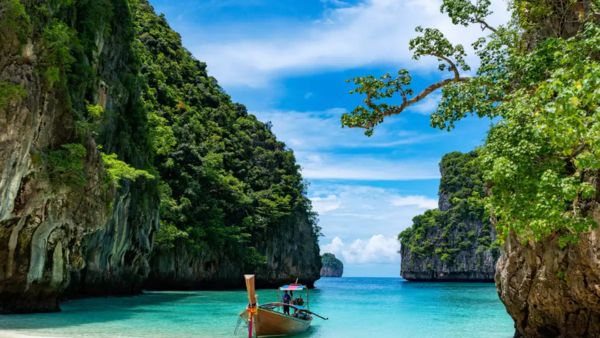
Thailand tourism sector surges with new visa free travel access
- Aug 20,2024
- Travel And Tour World
Thailand, in Southeast Asia, is famed for its tropical beaches, grand royal palaces, ancient ruins, and ornate temples. Bangkok, the lively capital, blends modern skyscrapers with serene canalside communities and iconic temples like Wat Arun and Wat Phra Kaew. Recently, Thailand’s tourism has surged, driven by expanded visa-free access for travelers from Malaysia, India, and China, boosting arrivals to 2.74 million as of August 2024. This policy further solidifies Thailand’s status as a top travel destination, making it easier for visitors to explore its rich culture and stunning landscapes. Thailand’s Tourist Arrivals Increase to 2.74 Million in June 2024 Tourist arrivals in Thailand climbed to 2,740,372 in June 2024, an increase from 2,633,464 in May 2024. Over the years, from 1997 to 2024, Thailand has averaged 1,495,688.97 tourist arrivals, with a peak of 3,930,800 in December 2019 and a record low of zero in April 2020. Additionally, Thailand welcomed 17.5 million foreign tourists in the first half of 2024, according to the Ministry of Tourism and Sports, with 17,501,283 international visitors recorded between January 1 and June 30. Thailand Leads Southeast Asia in Tourism with Strategic Policies In the first quarter of 2024, Thailand attracted 9.37 million international tourists, more than double Vietnam’s total. This growth is driven by Thailand’s effective policies, including visa waivers and medical coverage for visitors. Most tourists came from China (1.75 million), Malaysia (1.16 million), and Russia (622,800). Thailand’s tourism recovery is strong, with 28 million visitors in 2023, up from 11 million in 2022, aiming for 35 million tourists and $55 billion in revenue in 2024. In comparison, Vietnam saw 4.6 million tourists in the same period, highlighting Thailand’s successful strategies. Surge in Indian Tourists to Thailand Following Visa-Free Policy Thailand has seen a significant increase in Indian tourists since introducing its visa-free policy for Indian passport holders. From November 2023 to May 2024, the number of Indian visitors rose notably. To sustain this growth, the government extended the visa waiver through November 2024, adding a 60-day stamp for Indian nationals. This move aims to attract more Indian tourists despite India’s increased outbound travel tax. Thailand expects up to 2 million Indian tourists in 2024, surpassing the initial target of 1.7 million. In the first half of 2024, 1.04 million Indian tourists visited Thailand. This growth continues from 2023 when 1.62 million Indian visitors exceeded expectations. In response to the surge, Thai authorities are working with airlines to expand capacity and routes, anticipating further increases in Indian tourism. Popular destinations include Bangkok, Phuket, and Krabi, with growing interest in leisure, weddings, and business travel. Must-Visit Attractions in Thailand 1. Bangkok: Grand Palace: A stunning complex of ornate buildings, once home to Thai kings. Wat Phra Kaew (Emerald Buddha Temple): Thailand’s most sacred temple, housing the Emerald Buddha. Wat Arun (Temple of the Dawn): An iconic riverside temple known for its stunning architecture. Floating Markets: Vibrant markets where vendors sell goods directly from boats. Khao San Road: A bustling street famous for its nightlife, street food, and backpacker culture. 2. Chiang Mai: Doi Suthep: A revered mountaintop temple offering panoramic views of Chiang Mai. Wat Phra That (Golden Temple): An important Buddhist temple with a striking golden stupa. Chiang Mai Night Bazaar: A lively market perfect for shopping and sampling local food. Elephant Nature Park: A sanctuary dedicated to the care and rehabilitation of elephants. 3. Phuket: Patong Beach: Phuket’s most famous beach, known for its vibrant nightlife and water activities. Phang Nga Bay (James Bond Island): A picturesque bay featuring dramatic limestone cliffs. Old Phuket Town: A charming area with well-preserved Sino-Portuguese architecture. Promthep Cape: A popular viewpoint offering breathtaking sunset views. 4. Ayutthaya: Ancient City: Explore the historic ruins of Thailand’s former capital. Wat Mahathat: Famous for the Buddha head entwined in tree roots. Wat Phra Si Sanphet: An ancient temple once part of the royal palace complex. 5. Chiang Rai: Wat Rong Khun (White Temple): A modern, all-white temple known for its intricate design. Golden Triangle: The meeting point of Thailand, Myanmar, and Laos, offering unique cultural insights. Doi Tung Royal Villa: A royal residence set amidst beautiful gardens, with panoramic mountain views. Thrilling Outdoor Adventures Await in Thailand’s Stunning Landscapes Embark on thrilling outdoor adventures in Thailand, from island-hopping in Phang Nga Bay to exploring Krabi’s shores. Experience rock climbing in Railay or Chiang Mai, trek through northern Thailand’s lush hills, sail along the scenic Mekong River, and dive into the vibrant waters of the Similan Islands for an unforgettable snorkeling and diving experience. Thailand‘s tourism offers an extraordinary blend of cultural richness, natural beauty, and thrilling adventures, making it a top destination for travelers worldwide. Whether you’re exploring ancient temples, indulging in world-renowned cuisine, or seeking adrenaline-fueled outdoor activities, Thailand provides a diverse array of experiences that cater to every interest. The country’s warm hospitality, vibrant traditions, and breathtaking landscapes ensure that every visit is memorable, inviting you to return and discover even more of its hidden gems.
Read more
Istanbul named as world’s most connected airport in 2024
- Aug 20,2024
- Business Travel News Europe
Istanbul, Frankfurt and Paris Charles de Gaulle have been named as the top three airports in the world for serving the most destinations, according to research from aviation data analyst Cirium. Cirium’s list of the top 20 most connected airports during the first half of 2024 found that Turkey’s main hub Istanbul served 309 destinations, followed by Frankfurt with 296 routes and Paris CDG (282). Amsterdam’s Schiphol airport came joint fourth with 270 destinations, which tied it with Chicago’s O’Hare, the top US gateway. The only other European airport in the top 10 was Rome Fiumicino (234 routes). No UK airport features in the top 10 with London Heathrow dropping from eighth position in 2023 to 12th this year with 221 destinations. This placed it only just ahead of another London airport Gatwick which served 218 destinations. Madrid, Munich and Barcelona airports also featured in the list. Cirium’s research shows that 10 of the top 20 most connected airports were in Europe with four each in China and the US, and two in the Middle East – Dubai International and Jeddah in Saudi Arabia.
Read more