
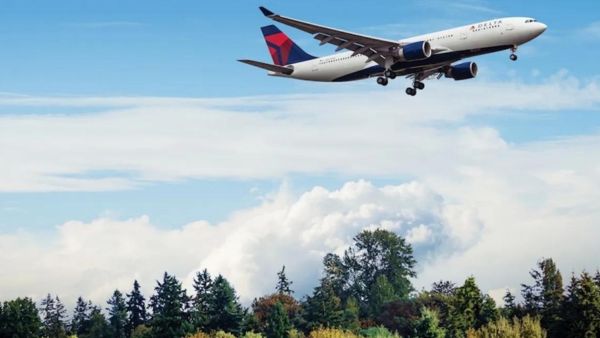
Delta Air Lines Sees Revenue Growth in Second Quarter from International, Corporate Travel
- Jul 12,2024
- Travel Pulse
Delta Air Lines reported on its second-quarter financial results and provided predictions for the second half of 2024 today, highlighting how growth in its premium, corporate and international travel are driving its performance this year. The second quarter saw a 5.4 percent revenue growth than the same quarter in 2023. Premium revenue grew 10 percent year-over-year, loyalty revenue grew 8 percent and corporate travel continued to grow in double-digits for the past six months. We’ve covered how international travel is booming this year ahead of pre-pandemic and 2023 levels, and Delta Air Lines has enjoyed a four percent increase in international passenger revenue. The majority of this international growth comes from the Pacific and Latin America regions, though Europe remains highly popular for travelers from North America this year. Second Quarter Financial Metrics: Financially, Delta Air Lines reported a quarterly adjusted operating revenue of $15.4 billion, an operating income of $2.3 billion and a return on invested capital of 13.1 percent. Shareholders received $2.36 per share. The airline predicts shareholders will enjoy $6-7 earnings per share this year. Total revenue year-over-year is expected to be up 2-4 percent from 2023. "Thanks to the incredible work of our 100,000 people, Delta is delivering industry-leading operational performance and best-in-class service for our customers,” said Delta CEO Ed Bastian. “We delivered record June quarter revenue and pre-tax income of $2 billion with a 15 percent operating margin. Our people are the best in the industry, and we are pleased to recognize their efforts with more than $640 million accrued in the first half toward next year's profit sharing.” The airline celebrated several things in this second quarter, including being awarded the 2024 Airline of the Year award from Air Transport World and was named the best U.S. airline by The Points Guy for the sixth consecutive year. The airline was also the only airline to make Glassdoor’s Best Led Companies list. Delta took delivery of 11 aircraft during the quarter, including new A321neo, A220-300 and A350-900 aircraft. It also announced a new partnership with Riyadh Air to become exclusive partners in future service between North America and Saudi Arabia. The airline also partnered with the Best Defense Foundation to charter a flight for 48 World War II veterans heading to Normandy to commemorate the 80th anniversary of D-Day.
Read more
Bengaluru-Chennai Expressway to cut down travel time between the cities to 2 hours
- Jul 12,2024
- Times Travel
In a significant development, the 262-km-long Bengaluru-Chennai Expressway (BCE) is nearing completion, which will drastically reduce travel time between the two major cities. This new route, officially known as NE-7, will cut the journey down to two to two-and-a-half hours, a stark improvement from the current seven to eight hours. Additionally, the expressway will shorten the distance between Bengaluru and Chennai by 80 km, with a permitted speed of 120 km/hr, enhancing both efficiency and safety. Union Minister of Road Transport and Highways Nitin Gadkari recently announced that Prime Minister Narendra Modi will inaugurate the expressway before December 2024. Initially, the estimated completion date was March 2024. The expressway, constructed at a cost exceeding INR 17,930 crore, will pass through three states: Karnataka, Andhra Pradesh, and Tamil Nadu. Key cities along the route include Hoskote, Malur, Bangarapet, Kolar Gold Fields, Palamaner, Venkatagirikota, Chittoor, Bangarupalem, Ranipet, and Sriperumbudur. The BCE features an eight-lane highway for 240 km and an elevated stretch of 22 km. A notable segment is the 21 km four-lane double-decker elevated road connecting Chennai Port to Maduravoyal, built at a cost of around INR 5,850 crore. This section is designed to ensure a seamless flow of goods to and from Chennai Port, bolstering the region's economic infrastructure. In addition to the BCE, the region will benefit from other infrastructure projects. The 94 km long highway from Neraluru to Dharmapuri (NH-844), constructed at a cost of around INR 3,870 crore, and the 31 km two-lane highway connecting Meensurutti to Chidambaram (NH-277), built at a cost of around INR 720 crore, will enhance connectivity and support continuous travel across the region. Currently, there are three primary routes between Bengaluru and Chennai: Old Madras Road, via Hosur and Krishnagiri/Golden Quadrilateral, and a third route passing through Kolar-KGF-Kota and Vellore. Of these, the Golden Quadrilateral route, spanning approximately 380 km, is the most frequently used. The National Highway Authority of India (NHAI) is overseeing the construction of the BCE under the Bharatmala Pariyojana programme. The foundation for this transformative expressway was laid by Narendra Modi in May 2022, with an initial budget of over ₹14,870 crore. Once completed, the Bengaluru-Chennai Expressway will not only reduce travel time, but also significantly enhance regional connectivity, boost economic activities, and improve the overall travel experience between these two bustling cities.
Read more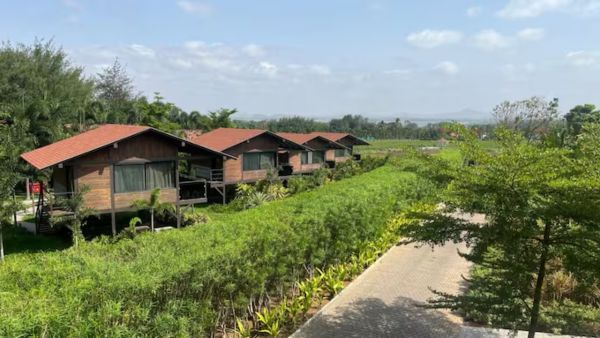
Nashik is making vineyard tourism a hit in India
- Jul 11,2024
- India Today
Next time you’re unsure about what snacks to serve with wine at a home get-together, try bhaji (onion fritters). Believe it or not, this is a combination recommended and endorsed by the experienced winemakers at Sula Vineyards. An assortment of cheeses or processed meat is not the only option, they say. When we tried this striking combination ourselves during a wine ageing masterclass at their vineyard in Nashik, we couldn’t help but agree. Every weekend (even on weekdays, tbh), people from Mumbai and Pune drive to Nashik, a tropical wonderland better known as the wine capital of India, to see scenic vineyards and learn more about the winemaking process. At the forefront of this growing vineyard tourism is Sula, one of the world’s most visited wineries. It hosts almost 400,000 people annually in Nashik for guided tours and wine tasting. Nashik - the wine capital of India An hour’s drive from Nashik airport, Sula Vineyards welcomes you with verdant views all around. Never-ending rows of grapevines meet the gaze, and you might be lured to run towards them right away. Whether you can see wine grapes growing or not depends on the time of your visit. The time of the harvest is from January to March, in contrast to many other countries like France, California, Italy, and Turkey, where harvesting is done around September and October. Owing to the proximity to the equator, weather conditions in India (in this case, Nashik) are different, and hence the winemaking process runs on a completely different cycle, which brings along its own set of challenges. Yet, Sula has an international presence in over 25 countries. “One of the primary challenges we face is changing the perception of Indian wine. Traditionally, when people think of wine, they think of regions like Europe, the USA, Australia, and New Zealand. Positioning Indian wine alongside these established giants requires a dedicated effort to highlight the unique qualities and craftsmanship of our products,” Karan Vasani, COO, Sula Vineyards tells India Today, while adding that only 2 per cent of the production is currently exported. “Another significant challenge is the competitive price point. International wine markets often operate on high volume and thin margins, which can make it difficult for us to compete directly on price. However, we have found success by focusing on the premium and elite segments, where the quality and distinctiveness of our wines can truly shine,” he adds. Sula - leading wine tourism in Nashik Sula is credited for turning Nashik into the wine capital of the country. Founder Rajeev Samant set up the first winery in Nashik in 1999 and is now championing sustainable viticulture by generating around 60 per cent of the electricity used with solar panels and using recyclable packaging. In 2021, the company was accepted as a member of the International Wineries for Climate Action (IWCA). As one takes a round of the vineyards in Nashik, one can see solar panels etched atop the wine-tasting area. Wine tasting is among several activities visitors explore at the vineyard, which hosts a young crowd as well as families from nearby cities of Mumbai and Pune each day. One can also take a look at the fermentation tankers in which the grape juice is stored and peek inside the barrel room where the ageing of premium wines takes place in French and American oak barrels. Vineyard resorts for weekend getaways However, this vineyard in Nashik is not limited to being a day-out spot. It is a fabulous weekend getaway as it also boasts a stay property – The Source – a luxury vineyard resort comprising a mix of well-built suites, cottages, and crowd-puller tree houses. Each of these accommodations has a distinctive vibe and build, but making you feel in the lap of nature is a common element. For instance, the suites are built in a palatial setting where lush green trees not only serve as spectacular surrounding scenery but also grow through the stair alleys within the resort. The treehouses, also built with a luxurious aesthetic, boast glass walls to ensure scenic delights.
Read more
Taiwan introducing Visa-On-Arrival For Indian Tourists
- Jul 11,2024
- Travel And Tour World
Taiwan is exploring the possibility of introducing visa-on-arrival for Indian travelers, aligning with global trends of simplifying visa processes to boost tourism. Deputy Foreign Minister Tien Chung-kwang highlighted Taiwan’s interest in tapping into India’s substantial outbound market. Before any final decision, talks with the immigration department are anticipated. ResearchAndMarkets.com predicts that India’s outbound MICE tourism market will achieve a valuation of $13.4 billion by 2031. Currently, India ranks as the ninth-largest market globally for business travel expenditure and holds the fourth position in the Asia Pacific region. Sunny Sodhi, Managing Director of FCM Travel India, highlights that 86% of Indian business travelers view travel as essential for achieving their business objectives. The Global Business Travel Association forecasts that India’s business travel spending will hit $38 billion this year, with a projected return to pre-2019 expenditure levels anticipated by 2025. Notably, India experienced a significant 25% surge in business travel spending in 2023, reaching 78% of pre-pandemic levels. In a bid to promote Taiwan’s tourism offerings to Indian travel trade professionals, the Taiwan Tourism Administration launched the Taiwan Specialist Program in April. This initiative includes an e-learning program aimed at familiarizing professionals with Taiwan’s attractions. Taiwan further engaged with the Indian travel trade through a multi-city roadshow across Delhi, Mumbai, Hyderabad, and Bengaluru, with a particular focus on the MICE (Meetings, Incentives, Conferences, and Exhibitions) segment. Joseph Cheng, Director of the Taiwan Tourism Administration’s Singapore office, emphasized the growing importance of MICE travel, surpassing traditional business travel norms. Taiwan is keen on enhancing its offerings in this sector to cater to the preferences of Indian travelers. India’s outbound travel market, encompassing over 27 million people, sees 41% traveling for leisure and recreation, while 16% travel for business purposes, reflecting a substantial portion dedicated to MICE activities. FCM Meetings & Events India noted a notable resurgence in incentive trips, reporting a 30% increase in requests during the first quarter compared to the previous year. In the latter half of this year, Taiwanese authorities will extend invitations to Indian businesses for exploratory visits to central and southern Taiwan. This initiative aims to deepen Indian companies’ understanding of Taiwan, fostering stronger collaboration between Taiwanese and Indian tourism sectors. To actively cultivate the international tourist market, Taiwan’s Ministry of Transportation and Communication’s Tourism Administration is expanding its focus beyond traditional markets like Japan, Korea, Hong Kong, Macau, Singapore, Malaysia, Thailand, Vietnam, and the Philippines. It now targets Indonesia and India as pivotal new markets for growth. Since the establishment of the “Taiwan Tourism Information Center in Mumbai” on February 7, 2024, the Administration has invited ten incentive travel-specialized travel agencies from India to visit Taiwan from June 20 to 25. This marked the first group post-pandemic, emphasizing immediate MICE market development and long-term mass market targeting through phased marketing strategies. The itinerary for this inaugural group centered on Yilan, showcasing Taiwan’s diverse tourism resources and high-quality hospitality. Highlights included visits to Toucheng Farm for rural and eco-tourism experiences, the National Center for Traditional Arts to appreciate Taiwan’s rich cultural heritage, historical sites, traditional architecture, and the scenic beauty of the Northeast Coast and Yilan Coast National Scenic Area. In Taipei, the group explored the Grand Hotel’s secret passages and enjoyed retro costume changes in Dadaocheng. This exchange enabled Indian businesses to gain a deeper appreciation of Taiwan, laying the groundwork for enhanced cooperation between Taiwanese and Indian tourism industries. The Administration also aims to reinstate direct flights between Taiwan and India to enhance travel convenience, comfort, and affordability. In the second half of the year, more invitations will be extended to Indian businesses to explore central and southern Taiwan, including the scenic landscapes of Taichung, the cultural allure of Kaohsiung, and the natural and cultural treasures of Hualien and Taitung. The Administration welcomes more enthusiastic Indian visitors to discover Taiwan’s unique charm and endless delights. To facilitate these opportunities, the Administration hosted a “Taiwan-India Tourism B2B Networking Session” on the 24th, drawing around 15 businesses from travel agencies, hotels, and the tourism and leisure sectors. The event fostered lively face-to-face interactions and forged valuable business connections between Taiwanese and Indian tourism professionals. Highlighting India’s status as the world’s most populous country, with around 40,000 Indian tourists annually visiting Taiwan pre-pandemic, the Administration sees significant potential in India’s burgeoning “new wealthy” and “business traveler” segments. With India’s robust economic growth and diverse cultural appeal, visitor numbers are expected to rebound to pre-pandemic levels this year. Impressed by their experiences, Indian businesses provided positive feedback and expressed intentions to develop new travel products, bolster promotions, and increase tourist flows from India. The Administration plans to maintain ongoing communication and explore further collaboration opportunities.
Read more
Indians travelled close to 1,000 cities across world
- Jul 11,2024
- Business Standard
Uber, the global ride-hailing app, shared travel data of India-registered users that give a peek into the global travel trends of Indians. Uber’s data reflects a sharp increase in the number of Indians using the ride-sharing app abroad during 2023, with the number of overseas travellers being second only to Americans. During the ongoing summer travel season, Indians are expected to surpass records set in previous years. “Indians have been breaking all travel records over the past couple of years, and it’s heartwarming to see how Uber continues to be their trusted last-mile partner in these travels,” said Prabhjeet Singh, president, Uber India and South Asia. “Be it the familiarity when landing at an airport in a new city, or the safety when riding late at night, it’s a huge mark of trust for us to see Indians book an Uber for their overseas travels.” Uber App Usage Data: Indians travelling overseas like never before: - A million Indians using Uber in their travels overseas - Indians travelled to close to 1,000 cities across 68 countries overseas - Most Uber-ed countries: 1. The United States 2. The United Kingdom 3. Canada - Most popular month of overseas travel in 2023 was May; June in 2022 - Indians tried 21 different Uber products including Comfort Electric, Multimodal Transit, and UberX Indians used Uber's luxury cars and SUVs: - Porsche Cayenne - Jaguar F-PACE - Range Rover Sport - Mercedes S450 - BMW 740i M Sport - Lincoln Navigator Indians used Uber's premium EVs: - Jaguar I-PACE - Audi e-tron Sportback - Mercedes EQE 500 - Ford F-150 Lightning
Read more
Etihad to step-up North America services this winter
- Jul 11,2024
- Business Travel News Europe
Etihad will expand services to North America this October with plans to increase flight frequencies on its Abu Dhabi-Boston route. The carrier will also begin operating its new Airbus A350 aircraft on daily flights to Toronto in the upcoming winter season. The Middle Eastern airline will begin daily services to Boston Logan International Airport on 27 October, increasing frequencies from four weekly flights as per the current schedule. The decision, the carrier said, is based on the route’s “strong performance” and comes just three months after Etihad introduced the non-stop Boston service in March. Etihad chief revenue and commercial officer, Arik De, said: “Having already experienced record passenger demand, we’re excited to invest further in the North American market by expanding our flight frequency out of Boston ahead of the peak winter travel season.” Flights to Boston will be operated by Boeing 787-9 Dreamliner aircraft with 28 business class seats and 262 seats in economy. Meanwhile, the carrier’s daily service to Toronto Pearson Airport from 27 October will be operated by its Airbus A350 aircraft, which includes 44 business suites with “enhanced” privacy. According to the carrier, the A350 produces 25 per cent less fuel burn and CO2 emissions than previous aircraft models.
Read more