

Sri Lanka is surging the travel Industry with new visa-free entry policy
- Jun 29,2024
- Travel And Tour World
Sri Lanka, an island nation in the Indian Ocean, is a captivating tourist destination renowned for its stunning beaches, rich cultural heritage, lush tea plantations, and vibrant wildlife. Visitors can explore ancient cities like Anuradhapura and Polonnaruwa, admire the sacred Temple of the Tooth in Kandy, or embark on scenic train journeys through the picturesque hill country. Adventure seekers can enjoy safaris in Yala National Park, while beach lovers can relax on the pristine shores of Mirissa and Unawatuna. Sri Lanka’s diverse offerings make it a prime spot for leisure travel, cultural exploration, and nature adventures. Additionally, citizens from three countries—Maldives, Seychelles, and Singapore—can enter Sri Lanka without a visa, making it a hassle-free destination for travelers from these nations. For other countries, an Electronic Travel Authorization (ETA) is required, which can be conveniently obtained online. This ease of access, combined with Sri Lanka’s enchanting attractions, enhances its appeal as a top global travel destination. Indian travelers need to apply for an Electronic Travel Authorization (ETA) before their arrival, which is a simple and free process during the program’s duration. This visa-free entry is part of Sri Lanka’s efforts to recover from economic challenges and increase tourist arrivals, with India being a significant source market. TTW Editor in Chief Mr. Anup Kumar Keshan said: “The implementation of Sri Lanka visa-free policy for 3 countries, has been a transformative force for the tourism sector. This strategic move has not only simplified the entry process for millions but has also broadened our appeal across diverse travel sectors. Additionally, this policy has invigorated niche travel markets, such as culinary tourism, adventure travel, and wellness retreats, enriching the travel experience and fostering significant economic growth and cultural exchange.” Sri Lanka recently had introduced a pilot program offering free visas for citizens of India, China, Russia, Malaysia, Japan, Indonesia, and Thailand until March 31, 2024. For other nationalities, the visa fee for a 30-day tourist visa remains at $50. But though it has expired, still there are avenues that one can explore for travel boom. Visa-Free Countries- Maldives Seychelles Singapore Top Airlines in Sri Lanka- SriLankan Airlines Description: SriLankan Airlines is the national carrier and largest airline in Sri Lanka. It operates flights to various international destinations across Asia, Europe, and the Middle East, as well as domestic flights. FitsAir Description: FitsAir is a privately owned airline in Sri Lanka that operates both passenger and cargo flights. It offers domestic flights within Sri Lanka and international services to select destinations. Major Airports in Sri Lanka- Bandaranaike International Airport (CMB) Location: Katunayake, near Colombo Description: The main international gateway to Sri Lanka, Bandaranaike International Airport handles the majority of international and domestic flights. It offers modern facilities and services for travelers. Mattala Rajapaksa International Airport (HRI) Location: Hambantota Description: This airport serves the southern region of Sri Lanka and aims to boost tourism and economic development in the area. It handles both international and domestic flights. Ratmalana Airport (RML) Location: Colombo Description: Ratmalana Airport primarily serves domestic flights and general aviation. It is located closer to Colombo city center compared to Bandaranaike International Airport. Jaffna International Airport (JAF) Location: Jaffna Description: Serving the northern region of Sri Lanka, Jaffna International Airport facilitates regional connectivity and supports the development of the Jaffna Peninsula.
Read more
Travel credit card fintech records 30% rise in travel bookings this summer
- Jun 29,2024
- Business Standard
Travel credit card fintech Scapia on Friday said the company recorded a 30 per cent increase in domestic and international travel bookings on the platform during the summer season this year, compared to bookings in January. The Bengaluru-based company said domestic destinations such as Goa, Varanasi, Srinagar, Port Blair, and Leh were popular between February and May, whereas on the international front, travellers preferred to visit countries such as UAE, Thailand, Malaysia, Singapore, Indonesia, and Sri Lanka. Women solo travellers grew at the rate of 47 per cent, whereas solo travellers who were men grew 39 per cent. In terms of such travel, Thailand and Malaysia witnessed a fourfold increase in popularity, along with Nepal, which recorded a threefold increase in bookings. “Women’s greater engagement in solo travel reflects a positive shift in the Indian travel and tourism market. This shift can be attributed to advancements in technology that offer real-time travel support, improved security measures, and the abundance of travel information available online,” the company said in a statement. Lesser-known destinations like Penida Island in Indonesia, Nonthaburi in Thailand, and Kowloon in Hong Kong made it to travellers’ lists this summer. The growth in travel numbers on the platform comes even as the company witnessed some turbulence at the start of 2024 when some of Scapia’s customers saw their credit limits marked down by its banking partner Federal Bank. The company was founded in 2022 by Anil Goteti, a former senior executive at e-commerce giant Flipkart. It raised $23 million in a funding round led by Elevation Capital and 3STATE Ventures, an investment firm of former Flipkart chief executive Binny Bansal. The Series A round was attended by Scapia’s existing investors, Matrix Partners India and Tanglin Venture Partners.
Read more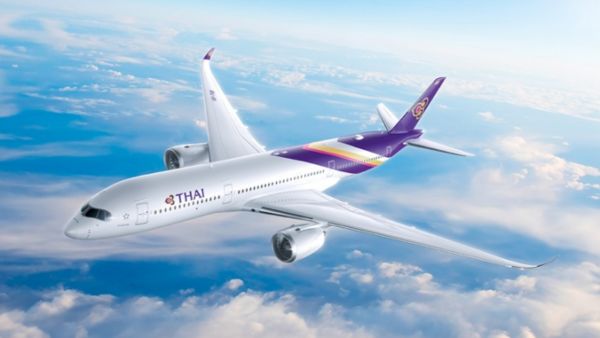
Thai Airways expands technology partnership with Amadeus
- Jun 28,2024
- Breaking Travel News
Thai Airways has renewed and expanded its distribution agreement with Amadeus to further enhance its travel retailing offerings. The carrier will revamp its website and mobile booking channels to offer its passengers a smooth and personalised travel experience. Amadeus Reference Experience will provide a modern, responsive and configurable user interface. Thai Airways’ website and mobile channels will be upgraded with a robust booking flow that enables travellers to switch devices all along their journey. Travellers will also be able to manage end-to-end flight bookings, check-in, and disruptions by themselves. The carrier implemented Amadeus Travel Ready, which enables international travellers to verify their travel documents (passports and visas) within the online check-in process. This helps save time at the airport by speeding the manual document verifications at check-in, bag drop and boarding, consequently reducing queues. To boost and optimise network revenue, Thai Airways will implement Amadeus Network Revenue Management. The carrier will benefit from this cutting-edge technology when building routes through connecting hubs, codeshares, or partnerships. Leveraging machine learning and customer choice modelling techniques, the solution enables Thai Airways to optimise pricing and availability decisions. Javier Laforgue, managing director, Asia Pacific, Amadeus, said: “Thai Airways has long been an important and strategic partner of Amadeus. “The agreement signed today is a milestone for us and we look forward to working hand in hand with the carrier on its transformation journey. “We are confident that our technology will continue to support Thai Airways’ growth ambitions and enable the carrier to achieve its business goals.” Finally, the airline will use the Xchange Payment Platform (XPP) from Outpayce, Amadeus’ payments business. This platform allows Thai Airways to easily accept a wide range of card and alternative payment methods from travellers. Through XPP, the carrier can accept payments globally by connecting to a wide range of specialist partners, for services like cross-border acquiring, authentication and fraud management. Thai Airways also benefits from XPP’s enhanced orchestration and analytics to continually refine its payments strategy and increase acceptance rates.
Read more
Madrid to use flamenco to draw tourists in from the heat
- Jun 28,2024
- The Economic Times
While temperatures in the morning are bearable, even Madrid's central Retiro Park "is ho 3:00 pm. The best places to take refuge are air conditioned, and that means museums, cinemas and libraries," said Madrid's city councillor for culture and tourism, Marta Rivera Cruz. The shows will features internationally renowned performers such as Yolanda Osun and Eduardo Guerrero. Madrid city hall said Wednesday it will offer free flamenco shows at air conditioned museums during the hottest hours of the day to encourage tourists to seek shelter from the heat. Spain endured its second-hottest year on record in 2023 and temperatures in Madrid regularly top 40 degrees Celsius (104 Fahrenheit) during the summer months, when tourists from around the world flock to the city. Over 1.6 million tourists visited the Spanish capital last July and August. While temperatures in the morning are bearable, even Madrid's central Retiro Park "is hot at 3:00 pm. The best places to take refuge are air conditioned, and that means museums, cinemas and libraries," said Madrid's city councillor for culture and tourism, Marta Rivera de la Cruz. To draw tourist indoors, Madrid's three main museums -- the Prado, the Reina Sofia and the Thyssen -- as well as the Royal Collections Gallery next to the royal palace will offer free flamenco shows every day from 3:00 pm until 5:00 pm during July and August, she added The shows will features internationally renowned performers such as Yolanda Osuna and Eduardo Guerrero. Public libraries will also offer humorous monologue shows and concerts in the early afternoon, while cinemas will offer reduced rates for screenings before 5:00 pm. The measure "will not involve any additional energy expenditure" since these venues were already air conditioned, said Rivera de la Cruz. Spain experienced seven heatwaves last year. since 1975, heatwaves have lengthened by three days per decade...and increased in temperature by 2.7C per decade, according to Spain's AEMET weather agency.
Read more
Singapore Tourism to host multi-city B2B roadshow in India highlighting "Made in Singapore" campaign
- Jun 28,2024
- The Economic Times
The 'Singapore Tourism Board Roadshow 2024: Holidays Made in Singapore' will feature 50 exhibitors from hotels, attractions, airlines, and cruise lines in Chennai, Hyderabad, Kolkata, and Ahmedabad from 8 to 12 July 2024. The event aims to strengthen partnerships with the Indian travel trade community and promote Singapore as a unique destination. From 8 July to 12 July 2024, the Singapore Tourism Board (STB) will host a multi-city B2B roadshow in Chennai, Hyderabad, Kolkata, and Ahmedabad. Named "Singapore Tourism Board Roadshow 2024: Holidays Made in Singapore," the event will feature 50 exhibitors from hotels, attractions, airlines, cruise lines, and destination management companies. Among the exhibitors are newcomers such as the Museum of Ice Cream and Disney Cruise Line, which has chosen Singapore as its exclusive Southeast Asian homeport for the next five years. Since the resumption of international travel in 2022, Indian tourists have been increasingly attracted to Singapore’s evolving offerings. In 2023, the city introduced numerous new hotels, attractions, and lifestyle experiences, enhancing the appeal for India’s travel agents and planners when creating holiday itineraries, MICE programs, and wedding celebrations. Markus Tan, Regional Director, India, Middle East, South Asia, and Africa, Singapore Tourism Board expressed enthusiasm about the upcoming multi-city roadshows and emphasized the importance of collaboration with the travel trade in enhancing Singapore's appeal in these regions. "From January to May 2024, Singapore has welcomed more than half a million visitors from India. This underscores India’s importance as a key tourism source market for us. We are hopeful that together with our travel stakeholders, we can maintain this growth momentum through the second half of 2024. We are excited to embark on this multi-city B2B roadshow to strengthen our connections with the Indian travel trade community from four key cities with direct flights to Singapore. We hope the roadshow will foster stronger business relationships and partnerships, driving mutual growth and success for all participants and attendees." The STB’s global campaign, “Made In Singapore,” highlights the city as a destination full of unique and unexpected experiences. The 2024 roadshow theme, "Holidays Made In Singapore," aims to equip the Indian travel trade community with the tools to promote Singapore as a distinct destination for various consumer segments. Additionally, STB will host curated business matching events in Ahmedabad and Kolkata, connecting Singapore wedding suppliers with Indian planners. These sessions, featuring venues, hotels, aviation, cruise partners, and DMCs, will spotlight Singapore’s unique wedding venues and experiences, supported by a partnership with designer Rahul Mishra and a Wedding Planner’s Guide to Singapore.
Read more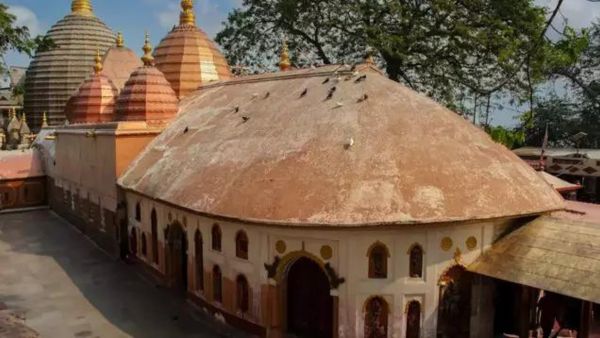
Guwahati: Kamakhya Temple reopens after Ambubachi Mela, draws thousands of devotees
- Jun 28,2024
- Times of India
The revered Kamakhya Temple, a prominent seat of the Shakti cult, reopened its doors on Wednesday morning after a four-day closure for the annual Ambubachi Mela. The reopening saw a throng of devotees eager to offer their prayers and seek blessings at the famed temple. The Kamakhya Temple, located atop the Nilachal Hill in Guwahati, Assam, is one of the most significant pilgrimage sites in India. It is particularly renowned for the Ambubachi Mela, an annual festival that marks the believed menstrual cycle of Goddess Kamakhya. During this period, the temple doors are symbolically closed for four days, reflecting the belief that the goddess undergoes her menstrual cycle. The festival also embodies the broader belief that Mother Earth menstruates during this time. As the temple reopened, a large number of devotees gathered, eager to participate in the rituals and festivities. The atmosphere was charged with devotion and reverence as pilgrims from various parts of the country made their way to the temple. To ensure the safety and security of the devotees during the Ambubachi Mela, a robust security arrangement was put in place. Officials reported that police personnel, volunteers, private security guards, and other staff were engaged to manage the crowds and maintain order throughout the festival. The meticulous planning and coordination by the authorities helped facilitate a smooth and secure environment for the worshippers. Kamakhya Temple is one of the Shakti Peethas. The Kamakhya Temple, located in Guwahati, is particularly significant as it is dedicated to the goddess Kamakhya, an embodiment of Shakti, and is associated with the yoni (womb) of the goddess. This temple is a major pilgrimage destination and plays a central role in the worship of the divine feminine. The Ambubachi Mela holds a unique place in the cultural and spiritual landscape of Assam. It attracts thousands of pilgrims, saints, and tourists, all drawn by the temple's profound religious significance and the vibrant festivities that accompany the festival. The rituals performed during the mela emphasise the sanctity and power of the feminine divine, celebrating the natural cycles of life and fertility. The Ambubachi Mela not only reinforces spiritual beliefs but also fosters a sense of community and cultural heritage among those who gather to honour the goddess Kamakhya.
Read more