Himachal Pradesh records 7.4 million tourists by May; Solan tops the chart of visitor numbers

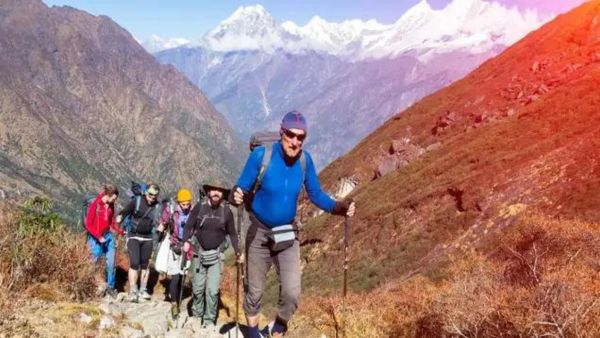
Tourism in Himachal Pradesh has seen a great hike, with over 74 lakh tourists visiting the state by May this year, marking a 3.5% rise compared to the same period last year. And this time Solan district has taken the crown of highest tourist footfall surpassing Shimla, the capital of Himachal. Prime destinations like Kasauli and Chail are gaining popularity, with newer spots like Reva Waterfall gaining the attention of tourists. The rise in homestay options and accessibility has bolstered tourism in areas like Kandaghat-Sadhupul. Director of Tourism and Civil Aviation, Manasi Sahay Thakur, highlighted ongoing efforts to enhance connectivity and infrastructure. "Efforts are afoot to improve inter and intra state connectivity through construction of heliports. Major focus is on infrastructure development like creating wayside amenities besides opening wellness centres, construction of ice skating rinks, promoting eco and adventure tourism with the funding of Asian development Bank (ADB)," she told the PTI. Plans include constructing heliports, developing wayside amenities, and establishing wellness centers and ice skating rinks. Funding from the Asian Development Bank supports initiatives in eco-tourism and adventure tourism. The minister also reported that by the end of May, Himachal Pradesh had welcomed 74,64,184 tourists, including 32,415 foreign visitors. This marked a 3.5% increase from the 72,02,956 tourists, including 23,174 foreign tourists, during the same period last year. Throughout the year, Himachal Pradesh remains a magnet for tourists, offering Spiti's landscapes, Kinnaur's serene beauty, and Dharamsala's spiritual allure as the residence of the Tibetan spiritual leader, Dalai Lama. Shimla charms with its colonial architecture, while Kullu-Manali beckons snow and adventure sports. Additionally, Himachal Pradesh's spiritual significance draws tourists to Shakti Peethas in Kangra, Bilaspur, Una, Sirmaur, and Mandi, revered as Chhoti Kashi for ancient Shiva temples. Foreign tourists and adventure enthusiasts are increasingly drawn to the unspoiled terrain of Kinnaur, Lahaul and Spiti, and Chamba, offering pristine landscapes and cultural richness.

Read more

Etihad Airways launches four weekly flights to Jaipur

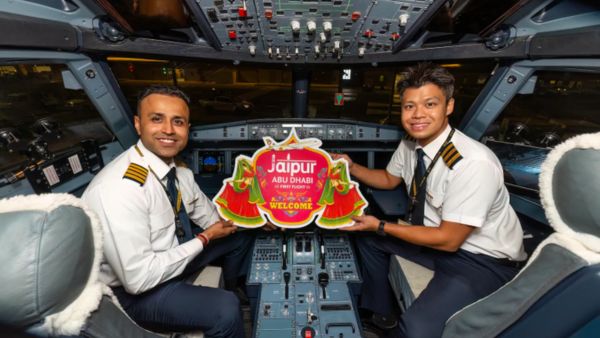
Etihad Airways has celebrated the start of its flights to Jaipur, India. A welcome ceremony at Jaipur International Airport on June 19 acclaimed the new route, which offers guests four non-stop services a week, enhancing connectivity Jaipur and the rest of the world, via Abu Dhabi. Travellers flying from Jaipur to the United States can take advantage of the US Customs and Border Protection (CBP) facility at Abu Dhabi, streamlining the immigration process and ensuring a hassle-free journey. The flights will be operated with aircraft from the Airbus A320 family, offering both Business and Economy cabins, convenient flight timings to the UAE’s capital city and seamless connections to destinations across the airline’s growing global network. Antonoaldo Neves, CEO of Etihad Airways, said, “With the resurgence of outbound travel from India, we are thrilled to start four weekly flights to Jaipur, a significant cultural and commercial centre. By establishing this crucial air link with Rajasthan, we aim to meet the increasing demand from travellers in and around the region, providing them with convenient access to Abu Dhabi and Dubai, and seamless connectivity to our extensive global network.”

Read more

Air India to launch premium economy class on select domestic routes from July

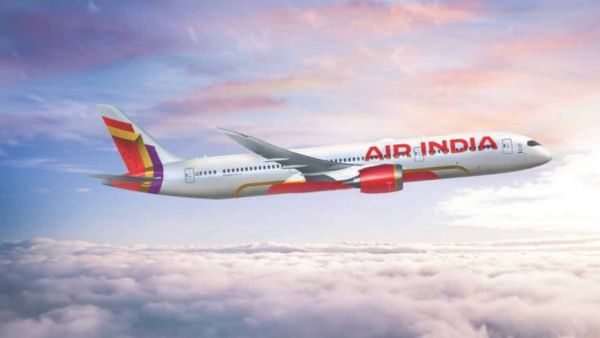
Air India on Wednesday said it will launch premium economy class on select domestic routes from next month. As of now, Vistara is the only Indian carrier, which offers premium economy-class travel on its domestic routes."Air India today unveiled a three-class configuration on its newly inducted narrow-body aircraft. Air India's A320neo aircraft will now offer a new business, an all-new premium economy and a new routes," the airline said. The Tata Group-owned airline said it has refitted two new A320neo aircraft in a three-class configuration, featuring eight seats in business, 24 seats with extra legroom in premium economy, and 132 in the economy category, offering a wider choice to its guests. This is the first time the airline has introduced premium economy cabins on its narrow-body aircraft. Delhi-Bengaluru-Delhi and DelhiChandigarh-Delhi are the two select routes on which the airline will offer premium economy seats, as per the airline. Air India has plans to introduce the three-class configuration to its entire full-service narrowbody fleet over the next year. Existing aircraft are now being progressively inducted for refit, while new aircraft joining the fleet will be delivered with the new Air India experience, it said."The introduction of a three-class cabin to Air India's narrow-body fleet and commencement of interior refits are important steps in the journey of enhancing the flying experience," said Campbell Wilson, Chief Executive Officer and Managing Director at Air India. The latest upgrade of the narrow-body fleet, which operates on domestic and short-haul international networks, complements the upgraded wide-body experience now available on the A350 fleet and new B777s, and on all other wide-body planes as they are refitted over the next two years, he said. The new business cabins offer 40-inch ergonomic seats with deep 7-inch recline, an adjustable armrest, footrest and backrest, a tray table deployed at the push of a button that includes a PED holder and is extendable and multiple charging ports while the all-new premium economy category provides larger seats with four-way headrests, wider 32-inch seat pitch with a 4-inch recline, and other amenities such as a PED holder and USB charging port, Air India said. Earlier this month, Wilson had said that Air India will be retrofitting more than 100 planes, including 40 wide-body planes. Moreover, the airline had in December 2022 announced that it would be investing USD 400 million to refurbish its Boeing 777 and Boeing 787 wide-body aircraft fleet.

Read more

South Korea to launch 'K-Culture Training Visa' to boost tourism

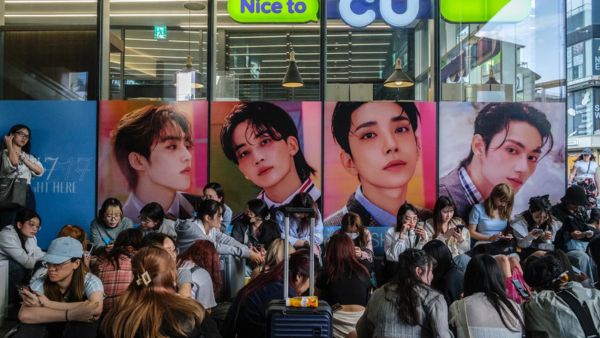
South Korea will soon launch a new visa for foreign nationals who dream of training like a K-pop idol, in a bid to boost its tourism industry back to pre-pandemic levels. The “K-Culture Training Visa” will be open to foreigners who want to train in K-pop dancing, choreography and modeling, the finance ministry announced on Monday. Applicants don’t necessarily need to audition or have a callback offer from a talent agency – at least not yet – as more details are expected to come out later this year. The surge in interest toward all things Korean has prompted many foreign fans to travel to South Korea and even learn the language, with some splashing out on full-on pilgrimages to visit the filming locations of K-pop music videos and K-dramas. Seoul now aims to use its culture’s popularity as a tourism draw for more people worldwide, possibly easing barriers for travelers from Southeast Asia. Last year, travelers from countries like Thailand and the Philippines made up more than a fifth of total visitors to South Korea, according to the Ministry of Culture, Sports and Tourism (MCST), despite sometimes lengthy visa requirements. The rise of South Korean cultural exports since the 1990s, dubbed the Hallyu Wave or K-wave, has exploded in the last decade, with super-groups like BTS and Blackpink breaking though international music charts and Korean drama series becoming more popular on streaming platforms. K-pop is already the most-cited reason for visiting the country, according to the MCST, with particularly strong interest from overseas fans from Southeast Asia, Europe and the US. Korean celebrities have been heavily featured travel advertisements with Emmy-winning “Squid Game” actor Lee Jung-jae becoming the honorary tourism ambassador for the country, while flagship carrier Korean Air even collaborated with boy band SuperM for its in-flight safety video in 2019. But while the nationalities of those entering the country are becoming more diverse, tourism has been slow to recover to its pre-pandemic levels, according to the finance ministry. Last year, around 11 million people visited the country – a slight boost from the year prior but far fewer than in 2019, when more than 17.5 million tourists visited, according to government data. Tourism revenue also continued to fall short, generating $15.1 billion in 2023, 25% less than the $20 billion seen in 2019. The ministry said the slow recovery was due to shifting spending from shopping to cultural experiences. South Korea has also made it easier for digital nomads to stay and work in the country, implementing its “workation” visa at the start of this year. The government is considering to expand the scheme so that remote workers can also indulge in tourism while working in the country.

Read more

Japan’s flood of tourists prompts call to charge foreigners more

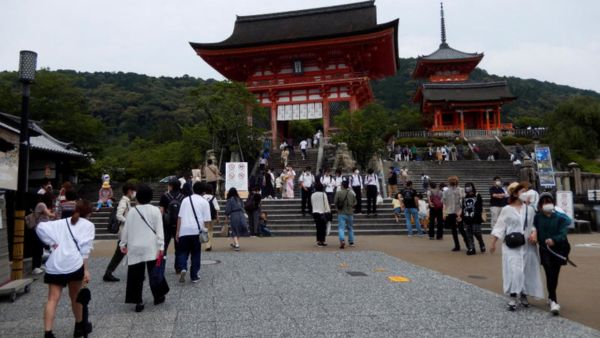
As the flood of overseas tourists shows no sign of slowing, complaints about overcrowding and poor behaviour by visitors are prompting some in Japan to look at ways of controlling the flow without losing income, including by charging higher prices for foreigners. Foreign tourist arrivals came to 3.04 million in May, up 9.6% from the same month in 2019 and marking the third straight month at more than three million, the Japan National Tourism Organization said Wednesday. The weak yen has helped spur visitor numbers. While many businesses benefit from visitors’ spending in aging and shrinking Japan, the crowds have started to rile some locals annoyed about being crowded out of their favourite attractions or even being unable to squeeze on to the bus to work. In the latest sign of a growing backlash, the mayor of the western city of Himeji on Sunday said he would like to start charging foreign tourists six times more than locals to visit the city’s famed 400-year-old castle. Overseas visitors should pay around $30 to visit the World Heritage-listed Himeji Castle, compared to about $5 for local residents, the mayor said. Osaka Governor Hirofumi Yoshimura this week expressed support for the idea and said he’d like to do the same at Osaka Castle, broadcaster FNN said. In Kyoto, tourists have been banned from parts of the historical Gion geisha district, and local authorities in Fujikawaguchiko, at the base of Mt. Fuji, last month erected a barrier to stop tourists from taking photos of a convenience store with the mountain in the background — a spot that had gone viral on social media. Yamanashi prefecture, one of the two prefectures Mt. Fuji straddles, has also limited the number of people allowed to climb the mountain this summer amid concern about overcrowding, trash and waste. Just 4,000 people a day will be allowed on the most popular route, with a new ¥2,000 ($13) fee imposed on each climber. The number of foreign tourists visiting Himeji castle — which was completed in 1609 and is one of only a dozen “original castles” that have withstood war, earthquakes and fire — reached a record 400,000 last year, accounting for around 30% of total visitors.

Read more

Delhi Airport launches country’s first-ever self-drop baggage machines

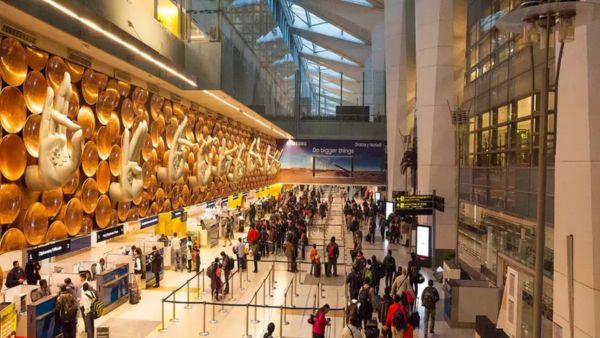
As per the latest development, the Delhi airport operator, Delhi International Airport Limited (DIAL), announced the launch of a self-service mechanism. This new system enables passengers to drop their luggage, collect tags, and complete the check-in process more efficiently and swiftly. The service, in short, eliminates the need for boarding passes and biometric validation, as the required information is embedded in the tags. If reports are to go by, Delhi's Indira Gandhi International Airport is the first-ever in India and the second globally, after Toronto's airport in Canada, to offer this facility. DIAL introduced the Self-Service Bag Drop (SSBD) Quick Drop Solution at Delhi Airport, positioning it as a pioneering technology in India and the second worldwide after Toronto. With 50 SSBD units now operational across Terminal 1 and Terminal 3, passengers will now be able to enjoy a more streamlined and efficient baggage drop process, which will further significantly reduce wait times and enhance the overall passenger experience. According to DIAL, the new one-step quick baggage drop solution reduces the check-in process from one minute to just 30 seconds. Traditional SSBD units allowed travelers to bypass check-in desks by printing their boarding passes and baggage tags at Common Use Self Service (CUSS) kiosks. Passengers would then scan their boarding passes or use biometric cameras at the SSBD unit to drop their bags on the conveyor belt, a process that typically took about a minute. However, with the Quick Drop Solution, the need for boarding passes or biometric validation is eliminated, cutting the processing time to just 30 seconds and making the check-in experience even more efficient. Currently, the self-service bag drop (SSBD) units are available with three airlines: Air India, IndiGo, and Air India Express. Passengers can collect and attach their luggage tags at CUSS kiosks upon arrival at the airport. After placing their bags onto the SBD conveyor belt, the system opens the respective airline's application on the SBD machine with a single click, reducing the processing time from about a minute to 30 seconds. In the event of dangerous goods, passengers must agree to the dangerous goods self-declaration form with a single click. The SBD system then internally checks all relevant criteria and business rules defined by the airlines. Once verification is complete, the bag is automatically processed. This innovative approach at Delhi Airport is set to revolutionize the check-in process, providing a faster, more convenient option for travelers and enhancing the overall airport experience.

Read more