
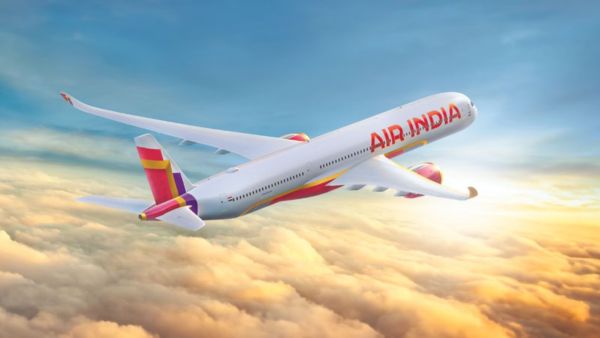
Air India to start non-stop services between Bengaluru and Gatwick
- Jun 08,2024
- Financial express
The Bangalore International Airport Ltd, the operator of Kempegowda International Airport Bengaluru (BLR Airport), on Friday (June 7) announced that Air India will inaugurate non-stop services between Bengaluru and London Gatwick (LGW) starting August 18. According to the statement issued by BLR Airport, the new route will offer five weekly flights, enhancing connectivity for both business and leisure travelers. “This exciting development marks Bengaluru as the first Indian city to have direct connectivity to the two largest airports in London – Heathrow and Gatwick, further reinforcing the strong economic and cultural ties between India and the UK,” BIAL said in a statement. The introduction of this service responds to the growing demand for travel between Bengaluru and London, offering passengers convenient and direct flight options. Satyaki Raghunath, Chief Operating Officer, BIAL, said, “This new route will boost trade, tourism, and cultural exchange. London is one of our busiest long-haul markets and the new service will allow our passengers to have a choice of airports in London to travel to.”
Read more
Bengaluru Airport launches India's first biometric-enabled self-bag drop facility
- Jun 08,2024
- money control
Now, DigiYatra domestic passengers flying with Tata Group Airlines from Terminal 2 of Bengaluru airport only need to scan their faces to initiate the self bag-drop process. Bengaluru International Airport Limited (BIAL), which operates Kempegowda International Airport (KIA), has unveiled the country's first biometric-enabled self-bag drop facility. Earlier, passengers using the self-bag drop facility at the airport had to print a boarding pass at self-check-in kiosks. Later, the boarding pass had to be scanned to initiate the bag drop process. Digi Yatra, utilising face-scan biometric technology, enables domestic passengers to navigate airports without a boarding pass or ID. Bengaluru airport has been a pioneer in technology implementation, introducing a fully automated 'self-bag drop' system in 2018 and piloting DigiYatra in 2019 to reduce queues. Once declared, the machine will instruct the passenger to place the bag on the conveyor. It will then prompt them to attach the baggage tag (which can also be generated by the machine or printed by passengers at a self-kiosk beforehand). Once confirmed, the bag will be measured, weighed, scanned, and automatically fed into the baggage handling system, while also generating the baggage receipt. In case of excess baggage, passengers will be directed to the counter to complete payment. However, machines will soon offer a UPI payment option for passengers to pay for excess baggage on the spot. Those who do not want to opt for biometrics can continue to scan their boarding pass and initiate the self-bag drop process. Tata Group, including Air India, Air India Express, and Vistara, has piloted this initiative, and the facility will be extended to Bengaluru airport's Terminal 1 (T1) and other domestic airlines in a phased manner. Bangalore International Airport Limited (BIAL), which operates KIA, has partnered with Materna Group, headquartered in Germany, to implement the biometric-enabled self-bag drop facility. Airport officials said biometric-enabled self-bag drop facility would expedite baggage transactions and reduce check-in queues. BIAL, in a statement to Moneycontrol, said: "Bengaluru airport introduced the country's first biometric-enabled self-baggage drop facility at Terminal 2. Presently this facility is available only to passengers of Vistara, Air India, and Air India Express". "Through facial biometric authentication, DigiYatra passengers can eliminate the step of scanning their boarding passes and conveniently deposit their luggage at the self-baggage drop facility. This service not only expedites baggage handling but also empowers passengers with greater control over their travel experience", it added. At Hartsfield-Jackson Atlanta International Airport (ATL) in the US, the self-bag drop with biometric ID verification, implemented in 2022, reduces average processing time to 70 seconds per passenger, cutting bag check time by 30 percent. There have also been privacy concerns. In April 2024, there were reports raising concerns about the privacy of data shared with DigiYatra in connection with a former vendor Dataevolve, which has come under investigation. However, Digi Yatra Foundation claimed that it does not store the personally identifiable information of passengers and that the personal data of the Indian users are safe and secure.
Read more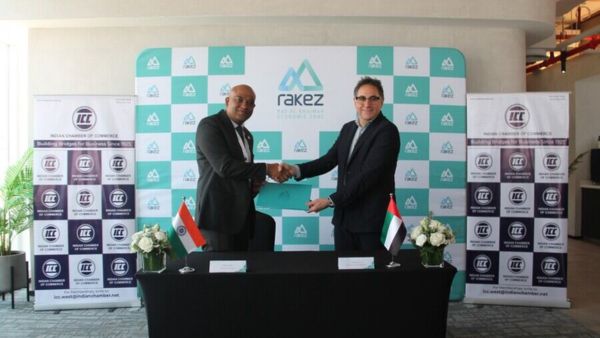
ICC and RAKEZ Forge Alliance to boost UAE-India Travel Growth
- Jun 07,2024
- Travel And Tour World
RAKEZ and ICC ink a landmark MoU to boost business, economic growth, and travel opportunities, strengthening UAE-India ties and fostering mutual collaboration. Ras Al Khaimah Economic Zone (RAKEZ) and the Indian Chamber of Commerce (ICC) have inked a Memorandum of Understanding (MoU) aimed at bolstering business prospects and fostering economic growth between the UAE and India. The MoU was signed by RAKEZ Group CEO Ramy Jallad and ICC Regional Director Ratheesh Nair. This collaboration enables both entities to tap into extensive business networks, with RAKEZ gaining access to the Indian business community through the ICC, and ICC members finding new opportunities for growth in the UAE market. Commenting on the partnership Jallad said, “This collaboration with the Indian Chamber of Commerce represents a strategic milestone for RAKEZ as we continue to support and facilitate the growth of Indian businesses in the UAE. Our active efforts in promoting the Comprehensive Economic Partnership Agreement (CEPA) with India through roadshows, investor meets, and regular exchanges, have laid a strong and reliable foundation for developing and maintaining partnerships with more Indian business groups.” The ICC is instrumental in advancing trade, industry, and commerce within India, particularly in the Eastern and North-Eastern regions. It has also formed a cooperative alliance with the UAE-India CEPA Council, reinforcing its commitment to facilitating bilateral trade. Highlighting the significance of the partnership, ICC Director General Dr. Rajeev Singh said, “The UAE and India have long enjoyed a dynamic trade relationship. This MoU with RAKEZ opens new doors for our members and Indian entrepreneurs to explore and establish their presence in one of the fastest-growing economic zones in the region. We are excited about the prospects this partnership holds for Indian enterprises.” The UAE stands as India’s third-largest trading partner and second-largest export destination. Within RAKEZ, around 6,000 Indian companies are thriving, enriching a diverse industrial landscape that includes major players such as Ashok Leyland, Dabur, Mahindra, Royal Gulf Industries, Sejal Glass, Motherson, and Bosco Aluminium. In its ongoing efforts to strengthen economic ties with India, RAKEZ recently hosted a business delegation from the PHD Chamber of Commerce and Industry in Ras Al Khaimah. The delegation, comprising representatives from sectors such as healthcare, agri-food processing, leather, IT, and AI, explored business opportunities and toured key locations in the emirate, including Marjan and various facilities within the economic zone.
Read more
US business travel industry responsible for nearly 2% of GDP
- Jun 07,2024
- Travel Biz Monitor
The Global Business Travel Association (GBTA) has unveiled a new study, the “GBTA U.S. Economic Impact Study: Business Travel’s Impact on Jobs and the U.S. Economy,” which quantifies the significant economic impact of traveling for work in the U.S. The report shows the business travel industry provided a major boost to the U.S. economy in 2022, the latest full year for which a complete set of data is available for analysis. The U.S. was the nation that spent the most on business travel in 2022, with expenditures totalling USD 421.1 billion and resulting in USD 119 billion in tax receipts. It also supported 6 million jobs and represented 3.5% of total employment. GBTA’s economic impact study also shows that for every dollar spent on business travel, USD 1.15 was returned to the U.S. economy as net-new gross domestic product (GDP). Additionally, of the direct jobs supported by business travel, 38% were in food services, 19% in accommodations and 11% in transportation and warehousing. The study also includes profiles of U.S. business travellers to better understand their characteristics, behaviour, motivations and spending patterns. The study methodology estimates total annual business travel spending in the U.S. in 2022 and uses a standard economic model to translate business travel spending into its impact on GDP, jobs, wages and taxes. The U.S. is anticipated to be a top one or two market worldwide for spending again in 2024, according to GBTA’s latest industry forecast2. Although final data is not yet available beyond 2022, estimates from GBTA’s latest Global Business Travel Index (BTI) point to U.S. business travel spending for 2023 to increase around 7% above 2019 totals, indicating a robust recovery for the industry. On a global basis similar growth is expected, with business travel spending anticipated to surpass USD 1.5 trillion in 2024. “The data shows that business travel is a substantial contributor to the health of the U.S. economy, and therefore also a key driver for the global economy,” said Suzanne Neufang, CEO, GBTA. “Business travel supports millions of jobs and delivers billions in tax revenue, which is why it is important for policy-makers to consider the impact on the industry when devising economic policies – and for sustainable solutions to be prioritized, funded and developed to help us abate travel’s hardest-to-abate sectors.” Additional study highlights for U.S. business travel in 2022 include: • A total of 429.9 million business trips were taken within the U.S. • An estimated 67% of trips were taken for transient purposes: sales, client service, government and military travel, and travel for construction or repair. The remaining 33% represents conference and event travel. • Business travellers are traveling longer for each trip: 4.1 days in 2022 (versus 3.3 days as cited in 2017 GBTA research). • The amount spent per business trip averaged USD 632, with 34% spent on lodging (USD 214), representing the largest single category for spending. • The average age of U.S. business travellers is 44.3 years. • One-third (33.9%) have an annual household income below USD 50,000 and 31.5% above D 100,000, with the remaining third falling in between. • Blended travel − where business and leisure trips are combined − made up over a third of all travel (33.8%). Travelers stay for 4.4 days on average during “bleisure” trips, and although men were more likely to travel for business overall, proportionally, women added a leisure component to their business travel at a much higher rate than men in 2022.
Read more
Hotels adapt to neurodivergent needs: New era of stress-free family vacations
- Jun 07,2024
- Hindustan Times
On a family trip to Walt Disney Co.’s. Orlando theme parks, Nicole Thibault’s 2.5-year-old son began experiencing meltdowns—and not in the standard toddler sense. Everything he had previously loved became deeply distressing, from his favourite characters to familiar foods setting off tantrums that could stretch for more than 30 minutes. Something felt amiss, Thibault recalls of the weeks before her son was diagnosed with autism. Determined to continue showing her son the world—sans meltdowns—her next step was to solicit travel tips from experienced parents of neurodivergent kids. One after another, the responses poured in, variants on the same idea: “We don’t go anywhere. It’s just too hard.” A decade later, Thibault has built her New York-based travel agency, Magical Storybook Travels into a thriving business that caters specifically to neurodivergent families. In pre-travel counseling sessions for her clients, she studies their daily routines and preferences before discussing potential destinations. Then she’ll offer detailed briefs for each suggested hotel, including video tours, floor plans and potential sensory triggers (such as possible fireworks displays in the vicinity or strong scents in the lobby) to set expectations on a very granular level. In the United States, approximately 20% of the population (66 million people) experience a form of neurodivergence. These often-invisible conditions range from attention deficit hyperactivity disorder (ADHD) and autism spectrum disorder to dyslexia and Tourette’s syndrome. Each diagnosis—and each individual—is unique, and so are their destabilizing triggers. A child who thrives in playgrounds may prove intolerant of mulched wood chips on the ground. Another may love the stimulation of big cities—until the raspy sound of a subway announcement rattles them. Some may subsist primarily on chicken nuggets, but only if they’re not deemed “too scratchy.” Add a decreased ability to communicate verbally in unfamiliar or stressful environments, and it’s easy to see how travel can amount to a series of land mines. The concerns are so overwhelming that, according to a 2022 survey, 78% of families or individuals with autism forgo travelling entirely. The findings are from the International Board of Credentialing and Continuing Education Standards, which trains education, health-care and corporate professionals on neurodivergent inclusivity. While that figure represents a drop from 87% in 2018, it’s still too large a number, the organization’s president Meredith Tekin said in an emailed statement. But hotel brands are now wising up to the untapped economic opportunity of catering to this substantial segment and brushing up on how to extend a sensitive welcome. Up for grabs: tens of millions of prospective guests that currently stay home. The first step, and the bulk of what these hotels are doing now, is training. Certifications such as those offered by Ibcces help employees to anticipate neurodivergent needs and handle guest interactions sensitively. Rather than stop to stare at Thibault’s toddler in a tantrum—or worse, offer gratuitous advice—trained staff are prepared to respond to parental requests for help while encouraging bystanders to move along quietly. The board’s conversation with hotels, said Tekin, is shifting. “I have noticed a change from organizations asking ‘why’ this is a need to asking ‘how’ to better welcome these guests,” she wrote. Close to 200 travel and tourism companies have received Ibcces’ Certified Autism Center or Advanced CAC designations since the program’s inception in 2017. Recent examples include Atlantis Dubai, JW Marriott Desert Springs Resort and Spa and Legoland Korea Resorts. More are listed on the Autism Travel website alongside hotels that have adopted similar certifications from other organizations.
Read more
Hong Kong to Beijing and Shanghai: New high-speed sleeper trains cut travel time by half
- Jun 07,2024
- Hindustan Times
A new high-speed sleeper train service is set cut travel time between Hong Kong and Beijing and Shanghai by about half as the financial hub seeks to deepen ties with mainland China. The services, which start June 15 and run Fridays to Mondays, will reduce travel time between Hong Kong and Beijing to 12.5 hours from more than a full day, MTR Corp. said in a statement. Trips to Shanghai will be shortened to 11 hours from 19.5 hours, according to Hong Kong’s mass railway operator. A trip to Beijing will set travelers back as little as HK$937 ($120), with a journey to Shanghai starting at HK$682 ($87) and sleepers costing more. That compares with about $100 for a 3.5-hour flight from Hong Kong to China’s capital in mid-June and as low as $78 for the less than 3-hour plane ride to Shanghai. As well as the longer travel time, the overnight train services will run just once a day compared with at least a dozen flights over the weekend between Hong Kong and the two mainland cities. Long-haul daytime train services that clock in at about eight hours will continue to run on the route that’s popular with tourists and business people alike. The introduction of the sleeper trains means passengers can “maximize their travel time and conveniently plan their business or leisure itineraries,” MTR said. Tickets for the new service go on sale on June 5.
Read more