Himachal government forms committee to safeguard Lahaul Valley ecosystem amid tourism surge

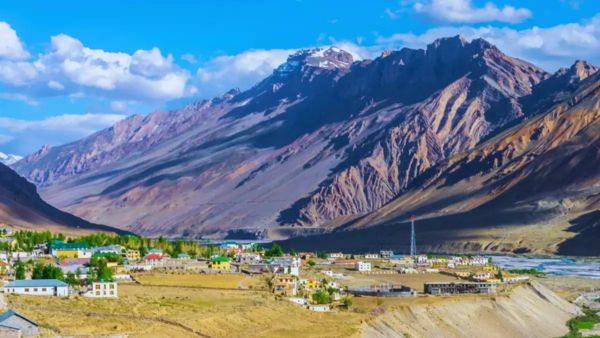
In response to the burgeoning influx of tourists in the Lahaul Valley, the state government has established an 11-member committee led by the Director of Tourism to ensure safe and sustainable tourism in the region. This initiative aims to protect the valley's delicate ecosystem, which has faced increasing pressure since the opening of the Atal Tunnel in October 2020. The Atal Tunnel has significantly boosted tourism, drawing numerous visitors to Sissu and Koksar for adventure activities in the snow. The surge in tourist numbers has raised environmental concerns, with experts warning about the region's limited carrying capacity. Kullu District Tourism Development Officer (DTDO) Sunayna Sharma emphasised the committee's role in regulating tourism, noting that it will offer suggestions on traffic management, safety, and adventure activities to ensure tourism is conducted in a safe, efficient, and sustainable manner. In May 2023, the government also established the Atal Tunnel Planning Area to control land use and construction activities in the region, particularly along highways. This measure aims to prevent unregulated expansion as new hotels and homestays emerge to meet the growing demand. The HP High Court has been actively involved in addressing ecological concerns. On March 6, the court directed the Town and Country Planning Principal Secretary to notify vending and non-vending zones in the Solang Special Area near Manali. This followed the court's earlier intervention regarding littering near the Atal Tunnel, prompted by a public interest litigation (PIL) based on a news report from The Tribune in July 2022. As the valley continues to attract more tourists, the newly formed committee's work will be crucial in balancing the region's economic benefits from tourism with the need to preserve its unique ecological and cultural heritage.

Read more

Travel advisory: Heatwave alert in most parts of North India; places to avoid right now

A relentless heat wave persisted across large parts of the country for the seventh consecutive day on Thursday, with temperatures soaring to 48.8 degrees Celsius in Rajasthan's Barmer, marking the highest recorded temperature in the country so far this year. Official statistics revealed that at least 16 locations in Punjab, Haryana, Uttar Pradesh, Rajasthan, Gujarat, and Madhya Pradesh experienced maximum temperatures of 45 degrees Celsius or above on Thursday. The India Meteorological Department (IMD) warned that the severe heat wave would persist for at least another five days. In Rajasthan, Churu recorded a high of 47.4 degrees Celsius, Phalodi 47.8 degrees, and Jaisalmer 47.2 degrees. Meanwhile, maximum temperatures reached 46.6 degrees in Madhya Pradesh's Guna, 45 degrees in Uttar Pradesh's Orai, 45.9 degrees in Gujarat's Ahmedabad, 45.4 degrees each in Punjab's Bathinda and Haryana's Sirsa. Despite a slight dip, Delhi still experienced above-normal temperatures on Thursday, with the mercury hitting 41 degrees Celsius, according to IMD data. The Met office issued a 'red' warning for Punjab, Rajasthan, Haryana, Chandigarh, Delhi, and western Uttar Pradesh, highlighting a ‘very high likelihood’ of heat-related illnesses and heat stroke across all age groups. It also cautioned that warm nighttime conditions could exacerbate heat-related stress in Uttar Pradesh, Delhi, Punjab, Haryana, and Rajasthan over the next three days. Elevated nighttime temperatures are particularly concerning as they hinder the body's ability to cool down, a phenomenon exacerbated by the urban heat island effect, which causes cities to be significantly hotter than their surroundings. If reports are to go by, the relentless heat is straining power grids and depleting water sources, leading to drought-like conditions in various parts of the country. The Central Water Commission reported that water storage in 150 major reservoirs in India had plummeted to its lowest level in five years, exacerbating water scarcity in many states and significantly impacting hydropower generation. Severe and frequent heat waves are disproportionately affecting low-income households, which often lack access to adequate water and cooling facilities, and are putting outdoor workers at risk, necessitating frequent breaks. Vulnerable populations, including the elderly and children, are at a heightened risk of heat-related illnesses. Hot weather also negatively impacts productivity, with studies showing that students perform worse academically during 'hot school years.' The absence of functional electricity connections in 15 percent of government schools in India exacerbates the impact of heat waves on rural education. Moreover, the lack of adequate cold-chain infrastructure poses a threat to fresh produce during extreme heat events, contributing to annual food losses worth USD 13 billion in India. A World Bank report predicts that India could account for 34 million of the projected 80 million global job losses due to heat stress-associated productivity decline by 2030. With 75 percent of Indian workers experiencing heat-related stress, the lost labour resulting from rising temperatures could lead to a loss of up to 4.5 percent of India's GDP by the end of the decade, equivalent to approximately USD 150-250 billion, according to a McKinsey Global Institute report.

Read more

Dubai Tourism charts path for aggressive growth in Indian market

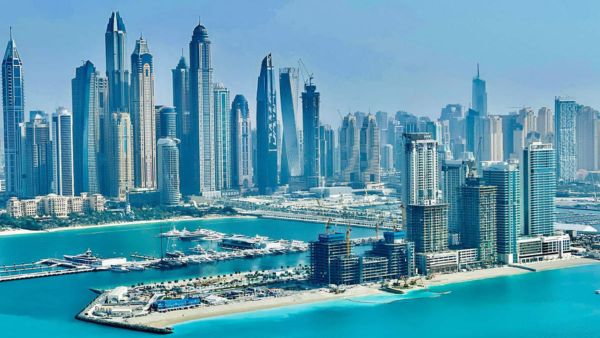
Dubai Tourism is aggressively targeting the Indian market with ambitious growth strategies and sustainable initiatives. 1.Dubai aims to strengthen its position as the top destination for Indian travelers through various targeted strategies, according to ET TravelWorld. 2.Key focus areas include offering affordable short-stay packages, targeting solo and couple travelers, and summer travel promotions. 3.Dubai is investing in marketing strategies to penetrate tier-2 and tier-3 Indian cities, enhancing engagement beyond major metros. 4.Sustainability initiatives like the “Dubai Sustainable Tourism” program are being implemented to address over-tourism and environmental concerns. 5.Dubai is working on new partnerships and product developments, including influencer marketing and enhanced luxury experiences, to attract high-spending Indian tourists.

Read more

Sardinia: The Mediterranean isle where hikers stay for free

An enticing new programme is seeking to transform a rugged corner of the Italian island into an outdoor lover's paradise. Renowned for its pristine beaches and dramatic granite cliffs, the Italian island of Sardinia has long been known as a jet-setters' paradise. But away from the mega yachts and glitterati of its glamorous Costa Smeralda resort, much of the Mediterranean's second-largest island remains a rugged, unspoiled wilderness waiting to be explored. Now, a group of hikers and former miners are hoping to lure adventure-seekers to Sardinia's seldom-visited south-west coast by offering free lodging along the island's stunning 500km Santa Barbara Mining Route. Named for the patron saint of miners, the 30-stage route passes through towering sand dunes, lush forests, craggy outcrops and nearly 150 abandoned mines. It also allows travellers plenty of opportunities to get to know local Sardinians and enjoy the island's famous gastronomy. "Before my trip, I didn't know anything about the history of that part of Sardinia," said Giorgio Pedulla, a 26-year-old data analyst from Milan who spent five days hiking the trail in March. "On this hike, you really manage to get into the culture and the life of the people who live there." Pedulla was taking advantage of the trail's new Leg's Go In Cammino initiative, which launched in October 2023 and offers visitors younger than 35 up to three consecutive nights' accommodation for free. When hikers register, they're granted vouchers to use in local inns, campsites and bed and breakfasts. After the free stays, they pay the standard rates of €20 a night at posadas (small family-style inns) and €28 a night at private accommodations. "We wanted to decrease the average age of our visitors, from retired people to people in their 20s and 30s. It's also very important for us to let people know about the history of this trail," said 30-year-old Margherita Concu, the association's secretary and a hiker who has trekked all 500km of the trail. "We want people to learn about this community, a place that even some Sardinians don't know about." The area's jaw-dropping beauty and budget accommodations have proven a powerful draw. In 2023, 1,199 hikers set off on the trail. So far this year, 1,521 have come, trekking along mule tracks dating to 800 BCE, stone bridges built by the ancient Romans and 19th-Century rail lines. To date, 196 hikers completed the entire trail since it opened in 2017, often taking a month to do so. In addition to bragging rights, finishers receive a trophy made by a local artisan depicting a ceramic tower with three windows – the symbol of Santa Barbara. In contrast to life in Milan, Pedulla says that the small Sardinian villages he and his friends visited were full of people ready to welcome them and make them feel like a part of the community.

Read more

Domestic travel, tourism sector ready to capitalise on upcycle: IHCL MD

The Indian travel and tourism sector is well-positioned to capitalise on an upcycle, driven by factors, including the demand-supply gap, penetration opportunities in Tier II and Tier III markets and rebound in foreign tourist arrivals, according to Indian Hotels Company Ltd Managing Director and CEO Puneet Chhatwal. In his address to shareholders in the company's Annual Report for 2023-24, Chhatwal said the Tata group hospitality firm is uniquely placed to capitalise on the opportunities provided by a dynamically growing industry. "In India's evolving economic landscape, tourism has emerged as a powerful force driving not only economic growth but also forging a path towards a brighter and more inclusive future. With its rich cultural heritage and warm traditions, hospitality in India has undoubtedly arrived on the world stage," he wrote. He further said India's growth story is characterised by a dynamic interplay of economic expansion, changing consumer preferences, and evolving aspirations. Increasing affluence is leading to new trends like the rise of premiumisation, experiential travel and brand consciousness. "The Indian travel and tourism industry is ranked among the fastest-growing economic sectors in the country, contributing to employment generation and regional development," Chhatwal said. On the future prospect, he said, "The sector is well-positioned to capitalise on an upcycle, driven by the demand-supply gap, market penetration opportunities in Tier II and Tier III markets, strong demand drivers such as MICE, spiritual tourism, the rebound in foreign tourist arrivals and destination weddings." This evolving landscape is marked by a heightened consumer awareness and a stronger preference for brands. "With our diverse portfolio, iconic properties, world-class service, and a brandscape defined to serve myriad travel and hospitality needs, we are uniquely placed to capitalise on the opportunities provided by a dynamically growing industry," Chhatwal told the shareholders.

Read more

Singapore Airlines turbulence: SIA changes in-flight safety protocols, modifies route

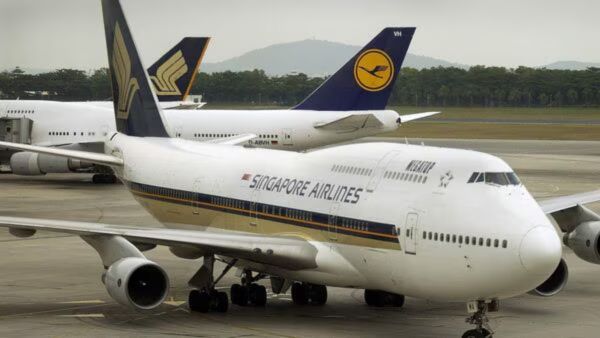
Following a turbulence incident that killed one passenger and injured several others, Singapore Airlines has tweaked its in-flight safety protocols and flight routes, newswire Reuters reported on Friday. The SQ321 London-Singapore flight on a Boeing 777-300ER plane carrying 211 passengers and 18 crew diverted to Bangkok for an emergency landing on Tuesday after the plane was buffeted by turbulence that flung passengers and crew around the cabin, slamming some into the ceiling, the Reuters report added. Flight SQ321 has since modified its route, avoiding the area of turbulence encountered during the incident. Here are the top eight updates from the Singapore Airlines turbulence incident: 1.Director of Samitivej Srinakarin Hospital, Dr Adinun Kittiratanapaibool, said that although none of the injuries caused due to turbulence were life-threatening, twenty passengers were reported to be in intensive care after the incident, The Straits Times reported. 2.The youngest patient is a two-year-old child who suffered a concussion, while the oldest patient at the hospital is 83 years old. Dr Adinun Kittiratanapaibool noted that 40 patients from Flight SQ321 were at the hospital. 3.The Singapore-bound flight carrying 211 passengers and 18 crew members made an emergency landing in Thailand's capital, Bangkok. The Boeing 777-300ER aircraft departed from London and landed at Bangkok’s Suvarnabhumi Airport at 3:45 pm (4.45 pm Singapore time). 4.In the incident, around 60 passengers were injured after the flight encountered “sudden extreme turbulence over the Irrawaddy Basin at 37,000 feet about 10 hours after departure" on Tuesday. 5.The medical treatment for forty-six passengers and two crew members aboard the SIA flight is ongoing in Bangkok. On May 23, SIA posted on Facebook that sixty-five passengers and two crew members were still in Bangkok. 6.The post further noted that SIA Chief Executive, Goh Choon Phong met "affected passengers, crew, their family members and loved ones in Bangkok today to personally offer his support and understand their concerns". 7.The Airline has since tightened cabin service rules to ensure passenger safety and on Friday said it’s taking a “more cautious approach". 8.The airline said that in-flight meal services and hot drink distribution would cease when the seatbelt sign is switched on. Additionally, crew members will take their seats and fasten their seatbelts.

Read more