Global Airlines Expand Connectivity Through Western Sydney Airport Growth

The Western Sydney Airport international expansion is set to transform Australia’s aviation and tourism landscape as major carriers including Air New Zealand, Singapore Airlines, Emirates, and Qatar Airways ramp up flights from top global markets. The expansion follows updated aviation agreements with Qatar and the UAE, allowing more passenger services and strengthening connectivity from the USA, UK, China, India, and New Zealand. This development positions Western Sydney Airport as a curfew-free international hub, expected to boost inbound tourism, enhance travel options, and stimulate the local hospitality sector. With the airport scheduled to open for passenger services in October 2026, the move signals a major growth opportunity for Australia’s tourism and airline industries. With passenger services scheduled to begin in October 2026, this development signals a strategic opportunity for airlines, travellers, and the Australian tourism industry.

Read more

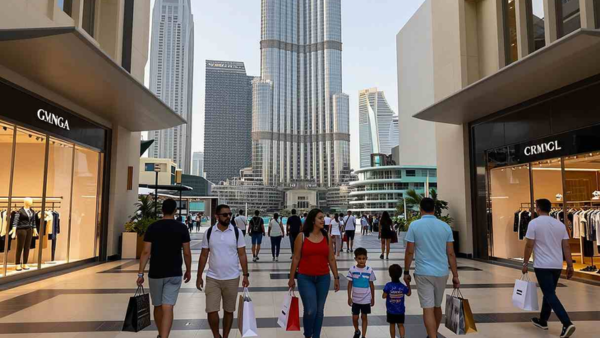
Dubai Reinvents Lifestyle Tourism Through Homeownership Campaign

Dubai’s latest Win Your Home in Dubai campaign is being positioned as far more than a retail promotion. Through a citywide strategy that combines shopping, tourism, hospitality, and real estate, the initiative is being used to strengthen Dubai’s status as one of the world’s leading lifestyle destinations. By linking everyday spending during major summer events to the opportunity to win residential property, the campaign is expected to stimulate visitor spending, encourage longer stays, and deepen engagement with Dubai’s tourism economy. Running from 22 May to 30 August 2026, the 12-week campaign has been designed around Dubai’s established festival-led tourism model, where retail events are used as catalysts for economic growth, visitor arrivals, and hospitality demand. The initiative also reflects Dubai’s broader vision of positioning itself not only as a tourism hub, but also as a city for long-term living, investment, and lifestyle experiences.

Read more

Thailand’s Tourism Boom Accelerates with Visa Reforms and New Destinations

In an era of global competition, tourism in Thailand has experienced a boom that has been welcomed by officials and travellers worldwide. The nation recorded more than thirty‑five million visitors, generating billions in revenue while a new record was expected in 2025 with relaxed policies. China, Malaysia and India were major drivers of this tourism boom. This surge has been driven by bold visa reforms that have allowed citizens from ninety‑three countries to enter without a visa for sixty days, with a thirty‑one nation visa on arrival scheme and a Destination Thailand Visa welcoming digital nomads. Seat capacity has been increased and digital systems have been enhanced to handle arrivals. Across the country, mountains, temples, beaches and markets have been promoted, while lesser‑known sites have been highlighted through campaigns. Safety centres, emergency hotlines and mobile applications have been integrated to ensure confidence. The momentum is underpinned by a forward‑looking tourism strategy that emphasises sustainability, soft power and inclusivity. Overall, the tourism boom is being portrayed as a story of visionary policies, improved infrastructure, rich attractions and careful stewardship globally today. Thailand’s tourism boom has been shaped by government policies and visa reforms. In 2024 the cabinet approved visa exemptions for citizens of ninety‑three countries with stays of sixty days. The visa on arrival list has included thirty‑one countries and the Destination Thailand Visa has been designed for digital nomads. An Education Plus visa has allowed students to remain for one year after graduation, boosting tourism spending. Visa categories have been simplified from seventeen to seven and an expanded e‑Visa system has been planned. A digital arrival card has been proposed to process data securely. These measures have been intended to make travel seamless and to encourage visitors. The reforms have been praised for clarity and openness widely.

Read more

Japan Tourism Adapts to Changing Regional Travel Trends in 2026

Japan’s international tourism sector experienced a notable downturn in April 2026 as arrivals from key countries including China, the UK, Germany, Italy, the UAE, Saudi Arabia, and Kuwait fell sharply, driven primarily by mounting regional instability and shifting global travel patterns. Despite a record-breaking March and a strong start to the year, geopolitical tensions and cautious travel behavior in both European and Middle Eastern markets contributed to an overall five percent decline in inbound visitors, unsettling airlines, hotels, and tourism-dependent businesses across the country. This sudden drop highlights the sector’s vulnerability to external factors while emphasizing the need for strategic market diversification and adaptive travel planning to sustain Japan’s long-term tourism growth. Japan’s international tourism industry, long regarded as one of the fastest-growing in Asia, faced an unexpected setback in April 2026. Official data from the Japan National Tourism Organization (JNTO) revealed that inbound arrivals fell 5.5 percent year-on-year, dropping to 3.69 million foreign visitors. This decline came on the heels of a record-breaking March, highlighting the volatility of global travel flows amid geopolitical and regional instability.

Read more

Thailand Sustains Long-Haul Tourism Growth with Strategic Focus

The resilience of the international travel segment within Southeast Asia is currently being demonstrated by the steady performance of long-haul arrivals. A primary position within the global hospitality industry is maintained by Thailand, where consistent booking numbers from distant origin markets are being observed. In the face of intensifying international challenges, Thailand tourism stability is actively being preserved through targeted administrative strategies. This stability is attributed directly to the established reputation of the country as a destination capable of delivering exceptional value, high-quality experiences, and dependable standards. A comprehensive approach is utilized by the Tourism Authority of Thailand to navigate the complexities of the modern economic landscape, ensuring that the marketplace remains attractive to international travelers who prioritize reliability and cultural richness. Operational frameworks within the regional hospitality industry are being heavily influenced by shifting global dynamics. The maintenance of TAT long-haul market resilience serves as a core objective for state administrators who are tasked with shielding the local economy from external shocks. While regional competition from emerging markets continues to expand, the unique market positioning of Thailand allows the nation to retain a significant share of the global travel demographic. The strategic focus is shifted away from mere visitor volume and is directed instead toward the cultivation of high-value experiences that justify the expenditures associated with long-distance travel. By reinforcing infrastructure and hospitality standards, a robust defense is mounted against the volatile fluctuations currently characterizing the international travel sector.

Read more

Middle East Hospitality Market Sees Record Luxury Growth in 2026

The Middle East hospitality market has entered 2026 with record-breaking pipeline growth, driven by a powerful mix of luxury resort development, rapid urban expansion, and large-scale destination projects across the region. Strong investor confidence, combined with ambitious tourism diversification strategies and sustained demand for high-end and upscale accommodation, has pushed hotel construction activity to unprecedented levels in key markets including Saudi Arabia, Egypt, and the UAE. Despite regional geopolitical uncertainties, development momentum remains firmly intact, with a surge in early-stage planning and long-term project commitments signaling continued expansion well beyond the current year. Despite these external pressures, overall pipeline activity still posted strong growth, rising 13% in project count and 12% in room supply compared with the same period a year earlier. The figures underline how long-term tourism strategies and large-scale investment plans continue to drive development across the region.

Read more