Govt bans pharma firms' gifts and travel sponsorship for doctors

NEW DELHI: Govt on Tuesday notified a uniform code for marketing practices by pharmaceutical companies, which prohibits them from extending travel and stay facilities in India or abroad to doctors and their family members for attending conferences and workshops, unless the person is a speaker at the event. The uniform code for Pharmaceutical Marketing Practices (UCMP) 2024 also bans any kind of gifting to healthcare professionals and lays out guidelines for redressal of complaints related to breach of the code. The department of pharmaceuticals has shared a copy of UCPM with all pharmaceutical associations for strict compliance. The department has directed the associations to form an ethics committee to investigate complaints related to any breach of the code. Actions suggested for any established breach include asking the entity (company in question) to recover money or items, given in violation of the code, from those concerned, suspending or expelling the entity from the association or referring the matter to the agency or authority of govt that is qualified to act in the matter. It says the executive head of the company should submit a self-declaration within two months of the end of every financial year to the association for uploading on their website, or directly to the UCMP portal of the department of pharmaceuticals in case he or she is not a member of such a body. "Pharmaceutical companies spend a lot of money on marketing their products. Taking doctors abroad in the name of conferences and workshops, offering them gifts and free drug samples are some of the ways they do it. It must stop as eventually the cost of all this expenditure is passed on to the patient in terms of the high cost of the drugs and medical devices," sird a senior doctor, who was part of the ethics committee of the Medical Council of India (MCI). He, however, added that programmes to train healthcare professionals in newer technologies shouldn't be curtailed in the process.

Read more

Fasting and flying during Ramadan? Here’s what airlines are offering

Several airlines are offering special Iftar meals and traditional culinary delicacies in their lounges as well as flight discounts during the month of Ramadan. As the Holy month of Ramadan begins on March 12 in India, several airlines are offering special menu and amenities to those who are observing the sunrise to sunset fast. Premium lounges of a few Middle Eastern airlines will have traditional Arabic dishes while meal boxes will be served for Iftar 30,000 ft high in the sky. Special entertainment programmes have been lined up for those flying during the month of Ramadan. If you are fasting and flying during Ramadan, know all about the airlines’ special offering. What’s in the premium lounges? Etihad Airways: At Etihad’s lounges in Abu Dhabi, New York, Washington DC and London Heathrow, guests can indulge in traditional Ramadan refreshments such as laban, Vimto, karkade, date milk, cucumber refresher, and rose milk. Travellers who will break their fast before departure can enjoy an Iftar meal at Etihad lounges. From warm harira soup and lobster machbous ravioli to chicken biryani, guests can savour the rich flavours of Arabic cuisine. The dessert menu will include authentic Ramadan treats such as Vimto cheesecake, rose and pistachio mahalabia (milk pudding) and rangeena (pitted ripe date topped with a toasted flour and ghee mixture). Emirates Airlines: At the Emirates lounges in Dubai International Airport (DXB), traditional Arabic sweets, dates and coffee will be offered during Ramadan. Meals available in First and Business Class lounges will include a selection of hot and cold Arabic mezze, lentil soup, main courses of Arabic mixed grill with tahina, chicken kabsa (national dish of Saudi Arabia) served with dakous (tomato sauce) and raita, and desserts of kunafa (pastry soaked in syrup) pistachio cream, basboussa (syrup-soaked semolina cake) saffron, walnut Qatayef (Arabic pancake) ashta (thick cream) and ice cream flavours of Arabic coffee and dates or baklawa, alongside a host of traditional Arabic sweets and pastries. Emirates lounges are also equipped with dedicated prayer rooms and ablution facilities. Iftar meals onboard and at the departure gate: Etihad Airways: In premium cabins, guests can indulge in delicacies such as lentil soup with fried chaami (Emirati cheese), lamb and date meatballs with saffron rice, and the classic warm umm ali dessert (national dessert of Egypt). For those seeking a lighter option, there will be Iftar salad. Travellers in Economy class will enjoy Arabic mezze, braised lamb with vermicelli rice, fried onion, and almond and for the dessert, they will be served Vimto mousse with khabeesa. For those breaking their fast just before or after landing, Etihad will provide Iftar bags containing Laban, water, and dates. Emirates Airlines: For fasting customers at select Emirates Boarding Gates during Iftar time, there will be complimentary Iftar boxes to help break the fast - containing water, laban, a banana and dates. From the March 11, customers breaking their fast across all cabin classes to select destinations will be offered Ramadan meal boxes that will include light bites from hummus with spinach and Arabic bread, to tabbouleh with baba ghanoush, alongside sandwiches of Moroccan or zaatar chicken with pickled garlic mayonnaise, and some sweet treats of almond chocolate or Arabic baklawa, cashew nut and pine seed baklawa flowers, as well as staples like traditional dates and laban. Onboard announcement of Imsak and Iftar time: To ensure the highest levels of accuracy for fasting Muslim passengers, Emirates uses a unique tool to calculate the correct timings for Imsak (the time to commence fasting) and Iftar while in-flight, based on the times of the sunrise and sunset of the location the flight is passing by using the aircraft’s longitude, latitude, and altitude. When the sun sets, passengers will be officially informed of the Iftar time by the captain. Special Entertainment programs: Etihad Airways’ signature E-BOX entertainment system features a selection of Ramadan programming and religious content, as well as an audio of the Holy Quran.

Read more

Singapore eases travel hassles, introduces QR code system in place of passports for border crossings

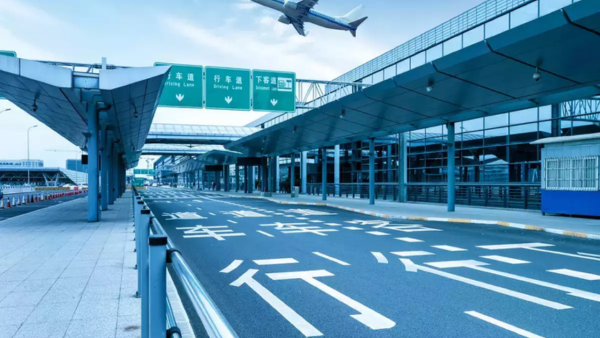
Travellers arriving and departing Singapore via Woodlands and Tuas checkpoints will from March 19 only need a scanned single QR code, which they can generate prior to arriving and which can be used for all people in a vehicle, the nation’s Immigration & Checkpoints Authority said in a statement. Overall wait times, which can often stretch to hours in busy periods when workers are trying to cross the border from Malaysia, should be reduced by around 30% if most car travelers use the QR code for clearance, the authority said. Singapore will also extend the passport-free clearance to other land checkpoints with Malaysia, further easing congestion at what is one of the world’s busiest border crossings. As travel picks up to near full speed after Covid, Singapore has also been deploying new technologies at Changi Airport, frequently voted one of the world’s best for its futuristic feel and efficiency. Residents and visitors leaving the island will progressively be able to clear those checkpoints without having to use their passports either. The government said last year that manual counters at all passenger halls will gradually be replaced by about 800 automated lanes using a new contactless automated border control system from the first quarter of 2024. The system was trialled at Changi Airport’s Terminal 4 in 2019. Some 5.43 million people passed through Singapore’s main airport in January. Tuesday’s move should also help pave the way for the upcoming Rapid Transit Link project between Singapore and Johor Bahru in Malaysia. The project, with a peak capacity of up to 10,000 passengers per hour in each direction, is expected to up and running by the end of 2026.

Read more

Jaipur Elephant Festival – When is it and what to expect

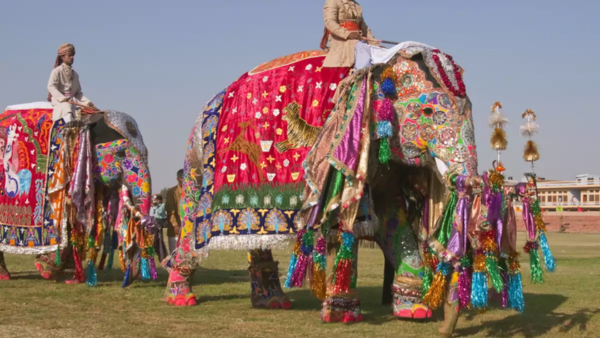
The Jaipur Elephant Festival, held annually in the vibrant city of Jaipur, Rajasthan, is a unique and colourful celebration that showcases the majestic beauty of elephants while highlighting the rich cultural heritage of India. This festival holds a special place in the hearts of locals and tourists alike for several reasons. The Jaipur Elephant Festival is most popular for its colourful parades, cultural performances, and unique sporting events. The festival continues to be a truly special and unforgettable experience for all who attend. This year, the Jaipur Elephant Festival is going to be celebrated on March 25. If you are planning for a unique summer holiday, you might want to give this cultural festival a chance. Elephant parade: The highlight of the Jaipur Elephant Festival is the grand parade of beautifully adorned elephants. These gentle giants, bedecked in vibrant colours, intricate patterns, and embellished with ornaments, march through the streets of Jaipur, creating a mesmerising spectacle that captures the imagination of onlookers. Tourist attraction: The festival has gained international acclaim and attracts tourists from around the world who flock to Jaipur to witness this unique spectacle firsthand. For many visitors, the Jaipur Elephant Festival offers a glimpse into the rich tapestry of Indian culture and provides unforgettable memories of their time in Rajasthan.

Read more

PM Modi inaugurates T3 of Lucknow airport along with 5 other airports in Uttar Pradesh

In a recent development, PM Narendra Modi has inaugurated Terminal-3 of Chaudhary Charan Singh International Airport in Lucknow. Along with this, the PM also inaugurated five other airports in various districts of Uttar Pradesh which are Aligarh, Azamgarh, Chitrakoot, Moradabad and Shravasti. During the inauguration, the PM said that “We are increasing the strength of the tier 2 and tier 3 cities, so that urbanisation continues unabated. Small cities have equal rights to airports and good highways as big metro cities. Shravasti airport is a part of Buddha circuit and had got 2B VFR (visual flight rules) licence from the directorate general of civil aviation (DGCA) on Feb 2. So as of now, commercial operations of smaller 19-seater aircraft are permitted. It is a huge development and 19-seater airplanes can operate between these districts and Lucknow on a daily basis. The Airports Authority of India (AAI) will take care of these airports. As per reports, one flight will operate each on these routes every day. On January 10, the Directorate General of Civil Aviation (DGCA) also granted a 2B VFR rules license to Chitrakoot airport while Aligarh airport got certification for its 1500-m runway in January first week. Moradabad (2100-meter) runway, and Azamgarh O1,499-meter runway, were also licensed for commercial operations in November of the previous year. These airports have been developed under the central government's regional connectivity UDAN scheme. For those who don’t know, to get the 2B VFR license, the runway must ensure clear visibility for aircraft landing up to 550 meters. Meanwhile, it is being anticipated that Lucknow airport's Terminal 3 (T3) would be able to serve 8 million passengers yearly with a peak-hour capacity of 4000 passengers!

Read more

Vistara Flights Cancelled & Delayed; Rumours Rife With Pilot Sick Leaves, Airline Responds

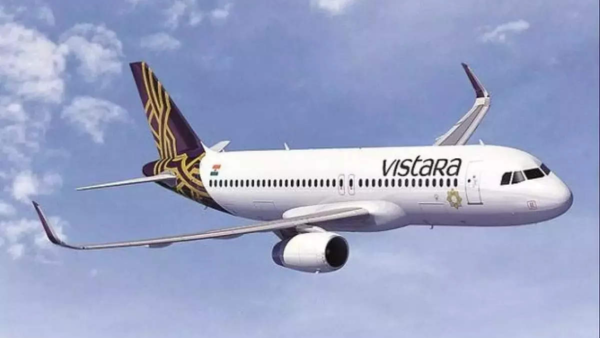
Travelling on flights is mostly a pleasant experience unless we need to face the issues of delays and cancellations. Recently, such instances have unfortunately become quite a common problem. Many Vistara passengers had bad experiences recently as many flights of this airline saw travel disruptions in the already scheduled journeys. Amid tons of complaints, pilot shortages, problems with flight operations, and more, Vistara witnessed a terribly crazy week. A huge number of flights were delayed for more than a week. Along with these, there were some cancellations too. A spokesperson of Vistara recently stated, “We confirm that we have had a few flight cancellations and unavoidable flight delays in the last few days. However, we would like to clarify that it cannot be attributed to pilot absenteeism alone.” While talking about the much-talked-about flight schedule disruptions seen in the past few days, the spokesperson also added how the airline witnessed disruptions across the network and there are a host of factors responsible for all these. Several reasons are responsible for all the fiasco, delays, and cancellations. “Unforeseen maintenance requirements on some aircraft”, “unfavourable weather conditions in North India for some days”, “air traffic congestion”, and some “routine operational constraints” are some major factors leading to the recent flight disruptions of the airline. There have been reports and headlines about Vistara pilots taking mass sick leaves that led to many flight delays, changes in scheduled flight operations, and cancellations. Well, these issues have not been faced by many passengers solely for pilots and their leaves. The spokesperson stated that “there has been no rise in the number of pilots reporting sick. It has remained well within the range that is factored in the manpower planning”. This was one of the many reasons that led to the past disruptions. The airline is currently working to control the issues, maintain the schedules, and be committed to offering seamless connectivity to the passengers.

Read more