

Travel to Bhutan from India: Guide to passport, visa, and SIM card for Indian travellers
- Dec 14,2023
- timestravel
Bhutan is one of the favourite tourist destinations for Indians and is nestled in the Eastern Himalayas. Complemented with its pristine landscapes, vibrant culture, and a commitment to Gross National Happiness, Bhutan deserves a visit at least one. For Indian travellers seeking to embark on a journey to this enchanting kingdom, it's essential to navigate the travel requirements seamlessly. So, here’s our comprehensive guide to passports, visas, and SIM cards for Indian travellers planning a trip to Bhutan. One of the advantages for Indian travellers visiting Bhutan is that they do not require a visa. However, they will need to get an entry permit to enter the country. Make sure that you have at least one valid travel document with you, which could be your passport, with a minimum validity of six months. While no visa is required for Indians travelling to Bhutan, there's a process in place. You need to get the entry permit upon arrival, which is issued by the Immigration Office at the border entry points. This permit is typically valid for 7, which should be produced in every check point for verification. For those intending to explore beyond the permitted duration, an extension can be sought in Thimphu, the capital city. It's advisable to carry multiple copies of your passport-sized photographs as they might be required during the permit application process. Staying connected during your Bhutanese trip can become more hassle-free if you opt to get a local SIM card. Bhutan Telecom and TashiCell are the two primary telecom operators in the country. Both providers offer SIM cards to tourists, allowing access to local networks for calls, texts, and data services. To obtain a local SIM card, you will have to provide a copy of your passport and a passport-sized photograph for the SIM card registration process. The coverage in urban areas is generally good, but in remote regions, network availability might be limited. Permit extensions If your travel plans exceed the initial permit duration, you can extend your stay by applying for an extension in Thimphu. Do ensure that you do this well in advance to avoid any complications. Photography rules Bhutan is a photographer's paradise, but it's also essential to respect local customs and regulations. Certain religious sites may restrict photography, so be mindful of signage and seek permission when necessary. Currency exchange Bhutan's official currency is the Ngultrum (BTN), but Indian Rupee is also widely accepted here. It's advisable to carry sufficient local currency, especially when venturing into remote areas where card payments may not be accepted.
Read more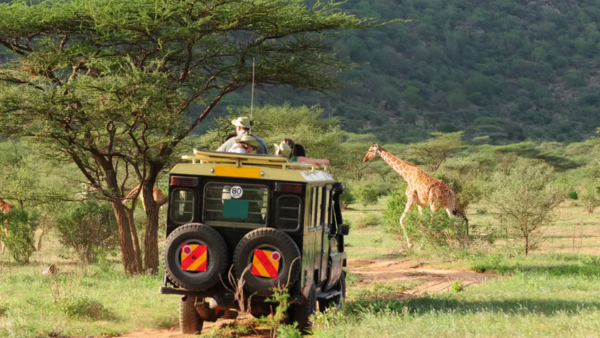
Kenya to become visa-free from January 2024!
- Dec 14,2023
- timestravel
In the latest development, visitors from across the world will no longer require a visa to visit Kenya. This initiative will come into effect from January 2024. In a significant move to boost tourism and foster global connections, Kenyan President William Ruto announced on December 12 that visitors from around the world will no longer need a visa to enter the country starting January. This groundbreaking decision is part of the government's initiative to streamline the entry process through a newly developed digital platform. President Ruto highlighted that this innovative platform will facilitate the issuance of electronic travel authorization, and eliminate the cumbersome visa application process. Speaking at an event commemorating Kenya's 60 years of Independence from Britain in Nairobi, President Ruto expressed his commitment to easing travel restrictions, stating that it shall no longer be necessary for any person from any corner of the globe to carry the burden of applying for a visa to come to Kenya. This visionary step aligns with Ruto's long standing advocacy for visa-free travel within the African continent. President Ruto had previously outlined his plans for visa exemptions at a conference in the Republic of Congo in October, where he declared that citizens of African countries would be able to visit Kenya without a visa by the end of 2023. This move reflects a broader effort to enhance regional cooperation and strengthen ties among African nations. Kenya, renowned for its diverse landscapes and vibrant culture, heavily relies on tourism as a key driver of its economy. The decision to waive visa requirements aims to attract more international visitors, offering them the opportunity to explore the country's picturesque Indian Ocean coastline and embark on thrilling wildlife safaris. President Ruto extended the nation's hospitality by declaring, "Kenya has a simple message to humanity: Welcome Home!" This sentiment stresses the country's commitment to fostering an open and inclusive environment for global travelers, marking a significant milestone in Kenya's efforts to position itself as a top destination for tourism and cultural exchange.
Read more
Kerala’s 21 railway stations awarded 'Eat Right Stations' certification
- Dec 12,2023
- timestravel
In a recent development, 114 railway stations in India received the prestigious 'Eat Right Stations' certifications, with Kerala alone boasting 21 stations, making it the leading state in this recognition. This certification proves the station's dedication to providing passengers with hygienic and healthy food options. The Food Safety and Standards Authority of India (FSSAI) awards certifications to railway stations adhering to food storage and hygiene standards, with only one percent of all railway stations receiving this distinction out of the total 7349 stations across the country. Kerala, with a total of 199 stations, stands out with 21 stations receiving the coveted certification. The primary objective is to ensure the availability of hygienic, nutritious, and safe food at railway stations. The certification guarantees the implementation of safe procedures in handling and preparing food, encompassing catering establishments within stations, including stalls. On what basis the stations are chosen? To receive the certificate, stations are evaluated on water quality, cleanliness, sanitation, pest control, register maintenance, and food item inspection. The certification is part of the FSSAI-led Eat Right India campaign, specifically the Eat Right Railway Station initiative. Under this initiative, all food vendors at railway stations, including organised catering units, restaurants, food courts, as well as small vendor kiosks, retail outlets, and booths, are required to adhere to safe cooking and handling practices. Stations that excel in providing healthy and safe food to passengers receive the 'Eat Right Station' certification, determined through an audit by an independent firm appointed by FSSAI, assigning a grade between one and five. A 5-star rating reflects a station's complete commitment to ensuring passengers have access to safe and hygienic meals. This accreditation is an integral part of the broader 'Eat Right India' initiative by FSSAI, aimed at transforming the nation's food system to guarantee sustainable, safe, and nutritious meals for all citizens. The initiative employs a comprehensive approach involving collaboration, regulation, capacity-building, and empowerment to promote environmentally and health-friendly food practices. Here are all the 21 railway stations that have received the award: 1) Tiruchirappalli Railway Station 2) Parapanangadi Railway Station 3) Chalakkudy Railway Station 4) Thalassery (TLY) Railway Station 5) Kannur (Can) Railway Station 6) Palakkad Junction Railway Station 7) Chengannur Railway Station 8) Shoranur Junction Railway Station 9) Tirur Railway Station 10) Vadakara Railway Station 11) Changanasseri Railway Station 12) Alappuzha Railway Station 13) Varkala Sivagiri Railway Station 14) Karunagappally Railway Station 15) Angamali for Kaladi Railway Station 16) Aluva Railway Station 17) Tiruvalla Railway Junction 18) Kottayam Railway Junction 19) Thrissur Railway Station 20) Thiruvananthapuram Railway Station 21) Kollam Railway Station
Read more
Prayagraj Railway Station to get ‘sleeping pods’ in January 2024
- Dec 12,2023
- timestravel
Prayagraj administration is making all efforts to ensure that they are able to provide the best of facilities to the visitors all set to arrive to attend Magh Mela. As per the reports, the mela will start from January 14 next year. Meanwhile, the North Central Railways (NCR) is also all set to operationalise 60 sleeping pods at the Prayagraj railway junction soon in anticipation of a large influx of pilgrims for the Magh Mela celebrations that will commence in January. As per the officials in the know-how, these pods, apart from being compact and cost-effective, will offer a comfortable experience to the pilgrims. Measuring eight feet in length and six feet in width, each pod will be available for booking at a cost ranging from INR 500 to INR 1,500 for a 12-hour period, utilising a flexi-fare system. The hotel, located in the old booking office on the Civil Lines side of Prayagraj Junction near the old dismantled footover bridge, will also feature its own cafeteria, officials noted. If reports are to go by, these pods are slated to be operational before the inaugural Magh Mela bathing festival on Makar Sankranti (January 15), which will mark the commencement of the 54-day fair. This 'sleeping pod' hotel project has been awarded to a Pune-based company after the Prayagraj division of NCR floated a tender for its installation a few months ago. Amit Singh, spokesperson for NCR's Prayagraj Division, expressed optimism about launching this facility at Prayagraj Junction by Makar Sankranti. The reports further add that the sleeping pods will resemble capsule-sized rooms, and will come equipped with all modern amenities such as phone charging, Wi-Fi, locker rooms, and bathrooms. There will be a total of 60 sleeping pods, which will include 45 for single occupants, 10 for double occupants, and five for small families, with an additional 10 pods exclusively reserved for women passengers.
Read more
Ayodhya's international airport reaches final stages of construction
- Dec 12,2023
- The Economic Times
GM Airport Authority, Rajeev Kulshrestha, said that the runway and parking are complete ready and the building work is in the final stage. "Beautification work is going on. The DG team has gone for an inspection. The flights will hopefully start soon. This entire airport is being built on the basis of the design of the temple of Lord Shri Ram," said Kulshrestha. The Maryada Purushottam Shri Ram International Airport being built in Ayodhya, Uttar Pradesh, on the lines and outline of Ayodhya's Shri Ram temple has reached its final stages of construction. GM Airport Authority, Rajeev Kulshrestha, while speaking to the news agency, said that the airport work is in its final stages. He further said that the runway and parking are completely ready and the building work is also in the final stage. "Beautification work is going on. The DGCA team has gone for an inspection. The flights will hopefully start soon. This entire airport is being built on the basis of the design of the temple of Lord Shri Ram and Ayodhya District Magistrate, Nitish Kumar told that the airport has been inspected by the DGCA team and soon permission will be granted and people will be able to travel by flight to Ayodhya. it is a matter of great pride for all of us that we are involved in the work of building this temple," said Rajeev Kulshresth. "This is a pleasant experience for the residents of Ayodhya and the tourists coming from India and abroad. And there is good news as we hope that the Airport will be inaugurated soon and soon people will be building."
Read more
Putting Big data to use for enhanced digitised travel experience
- Dec 12,2023
- The Economic Times
Today, Big data is being leveraged by the tourism industry in every possible way. According an analysis conducted by Global Data, the AI market which was valued at USD 81.3 billion 2022, is expected to grow at the rate of 35% by 2030. These tools are being incorporated in devices, business applications and productivity tools for seamless business operations. Digitisation has prevailed in the industry for quite some time in the formof online booking of flights and accommodations. However, the operations and administration across the industry still remained largely manual. Things took a dramatic turn when the pandemic struck and the industry experienced a complete upheaval. Travel came to a complete standstill with no certainty of resumption. Several travellers were affected as they were stranded in foreign lands and were unable to return home, while numerous booked travel plans had to be changed and rescheduled due to extended lockdowns. The travel industry was in total chaos, inept in handling such a situation. The primary priority was to get the stranded passengers back home. Bigdata analytics came in as a major force of orderliness in this labyrinth of confusion. Travel companies ubiquitously adopted digitisation to create a seamless network among travel companies, sieve the data of stranded passengers, match them with available transport and safely get them back home. This brought in the next level of challenge of quarantining foreign return passengers in various hotels, providing them with medical facilities and ensuring that the infection is contained and the staff is not affected.This is where AI-enabled digital solutions came into action where each passenger was monitored remotely and their needs were catered to with minimal human interaction. According to the UNWTO survey, international travel plunged by 72% in 2020, the worst year for tourism. The international tourism recovered only 63% of pre-pandemic levels by 2022 and expects a better recovery in 2023. However, this entire period enabled the travel industry to experience, experiment and embrace digitisation in toto. The pandemic period was leveraged to acclimatise the workforce with new skills and training, build processes, add efficiencies and keep the industry and customers informed about the ever-changing global rules. Today, digitisation is the only way forward for the travel industry to reinvent itself. Some of the areas where digitisation has transformed the functioning of the industry are: Being future-ready: One of the primary forces guiding the tourism industry is to be future-ready for any kind of catastrophe or calamity and devise a swift, digitally-enabled recovery plan. The AI-generated data enables travel companies to predict the possibility of things going and create travel plans in accordance to avert such situations. Most travel companies and airlines today heavily depend on data science to compile weather forecasts, fuel forecasts, etc to achieve efficiency in their plans. Marketing maneuvers: Digitisation plays a big role in keeping travel agencies ahead of their competition by creating the right marketing strategies, offering competitive prices and packages and providing personalised and targeted marketing plans to its customer base. Contactless Travel: Post-pandemic, most customers prefer contactless interaction. Thus, travel agencies and airline companies have leveraged automation across the industry right from automated check-ins at hotels and airports, self-service kiosks, biometric solutions for identity verifications and medical screenings to AI-enabled hospitality services. AI-enabled robot workforce: Globally, AI-enabled robots are fast replacing human workforce to pave the way for a futuristic hospitality experience. Enabled with speech recognition, face recognition, voice recognition and collision-free capabilities, these robots provide front desk services, check-in/check-out services and also double up as robot cleaners, concierge and room service assistants. This not only limits physical contact but also bolsters efficiency in the industry. Furthermore, these AI and ML-enabled humanoids also enhance the customer experience by assessing each customer’s unique requirements. Backend digitised support: Travel companies have experienced a significant shift in the realm of document storage. The tourism and hospitality industry generates a huge amount of documents that need to be stored for a considerable duration. Digitisation has completely replaced the need for physical documentation by storing it on the cloud at the rate of 35% by 2030. These tools are being incorporated into devices, business applications and productivity tools for seamless business operations. Digitisation, armed with Big data, AI and ML, has given the travel industry a new and futuristic dimension. This is the best time to fully unleash the power of digitisation and amalgamate it with the potential of the travel industry.
Read more