India Will Become Global Leader In Cruise Tourism Soon, Says Sonowal

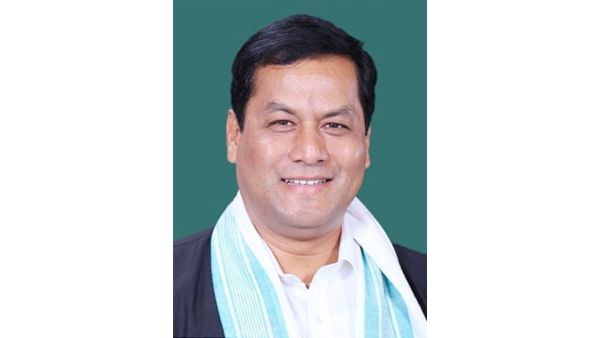
Global Maritime India Summit, which the country hosted last week for the third time in last seven years, will add more dimensions to the sector’s growth, which is already on an upswing since 2014, Union Minister Sarbananda Sonowal has said. Sonowal, who is the Minister for Ports, Shipping and Waterways, also expressed hope that India will become a global leader in cruise tourism soon given the ecosystem created by the government. India successfully hosted the third edition of the mega maritime event in the financial capital from October 17-19, with the summit attracting investment proposals worth Rs 10-lakh crore by way of 360 initial pacts reached between various companies both from the private and public sectors. I believe this particular global summit is going to add more dimensions to our growth (of the sector). The transportation sector in the last nine-and-a-half years has seen transformation, which is visible also because of the growth, Sonowal told PTI in an interaction. The minister said that earlier there were no excitement or initiatives in many sectors and neither there was any policy or programme, but post-2014, the speed and scale of the growth is being witnessed. The government has not only created an ecosystem in terms of connectivity and communication but has also started to empower the common man in all aspects, he said. Citing the example of the World Bank’s Logistics Performance Index (2023) which saw India jumping 6 places to rank 38th position out of 139 countries, he said this improvement also shows growth. How growth will take place unless you have taken some concrete initiative, a concrete programme to be implemented with quality and within a time frame, he said. So that is why modernisation, mechanization, digitisation and port-led industrial growth as well as connectivity enhancement besides coastal shipping, and inland waterways are all important verticals that were included in the flagship Sagarmala programme, he added. Sonowal said that his ministry has identified 809 projects worth Rs 5.6-lakh crore of investment and as many as 222 projects have been completed by spending Rs 1.22 trillion while the rest are under implementation and will be completed by the stated timeline of 2035. So now firstly it has been implemented and out of developing this infrastructure facility, ecosystem, growth is taking place, he said. Sonowal said that the government has taken a slew of initiatives in ocean, coastal and river cruise segments and within a short span of time of now, in coastal, river cruise and ocean cruise (segments), India is going to become the world leader. It is because we have already developed infrastructure like international level terminals, cruise terminals. And at many places, as per the requirement of the global tourists we are going to add more value in the (existing) infrastructure, he said. He said that India has become a global destination even in the river cruise segment.

Read more

Air India launches direct flight services to Singapore from Bengaluru

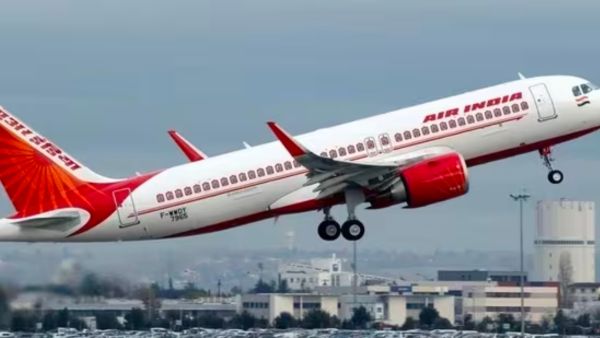
Air India also announced an increase in the frequency of flights from Mumbai to Singapore from seven flights a week to 13 flights a week Air India has launched a non-stop service between Bengaluru and Singapore on Sunday. The new service will provide the direct connection between the two crucial cities. The new service, AI392, will depart Bengaluru at 10.30 pm and reach Singapore by 5. 30 am the next morning. The return flight AI393 will take off from Singapore at 6. 40 am land in Bengaluru at 8.35 pm IST. The flight, operated by an Airbus A321 aircraft, will have a two-class configuration of 170 Economy and 12 Business Class seats and operate four days a week on Monday, Thursday, Friday and Sunday. The new flight connection is expected to enhance tourism and trade in the two cities. Air India also announced an increase in the frequency of flights from Mumbai to Singapore from seven flights a week to 13 flights a week, starting from Sunday. Air India is currently operating a total of 38 non-stop flights to Singapore per week from Delhi (14 flights), Mumbai (13 flights), Chennai (7 flights) and Bengaluru (4 flights) connecting the Merlion City.

Read more

Akasa Air plans to list by end of decade

Indian airline Akasa Air plans to list on the stock exchange by the end of the decade, according to CEO Vinay Dube. The airline, which currently operates domestic flights to destinations, plans to expand internationally by the end of the fiscal year and has place order for 76 Boeing 737 MAX aircraft. Dube stated that the company is generating free from operations and is well-funded for the new aircraft order. India's newest airline Akasa Air, which is set to soon fly on international routes and will be placing a three-digit aircraft order, plans to list on the bourses by the end of the decade, its Chief Executive Officer Vinay Dube told PTI. The 14-month-old Akasa Air, which already operates more than 750 weekly flights across 16 domestic destinations, including Mumbai, Ahmedabad, Bengaluru and Delhi, is looking at "gathering a little more history" before launching an initial public offering (IPO), he said. The airline plans to start international services by the end of this fiscal and has placed a firm order for 76 Boeing 737 MAX aeroplanes, all of which will join its fleet by mid-2027. Currently, Akasa Air has a fleet of 20 aircraft and is looking to place an order for three-digit aircraft before the end of 2023, he noted. Dube, the founder and CEO, said the airline is already generating free cash from operations and is well-funded for the new aircraft order it is going to place. About the medium-term goals, Dube, in an interview, said that as a timeframe, by mid-2027, the airline expects to have 76 planes. The aim is to be a pan India player with a very healthy domestic and international network and multiple bases, he added. On going public, Dube said, "I don't think 2027 will be possible for a listing, but the listing is something that we definitely want to do. We may have to gather a little more history before we can list. Certainly, listing or an IPO is something that we would desire". When asked whether listing could happen before the end of this decade, the Akasa Air chief said that is a "much more realistic goal". Currently, two operational scheduled carriers are listed on the bourses — IndiGo and SpiceJet. Jet Airways, which stopped flying in April 2019 due to financial woes, is also listed. The now-grounded Go First's earlier attempts for an IPO did not take off. Meanwhile, Akasa Air has received international flying rights for Riyadh and Jeddah (Saudi Arabia), Doha (Qatar) and Kuwait. It will soon be starting overseas operations. "We are in growth mode. We should have two more aircraft delivered before the end of this calendar year. We will exit the financial year with 25 aircraft. We will exit the following financial year with approximately 40 aircraft," Dube said. According to him, the airline has funds to place the three-digit order and is also free cash flow positive. "We also hear rumours about the Jhunjhunwala family leaving, which are absurd, and the family says that they are invested with us for the long run," he noted. Recently, the carrier faced turbulence due to the exit of around 40 pilots without serving their notice periods as a result of which it had to cancel some flights, and the airline has also initiated legal action against the pilots concerned. Akasa Air flew 5.17 lakh passengers and has a domestic market share of 4.2 per cent, as per the latest official data. In June, the airline announced an order for four additional Boeing 737-8 jets. It was in addition to the order for 72 aircraft that was placed with Boeing. Together, Akasa Air will have 76 aircraft, including 23 Boeing 737-8s and 53 Boeing 737-8-200s, by mid-2027.

Read more

New Vande Bharat Trains force Airlines to reduce fares in selected routes: Indian Railways

New Delhi, India (Urban Transport News): In a recent data study conducted by the Indian Railways, it was revealed that Vande Bharat trains have become the favored choice among a significant portion of the youth demographic. An impressive 56% of passengers aboard Vande Bharat trains are comprised of the younger generation and the working class. This statistic marks a notable shift, positioning the youth segment as the primary patrons of Vande Bharat, surpassing all other age groups. The report underlined the growing trend, shedding light on the evolving preferences of travelers across various age brackets. Drawing attention to the impact of Vande Bharat on the aviation sector, it appears that the introduction of these new trains has triggered a ripple effect, compelling airlines to recalibrate their pricing strategies in response to the heightened competition. Notably, routes such as Chennai-Bengaluru, Thiruvananthapuram-Kasargod, MumbaiPune, Jamnagar-Ahmedabad, and Delhi-Jaipur have experienced a tangible reduction in airfares, estimated to have plummeted by 20- 30% since April 2023. According to a senior Railway Ministry official, the emergence of Vande Bharat as a preferred mode of transportation has directly influenced the customer base of airlines, causing a substantial shift in passenger preference. "Around 10-20% of the airline's customer base has seamlessly transitioned to becoming dedicated Vande Bharat travelers," the official confirmed. Consequently, this shift has played a pivotal role in the significant reduction of airfares on the aforementioned routes, creating a more competitive market for travelers seeking affordable transportation options. The seamless integration of Vande Bharat trains into the existing transportation landscape has ushered in a new era of mobility, redefining the dynamics of travel within India. With the convergence of affordable railway services and a marked decline in airfare prices, travelers now have a diverse range of cost-effective options to choose from, promising increased accessibility and convenience for all. As Vande Bharat trains continue to solidify their position as a preferred choice for an extensive demographic, the transformation of the travel landscape is poised to create a more competitive and inclusive environment, fostering accessibility and affordability for all.

Read more

Flight services at Thiruvananthapuram Airport to be temporarily suspended today; Here is why

Flight services at the Thiruvananthapuram airport, Kerala, will be temporarily suspended from 4 pm to 9 pm today to facilitate the procession of Alpassi Arattu by Sree Padmanabhaswamy Temple. The airport advisory was shared on X (formerly Twitter) by news agency ANI. It read, “Flight services at Thiruvananthapuram Airport will be temporarily suspended on October 23, 2023, from 4 pm to 9 pm to facilitate the Alpassi Arattu Procession by Sree Padmanabhaswamy Temple.” The passenger advisory, issued by Thiruvananthapuram Airport, also mentioned that the “updated timings of the flights are available with the respective airlines.” The traditional “Arattu” procession of Sree Padmanabhaswamy temple will pass through the runway, reported news agency PTI. The Alpassi Arattu Procession is a century-old practice that involves the Travancore ruler Marthanda Varma. The procession marks the end of the nine-day Navaratri festival, celebrated at the Sree Padmanabhaswamy Temple. In order to facilitate the procession, the airport has been halting operations and rescheduling flights twice every year for decades. For the Arratu procession, the priests in Garuda Vahanas, hundreds of people, and four elephants carry the Utsav Vigraha of deities Padmanabhaswamy, Narasimha Moorthy, and Krishna Swami. This procession passes through the long runway to Shangumugham Beach. The idols are then taken back to the temple with traditional torches, marking the conclusion of this festival. At the time of the construction of an airport in this place, the Travancore King Sree Chithira Thirunal spoke to the airport authorities to facilitate the procession twice a year for Lord Padmanabha, the titular deity of the royal family. This royal-era ritual has been continued even after the Adani Group took over the management of the Thiruvananthapuram Airport.

Read more

India Leads In Tourism Recovery Post-Covid

A recent report has indicated that India played a pivotal role in the post-pandemic recovery of tourism expenditure in Asia in 2022, following the fluctuations caused by the COVID-19 outbreak. Notably, Tier-II and III cities like Varanasi, Coimbatore, and Kochi have been gaining popularity as top tourist destinations. In 2022, India achieved a remarkable recovery by reaching 78 percent of its 2019 tourism expenditure levels, whereas the broader Asian market only recorded a 52 percent recovery. This data comes from a report titled ‘How India Travels,’ a collaboration between online travel platform Booking.com and McKinsey & Company. Due to prolonged travel restrictions, particularly in countries like China, Japan, and Southeast Asia, the tourism industry in Asia remained subdued throughout 2022. Before the COVID-19 pandemic, Indian travelers spent a substantial USD 150 billion on travel, ranking India as the sixth largest global spender. The report predicts that by 2030, total expenditure by Indian travelers will surge to $410 billion, making India the fourth largest global spender and showcasing one of the most rapid recoveries from COVID-19 globally in comparison to key regions. This expected robust recovery in India can be attributed to a strong economy, a growing middle class, and a youthful population with a penchant for travel, all of which are contributing to increased tourism revenue in the country. Santosh Kumar, the Country Manager for India, Sri Lanka, Maldives, and Indonesia at Booking.com, mentioned that Indian travelers are enthusiastic, eager, and confident to explore both nearby and far-off destinations in search of new experiences. The report also predicts that Indians are anticipated to spend $40 billion by 2030, further driving the global tourism rebound. The report underlines a surge in demand for alternative accommodation options, including hostels, campsites, vacation rentals, and chalets. The growth rate of average daily rates (ADR) for these alternative accommodations has outpaced those of traditional hotels and managed chains, signaling a notable shift in travel preferences among Indian travelers.

Read more