Croatia Leads Europe in Preserving Living Cultural Heritage
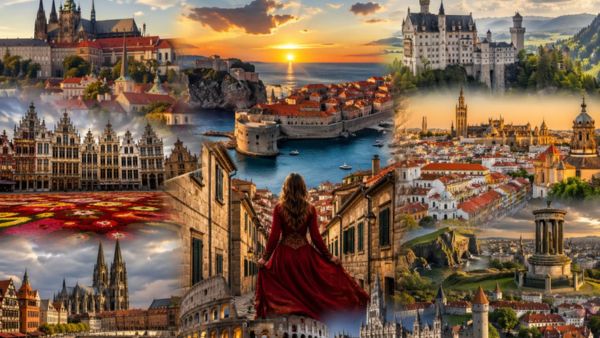
Croatia’s inclusion alongside the Czech Republic, Belgium, Germany, Spain, Portugal, Scotland, Italy and Estonia is not accidental—it reflects a shared European pattern where history was never pushed aside, only carried forward. In each of these countries, certain cities resisted the impulse to modernize at the cost of identity. Instead of replacing their medieval cores, they adapted around them, allowing centuries-old streets, structures and cultural rhythms to remain active parts of daily life.
What binds these nations together is not just preservation, but continuity. Their historic centers are not isolated districts or curated attractions—they are functioning urban environments where people live, work and move through spaces shaped long before the modern era. Markets still gather in medieval squares, churches still define skylines and narrow streets still dictate the pace of movement.
Croatia joins this group because its cities follow the same principle. Places like Dubrovnik, Split and Trogir did not abandon their foundations; they evolved within them. Roman walls, Gothic layouts and coastal fortifications are not remnants—they are frameworks that continue to support contemporary life.
In this context, these countries stand apart as custodians of Europe’s “living history”—not because they froze time, but because they never severed their connection to it.