Seychelles Travel Boom Fueled by Viral Appeal of Anse Lazio
The international vacation economy is experiencing a deep, structural transformation as contemporary adventurers completely redefine their core expectations of luxury, leisure, and geographical isolation. Historically, the premium tier of the hospitality market relied almost exclusively on dense, artificial infrastructure, hyper-commercialized metropolitan centers, and massive resort properties. However, current analytical data indicates a massive behavioral shift toward raw, undisturbed, and ecologically unique environments that offer genuine psychological detachment from modern urban stress. Within this changing consumer framework, Anse Lazio, nestled on the remote northwestern coastline of Praslin Island within the Seychelles archipelago, serves as an indispensable benchmark for how natural topography dictates the commercial viability of long-haul aviation networks and luxury lodging ecosystems.
When international globetrotters map out their long-distance itineraries, the pursuit of unblemished, authentic scenery overwhelmingly dictates their final booking decisions. This unmistakable preference forces hospitality corporations and destination marketing executives to fundamentally overhaul their advertising methodologies, pivoting aggressively away from traditional material indulgence and moving decisively toward eco-centric, immersive marketing strategies.
Monumental Sculptures of Nature: The Unique Ancient Granite Topography of the Seychelles
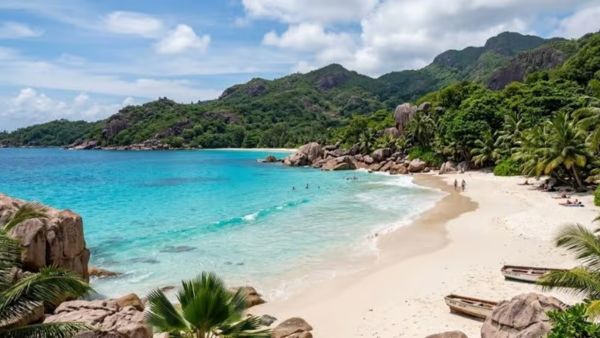
The extraordinary visual aesthetics of this legendary Praslin Island coastline provide a remarkable, highly marketable contrast that captures the collective imagination of the international traveling public. The striking interplay between the intensely vivid, turquoise expanse of the Indian Ocean, the ultra-fine, powdery white sands, and the monumental, smooth granite formations creates a visually arresting environment that cannot be replicated by human engineering. These colossal, ancient, pink-tinged geological structures, which have successfully withstood weathering forces for millions of years, fulfill a purpose that extends far beyond mere cosmetic or photographic value. Geographically, they naturally dissect the expansive shoreline into tiny, highly secluded alcoves, providing an intense, organic sense of privacy for solo adventurers, high-profile dignitaries, and couples seeking refuge from public scrutiny.
Natural Architectural Frameworks: Meeting Post-Pandemic Demands for Organic Privacy
This specific spatial arrangement addresses a critical post-pandemic market demand: the desire for physical distancing combined with absolute aesthetic perfection. Furthermore, the shoreline is heavily bordered by dense, flourishing groves of indigenous Takamaka trees and towering, swaying palm flora. This rich botanical border creates an abundance of organic canopy shade, ensuring that beachgoers can enjoy reliable, cool shelter from the intense tropical sun without requiring the installation of disruptive, artificial umbrellas or synthetic tents.