How Opening of India's Longest Sea Bridge Will Change Travel in Mumbai Region
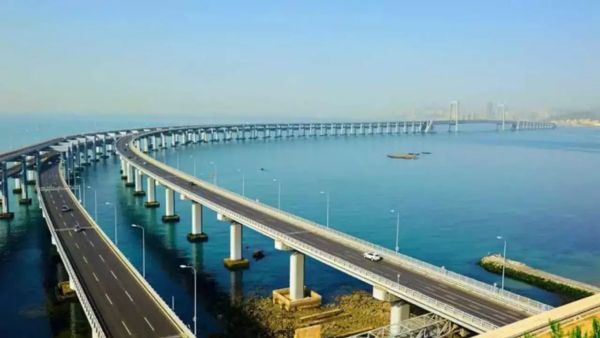
To be named the Atal Bihari Vajpayee Sewri-Nhava Sheva Atal Setu, the six-lane Mumbai Trans Harbour Link is expected to accommodate 70,000 vehicles daily. It will have a maximum speed limit of 100 kmph for vehicles.
The Mumbai Trans Harbour Link (MTHL), also known as the Sewri-Nhava Sheva sea link, is all set for inauguration on January 12. Spanning nearly 22 Kms, this is India's longest and the world's 12th longest sea bridge. Apart from being a vital connector between Mumbai and Navi Mumbai, the MTHL will help save commuters travel time in many ways.
How Will Mumbai Trans Harbour Link Help Mumbaikars Save Travel Time?
The trans harbour link will begin at Sewri in south Mumbai, crossing over Thane creek and terminating at Chirle in the distant outskirts of Navi Mumbai. Once open, it will cut down the travel time between Mumbai and Navi Mumbai to 20 minutes, benefiting scores of people who commute on the route every day.
Motorists can expect savings of nearly 30-45 minutes during peak hours when traveling from south Mumbai to the New Airport Influence Notified Area (NAINA) and the Mumbai-Pune expressway, as compared to the conventional routes via Eastern Freeway and Sion-Panvel highway.
During non-peak hours, traveling from CSMT to the mouth of the Mumbai-Pune Expressway at Kalamboli junction takes 71 minutes via Sion-Panvel road. This time is expected to come down to 68 minutes with MTHL.
The MTHL will also link Third Mumbai, the proposed city around Navi Mumbai International Airport, to Mumbai.
The MTHL bridge will provide faster connectivity with proposed Navi Mumbai International Airport, JNPT Port, Mumbai–Pune Expressway, and Mumbai–Goa Highway.