
Qatar Airways And IndiGo Reactivate Strategic Cooperation
- Apr 19,2022
- Travel Trends Today
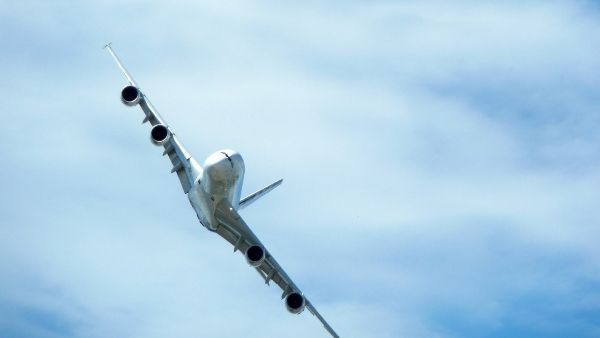
Qatar Airways and IndiGo announce the reactivation of their strategic cooperation following the lifting of the suspension on international scheduled flights by the Indian government. Qatar Airways is currently operating 190 flights per week to and from 12 destinations in India, namely Delhi, Mumbai, Hyderabad, Bengaluru, Chennai, Kochi, Kozhikode, Ahmedabad, Amritsar, Goa, Kolkata, and Thiruvananthapuram. IndiGo is currently operating 154 flights per week between Doha and eight cities in India and that includes Mumbai, Delhi, Hyderabad, Bengaluru, Chennai, Kochi, Kozhikode, and Kannur. As part of this expanded code-share agreement, Qatar Airways will be placing its marketing code on IndiGo operated flights between Doha and Delhi, Mumbai, Hyderabad, starting from 25 April 2022, and Chennai, Bengaluru, Kochi, Kozhikode, starting from 09 May 2022. Both Qatar Airways and IndiGo flights are optimally connected to Qatar Airways' hub, the award-winning Hamad International Airport in Doha. This allows passengers to benefit from seamless and convenient connections to the airline's entire route network, including North America, Europe, Africa, and Asia/Australia. Qatar Airways Group Chief Executive, His Excellency Akbar Al Baker, said: "The reactivation of our strategic partnership with IndiGo is another milestone in the development of aviation between the State of Qatar and India. Together, both Qatar Airways and IndiGo will offer over 340 flights per week to 13 destinations in India. Never before has our partnership with IndiGo been stronger and the resumption of our strategic cooperation demonstrates the resilience, agility and commitment both partners have shown in overcoming the challenges of the pandemic.” Ronojoy Dutta, Wholetime Director and Chief Executive Officer, IndiGo added: “We are excited to reactivate our code-share agreement with Qatar Airways, one of the world’s fastest growing airlines. We are confident this strong partnership will not only expand opportunities for the customers, but also boost trade and tourism in both the countries. With the easing of restrictions, we believe that this will create economic growth through IndiGo’s seamless nationwide connectivity. We look forward to serving customers on our lean, clean flying machine, as we extend to them our on-time, affordable, courteous and hassle-free travel experience.”
Read more
Demand For Travel To Southeast Asia Increases As Borders Reopen: Travelport
- Apr 19,2022
- Travel Trends Today
As borders begin to reopen across Southeast Asia, increased flight bookings show how excited travelers are to return to the region. All countries in Southeast Asia, except for Brunei, have started to remove their travel restrictions and are reopening their borders to international tourists in hopes of rejuvenating the industry that was hardest hit by the Covid-19 pandemic: tourism. T ravelport, a global technology company that powers bookings for hundreds of thousands of travel suppliers worldwide, today released the below trend data showing how the easing of restrictions has affected the international demand for travel to Southeast Asia. Hot Spots According to Travelport’s booking data, the top ten destinations in Southeast Asia for international travelers to visit in 2022 are: 1. Manila (Philippines) 2. Singapore (Singapore) 3. Bangkok (Thailand) 4. Ho Chi Minh City (Vietnam) 5. Jakarta (Indonesia) 6. Kuala Lumpur (Malaysia) 7. Hanoi (Vietnam) 8. Phuket (Thailand) 9. Bali (Indonesia) 10. Angeles/Mabalacat (Philippines) For the first quarter of 2022, international flight bookings to Southeast Asia overall have increased and have showed upward trajectory with the Philippines taking the lead by achieving 42% of its international bookings in the first quarter of 2019 prior COVID-19 pandemic. The Philippines and Thailand were among the earliest countries in Southeast Asia to reopen their borders, and travelers are already clamoring to visit. In the first quarter of 2022, these two countries alone represent over half (51%) of all international flight bookings to the region. • On 28 January, the Philippines announced its plans to fully reopen to vaccinated travelers on 10 February. Within a week of the announcement, international flight bookings to the country rose by 114%. One month after the announcement on 28 February, the country saw a 294% increase in daily flight bookings. • Thailand first allowed foreigners to enter the country on February 1 with the introduction of its Test & Go program which required tourists to have a negative PCR test for entry, and a subsequent antigen test on the fifth day of travel. In the 24 hours following that announcement, international flight bookings to Thailand grew by 37%. On March 7, the Thai government further revised the measures, dropping the testing requirements on the fifth day. With that change, international flight bookings grew 128% compared to booking on first announcement. The top five countries traveling to Southeast Asia are the United States, United Kingdom, Australia, Saudi Arabia, and South Korea. Solo travelers made up 44% of international flight bookings for the first quarter of 2022 to date, by far the largest traveler segment, which may be comprised of returning business travelers, flexible tourists whose bags are packed the moment borders reopen, and Southeast Asian expats who are eager to return home without enduring a once mandatory quarantine.
Read more
Casino Unroyale: Why a hangover is preferable to hitting Goa’s casinos
- Apr 19,2022
- Travel World
Every cis-het male in this country – whether he admits it or not – has the same adolescent fantasy – to relive the plot of The Hangover and have the Las Vegas experience. Sadly, while the protagonists of that particular movie couldn’t remember a single moment of their Las Vegas shenanigans, our casino experience in Goa will be forever etched in our minds. Foregoing other susegad-appropriate activities like lazing on the beach or collecting raindrops in one’s collarbones, a group of us ended up at one of those floating vessels which promised the Las Vegas experience. When we called to book our places, the casino’s call-centre employees, listed out extremely specific sartorial instructions like we are being invited to join the Kingsman or an unnamed posh, but uber-exclusive club. No open shoes. No beachwear. No pretending to be James Bond and ordering a martini. Sadly, it was less Casino Royale, and more of what can only be described as the microcosm of the worst things Indians have to experience on a daily basis. A Dante’s version of hell if you will, if Dante was desi. Even getting to the casino was a task, as a bunch of us were crammed onto a dodgy-looking ferry – which would’ve been rejected by white refugees trying to flee their homeland – to a huge floating vessel. Firstly, once one gets there, all wobbly from the trip, one is greeted with humongous lines to collect or even buy one’s chips, lines which are longer than some of the queues witnessed during demonetization. And this time, no one remotely pretended that standing in line was a patriotic activity of any sort. After we collected our chips, we were forced to navigate crowds that made Kurla station during rush hour look isolated. Once inside, we realised that the long lines at the chips counter weren’t an aberration but the rule. There were serpentine lines for everything – buying chips, getting a drink, finding a table, playing blackjack, and even when one wanted to make a Chinaman sing. Seeing that it was impossible to move, let alone gamble while packed like sardines, we decided to head for a meal where he encountered a setting which could easily be the prime attraction at the Museum of Gustatory Aberrations at the Generic North Indian Wedding section. There were all the usual staples. Paneer in a Trumpian shade of orange which still hasn’t picked its preferred pronoun between shahi, butter, lababdar or pasanda. The rotis were stiff enough to double up as bulletproof vests. There were mounds of sugar masquerading as pastries which were so poorly made, that even diabetics would give it a wide pass. It wasn’t just the food which is reminiscent of a North Indian wedding. There were inebriated uncles guffawing at lewd jokes while grandmas tried to handle their grandchildren as their sons and bahus did shots and danced to a loud band. Fed up with the desi version ofThe Last Supper, we moved to the gambling room where we were re-acquainted with another ancient Indian tradition – drinking like a fish whose girlfriend has left him. Anyone who has ever flown abroad knows that an Indian will never say no to a free drink. Many moons ago when one saw Casino Royale dubbed in Hindi, the Bond’s seminal drink order: “One Martini. Shaken not stirred” had been translated into “Ek Martini. Milakar Nahi. Hilakar.” Here, the junta no longer cared if it was either hilakar or milakar as they tried to recoup the evening’s losses – one drink at a time. Finally, realising that eating or drinking was just out of the question, we moved back to the gambling room. But it again turned out to be a procession of endless lines and closed machines. Completely fed up with the experience, we decided to leave, but even that’s as complicated as leaving Ukraine. Turns out you can’t just leave but you’ve to wait for a ferry to come pick you up which it finally did after 30 excruciating minutes. So, do yourself a favour. Laze at the beach. Knock back a few beers or whatever tickles your fancy. Go pose like Aamir Khan and Co. at the Dil Chahata Hai fort. But just don’t channel your inner Shakuni because your fate will be worse than Yudhisthir’s. The views expressed are the author's own.
Read more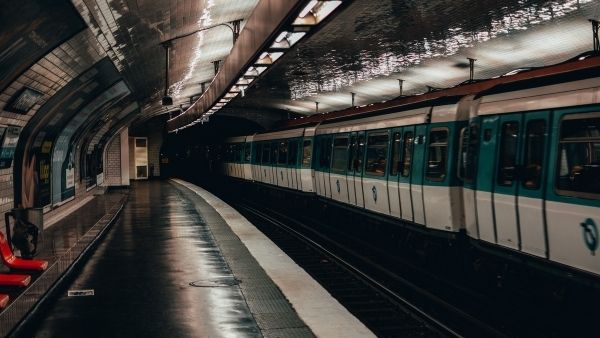
The underground labyrinth of the Paris Metro
- Apr 19,2022
- Hindustan Times
Next stop: "Charles de Gaulle — Etoile." If you want to get from A to B quickly in Paris, it's difficult to avoid the city's notorious Metro, aka subway. "Charles de Gaulle — Etoile" is one of the most well-known stations, since from there one can quickly get to the city's iconic landmark, the Arc de Triomphe. The station is named after the famous French officer who led the resistance against the Nazis in World War II and later went on to be the first president of the Fifth Republic. Whether president, war hero or author, a number of French figures have stops named after them. Stations like "Bastille," named for the site of the French Revolution uprising, provide the impetus for an imaginary trip back in time to remember the country's history. Incidentally, Louise Michel, a late 19th-century author and anarchist, is the only woman to have a metro station named after her, although scientist Marie Curie is commemorated in the name of a station along with her husband, Pierre. Some stops were closed for construction work or during wars but still exist. These "stations fantomes," aka "ghost stations," have been decommissioned and are sometimes used today as film locations. One was used in the popular 2001 film "Amelie" by Jean-Pierre Jeunet, for example. The 1900 world's fair At around 227 kilometers (141 miles) and hosting 306 stations, 16 independent lines and 4.2 million passengers per day, the underground network of the Paris Metro is one of the largest in the world. The French subway was the sixth in the world to be put into operation: London, Budapest and Vienna, for example, beat the French capital to it. The first line of the Metro was just 10 kilometers (6 miles) long, and it opened right in time for the 1900 world's fair in Paris. French architect Hector Guimard designed the characteristic entrances in art nouveau style, which went on to become an iconic part of Paris. Since then, the local transport system in Paris has become extensive — and efficient. Stations of a single line tend to be around 500 meters apart. Almost all Metro lines still have a driver who opens and closes the doors for passengers getting on and off the train. Only lines 1 and 14 are automated and run without human assistance, although a staff member is always on hand in case of emergencies. 'Metro, boulot, dodo' The Metro is an integral part of work life in the French capital. The phrase "Metro, boulot, dodo" is commonly used by Parisians to express that they live to work. Commuters take the "Metro" to the "boulot," an informal word for work, and then back home again to "dodo," which is baby talk for sleep. While many from Paris use the Metro seamlessly, switching stations and lines with apparent ease, it is often an adventure for tourists, replete with difficulties. One major challenge is that the French subway is often crowded, especially during the "Heure du pointe," or rush hour. The corridors of the Metro are then transformed into a river of moving bodies heading purposefully towards their destinations en masse. How to ride the Metro 'a la parisienne' Here's a brief crash course for beginners: The first step is validating the ticket by putting it through a slot in the turnstiles found at the entrances. The next task is to find your way through the underground labyrinth to the line you need. Ideally you'll already know which side of the station it's located at, and you'll have entered the subway at the entrance that's closest to it. If you want to act like a real Parisian, the next move is key: You should know which door and carriage is closest to your desired exit or connecting train. Once you've entered the Metro car, you must be aware of the etiquette. One rule of thumb: Don't stand in the way when people are exiting or entering. Don't push, don't shove, and if you're claustrophobic, stay calm and wait for the underground sardine can to open at the next stop. To get back above ground, keep an eye open for the signs reading "sortie," or exit. However, one entrance and exit are not enough for most Metro stations — some have dozens, so look out for the one closest to your destination. A miscalculation can lead to a longer walk. Once you've mastered the Metro, you're well on your way to becoming a Parisian.
Read more
Hong Kong bans Air India flights till April 24 due to COVID-19
- Apr 19,2022
- Times of India
As per the latest developments, Hong Kong has banned Air India services till April 24 due to COVID-19. If reports are to go by, three passengers on one of its flights tested positive for Covid-19 post-arrival on Saturday. Referring to this, a senior government official added that travellers from India were able to arrive in Hong Kong only if they had a COVID-19 negative certificate from a test that they had undergone 48 hours before the journey, which was as per the rules issued by the Hong Kong Government. Plus, all international passengers are also required to take a post-flight COVID-19 test at the airport premises in Hong Kong. Reports have it that the three passengers on Air India's AI316 Delhi-Kolkata-Hong Kong flight on April 16 tested positive for COVID-19 post arrival. Referring to this, Air India stated, "Due to restrictions imposed by the Hong Kong authorities and limited demand on the sector, our flights to Hong Kong and back of 19th and 23rd April stand cancelled." Earlier this year, Hong Kong announced a two-week ban on incoming flights from eight countries, including India, as the world was grappling with the surge of the Omicron variant of COVID-19. Also, India reopened scheduled international flights from March 27 after a long gap of two years, following the first COVID-19 lockdown that was imposed back in March 2020.
Read more
Dream job alert! Count penguins and run a post office in Antarctica
- Apr 19,2022
- Times of India
Good news for all those who are looking for a job in the world’s most remote place. Yes, you read that right. The world’s remotest post office, in Antarctica, is looking for eligible candidates. Reportedly, those selected for the job will be required to spend around five months at the Port Lockroy post office, on the beautiful Goudier Island. Latest report suggests that the United Kingdom Antarctic Heritage Trust (UKAHT) will be forming a new team at Port Lockroy, for which vacancies are available for gift shop assistant, base leader, shop manager, and a post office assistant from November this year to March next year. The Trust tweeted on this and stated, “Dream of waking up and seeing Antarctica in all its glory? Penguins plodding around, the sun peeking over snow capped mountains. A job like no other," further informing job seekers that they would be able to protect Antarctica's heritage and environment through this recruitment. The requirements for this job are environmental awareness, physical fitness, and knowledge of minimum-impact living are prerequisites for the jobs. It further added that interested candidates can apply till April 25 this year. The vacancies are open only for those who have the right to work in the UK. Physical fitness, knowledge of minimum-impact living and environmental awareness are a must for the job. Applications are welcome till April 25, whereas only those with the right to work in the United Kingdom are eligible to apply. Also, this is the first time when the official site of UKAHT is being thrown open for the general public. Since the advertisement has been posted online, many users have shown interest in the job profile. So, hurry up if you have been dreaming of Antarctica!
Read more