
About 70% of Indians plan to travel this summer: Survey
- Apr 19,2022
- Financial Express
While a budget-friendly travel option is a top priority for most, a large number of people don’t mind spending more for the best travel experience, says a report. According to a survey by ZestMoney, 70 per cent of respondents stated that they have plans to travel during the summer, indicating a pent-up demand from the last two years of the pandemic. While 60 per cent of them said they would travel domestically, about 40 per cent said they were most likely to travel internationally in the next three months as the pandemic restrictions have been lifted. ZestMoney, today revealed the findings from a customer survey conducted to understand Indians’ travel plans and preferences for this summer vacation. The survey elicited responses from over 2,000 participants, most of whom were millennials and Gen Z, from across India. The BNPL company states – that the need to escape everyday life, the desire to learn new things, and the need to break the monotony of the last two years and make new experiences emerged as the strong motivational factors behind the travel plans, according to the survey. Additionally, 63 per cent of respondents said that they would finance their travel using EMI/pay-later options, while 33 per cent revealed that they would dip into their savings to travel. Lizzie Chapman, CEO, and Co-founder of ZestMoney says, “There is a renewed and an increased interest among Indian customers, who are overcoming the pandemic resistance and are embracing travel passionately again. With the economy opening up and covid restrictions easing, people do want to make the best of their holidays. EMIs/Pay Later options are emerging as a preferred option as it not only offers the convenience to plan budgets better but also helps them make the most of their travel plans.” Chapman further adds, “Most of the transactions in the travel category are driven by zero-interest and no-cost ‘Pay-in-3’ option, followed by offerings with six months and nine months tenure. Travel is poised to become one of the largest categories for us.” According to the report, while Goa continued to be the most preferred destination in India, Kashmir, Ladakh, and Kerala emerged as the other popular destinations for this summer. Shimla, Sikkim, Andaman and Nicobar Islands, Jaipur, Agra, Ooty, and Dehradun also figured on the bucket list. Maldives, Dubai, and Thailand emerged as the top three international destinations. The report further stated Europe, the USA, Switzerland, the UK, Turkey, Indonesia, Vietnam, Mauritius, Hong Kong, and Singapore were among the other popular international destinations. 65 per cent of the surveyed said the ongoing geopolitical tensions (especially between Russia and Ukraine) won’t have a major impact on their plans. Additionally, according to the report, 60 per cent of respondents replied in the affirmative indicating normalcy returning to the corporate world, when asked if business travel was picking up in their work organizations. Some of the key findings of the report; Goa, Kashmir, Ladakh, and Kerala emerge as the preferred domestic destinations Maldives, Dubai, Thailand, and Europe are the favourite international destinations 60 per cent of respondents plan to spend their vacation in India, while 40 per cent are most likely to travel to international destinations Survey also revealed that business travel is picking back up in organizations
Read more
Global climate crisis or local culture connect; What is shaping this new travel trend
- Apr 19,2022
- Financial Express
Climate change is a real thing and there is enough significant evidence that suggests we are heading towards a global climate crisis. Thus, sustainability is not just a choice but the need of the hour. People now realise that immediate action is required to take control of the situation, and this has recently been established in the 2022 Sustainable Travel Research Report by Booking.com. The report states that 94% of Indian travellers have confirmed that sustainable travelling is important to them and 68% have cited that climate change has influenced them to make more sustainable travel choices. So what exactly do these sustainable travellers want? Let’s find out. Transportation that reduces carbon footprint Flying leads to CO2 emissions. Keeping that in mind, 31% of Indian travellers said they chose to travel to a destination that is closer to home, only to reduce their carbon footprint. Another 31% indicated that they researched the options for taking public transport including renting a bicycle in their chosen destination. In fact, 39% also chose to travel by train instead of the car for longer distances and 43% say they feel ashamed to fly because of its impact on the environment. Searching for sustainable stays Many credible hotels now follow an environmental policy that they are able to share with prospective customers, and many people actually research it beforehand. As per the report, about 69% of people before booking a property for a stay, research its sustainability efforts. What’s good news is that about 80% of Indian travellers have already stayed in a sustainable accommodation over the past year. Those who didn’t stay in a sustainable accommodation over the past year, said they didn’t know that such a stay existed, which makes it all the more important for hotels/accommodations to spread the information about sustainability. While this is down 51% from 2021, indicating that awareness is growing, nearly 37% said they still didn’t know how to find them. Connecting with locals and their culture A vacation is not considered complete unless you immerse yourself in the art and culture of the people living there. 69% Indian travellers want to have experiences that are representative of the local culture. In fact, 35% of people said that they actively familiarized themselves with the local cultural values and traditions in advance of their trips. This is the basis of thinking locally and acting globally! Not too keen on visiting busy destinations There is a conscious effort among travellers to avoid busy and over-visited destinations. The report suggested that 42% would be willing to choose an alternate destination to their preferred destination to help avoid overcrowding. However, 55% of Indian travellers struggle to find appealing destinations that are less crowded and 44% feel like it’s not possible to find sustainable travel options in cities or other popular tourist destinations. This provides an opportunity for such platforms to work with accommodators in these destinations and help them progress on their sustainability journeys.
Read more
As China's travel chill deepens, tourist-starved regions struggle to get by
- Apr 19,2022
- Travel World
As China's domestic tourism unravels, desperate provinces are slashing ticket prices, offering tax breaks and even begging locals to help save plummeting tourist earnings in a sector that employs tens of millions of people. The slump in tourism - which includes travel, accommodation and catering - has persisted into 2022 because of wider Covid-related curbs on interprovince travel, lockdowns and endless mass testing, official data shows. Particularly hurt are provinces that lean on tourism for growth such as Hainan and Yunnan, as well as northern regions with smaller windows of mild, tourist-friendly weather. boding ill for a sector that contributed 11.05 per cent to China's gross domestic product in 2019 and supported nearly 80 million jobs, or 10 per cent of all employment. Tian Yun, a former economist at the state economic planning agency, said he expected inter-province trips to resume during the three-day Dragon Boat Festival holiday in early June. "If inter-province trips are banned during the Dragon Boat Festival, this year's tourism and related consumption will be in chaos," Tian said. A continued tourism freeze may remove at least 0.5 percentage points from China's 2022 GDP growth, he said. The government has set a growth target of about 5.5 per cent this year. Deterrence Factors keeping tourists away include dramatic cuts in passenger flights and sudden cancellations. The number of weekly flights domestically stands at just over 35,000 flights, according to aviation data provider VariFlight, the lowest since the year 2000. Amid the travel curbs, tourists from other provinces accounted for just 5 per cent of visitors at scenic spots across China during the Tomb Sweeping holiday in early April, official data shows. Hohhot, capital of the northern Chinese region of Inner Mongolia and known for its verdant grasslands, saw the number of tourist trips drop by half during the holiday. Tourism revenue fell 53.5 per cent. Even the southern island province of Hainan, dubbed China's Hawaii with its year-round balmy weather, was not spared. The number of tourist trips to Sanya, a beach destination in Hainan, dived 99.4 per cent during the holiday, official statistics showed. Sanya's hotel occupancy rates averaged 12.6 per cent. Even in a bigger province like Yunnan, where leisure travel accounted for 90% of the services sector in 2019, authorities had to roll out measures such as tax cuts to help travel companies. To lure local visitors, the picturesque city of Dali, a major destination in Yunnan, on Friday started giving out 10 million consumption vouchers. Prices of tickets to scenic spots were also cut. Reliance on locals Local visitors helped lift the number of tourist trips in Ningxia, a poor autonomous region dependent on tourism in northwest China, by 21.1 per cent from a year earlier during the Tomb Sweeping holiday. Slightly smaller than Ireland, Ningxia has wooed its local population of 7.2 million with passes to more than 60 scenic spots for 199 yuan (USD 31), a giant discount to normal prices totalling nearly 3,000 yuan. Despite the higher visitor numbers during the three-day holiday, revenue sank 16.3 per cent. "(Local people) have their own cars and can drive to scenic spots by themselves," Gu Xuebo, a Ningxia driver and guide, told Reuters. "And there's no demand for accommodation and catering from local people." Gu said his 14-seat minivan had gathered dust in the garage since August. A few months afterwards, his travel agency was banned from serving tourists from other provinces. This year, Gu has had just two clients. "Several drivers who had worked with me for six, seven years have all switched to other jobs," said Gu, who works as a personal driver offering ride-hailing services. Bookings at Desert Star Hotel in Ningxia's Shapotou Scenic Zone are down 70 per cent from a year earlier. "Tourists from other provinces cannot come here, so we have to rely on local tourists," said a manager at the hotel surnamed Zhang. "It's better than having no one."
Read more
Tourism New Zealand unveils new travel trade website
- Apr 19,2022
- Travel Trade Journal
Tourism New Zealand has relaunched its Travel Trade website with the aim to deliver the best information, education, resources and support to inspire and help travel agents to sell New Zealand. The new website provides a comprehensive one-stop-shop for online training and inspirational content, as well as all sales tools and resources. The updated design and layout are more intuitive and user-friendly for the agents. The website content is dedicated to informing them about New Zealand tourism product news, travel industry events and providing training opportunities to them. Indian travel trade remains committed to destination New Zealand. There was an overall increase in engagement for the month of March due to the website’s relaunch, where India had the highest number of travel agents creating new 100% Pure New Zealand Specialist Program (NZSP) accounts (157) compared to the rest of the global markets. India along with Japan had the highest number of agents logging into (NZSP) to complete their modules. “India is an important market for Tourism New Zealand and Indian travel agents play an integral role in our initiatives. Our new travel trade website is aimed at equipping our travel trade community with tools to engage their customers more creatively. Content available includes an extensive library of digital resources including all training webinars created over the past two years,” says Venessa Chen, Regional Marketing Manager-Asia, Tourism New Zealand. The new website has simplified functionality with content grouped in four different sections: Training & Inspiration; Tools & Resources; News; and Events. This website is also the go-to place for the 100% Pure New Zealand Specialist Program (NZSP), the travel agent education program, where travel agents can complete the learning modules to earn Bronze, Silver, and Gold NZSP travel seller status. Regular users will be able to access the website as usual; any updated or changed links will redirect to the website’s new homepage.
Read more
US will no longer enforce mask mandate on flights & trains after Florida court ruling
- Apr 19,2022
- Travel World
The Joe Biden administration in the United States (US) will no longer enforce a mask mandate on public transportation, after a federal judge in Florida on Monday ruled that the 14-month-old directive was unlawful, overturning a key White House effort to reduce the spread of Covid-19. Soon after the announcement, all major carriers including American Airlines, United Airlines and Delta Air Lines, as well as national train line Amtrak relaxed the restrictions effective immediately. Last week, US health officials had extended the mandate to May 3 requiring travellers to wear masks on airplanes, trains, and in taxis, ride-share vehicles or transit hubs, saying they needed time to assess the impact of a recent rise in Covid-19 cases caused by the airborne coronavirus. Industry groups and Republican lawmakers balked and wanted the administration to end the 14-month-old mask mandate permanently. The ruling by US District Judge Kathryn Kimball Mizelle, an appointee of President Donald Trump, came in a lawsuit filed last year in Tampa, Florida, by a group called the Health Freedom Defense Fund. It follows a string of rulings against Biden administration directives to fight the infectious disease that has killed nearly one million Americans, including vaccine or test mandates for employers. Judge Mizelle said the US Centers for Disease Control and Prevention (CDC) had exceeded its authority with the mandate, had not sought public comment and did not adequately explain its decisions. A US administration official said while the agencies were assessing potential next steps, the court's decision meant CDC's public transportation masking order was no longer in effect. The administration could still opt to appeal the order or seek an emergency delay in the order's enforcement. "Therefore, TSA will not enforce its Security Directives and Emergency Amendment requiring mask use on public transportation and transportation hubs at this time," the official said in a statement. "CDC recommends that people continue to wear masks in indoor public transportation settings." The Transportation Security Administration said it will rescind the new Security Directives that were scheduled to take effect on Tuesday. The ruling comes as Covid-19 infections rise again in the United States, with 36,251 new infections reported on average each day, and 460 daily deaths, based on a seven-day average - the highest number of reported total Covid-19 deaths in the world. The White House called the ruling "disappointing." The CDC first issued a public health order requiring masks in interstate transportation in February 2021. The TSA issued a security directive to enforce the CDC order. The CDC and Federal Aviation Administration (FAA) declined to comment. United Airlines, American, Delta, Southwest Airlines , JetBlue and Alaska Airlines said masks are now optional on their planes. "We are relieved to see the US mask mandate lift to facilitate global travel as Covid-19 has transitioned to an ordinary seasonal virus," Delta said. The World Health Organization warned against comparing the virus to an endemic illness like the flu earlier this year, noting it is evolving too quickly. The move could impact travel demand, which has roared back after a blip caused by the Omicron coronavirus variant. US passenger traffic has been averaging about 89 per cent of the pre-pandemic levels since mid-February, according to TSA data. With the Covid-19 case count rising again, lifting the mandate could make some passengers wary, while prompting others to fly again. Only 36 per cent of Americans think it's time for people to stop using masks and quarantines so that life can get back to normal after Covid-19, according to a Reuters/Ipsos poll conducted between January 31 and February 7. However, while a mere 16 per cent of Democrats hold this view, a whopping 60 per cent of Republicans do, according to the poll. Delta Chief Executive Officer Ed Bastian last week acknowledged the risk, but said the airline still expected its flights to be full. "It's a question of individual accountability, personal accountability, making your own decisions rather than the government making decisions for people as to how to stay well," Bastian told Reuters in an interview. On Monday, Delta asked its employees to show "understanding and patience" as the unexpected nature of the announcement could result in "inconsistent" enforcement. Since January 2021, there have been a record 7,060 unruly passenger incidents reported, 70 per cent involving masking rules, according to the FAA. Thousands of passengers have been put on "no-fly" lists for refusing to comply with masking requirements. Alaska said some passengers will remain banned, even after the mask policy is rescinded.
Read more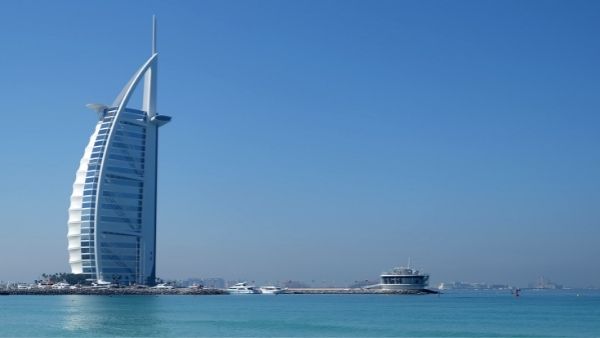
UAE approves new entry, residence scheme for foreigners
- Apr 19,2022
- Travel World
The United Arab Emirates’ cabinet approved regulations on entry and residence of foreigners, formalising a process aimed at giving expatriates a bigger stake in the economy. “The new system of entry and residence aims at attracting and retaining global talents and skilled workers from all over the world, and boosting the competitiveness and flexibility of the job market and fostering high sense of stability among UAE residents and families,” according to a statement. Foreign residents make up more than 80 per cent of the population of the UAE and have been a mainstay of the economy for decades. The UAE comprises seven sheikhdoms, including Dubai and Abu Dhabi. Details about new residence and entry permits: The golden residence scheme has simplified the eligibility criteria and expanded the categories of beneficiaries. The 10-year residence is granted to investors, entrepreneurs, exceptional talents, scientists and professionals, outstanding students and graduates, humanitarian pioneers and the first-line heroes. Amendments allow golden residence holder to sponsor family members. There is no restriction related to the maximum duration of stay outside the UAE in order to keep the golden residence valid. Real estate investors can obtain golden residence when purchasing a property worth no less than 2 million dirhams ($544,500). Green residence: 5-year residency for freelancers and self-employed individuals without requiring a sponsor or employer in the UAE. Green residence for investor or partners: 5-year residency for investors establishing or participating in commercial activities. It replaces the previous residence that was valid for 2 years New residence types: 5-year residence visa to attract talents, skilled professionals, freelancers, investors and entrepreneurs New entry visas: New types of visas are introduced without requiring a host or sponsor for the first time. In addition, all entry visas are available for single or multiple entry and can be renewed for similar period and are valid for 60 days from their issuance date Job exploration entry visa: It does not require a sponsor or a host. It is granted to those classified in the first or second or third skill level as per the Ministry of Human Resources and Emiratisation. Minimum educational level should be a bachelor’s degree or its equivalent Business entry visa: Entry without requiring sponsor or host to encourage investors and entrepreneurs to explore business and investment opportunities in the UAE Tourist visa: 5-year multi-entry tourist visa has been introduced and it does not require a sponsor; requires proof of having a bank balance of USD 4,000 or its equivalent.
Read more