Sri Lanka Expands Visa-Free Travel to Boost Global Tourism

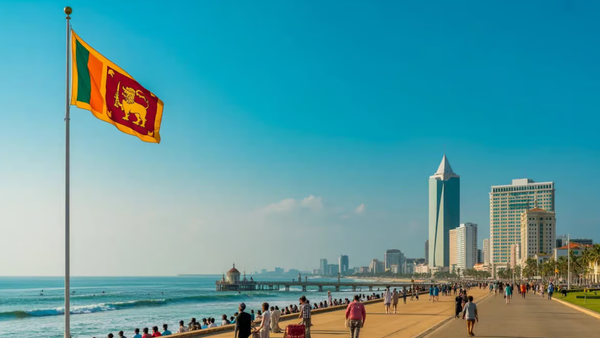
In a groundbreaking move aimed at boosting tourism and economic recovery, Sri Lanka has extended its visa-free entry policy to include the US, China, India, Japan, Germany, the UK, France, Russia, and numerous other countries. This historic expansion is designed to eliminate travel barriers, making it easier for international tourists to visit the island, thereby revitalizing its tourism industry, which has faced significant challenges in recent years. By opening its doors to a wider array of global travelers, Sri Lanka aims to unlock new opportunities for economic growth, attract high-value visitors, and strengthen its position as a prime destination in the international tourism market. Sri Lanka Expands Visa-Free Entry to 40 Additional Countries in Boost to Tourism and Economic Revival Sri Lanka is taking bold steps to rejuvenate its tourism industry and stimulate economic growth by broadening its visa-free entry policy. In an ambitious move aimed at attracting global travelers, the Sri Lankan government has announced an expansion of its free tourist visa program to include 40 additional countries. This decision, which was made public by the country’s Foreign Affairs and Tourism Minister, Vijitha Herath, during the opening of the “Hotel Show Colombo 2025,” marks a significant turning point in Sri Lanka’s tourism strategy. The extension of the visa-free program follows a successful trial run that began in March 2023, initially offering the benefit to just seven countries. The pilot program’s success prompted the Sri Lankan government to expand its reach, reflecting the nation’s determination to boost its tourism sector, which plays a crucial role in its recovery from ongoing economic struggles.

Read more

Croatia Leads Europe in Preserving Living Cultural Heritage

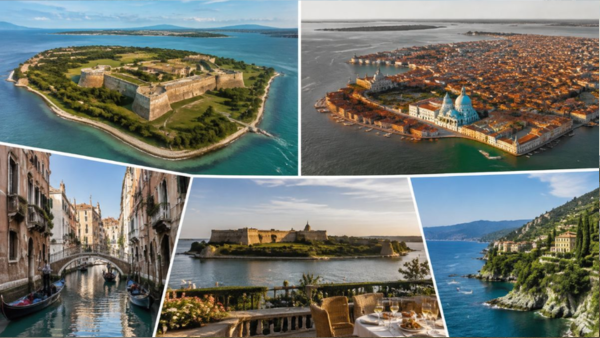
Croatia’s inclusion alongside the Czech Republic, Belgium, Germany, Spain, Portugal, Scotland, Italy and Estonia is not accidental—it reflects a shared European pattern where history was never pushed aside, only carried forward. In each of these countries, certain cities resisted the impulse to modernize at the cost of identity. Instead of replacing their medieval cores, they adapted around them, allowing centuries-old streets, structures and cultural rhythms to remain active parts of daily life. What binds these nations together is not just preservation, but continuity. Their historic centers are not isolated districts or curated attractions—they are functioning urban environments where people live, work and move through spaces shaped long before the modern era. Markets still gather in medieval squares, churches still define skylines and narrow streets still dictate the pace of movement. Croatia joins this group because its cities follow the same principle. Places like Dubrovnik, Split and Trogir did not abandon their foundations; they evolved within them. Roman walls, Gothic layouts and coastal fortifications are not remnants—they are frameworks that continue to support contemporary life. In this context, these countries stand apart as custodians of Europe’s “living history”—not because they froze time, but because they never severed their connection to it.

Read more

Italy Expands Seamless Travel with New Airline Codeshare Deals

Italy has strengthened its role in Europe’s air travel network with the expanded codeshare partnership between ITA Airways and Volotea, creating smoother, more efficient connections across key European markets. This new alliance significantly enhances travel accessibility for passengers traveling between Italy and countries like Spain, France, the UK, the Netherlands, Germany, and Switzerland, as well as several other destinations. By combining Volotea’s regional reach with ITA’s broader international network, the partnership not only simplifies travel across Europe but also opens up new opportunities for tourism and business, making the continent more interconnected than ever before. In an era when air travel has become synonymous with efficiency, connectivity, and accessibility, the newly expanded codeshare partnership between ITA Airways and Volotea marks a significant milestone in the evolution of European aviation. The move, officially launched on 15 April 2026, stands as a game-changer for passengers seeking seamless travel experiences across Europe. This enhanced partnership brings Italy into closer proximity with key European markets such as Spain, France, the UK, the Netherlands, Germany, and Switzerland, as well as a host of other European destinations. The result is a more unified air travel ecosystem that unlocks greater access, reduces complexities, and elevates travel convenience for passengers. The expanded codeshare agreement will reshape travel patterns across the continent, making Europe more interconnected and accessible than ever before. Let’s take a deep dive into how this partnership will benefit travelers, one country at a time, and what this strategic alliance means for the future of European travel. Italy Joins Spain in Revolutionizing European Connectivity Italy has long been a key player in the European travel market, but this new codeshare agreement with Volotea, a Spanish low-cost carrier, enhances its connectivity exponentially. With Volotea operating extensive routes across Spain, particularly to regional destinations, the partnership means Italian passengers can now seamlessly connect to more than 30 destinations across Spain. Notable cities like Murcia, Asturias, and Vitoria, previously harder to reach through traditional carriers, are now just a simple flight away.

Read more

Munich Expands Airport Capacity with New Terminal Pier

Munich’s position as one of Europe’s most critical aviation gateways has taken a decisive leap forward with the launch of a newly developed pier at Terminal 1, a move that is already reshaping travel dynamics across Germany and the broader European network. The development comes at a time when international travel demand continues to surge, placing renewed pressure on infrastructure that must now evolve rapidly to meet both passenger expectations and operational complexity. This expansion is not simply cosmetic. It represents a fundamental shift in how non Schengen travel is handled, especially for long haul and transatlantic routes that have historically faced congestion and inefficiencies within older terminal modules. For years, Terminal 2 at Munich Airport has been associated with modern design and streamlined operations, while Terminal 1 carried the weight of legacy infrastructure. The opening of the new pier changes that narrative dramatically, injecting advanced capacity and efficiency into a section of the airport that is now poised to play a much larger role in global connectivity. Transatlantic Travel Gains Momentum As Airlines Activate New Routes The operational debut of the pier has already been marked by high profile long haul movements, signaling its immediate relevance in global aviation networks. The arrival of an American Airlines flight from Charlotte and the departure of a Delta Air Lines service to Detroit illustrate how the facility is being deployed to handle high demand intercontinental routes with precision and efficiency. These routes are critical not only for tourism but also for business travel, linking Bavaria directly with major economic centers in North America. The presence of advanced widebody aircraft, including modern fuel efficient jets such as the Airbus A350, reinforces the pier’s design focus. The infrastructure has been purpose built to accommodate next generation aircraft, ensuring faster boarding processes, optimized turnaround times, and improved passenger comfort. This is particularly significant as airlines continue transitioning toward more efficient fleets to meet sustainability targets outlined by European and German aviation authorities.

Read more

Ho Chi Minh City Unveils Major Cultural Landmark with New Performance Hub

Ho Chi Minh City has taken a major step in strengthening its cultural landscape with the arrival of the Phu Tho Circus and Multi-Purpose Performance Theater, a modern venue that is already making headlines in travel news. The Phu Tho Circus and Multi-Purpose Performance Theater is being recognized as one of the city’s most ambitious cultural projects, designed to bring together large-scale performances, traditional art forms, and international shows in one space. In recent travel news, the city’s growing focus on cultural tourism has been highlighted, and this development fits directly into that trend. A Cultural Project Guided by Public Institutions The development of the theater has been closely supported by the Department of Culture and Sports, which has worked with planners to ensure the venue aligns with long-term cultural goals. The Ho Chi Minh City Arts Center has also played an active role in coordinating early tours, managing rehearsals, and preparing the space for public introduction. Instead of launching all at once, the venue was gradually opened for public visits and technical testing. This allowed residents to experience the space firsthand, reflecting a growing trend in travel news where cultural infrastructure is becoming part of the tourism experience itself. Modern Design and Flexible Performance Spaces The theater has been designed with both scale and flexibility in mind. It is capable of hosting everything from circus performances to theater productions and musical events, adapting quickly to different stage requirements.

Read more

Vietnam Accelerates Smart Tourism with AI-Powered Travel Experience

Vietnam’s travel and tourism industry is undergoing a dramatic transformation, as artificial intelligence rapidly reshapes how destinations are marketed, experienced, and managed. Once reliant on traditional models, the country is now embracing a technology-first tourism strategy, positioning itself as a rising powerhouse in smart tourism across Southeast Asia. At the center of this shift is the growing influence of AI-driven personalization, which is redefining how travelers discover, plan, and experience their journeys. Government-backed digital initiatives, combined with industry adoption of advanced technologies, are accelerating Vietnam’s ambition to build a globally competitive, digitally connected tourism ecosystem. This transformation comes at a time when international arrivals are rebounding strongly, signaling both opportunity and urgency for innovation in one of the nation’s most vital economic sectors. AI Redefines Travel Planning And On-Ground Experiences The modern traveler, particularly from younger generations, is no longer dependent on conventional travel agencies or static itineraries. Instead, AI tools are becoming essential companions throughout the travel journey. A significant majority of young travelers now rely on AI platforms for trip planning, seeking tailored recommendations, real-time updates, and seamless navigation. From choosing destinations to booking accommodations and experiences, AI has become the backbone of decision-making. During travel, digital tools are enhancing convenience at every stage. Visitors increasingly use AI for instant translation of menus and signage, helping bridge language gaps effortlessly. Museums and heritage sites are also integrating interactive digital guides, enabling tourists to engage more deeply with Vietnam’s cultural assets.

Read more