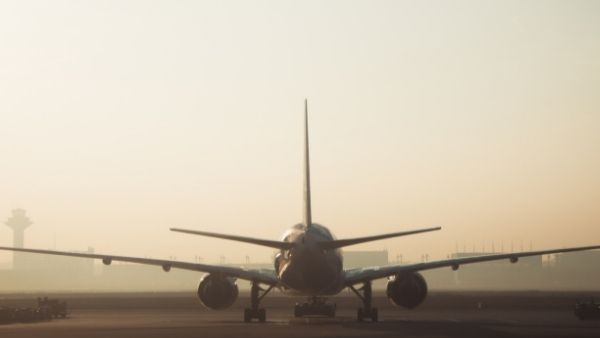
Flying beside a COVID positive positive person can land you into quarantine

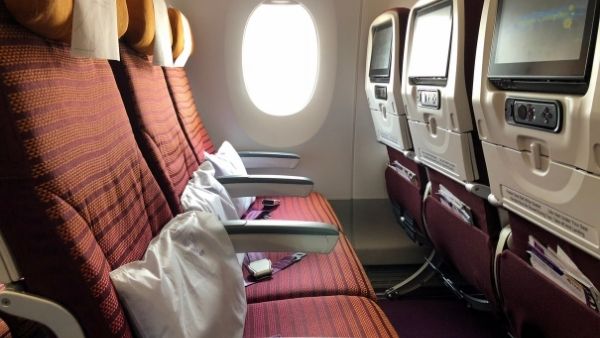
As the world takes note of the new Omicron variant of COVID 19, travel restrictions are back in place. India has laid out its own rules and regulations for flyers at this time, which includes submitting a declaration form at air suvidha online portal, uploading a COVID negative certificate there, and getting tested upon arrival, among other things. An important little detail here is that you have to be quarantined if you happen to have shared the flight beside a COVID positive person. The updated guidelines are already into effect from December 1 onwards, and passengers from at-risk countries such as South Africa, Brazil, Bangladesh, China, Botswana, Mauritius, New Zealand, Zimbabwe, Singapore, Hong Kong, Israel, and countries in Europe, including UK, have separate guidelines for travel. According to the guidelines, those passengers who are seated three rows in front of a COVID positive traveller, three rows behind a COVID traveller, or in the same row will have to be quarantined at an institution or at home monitored by the authorities. This includes cabin crew. Moreover, all community contacts with a COVID positive person who has been isolating at home will also need to quarantine for 14 days. Those travellers in home quarantine who develop signs and symptoms of COVID 19, will have to go into isolation and also report to the nearest health facility. They can even call 1075, which is a national helpline number, or a state helpline number.

Read more

Jet Airways in talks with Boeing, Airbus for USD 12 billion order

The new owners of once-bankrupt Jet Airways India are in talks with Boeing Co and Airbus SE to purchase at least 100 narrow body jets for the carrier’s fleet in a bid to revive what used to be the biggest private airline in the South Asian nation before it collapsed under a pile of debt. The winning bidders for Jet Airways in a state-run bankruptcy resolution process, Dubai-based, Indian-origin businessman Murari Lal Jalan and Florian Fritsch, the Chairman of London-based financial advisory and alternative asset manager Kalrock Capital Management Ltd, plan to start flights in the first three months of next year, Ankit Jalan, a representative for the consortium, said in an interview with Bloomberg News. The group will invest around INR 1,500 crore (USD 200 million) via equity and debt in the airline over the next six months, half a year earlier than originally planned, Jalan, who is Murari Lal’s nephew, said earlier this week. The potential revival of Jet Airways, which forced creditors to take a 95 per cent haircut, will be the first for any airline under India’s bankruptcy laws and will intensify competition in one of the world’s most cut-throat aviation markets. Founded by ticketing agent-turned-entrepreneur Naresh Goyal after India ended a state monopoly on aviation in the early 1990s, Jet Airways became popular among fliers as an attractive alternative to Air India, offering fullservice flights to cities including London and Singapore, before a bunch of low-cost airlines ushered in cheap fares for no-frills services. “The reaction that we saw of the Jet Airways brand coming back was motivation in itself,” 37-year old Jalan, who’s leading the consortium’s airline venture, said from the old offices of Jet Airways just outside of New Delhi on Wednesday evening. “That’s exactly why Jet is coming back; to serve the loyal fan base, to serve the people who miss Jet,” he said. Shares of the airline rose as much as 5.6 per cent Thursday in Mumbai, their biggest jump in more than three months. Jet Airways, which had almost 21,000 creditors seeking claims of around USD 6 billion under the bankruptcy process, is reentering a notoriously tough market. Kingfisher Airlines, founded by beer tycoon Vijay Mallya, ended operations in 2012 after failing to clear its dues to banks, staff, lessors and airports. SpiceJet almost collapsed two years later before its founders returned to gain control and revive the company. Singapore Airlines and AirAsia Group have also set up local affiliates, but they aren’t making any money. Fleet plans Jet Airways is now left with a fleet of 11 planes, including Boeing 737s and 777s, as well as Airbus A330 jets. But those aircraft are mostly old and need to be sold and replaced with newer, more fuel-efficient ones, Jalan said. A deal for the most popular model of Boeing 737 Max jets could cost more than USD 12 billion, although discounts are common in large orders. Options for the plane deal includes both outright purchase and leasing, Jalan said. While Airbus is looking at possible early delivery of its most popular A320neo jets, which are already sold out for several years, Boeing may potentially relook at an old 225-plane order for 737 Max aircraft, which Jet Airways had placed before going belly up, Jalan said. A decision is expected by early next month. “It will be at least something that covers us for the next five to six years,” Jalan said, in what is the new owners’ first interview to media since taking control of the airline. “Our plan is to be a 100-plus airline in five years, a 100- plus aircraft fleet. That is our plan. So the order has to support that.” India still has “enough room” to accommodate more planes, particularly compared with China, which has a lot more aircraft and a comparable population, and the US, which has 10 times the number of aircraft versus India with just one-quarter the population, Jalan said. Jet Airways has already hired most top management for the company, Jalan said, declining to elaborate before a formal announcement. The Jalan family, little-known in India, is based in Dubai and has businesses spanning healthcare, real estate and renewable energy primarily in Uzbekistan, Dubai and Russia, said Jalan, who was educated in both Dubai and the US Murari Lal Jalan has been a so-called nonresident Indian for more than three decades, with the majority of his businesses outside India. Jet Airways 2.0, as it is dubbed by the new owners, will be a full-service airline, with a business class in most planes once the venture takes off. It will also offer a frequent flyer program. The airline will target the corporate market in particular, which Jet once dominated, and have connections to major metro cities including New Delhi, Mumbai and Bangalore, Jalan said. “We are working on all the things that we need to do to make an airline operational, whether that’s the training infrastructure, whether that’s the IT systems, whether it’s the marketing plan, all that is being worked upon as we speak. All these things will come beautifully together in the next two or three months,” Jalan said. “This is how we are doing it, in the present tense, not in the future tense,” he asserted.

Read more

MoCA has proposal from 10 nations to start air bubble agreement: Jyotiraditya Scindia in Lok Sabha

Union Civil Aviation Minister Jyotiraditya Scindia, in a written reply to Lok Sabha, to a query regarding the pending air bubble agreement said that the Ministry of Civil Aviation (MoCA) has a proposal from 10 countries including Australia, New Zealand, Thailand and Saudi Arabia to ink air bubble transport agreement, which will allow certain number of direct flights with limited capacity bilaterally. The other six countries with which MoCA is in touch include South Korea, Israel, Italy, Philippines, Kazakhstan and Switzerland. Scindia said that India has sent proposal to all the 10 countries for operating flights under the air bubble agreement. Currently, India has signed air bubble agreements with 31 countries, which includes, Afghanistan, Bahrain, Bangladesh, Bhutan, Canada, Ethiopia, Finland, France, Germany, Iraq, Japan, Kenya, Kuwait, Maldives, Mauritius, Nepal, Netherlands, Nigeria, Oman, Qatar, Russia, Rwanda, Seychelles, Singapore, Sri Lanka, Tanzania, Ukraine, UAE, United Kingdom, USA, and Uzbekistan. “We are waiting to hear from them,” the Civil Aviation Minister informed during the Winter Session of the Parliament answering the to the question asked by ET Mohammed Basheer, member of the Lok Sabha from the Ponnani constituency in Kerala. While indefinitely postponing the commencement of international scheduled commercial flights from December 15, as earlier announced, the government last week confirmed air bubble flights will continue to be operational in the restricted manner. Amidst growing demand from the industry stakeholders, embassies, airlines and travel trade, the government had decided to resume regular flights from the mid of December 2021, but the increasing scare and threat compelled the authorities to postpone the plan.

Read more

Centre advised airlines to allot preferred seat to MPs, informs MoS VK Singh

Airlines have been advised to allocate the preferred seat to Member of Parliaments (MPs) during air travel, said Minister of State for Civil Aviation, General VK Singh, in Lok Sabha on Thursday. Congress MP Kumbakudi Sudhakarn asked whether the government has issued any guideline to private airlines operating within India for assisting Members of Parliament (MPs) during air travel. Singh, in a written reply in the Lower House, said that guidelines have been issued for extending protocol or courtesy support to Members of Parliament at airports by all airlines including Air India, Airport operators, and Bureau of Civil Aviation Security. He further stated that the airlines have been advised to facilitate MPs in the completion of their check-in formalities at the airport. "As per the extant guidelines, airlines have been advised that seats of their choice be allotted to MPs subject to availability," he replied. On being asked about the procedure in place for MPs in case of noncompliance from the airline staff, Singh said, "If complaints from MPs on rude behaviour by airline staffs are received, they will be examined and reports will be sought from the concerned airlines followed by appropriate actions," Sindh replied.

Read more

China's aviation regulator expects 737 MAX to resume flights around year-end

China's aviation regulator expects airlines will resume commercial operations with the Boeing Co 737 MAX by the end of this year or the beginning of next year, an official said on Friday. The Civil Aviation Administration of China (CAAC), which was the first regulator globally to ground the MAX in March 2019 after two deadly crashes, on Thursday provided airlines with a list of fixes required before the MAX returns to service. That move, which Boeing described as an "important milestone", sent its shares 7.5 per cent higher, pushing the Dow Jones index up 1.73 per cent in its biggest one-day percentage gain since March. The planes will need to be modified and removed from storage and pilots will require additional training before the existing MAX fleet in China can resume commercial services and Boeing can restart deliveries of new planes, CAAC official Yang Zhenmei told reporters. She did not comment on the status of China's ban of the MAX from its airspace, which has also prevented foreign operators from flying the plane into the country. Before the MAX was grounded, Boeing was selling one-quarter of the planes it built annually to Chinese buyers, its largest customers. Boeing Chief Executive David Calhoun said in October the company was working toward gaining Chinese approvals by the end of the year for the MAX to fly, with deliveries expected to resume in the first quarter of 2022. Around a third of about 370 undelivered MAX airplanes in storage are for Chinese customers, Boeing said at the time. Other Asia-Pacific countries - including Singapore, South Korea, India, Japan, Australia and Fiji - have already approved the return of the MAX. Singapore Airlines Ltd last month said it expected to resume MAX flights before the end of the year, noting that was contingent on other countries removing airspace bans.

Read more

India has not imposed travel curbs like some other countries: MEA on Omicron

India has not imposed any travel curbs like some other countries that have stopped flights from regions or nations they relate to Omicron but has intensified surveillance mechanisms and protocol for those who happen to come from 'at risk' countries, the Ministry of External Affairs said on Thursday. Asked about the 'at risk' countries list of India and the Omicron threat, Ministry of External Affairs Spokesperson Arindam Bagchi said it is an "evolving situation". He said that there were 11 entries in the 'at risk' list of nations and with the first one being European countries, including the UK, and therefore, the total number of countries on the list was much higher. The list was a result of a "technical decision" based on evidence by India's health regulatory authorities, Bagchi said. The 'at-risk' nations (as updated on November 30) are countries in Europe, including the United Kingdom, South Africa, Brazil, Botswana, China, Mauritius, New Zealand, Zimbabwe, Singapore, Hong Kong and Israel. Bagchi said the list existed prior to Omicron so it cannot be called "an Omicron list" at all. "I am not aware of any particular country having raised the fact that they are on that list," he said to a query if any country had taken up the matter of being in that list with India. "We don't have travel curbs as such. Some countries have stopped flights from that region or countries they define vis-a vis Omicron. We haven't done that. We have intensified surveillance mechanisms and protocol for those who happen to come from 'at risk' countries, and not just limited to Omicron, who have to undergo RT-PCR test and have to undergo seven-day home quarantine," Bagchi said.

Read more