
Consider booster dose for those above 40: INSACOG
- Dec 03,2021
- Financial Express
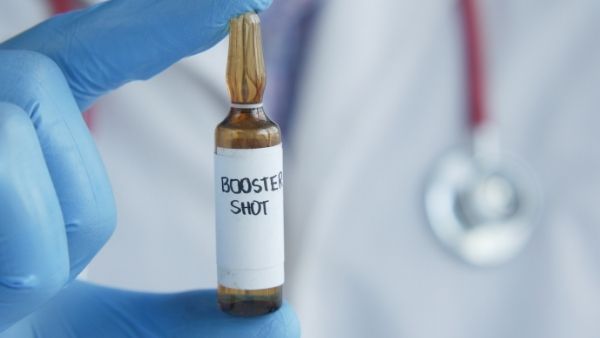
Amid demands for a booster vaccine dose against COVID-19, India’s top genome scientists have said that a booster dose “may be considered” for people above 40 years. “Vaccination of all remaining unvaccinated at-risk people and consideration of a booster dose for those 40 years of age and over, first targeting the most high-risk / high-exposure may be considered,” the Indian SARS-CoV-2 Genomics Sequencing Consortium (INSACOG) said in its weekly bulletin dated November 29. The INSACOG is a network of national testing labs set up by the government to monitor genomic variations of COVID-19. The recommendation came amid demands for a booster dose of Covid vaccines by lawmakers during a discussion in the Lok Sabha on the pandemic situation in the country. The INSACOG said genomic surveillance will be critical for early detection of the presence of this variant, to enable necessary public health measures. It also recommended monitoring travel to and from the known affected areas, and contact tracing of COVID-19 cases with an epidemiological link to the affected areas, that has been implemented along with increased testing. “Vaccination of all remaining unvaccinated at-risk people and consideration of a booster dose for those 40 years of age and over, first targeting the most high-risk / high-exposure may be considered, since low levels of neutralising antibodies from current vaccines are unlikely to be sufficient to neutralise Omicron, although risk of severe disease is still likely to be reduced,” the INSACOG bulletin said. It noted that genomic surveillance will be critical for early detection of the presence of this variant, to enable necessary public health measures. Monitoring travel to and from the known affected areas, and contact tracing of COVID-19 cases with an epidemiological link to the affected areas has been implemented along with increased testing – with sequencing of confirmed cases and possible SGTF based rapid screening, the INSACOG bulletin said. As of now, the US and Britain have recommended booster doses of vaccines for all adults, six months after the second dose. NITI Aayog member (Health) Dr V K Paul had said despite new challenge of Omicron variant, vaccination remained the most critical tool against COVID-19. “We are fortunate that we have the tool (vaccination) in plenty and there is no doubt that coverage of vaccines has to increase. Look at the big picture, we have this tool and we must protect every eligible individual with this tool,” Paul had said on Thursday. “We are benefited by two doses and people should get the second dose as soon as possible. The decision on duration between doses is based on scientific data and local data in a systematic manner, and there is no change in the present duration,” Paul had said.
Read more
Countries That Have Imposed Travel Restrictions Right Now
- Dec 03,2021
- Times of India
New travel restrictions With a new variant of the COVID-19, Omicron, being declared as a variant of concern by the WHO, many countries are banning travel once again. The latest travel bans by countries in the EU, the USA, and other countries are concentrated on African nations, including South Africa. South African President Cyril Ramaphosa, has condemned such a ban, and has said that he is deeply disappointed. Here are the countries that have banned travel, and has barred international flights. Israel Israel has closed its borders since the the outbreak of the new variant. The country is one of the first nations to close its borders for travel after news of the new variant, Omicron. All foreigners are barred from entering into the country as of today, and this ban is expected to last for 14 days, until further news. Japan Japan is yet another country that quickly closed its borders for travel. The country has banned foreigners from entering into the country, which includes business travellers, and students. The government has said that closing the borders is only a temporary measure. Japan had earlier eased travel ban on November 8, but that has changed since the outbreak of the new variant. Australia Australia has imposed travel restrictions or has banned travellers from southern African countries. These include South Africa, Botswana, Namibia, Zimbabwe, Lesotho, Eswatini, Malawi, and Mozambique. According to the latest rules, travellers from these countries who are not Australian citizens, permanent residents, or their immediate families, will not be able to enter. On the other hand, Australian citizens, permanent residents, or their immediate families will need to go under quarantine. Canada All non-Canadian travellers coming in from Mozambique, South Africa, Botswana, Zimbabwe, Lesotho, and Eswatini, will be barred from entering into the country. This rule is in force from November 12 onwards. All Canadian citizens, and permanent residents coming in from these countries will be required to follow strict protocols. Negative RT PCR test report before boarding, and test upon arrival are must. These travellers will also have to quarantine in a hotel for 14 days. Italy The country has gone ahead and imposed restrictions at its borders. Italy at this time restricts travellers from Botswana, Eswatini, Lesotho, Mozambique, Namibia, South Africa and Zimbabwe, who have visited these countries in the last 14 days. The country has also said that starting December 6, there will be an updated form on the Italian Green Pass. Indonesia Indonesia has increased the days of quarantine from three to seven after the latest outbreak of the virus. The country has tightened restrictions for foreign travellers, and as well as Indonesians returning to the country from countries such as Botswana, Zambia, Malawi, South Africa, Zimbabwe, Mozambique, Eswatini, Angola, Namibia, and Hong Kong. Morocco The North African country has decided to ban all incoming international flights for a period of two weeks. The country decided to go ahead with the ban on November 29. This is the third country, alongside Japan, and Israel, to completely ban international flights. Malaysia The country has also taken measures against the new variant of COVID 19. Malaysia as now temporarily banned the entry of travellers from those countries that are affected by Omicron. A total of eight African countries have been named in the list of countries. Also, the country's much awaited Vaccination Travel Lanes is likely to be delayed. Netherlands As Omicron became a variant of concern, Netherlands decided to ban flights from Botswana, Eswatini, Lesotho, Namibia, Zimbabwe and South Africa. The travel ban is currently in place until December 4, 2021, 23:59. All Dutch nationals, and residents are however exempted from this rule. New Zealand New Zealand has also banned travel from nine African countries, which are South Africa, Namibia, Zimbabwe, Botswana, Lesotho, Eswatini, Seychelles, Malawi and Mozambique. The ban has been in place from November 28 onwards. United States Like many other countries, the United States has also banned travel from South Africa, Botswana, Zimbabwe, Namibia, Lesotho, Eswatini, Mozambique, and Malawi. However, American citizens and those who have permanent residents, can travel to the United States from the above mentioned countries. Such travellers do need to test negative before gaining entry into the country.
Read more
Keravan Kerala: KSIDC to finance purchase of tourist caravans
- Dec 02,2021
- On Manorama
Thiruvananthapuram : In a major boost to Kerala's stakeholder-friendly Caravan Tourism project 'Keravan Kerala', the state's investment promotion agency Kerala State Industrial Development Corporation (KSIDC) has come out with an attractive scheme to provide loans up to Rs five crore to purchase tourist caravans and set up caravan parks. Under the scheme, an enterprise is entitled to get a loan of up to Rs one crore per caravan, or 70 per cent of the cost, for buying up to five vehicles. The range of the loan is from Rs 50 lakh to Rs one crore per vehicle and the loans will be available only to buy new vehicles, an official statement said here. The interest is pegged at 8.75 per cent (floating) with a 0.5 per cent rebate for prompt repayment. The loan should be repaid in 84 months after a twelve-month moratorium period. The enterprises eligible for the loan are existing resorts or resort groups (firms, LLP and Limited Companies), fleet owners and tour operators and repatriates, it said. The Caravan Tourism policy, announced by Tourism Minister P A Mohamed Riyas in September this year, has generated tremendous response from the industry since its online registration process began a month back. M G Rajamanickam, Managing Director, KSIDC said Keravan Kerala is going to be an initiative that redefines tourism in the state. "The response to the policy within a short span of its announcement has been encouraging. As the Government's nodal agency for industrial and investment promotion, KSIDC sees it as a highly rewarding investment avenue for entrepreneurs", he said. V R Krishna Teja, Tourism Director, said the KSIDC scheme will provide an added thrust to the project, which is set to take off soon. "It also reflects on how various government departments and agencies are working in tandem for the success of this novel initiative that is going to be a key component in the post-pandemic revival of tourism in Kerala", the official said. The policy offers attractive incentives for the investors. The two components of the initiative are caravan operation and setting up caravan parks across the state, for which clear-cut procedures and protocols have been laid down to ensure a pleasant experience for visitors. Under the policy, the first 100 caravans will get to a subsidy of Rs 7.50 lakh or 15 per cent of the cost. Within a short span, the project has also elicited keen interest from auto majors, top travel and hospitality players, local self-government institutions and service providers down to the grassroots, the official statement added.
Read more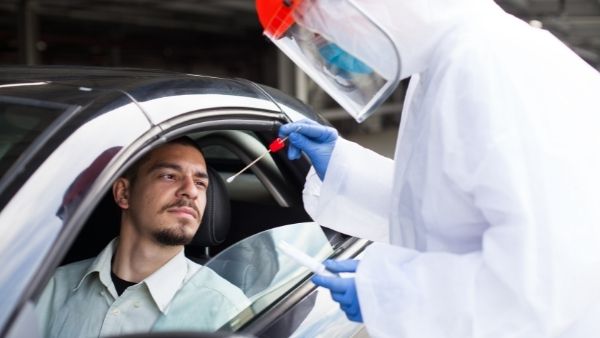
Tamil Nadu issues new SoPs for air travel amid Omicron fears. Check RT-PCR requirements and other details
- Dec 02,2021
- Live Mint
Tamil Nadu government has issued a new set of SoPs for passengers for air travel from 1 December as fears loom large around new COVID-19 variant Omicron, news agency ANI reported. As per the new directive, passengers on arrival from these nations are to stay at the airport till their RT-PCR result comes negative. Meanwhile, random sampling will be conducted for travellers coming from countries other than the ones categorised as 'at risk' nations, said S. Dharmaraj, Director at Tiruchirappalli International Airport. He further noted that, the entire area is being sanitised regularly. Meanwhile, state Health Minister Ma Subramanian on Wednesday said that the government has instructed officials to take steps to restrict movement of non-vaccinated people. Speaking to ANI, Subramanian said, "We have instructed district collectors to take steps on restrictions for non-vaccinated people and ensure that they do not come in public places. We want to ensure that people get vaccinated without fail." He further said, "In Kanyakumari, customers at government liquor shops will get liquor only if they are vaccinated." The state government on Tuesday extended the existing Covid-19 restrictions and relaxations in Tamil Nadu till 15 December. The state has also allowed inter-state public transport between Tamil Nadu and Kerala. Tamil Nadu on Wednesday reported 718 new COVID-19 cases. According to the state government health bulletin, the state has reported a total of 27,27,635 cases. With 11 deaths reported in the last 24 hours due to the disease, the death toll of the city climbed up to 36,492. The total active cases stood at 8,200. The total recoveries have gone up to 26,82,943 with 751 more people recovering from the infection.
Read more
KSRTC's colourful circular city services woo commuters in Kerala capital
- Dec 02,2021
- On Manorama
Thiruvananthapuram: Circular city services have been launched by the Kerala State Road Transport Corporation (KSRTC) in Thiruvananthapuram with buses sporting attractive colours. On the inaugural day, 38 services were conducted by the City depot of KSRTC and 28 by the Peroorkada depot. These buses are painted with colours such as red, blue, magenta, yellow, violet and green. Mobile app soon Incidentally, only a few passengers boarded the circular services in the morning on the inaugural day as there were no destination boards on the front side of the buses. In fact, the boards were fixed only on the sides of the public carriers. Later in the afternoon, KSRTC authorities installed the place names on the front side and some passengers boarded the buses. According to the authorities, route maps of the circular services would soon be displayed at all bus stops in the city. A mobile app too for passengers is planned, they added. “We need at least three months to attract regular commuters to the circular services,” said a KSRTC official. Frequency, fares The circular services are conducted at intervals of 15 minutes during peak hours and 30 minutes during non-peak hours. While the minimum charge on these buses is Rs 10, the maximum is Rs 30.
Read more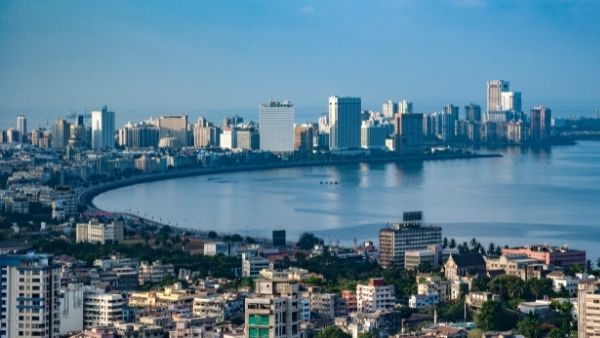
Omicron: Maharashtra Revises Travel Guidelines After Centre's Memo on 'Divergent' Quarantine Rules
- Dec 02,2021
- News 18
The Maharashtra government on Thursday revised its guidelines for international travellers a day after the Centre asked the state to “align" its rules with the SoPs announced by the Union Health Ministry. Maharashtra has now created another category — ultra risk — passengers from ‘at risk’ countries who will be sent to institutional quarantine. The state has now mandated 7-day institutional quarantine and 7-day home quarantine for air passengers coming from high-risk countries — South Africa, Botswana and Zimbabwe. According to the revised order, the restrictions imposed by the Government of India guidelines from time to time shall act as minimum restrictions to be imposed on all international and domestic air passengers. The order also states that ‘high-risk’ air passengers may be deplaned on priority and separate counters will be arranged by respective airport management authorities at all the international airports in the state for their screening and verification. These passengers need to undergo an RT-PCR test immediately on their arrival at respective international airports, following which they must go for mandatory 7-day institutional quarantine. The second RT-PCR will be carried out on the seventh day. If any of the tests are found to be positive, then such high-risk air passengers will be shifted to a hospital. If the result of the Covid test on the 7th day comes negative, then such passengers will have to go for a further 7 days of home isolation. For domestic passengers, they have to either carry their fully vaccinated certificate or mandatory RT-PCR negative test report of not more than 72 hours. The revision in the travel guidelines came after Union Health Secretary Rajesh Bhushan on Wednesday sent a letter to the Uddhav Thackeray government, urging it to align the orders with the Centre’s guidelines. Reacting to it, government sources said that the letter has been taken into consideration, but the “processes take time as experts need to be consulted". They added that the Brihanmumbai Municipal Corporation (BMC) has already deferred implementation. Maharashtra had mandated RT-PCR testing of all international travellers at the Mumbai airport, irrespective of country of origin. It had also made it compulsory for all international passengers to undergo 14-day home quarantine, despite being tested RT-PCR negative upon arrival In the letter sent to Maharashtra’s additional chief secretary, Union Health Secretary Rajesh Bhushan advised that such modified orders of the state government are given wide publicity to obviate any inconvenience to travellers. Unlike Maharashtra, the guidelines issued by the Centre are meant only for ‘at-risk’ countries. While no cases of Omicron have been reported so far in India, the Centre has advised states not to let their guard down and keep a strict vigil on the international passengers coming to the country through various airports, ports and land border crossings. The BMC on Thursday said that no omicron had been found in Mumbai after the genome sequencing report of a traveller tested negative for omicron. Few more samples have been sent for genome sequencing. Their results will be out soon, it said.
Read more