Sri Lanka opens for quarantine-free "bubble" tourism

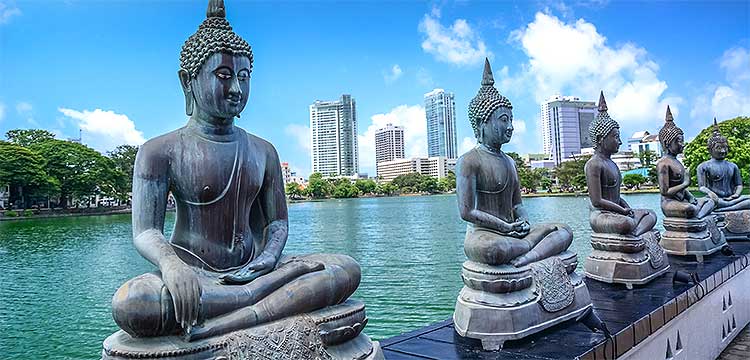
Sri Lanka is allowing foreigners to enter under “bio bubbles” during their first two weeks on arrival. Since January, the Southeast Asian nation has waived quarantine requirements for leisure travellers, allowing them to leave the confines of their hotel rooms, subject to a number of restrictions. This includes staying at approved Covid-safe properties, having insurance coverage, testing regularly for Covid-19, and refraining from interacting with locals, according to CNBC. While travellers are not permitted to leave their hotels during the initial “bio bubble” period, they will be able to visit approved tourist sites at designated times. Travel to the attractions will need to take place via travel agent or hotel-arranged independent transportation. Authorities in Sri Lanka have certified 98 Covid-safe hotels, including properties in the capital of Colombo and resort town of Bentota, to host foreign travellers for the first two weeks. All hotel facilities, such as beaches and swimming pools, will be available for use. Doctors will also be stationed onsite to monitor the health of staff and guests, according to the Ministry of Tourism’s guidelines. Sri Lanka Tourism Chairperson Kimarli Fernando told CNBC that over 3,800 travellers have taken advantage of the opportunity since the country reopened its borders on January 21.

Read more

Lakshadweep plans cruise tourism on the lines of Maldives, Mauritius

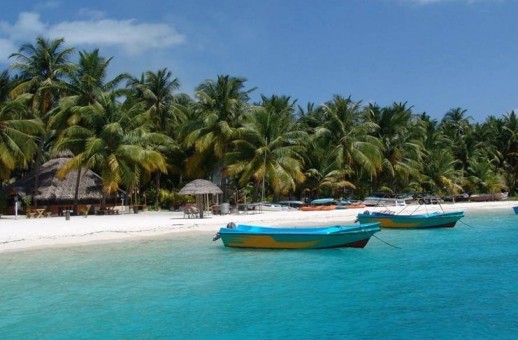
Aimed at generating employment opportunities and simultaneously bringing foreign exchange to Lakshadweep, a proposal for cruise tourism has been prepared by the Union Territory (UT) government to match the model already being facilitated for tourists in Maldives and Mauritius. In its proposal, the UT administration has informed the Ministry of Home Affairs (MHA) regarding its plan for fabrication of a dedicated tourist ship in the islands. The Lakshadweep administration has also prepared a draft policy for promotion and tourism in the UT along with the proposal for the Cruise tourism, which refers to holidays that are entirely or partly based on a cruise ship. Cruise tourism enables tourists to experience a multi-centre holiday, whereby they spend time at various destinations throughout their trip on cruise ships that vary from small yachts to mega ships and can take place on the ocean and rivers. Cruise tourism can be defined as a luxurious form of travelling, involving an all-inclusive holiday on a cruise ship of at least 48 hours, with a set and specific itinerary, in which the cruise ship calls at several ports or cities. The Home Ministry's 'action taken' report accessed by IANS says that "the Lakshadweep administration attaches utmost importance to cruise line tourism in the islands." "To develop cruise tourism in islands, Lakshadweep administration has prepared a proposal for fabrication of a dedicated tourist ship. Lakshadweep administration has also prepared a draft policy for promotion and tourism in the UT." The documents were shared with the Standing Committee on Home Affairs which earlier recommended the Ministry to develop tourism in Lakshadweep on the development model adopted by Maldives and Mauritius, both of which focus on high-end and low-volume luxury tourism, along with continuing the current cruise-based tourism approach. The document further reveals that the Lakshadweep administration is promoting eco-friendly low volume-high-end tourism in the islands, so as to develop tourism in a systematic manner by protecting the fragile ecosystem and environment. It is also mentioned that Lakshadweep administration has taken note of the limitations of the tourism development and is "avoiding mass tourism as a conscious policy". As part of this policy, the Ministry said Lakshadweep has developed eco-friendly resorts in the islands of Kavarati, Kadmat, Minicoy, Kalpeni and uninhabited Bangaram island. "Tourism projection under the guideline of NITI Aayog are under consideration in Kadmat, Minicoy and uninhabited Sushil islands." Also, the Ministry said, Lakshadweep plans to develop eco-friendly Tent Resorts at the Kiltan, Chetlat and Bitra islands.

Read more

Maharashtra Cabinet clears Caravan Tourism Policy

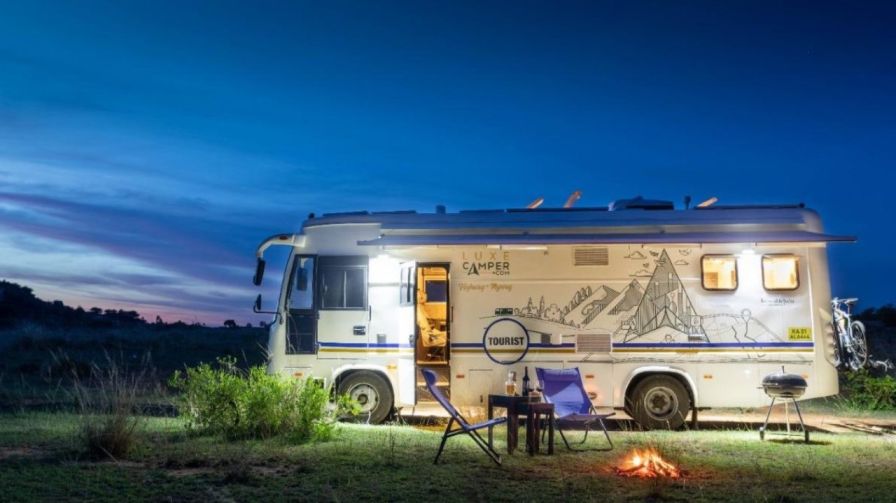
In a bid to boost tourism in Maharashtra especially post COVID-19, the state cabinet on Wednesday cleared Caravan Tourism Policy. As reported by Free Press Journal, the Maharashtra Tourism Development Corporation in September last year had released a draft policy seeking suggestions and objections from various stakeholders. Private players can procure caravans for tourism and as supportive infrastructure for these vehicles, the government will allow setting up of caravan parks. The government hopes to promote caravan tourism considering that Maharashtra is known for scenic beaches, forts, mountain ranges, hill stations, forests, heritage sites, caves and dams. While these attractions have immense potential for caravan tourism, they said, the moving ‘houses’ will have great demand in remote areas where hotels are scarce. According to the policy, caravans and camper vans will be able to provide all the facilities to tourists in areas where permanent construction is prohibited. Caravan parks will be places where recreational vehicles can be parked and all the facilities including water refill, battery charging and disposal of sewage will be made available. In addition, there will be food courts and information regarding local sights. These parks will be set up in the buffer zone of a forest, near a dam or foot of a fort. The Maharashtra Tourism Development Corporation plans to promote caravan parks and caravans through public and private sectors and PPP mode. MTDC will provide land, while others will require to develop various amenities and facilities at the parks. It will be promoted and marketed under MTDC’s Mahabhraman scheme. The caravan parks will remain operational 24X7 during tourist seasons and will be connected by fair-weather roads from main carriageways. Each park will come upon a minimum of 2.5-acre space and will have a maximum of 20 parking bays. Further, such centres will have to adopt a tourism-friendly policy which also benefits the local community and is eco-friendly.

Read more

Georgia is reopening its borders to vaccinated travellers

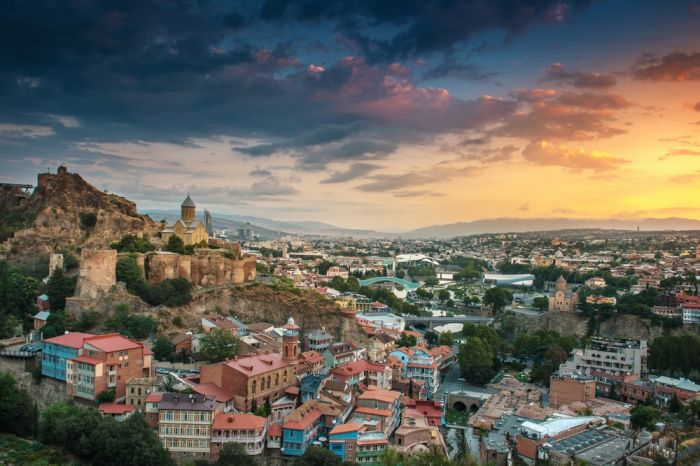
Georgia has also now joined the list of reopening its borders to vaccinated travellers. The country that sits at the border between Asia and Europe has now become the latest one to open its frontiers to vaccinated visitors. As per the latest reports, the country of Georgia has lifted all restrictions for foreign travellers, who are arriving by air and are able to show proof of being vaccinated by the two doses of COVID-19 vaccine. Reportedly, the country’s Ministry of Foreign Affairs recently announced new rules and conditions for entering Georgia. As per the Georgian Government, “Starting this month, citizens of all countries, travelling by air from any country may enter Georgia if they present the document confirming the full course (two doses) of any Covid-19 vaccination at the border checkpoints of Georgia.” However, non-vaccinated visitors who have been in the UK within the previous two weeks, will have to undergo mandatory quarantine for 12 days upon entry. With this, Georgia joins the growing list of nations, including Romania and the Seychelles for opening up its borders to vaccinated travellers. Further, countries like Israel, Denmark, and Iceland are in the process of developing vaccine passports for their citizens. Although the country is now open to vaccinated visitors, Georgia will still allow visitors from several countries, including the United States of America. As such, those who have not been vaccinated yet, will be required to arrive with a COVID-19 PCR test that has been taken within 72 hours of their departure, travel directly by air from an approved country, and will also be required to undergo a second PCR test three days after their arrival. Also, before crossing the border, travellers must complete a special application form. This move comes months after Georgia launched the scheme of long-term visas to remote workers.

Read more

IndiGo to start operations to Durgapur operations from April 22

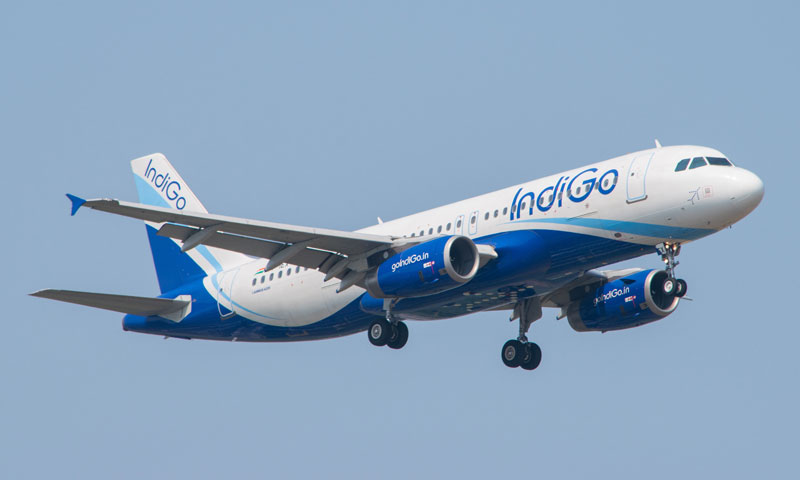
IndiGo has signed an agreement with Bengal Aerotropolis Projects Limited (BAPL) to start operations from Durgapur – the 66th destination in 6E network. The airline will operate its first direct flights from Delhi, Bengaluru, and a southern city to Durgapur from April 22, 2021, with bookings opening from February 13, 2021. Sanjay Kumar, Chief Strategy and Revenue Officer, IndiGo said, “We are pleased to partner with Bengal Aerotropolis Projects Limited, to add Durgapur as a new domestic destination in our network. Being one of the largest industrial hubs in the state of West Bengal, daily direct connections between key metro cities and Durgapur will augment economic growth in the city as well as the region. Durgapur also attracts people for its Damodar River and coalfields of Raniganj and increased access to the safest mode of transportation will further augment domestic tourist traffic. IndiGo is committed to providing an affordable, on-time, safe and hassle-free travel experience onboard our lean clean flying machine”. As part of the agreement, BAPL will also provide local marketing support to IndiGo through their expertise in the city. Post securing all regulatory approvals and specific flight schedules for Durgapur, IndiGo will soon take the overall number of domestic destinations in the 6E network to 68 by opening Bareilly and Rajkot in the coming months, as part of its plan to expand regional connectivity in the country.

Read more

Maharashtra Tourism to host festivals to promote lesser-known destinations

The Maharashtra tourism department will host a three-day grape festival in Junnar from February 19 to 21. The festival is aimed at promoting grape agro-tourism. “We plan to host such events in 20 places across the state, with 3-4 to be held in Pune district. The first is the grape festival to be held at Junnar with tour of wineries and vineyards. Tourists will be able to enjoy farm-fresh grapes, purchase beverages on the spot, and witness the entire wine-making process,” said Supriya Karmarkar, deputy director, Pune region. Some of the key attractions include Junnar heritage walk, Naneghat, boating, Ozar Ganapati temple etc. The second in the series will be the Panhala festival to be held near Kolhapur from February 26-28. It will be inaugurated at the Interpretation Centre, where an impressive set of historic weapons and vintage cars will be on display. “The objective is to showcase the cultural heritage of the region. Throughout last year, local artisans and self-help groups have suffered as tourism was badly affected by the pandemic. This initiative will give them a platform to showcase their work,” she said. “Local non-governmental organizations (NGOs) were hosting the festival in Junnar for the last four years, drawing a footfall of 700-1,000 people, but now since we are doing it on a bigger scale, we expect the count to go up to 5,000. We expect around 15,000-20,000 visitors daily in Panhala,” she added.

Read more