WTTC launches Insurance Guidelines for Travel & Tourism sector
- Jul 30,2020
- BW Hotelier
The World Travel & Tourism Council (WTTC) unveils its Insurance Guidelines to rebuild global consumer confidence to help encourage the return of travelling. The guidelines are designed to drive the return of safe, healthy and responsible travel and ensure the insurance sector is fit for purpose to operate for travellers in the ‘new normal’ of the COVID-19 world. Insurance is a vital part of the Travel & Tourism experience, providing peace of mind and risk mitigation to consumers, suppliers, and organisations across the Travel and Tourism sector. These new guidelines were compiled based on input from leading companies, many of which have partnered with trusted experts in public health and governments to support safe, healthy, and responsible travels. Gloria Guevara, WTTC President & CEO said, “Insurance is vital for travellers to have peace of mind and confidence to travel and it is now more important than ever to create confidence for consumers travelling in the ‘new normal’ of COVID-19. We have worked closely with key players across the travel insurance industry to make recommendations to ensure individual travellers, groups and organisations can feel safe and confident enough to travel, sure in the knowledge they have the protection they need. The measures outlined in our Insurance Guidelines should help guide travel insurers to create products which contain every contingency needed offer reassurance to enable travel to recommence to those countries which have relaxed their border controls and travel restrictions.” The guidelines aim to promote consistent standards across all relevant functions with an increased focus on health and safety, in line with what travellers need and expect. They provide practical insights and guidelines around insurance for the Travel & Tourism private sector to equip them with the knowledge of risks, what insurance coverage they need to look for, and how to attain appropriate coverage for their needs. Robin Ingle, MSH Ingle International, Travel Navigator and Novus Health CEO said, “The survival and growth of Travel & Tourism is important in many ways, particularly for the global economy and for promoting cross-cultural understanding transcending borders. The COVID-19 global pandemic has made governments, travellers, and the Travel & Tourism industry across the world experience how deeply integrated and interdependent we are on each other.” “Insurance protects and supports the operations of these stakeholders and thus plays a key part in the successful transition of the industry into the ‘new normal’. WTTC and its insurance, risk management and travel assistance members have worked closely to develop guidelines and an FAQ to address insurance-related issues and considerations. These guidelines will be an evolving document, and we will be on hand to answer questions to help guide and assist the industry toward a successful restart,” he added. Detailed discussions took place with key stakeholders and organisations to ensure maximum buy-in, alignment and practical implementation, to set clear expectations of what travellers may experience. WTTC divided the new guidance into four pillars including operational and staff preparedness; ensuring a safe experience; rebuilding trust and confidence; innovation; and implementing enabling policies. Highlights of recommendations announced today include: * All organisations to provide risk management plans, including how they aim to combat COVID-19, to insurers. * Organisations to make sure their plans are thorough, practical, and simple to follow. * All staff to be informed of protective measures being taken, which include insurance products that will cover them. * Insurers to ensure audits identify and plug gaps in and source the right partners and providers to ensure appropriate coverage. * Insurers to create blanket insurance and crisis management coverage to give comfort to customers. * Ensure there is enhanced awareness of the terms and conditions, restrictions, and coverage limits of insurance products/policies. * Insurers to provide a minimum base of mandatory coverage for risks posed by COVID-19. * Educate travellers who are unfamiliar with the risk they could be exposed to and what coverage to look for. Beth Godlin, President, Aon Affinity Travel Practice, and member of the WTTC Task Force said, “The benefits that Travel Insurance and Assistance products offer have always been an important part of the travel experience. The current global pandemic has directly affected companies in this industry who in turn have developed ways that these products can support the industry and travelers as we return to travel.” WTTC recently unveiled its Safe Travels protocols for hospitality, outdoor retail, airports, airlines, tour operators, convention centres, meetings and events, which were widely endorsed and supported by top CEOs and business leaders globally. Backed by the United Nations World Tourism Organization (UNWTO), the new protocols recognise businesses and governments worldwide which have adopted them to rebuild confidence among consumers, encourage the return of ‘Safe Travels’ and enable the Travel & Tourism sector to reopen for business. According to WTTC’s 2020 Economic Impact Report, during 2019, Travel & Tourism was responsible for one in 10 jobs (330 million total), making a 10.3 per cent contribution to global GDP and generating one in four of all new jobs.
Read more
International air travel permitted in limited manner: MHA in 'Unlock 3' guidelines
- Jul 30,2020
- Times Now
New Delhi: The Ministry of Home Affairs (MHA) on Wednesday said that international travel has been permitted in a limited manner under the government’s ‘Vande Bharat Mission’ (VBM) repatriation mission. Further opening-up will take place in a calibrated manner, said MHA as it issued the guidelines for further relaxations of various economic activities under 'Unlock 3'. On July 16, the Ministry of Civil Aviation (MoCA) announced setting up 'air bubbles' and partially resumed international flights to destinations in the US, Germany, France. An air bubble is a travel corridor between two countries who will fly their aircraft in a regulated environment. This arrangement has been made due to several travel restrictions across the world because of coronavirus pandemic. “Between July 22- August 31, Air India will be operating 30 flights a week to the US (New York, Chicago, Washington, New Jersey, and San Francisco), 4 flights a week to Germany (Frankfurt) and 3 flights a week to France (Paris)”, said the Ministry of External Affairs earlier. Air India, United Airlines, Air France and Lufthansa will be operating hundreds of international flights between destinations in India and the US, France and Germany from July 22 to August 31. Similar air corridors are also being established with Canada, the UK, other European, and Gulf countries. "Initially the air bubbles are with countries which have made a request. Till international civil aviation can reclaim its pre-Covid numbers, I think the answer will lie through bilateral air bubbles which will carry a possible number of people but under defined conditions," said Aviation Minister Hardeep Singh earlier. However, Indian nationals cannot travel on these flights on a tourist visa and these are meant to ferry only stranded Indians, Overseas Citizen s of India (OCI) cardholders and diplomats under VBM scheme. The establishment of air bubbles followed a previous arrangement between India and the UAE that has been in place since July 12. Puri earlier said that further international routes may be resumed once domestic capacity approaches between 50 to 55 per cent of pre-COVID levels. Ministry of Home Affairs (MHA) issued new guidelines today, for opening up of more activities in areas outside the containment zones. In Unlock 3, which will come into effect from August 1, 2020, the process of phased re-opening of activities has been extended further. The new guidelines, issued today, are based on feedback received from States and UTs, and extensive consultations held with related Central Ministries and Departments.
Read more
UAE is officially the most popular travel destination for 2021
- Jul 29,2020
- Khaleej Times
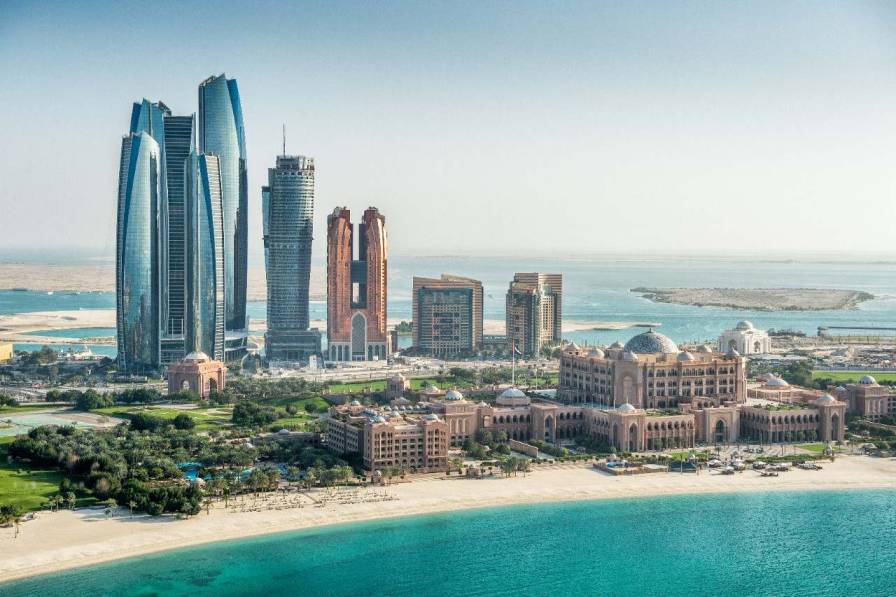
If you’re planning any travel around the UAE next year, we suggest booking in advance as the country is expected to get an influx of tourists. According to a survey conducted by global travel company Kuoni, UAE has topped the ‘world’s most searched destination for 2021’ in 11 countries. The firm looked at Google’s global data from 131 countries, with the spokesperson commenting that all of the seven emirates offer the perfect winter escape. “Each of the seven emirates has its own characteristics, but they’re all an excellent destination for some winter sun,” Kuoni said. “Dubai has a futuristic style with soaring skyscrapers, epic shopping malls and long stretches of beach, Fujairah has some incredible snorkelling spots and Ras Al Khaimah draws beach lovers to its beautiful coastline.” We couldn’t agree more. Other top destinations that made the list include Egypt, Canada and the USA. The global pandemic has had a significant impact on UAE tourism this year, with travel for leisure only reinstated on July 7. However, many feel that the numerous unique activities on offer for will entice many more holidaymakers to visit next year. “The success of the tourism sector in the UAE has been a model for many countries to follow. The UAE tops the list of the most attractive countries on the world map for tourism, due to the great infrastructure, array of entertainment offerings and its unparalleled tourism attractions,” Mamoun Hmedan, managing director for Mena and India, Wego, told Khaleej Times.
Read more
Turkey to resume flight operations to and from India from August 1
- Jul 29,2020
- Times of India
Turkey government has announced its plans to start flight operations to and from India starting August 1. In the announcement, Adil Karaismailoglu, Minister of Transport and Infrastructure of Turkey, said that Turkey will begin international flight operations for four countries, which are India, Russia, Kuwait and South Africa. He also said that the government was also planning to start operations for other countries such as Iraq, Uzbekistan, Kenya, Egypt, Tunisia, Kyrgyzstan and Algeria too. But for now, they have decided to start with the four countries only. Given the pandemic situation, the international flight operations in Turkey were suspended. After remaining grounded for more than two months on July 11, the Turkish airlines partially resumed operations internationally. Now the country is looking for boosting the number for international flights for more than 40 countries in coming days. Meanwhile, the country is already struggling after the dispute over Hagia Sophia, which is one of the most famous tourist attractions in the country. Hagia Sophia, which used to be a church, then a museum, and has a very interesting history, was recently converted into a mosque by the Turkish government. The decision raised a lot of eyebrows across the globe. Till 2019, the 1500-year-old Hagia Sophia museum was Turkey's most visited tourist attraction. Given the current scenario, it is still unclear whether tourists from other faiths would be allowed inside the ancient building or not. On the other hand, Turkey has recorded 227K COVID-19 positive cases and 5630. However, as per health officials, the recovery rate in the country is much higher than the infection rates, which is a good news.
Read more
Africa reopening for tourism - Full List of countries
- Jul 29,2020
- Travel Off Path
Many African nations are starting to reopen airports, remove curfews, and slowly resume international tourism. Most countries in Africa have been very strict on containing the spread of the virus, with most of them going into complete lockdowns earlier this year. That means nobody in and nobody out. Now that case numbers are relatively low across the continent, some nations have already reopened, with others making plans on how to reopen responsibly. Below we have a list of every country in Africa, and what their current reopening status is: Not open for tourism, reopening soon, and now open. For the nations that have already reopened, we also include which countries are permitted to visit, plus any entry requirements. 1. Burkina Faso - Reopening Soon Burkina Faso has made a statement about commercial flights resuming on August 1. Land and sea borders remain closed until further notice. It is unclear at this time if Visa issuing will also resume on August 1. 2. Cameroon - Reopening Soon Cameroon has resumed a few commercial flights, though mostly for essential travel only. Land and sea borders are not yet open. They’ve started testing requirements to land in Cameroon airports for essential travelers, including a negative PCR test no older than 3 days. 3. Cape Verde - Reopening Soon Cape Verde has reopened sea borders for essential travel by passenger ferries. International flights have not yet resumed but are planned to restart in early August. 4. Chad - Reopening Soon Chad will resume commercial flights starting on August 1. All international travellers will be required to surrender their passport, quarantine at home for 7 days and take a COVID-19 test on the 7th day. Passports will be returned upon presentation of the COVID-19 negative test receipt. 5. Democratic Republic of the Congo - Reopening Soon The DRC plans to start reopening land borders and airports on August 15. After reopening, visitors into the DRC will require negative PCR tests, temperature checks, and the possibility of testing and/or quarantines upon arrival. 6. Djibouti - Reopening Soon On July 17, Djibouti reopened the airport and restarted limited commercial flights. We are unsure if these flights are restricted to repatriation and/or essential travel only at this point, or if general tourism is now permitted. All passengers entering Djibouti will receive a covid test upon arrival and will have to remain at the airport until results come through (approx 4 hours), at the cost of the passenger. 7. Egypt - Now Open Egypt started reopening borders for tourism to seaside resorts as of July 1. Travelers will have to: - Have a valid visa - Wear a mask on the flight and in the airport - Fill out a health declaration card - Show proof of travel health insurance - Agree to have their temperature taken on arrival - At this point travelers are expected to remain in high-tourist areas and are not permitted to travel independently inwards throughout the country. 8. Equatorial Guinea - Reopening Soon Equatorial Guinea is currently in their domestic reopening phase, with domestic flights resuming as of June 15. Commercial flights are extremely limited at this point and are mostly used for repatriation and essential travel. All arriving passengers must present a negative PCR test taken no longer than 48 hours before arrival. 9. Ethiopia - Now Open Ethiopia has now reopened the airport for international arrivals. Passengers will need to bring a negative PCR test taken within 5 days of arrival. They are also required to self-isolate at home for 14 days. Visitors are tested again upon arrival. Passengers that do not bring the negative PCR test will have a mandatory quarantine at government designated hotels for 7 days at their own expense. At the end of 7 days, a PCR test will be given. 10.Ghana - Reopening Soon Ghana has resumed domestic flights within the country. The current international travel ban is set to expire July 31. We are unsure at this time if the ban will be extended or removed. 11. Kenya - Now Open President Uhuru Kenyatta has announced that Kenya will be reopening for international tourism on August 1st, 2020 Entry Requirements include bringing a negative PCR test, but the details of how long the traveler has to take the test before arrival has not yet been released. 12. Liberia - Now Open Liberia has reopened for tourism as of July 1, but many restrictions are still in place. When they first opened they had a rule that if a passenger was coming from a nation with more than 200 active cases of the virus, they would be denied entry. Now, we believe that restriction has been removed and replaced with testing requirements. Passengers arriving into Liberia will need to bring a negative PCR test no older than 72 hours, undergo a temperature scan and health check, and could be tested again upon arrival. Anyone testing positive on arrival will be put into government quarantine for at least 14 days. 13. Mali - Reopening Soon Mali just reopened flights on July 25 and is planning on reopening land borders on July 31st. It is unclear at this time if flights are reserved for Mali nationals, or if tourists can also enter at this time. Arrivals need to bring a negative PCR test within 72 hours of arrival. If they do not, a test will be performed on arrival while the passenger will remain in quarantine until results are processed. 14. Morocco - Reopening Soon The current state of emergency was extended until August 10th. The partial reopening of Morocco’s borders started July 14, first to allow Moroccan residents to return and foreign citizens to depart the country. While general tourism has not yet resumed, the reopening date is expected to be announced soon. 15. Nigeria - Reopening Soon Nigeria reopened their passport offices July 1 and resumed domestic flights on July 8. Restrictions on domestic travel continue to lift. While international flights are currently only available for nationals and residents, announcements are expected to be made soon on the resumption of tourism. 16. Rwanda - Now Open Rwanda has officially reopened for tourism as of June 17, 2020 Entry Requirements: Testing is required before arrival and again upon arrival. In order to gain entry into Rwanda as a tourist, you must take a PCR test in your own country within 72 hours of departure and have the negative results as proof. The negative test must be emailed to [email protected] before your departure and a copy of the results brought with you to show customs upon entry into Rwanda. At the airport upon arrival, travelers will be tested again with the results available in around 8 hours. 17. Senegal - Now Open Senegal has now reopened for tourism, with entry requirements explained below. Senegal reopened international flights on July 15, even though land and sea borders are still closed. The state of emergency was lifted on June 30. All arrivals into Senegal will require: - A health declaration form - A negative PCR test taken no longer than 7 days before departure - Undergo medical screening and temperature scans upon arrival 18. Seychelles - Now Open As of June 1st the Seychelles have reopened to tourists from ‘low’ and ‘medium’ risk nations, with different entry requirements for each category. 19. Sierra Leone - Now Open Sierra Leone reopened for tourism on July 22, 2020. Flights are starting to be rescheduled, but land borders remain closed. Entry Requirements: - Obtaining a travel authorization card from the government - A negative PCR test taken no longer than 72 hours before departure - A health declaration card - Pre-payment for testing on arrival - A valid visa 20 Sudan - Reopening Soon Sudan just lifted bans on flights from Egypt, Turkey, and the UAE, but flights from other nations are still suspended until October 10. 21. Tanzania - Now Open As of June 2020, Tanzania is now accepting tourists under normal and regular ‘pre-covid’ border rules. No mandatory quarantine period is currently in place, however temperature checks, mask wearing, and social distancing is in effect. However, under normal tourism laws, your country might require a Visa to enter Tanzania. There are currently 68 countries that can enter Tanzania Visa-free, with the rest requiring a Visa or Visa on Arrival. There is no mandatory 14-day isolation or quarantine period for travellers into Tanzania. 22. Tunisia - Now Open Tunisia is officially reopening its borders June 27, 2020 allowing tourists to enter based on a color-coded system based on risk assessment. Tunisia has created a ‘Green’ and ‘Orange’ list for arrivals. ‘Green’ countries may enter with no testing or quarantines, while ‘Orange’ countries will need to present a negative PCR test within 72 hours of departure. (See the lists here) 23. Zambia - Reopening Soon Zambia’s borders have reopened, with both domestic and international flights starting to resume, but tourist visa services remain suspended until further notice. Since a tourist visa is required to gain entry into Zambia, general tourism cannot resume until they restart visa services. Anyone the currently has a valid visa may be granted entry, but will face both testing on arrival and 14-day quarantine.
Read more
SpiceJet to operate its first long haul flight on Aug 1
- Jul 28,2020
- Financial Express
SpiceJet will operate its first long-haul flight from Amsterdam on August 1 to repatriate Indians “waiting” to come from Europe, the airline said on Monday. Scheduled international passenger flights have been suspended in India since March 23 in view of the COVID-19 pandemic. However, special international charter flights are permitted on a case to case basis by aviation regulator Directorate General of Civil Aviation. “SpiceJet will operate its first long-haul flight to bring back Indians waiting to come from Europe. 1st flight departs from Amsterdam on Aug 1. Limited seats available,” the airline said on Twitter. An industry source said the low-cost carrier has “wet-leased” an A330neo wide-body aircraft from a foreign company to operate these long-haul flights to and from Europe. “The flight will leave from Schiphol airport at Amsterdam at 2.45 PM (local time) on August 1 and will land at Bengaluru at 3.30 AM (local time) on August 2. After disembarking Bengaluru’s passengers, the flight will then head to Hyderabad where it is scheduled to land at 5.35 AM on August 2,” a SpiceJet official said . In a “wet leased” arrangement, the lessor provides the plane along with its cabin crew, cockpit crew and maintenance crew. A “dry lease” means the lessor will provide the plane only. Since a wide-body plane has a bigger fuel tank, it can operate long-haul flights. Till now, SpiceJet operated only narrow-body Boeing 737s and turboprop Q400 aircraft. India resumed scheduled domestic passenger flights from May 25 after a gap of two months due to the coronavirus-triggered lockdown. Indian airlines have been permitted to operate a maximum of 45 per cent of pre-COVID domestic flights. However, the occupancy rate has remained low domestically at around 50-60 per cent.
Read more