
Uttarakhand Villages will be Turned into Trekking Clusters
- Jan 29,2021
- Travel Biz Monitor
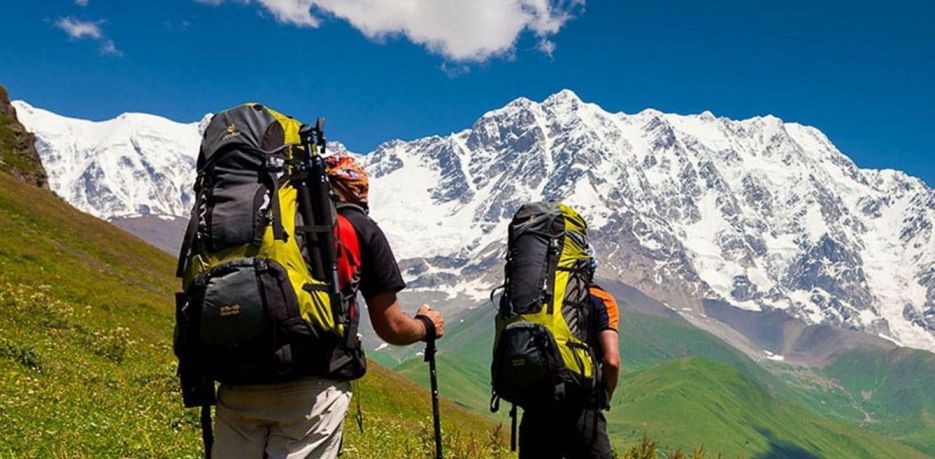
The Tourism Department of Uttarakhand has selected 29 villages to be included under the Trekking Traction Center Homestay Scheme, reports Outlook Traveller. The scheme is aimed at boosting the adventure tourism sector of Uttarakhand Tourism by establishing residential facilities for tourists and travel enthusiasts who visit the state. Uttarkashi, Pithoragarh, Chamoli and Bageshwar are some of the selected villages. The homestays will be developed according to the traditional architecture style of Uttarakhand. The villages fall en-route popular trekking trails, and will provide lodging facilities for tourists in the local areas. The project will start from Chopta village near Tungnath shrine, the world’s highest temple dedicated to Lord Shiva. A financial assistance of INR 60,000 per room and INR 25,000 per toilet will be provided for construction. Eight beneficiaries have already been selected from Agora and Dasna villages which fall on the Dodital trek route. The Secretary of Tourism has also instructed old bungalows of Garhwal Mandal Vikas Nigam to be renovated.
Read more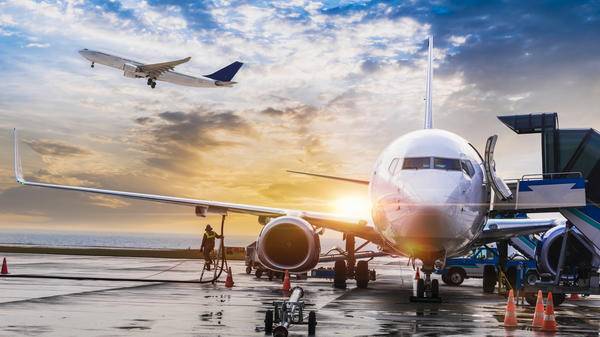
IATA calls on governments to partner with air transport industry for restart
- Jan 29,2021
- Travel Biz Monitor
The International Air Transport Association (IATA) has called on governments to partner with the air transport industry to devise plans to safely re-link people, business and economies when the COVID-19 epidemiological situation permits. A priority for this critical cooperation is acceleration of the establishment of global standards for vaccination and testing certification. “We can see the light at the end of the tunnel as vaccination programmes roll out. Turning this vision into a safe and orderly re-start will require careful planning and coordination by governments and industry. This will be challenging as the priority for the weeks and months ahead will be containing the spread of new variants. But even as the crisis deepens, it is important to prepare the way for a resumption of flights when the epidemiological situation permits. Understanding government policy benchmarks and agreeing the global standards needed to support a return to normality in travel will ensure that air transport is well-prepared and does not become a meaningful vector for reimportation. Airlines are ready to support governments in this task,” said Alexandre de Juniac, IATA’s Director General and CEO. When governments do turn their attention to re-establishing global air connectivity, IATA is ready to partner with them to facilitate a globally consistent, efficient and effective approach. Already we can see some governments evolving principles in their testing/vaccination programs that could form the foundation for global harmonization. These include: • Vaccinations: Most governments are pursuing a vaccination strategy that seeks to protect their health care workers and most vulnerable populations first. IATA supports re-opening borders to travel when this has been achieved, as the greatest risks will have been mitigated. • Vaccinated individuals: The Greek government last week proposed that vaccinated individuals should be immediately exempted from travel restrictions, including quarantine. IATA supports moves by governments, including Poland, Latvia, Lebanon and the Seychelles, to implement this exemption. • Testing: Many governments are implementing testing regimes to facilitate travel, which IATA supports. Germany and the US, for example, are taking advantage of the rapid improvement in testing technologies to accept PCR and antigen testing to safely manage the risks of travel. While rapid antigen tests are preferred for their speed and cost advantages, it is clear that PCR testing will play a role as many governments are requiring tests within a 48- to 72-hour window prior to travel. • Crew: The ICAO-CART guidance recommends that crew be exempted from testing processes and restrictions that are designed for passengers. IATA supports crew health management protocols which include, for example, regular testing and health checks at home bases, along with strict guidelines limiting interaction with the local community during crew layovers. This enables airlines to manage the risks of COVID-19 while maintaining operational viability. • Multi-layered bio-safety measures: The ICAO recommendations for multi-layered bio-safety measures (including mask-wearing) are being globally implemented. IATA supports such measures remaining fully in place for all travelers until such time as the epidemiological situation allows for relaxation. “There are plenty of moving parts in the equation. The number of people vaccinated, and the availability of testing are key among them. Airlines have adapted their operations in order to maintain cargo operations and some passenger services, while complying with the numerous and uncoordinated restrictions imposed. Building on this experience they can help governments with their preparations for eventually safely re-establishing global connectivity for their people, businesses and economies,” said de Juniac. Underlying all scenarios for the re-establishment of air connectivity is the development of global standards so that the requirements of one country can be followed by travelers originating in other jurisdictions. Key global standards that are being developed include: • Vaccination certificates: The WHO is leading efforts to build the standards needed to digitally record vaccination information that will be critical to re-establishing international travel. The Smart Vaccination Certificate will be the digital successor to the long-established “yellow book” used to manage vaccinations such as yellow fever. • Global framework for testing: The OECD is laying the foundation for a global framework to help governments trust testing data based on mutual recognition of testing results. The urgency of such a framework was demonstrated by the recent suspension of flights between the UAE and Denmark over concerns about the UAE’s testing regime. A trusted framework will ensure that travelers are not caught in the middle when governments do not recognize each other’s testing regimes. Standardizing the appropriate testing certificates is also essential. • Digital Travel Credential (DTC): ICAO has published standards to create a DTC from ePassports. Along with enabling contactless travel as recommended by ICAO-CART guidelines, the credentials are an essential component in digitally matching travelers to their vaccination and testing certificates. The standard exists and the challenge now is implementation. “As we have seen, unilateral government decisions are very effective in shutting down global mobility. Re-establishing the freedom to travel, however, can only be done with cooperation. Governments are already seeing how challenging that will be without global standards for vaccines or tests. This puts a spotlight on the urgency of the essential work being done by WHO, OECD and ICAO. IATA is participating in these initiatives and stands ready to help governments with implementation,” said de Juniac. IATA is building the information infrastructure to safely re-start travel with the IATA Travel Pass. The IATA Travel Pass is an industry solution that will help governments, airlines and individual travelers manage vaccine or testing requirements with accurate information, secure identification and verified data. As an industry-supported solution, it will be cost effective, protect privacy and respect global standards. The first pilot program to test the app in a real travel situation commenced with Singapore Airlines in December 2020. A growing list of airlines are confirming their intention to use IATA Travel Pass, including IAG, Emirates, Etihad Airways and Qatar Airways. “Based on our deep experience of driving transformational change in global air transport, we believe that IATA Travel Pass will offer the best support to governments in managing vaccination and testing data to safely facilitate travel. But the success of any of the solutions being developed will depend on governments working with and trusting each other. Air transport built its reputation on safety by cooperating with governments to ensure universal implementation of transparent global standards. That’s a compelling model for how industry and governments can work together to re-connect the world using opportunities created testing and vaccination progress,” said de Juniac.
Read more
In a first, Kolkata gets boat library
- Jan 28,2021
- The Economic Times
The West Bengal Transport Corporation in collaboration with a heritage book store here has launched a children's library on a boat, the first of its kind initiative, an official said. The idea behind the boat library is that one can read books while appreciating the beauty of Kolkata, cruising on the Hooghly river, he said. Children will be able to choose from a selection of 500 titles in English and Bengali on the Young Readers' Boat Library. "The boat library would take people on a three-hour-long trip," the official said. The trip will start at Millenium Park, and the boat will travel to Belur Math jetty and return, he said. There will be three trips on all weekdays, he said on Tuesday. The boat has a free wifi facility as well. A ride on the boat would cost Rs 100 for adults and Rs 50 for children. The library will host activities such as storytelling, dramatised readings, poetry sessions, book launches, music and more, he said.
Read more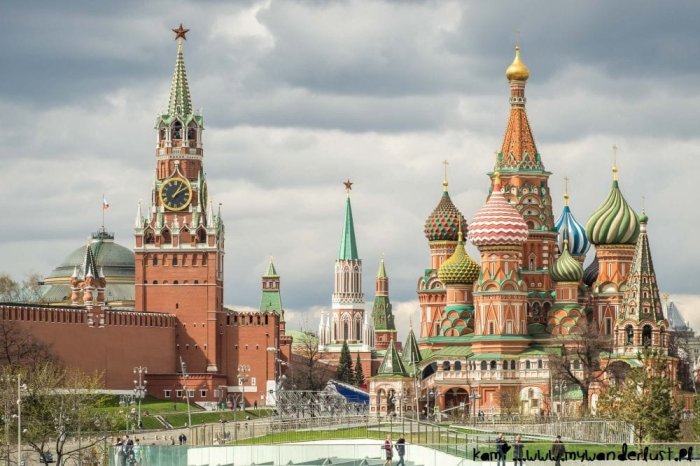
Russia lifts restrictions for travel to and from India
- Jan 28,2021
- The Economic Times
Russia has lifted restrictions on air travel to and from India. In an order signed by Prime Minister, Mikhail Mishustin, the Russian government has announced the lifting of travel restrictions on entry imposed due to the spread of coronavirus, for citizens and residence permit holders of India, Finland, Qatar and Vietnam. The order further states that citizens of these countries and those who have a residence permit there are allowed to enter Russia through air checkpoints. The Russians, in turn, can also fly to any of these countries. Air travel between India and Russia will initially commence with twice weekly flights between Delhi and Moscow. Earlier, taking into account the epidemiological situation in individual countries, the operational headquarters had made a decision to resume international flights from January 27, 2021 with these countries on a reciprocal basis. “While the Russian government has announced the lifting of travel restriction for Indians wishing to travel to Russia, we are awaiting details and statements from the Indian Government regarding this development. There is also a good level of interest from Indian and Russian travel companies for our respective destinations. Overall lifting of restrictions is good news for our both countries, with numbers of Covid cases dropping in India and Russia and availability of vaccines, this is indeed good news for the travel and business community of our two nations,” said Paresh Navani, Partner, Russian Information Center Russia's Federal Air Transport Agency had announced recently that airlines can resume twice weekly services from Moscow to the cities of Delhi, Hanoi and Helsinki as well as three-time weekly services to Doha from January 27 onwards. Twice weekly air services from Saint Petersburg to Helsinki had also been approved. Taking into account the epidemiological situation in individual countries, Russia decided to open commercial air operations to India, Vietnam, Qatar and Finland on reciprocal basis. The decision was arrived at after the four countries were reporting less than 40 new cases of coronavirus infection per fortnight per 100000 population.
Read more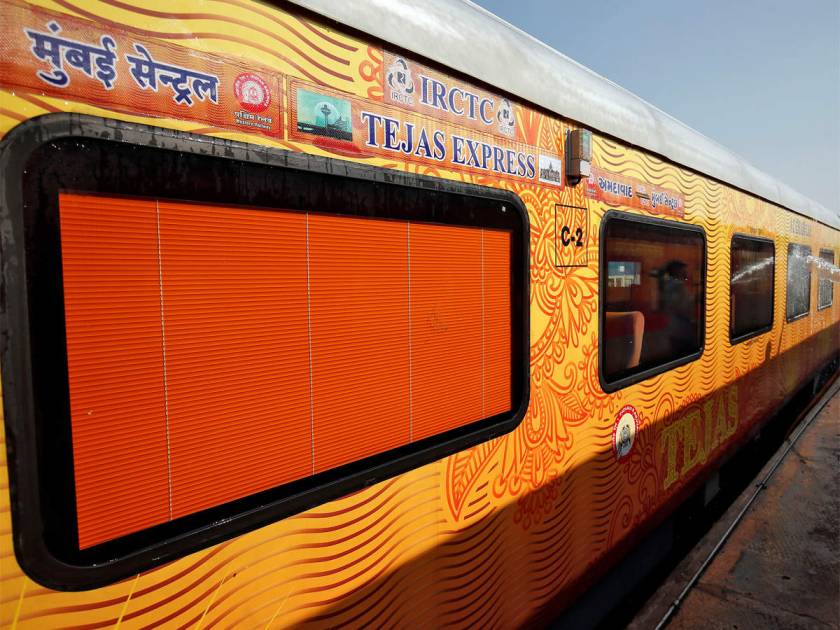
IRCTC to restart Lucknow- New Delhi and Mumbai-Ahmedabad Tejas Express trains from 14 Feb
- Jan 27,2021
- Live Mint
Indian Railways' corporate trains run by the IRCTC the Tejas Express is ready to restart operations for Lucknow-New Delhi and Ahmedabad-Mumbai routes 14 February, the ministry said on Wednesday. IRCTC had restarted operation of Tejas Express trains from October 17, 2020 after a hiatus of seven months in the wake of novel coronavirus, to cater to the need of the growing passenger demand, ahead of the festive season. However, in November last year, the state-owned State-owned Indian Railway Catering and Tourism Corporation (IRCTC) announced that it will cancel its fleet of Tejas Express trains from next week, due to low occupancy. The transporter is resuming the services again from second week of February. According to an earlier PTI report, in a bid to ensure social distancing, every alternate seat on these two trains will be kept vacant. Also, railway passengers before entering the coach will be thermally screened and will not be allowed to exchange their seats once seated. IRCTC Tejas Express passengers will be provided a “COVID-19 protection kit", which will contain a bottle of hand sanitizer, one face shield, one mask, and a pair of gloves. Moreover, in a big relief to passengers, IRCTC will resume its e-catering services from next month, a statement from the railways' catering arm said on Friday. Due to onset of the COVID-19 pandemic and the consequent unprecedented lockdown, e-catering services were suspended on March 22, 2020. IRCTC, the catering and tourism arm of the Indian Railways, is going to restart its e-catering services for passengers travelling in the special trains that are currently operating. "The passengers shall avail the services of e-catering through www.ecatering.irctc.com. e-catering orders through telephone is also being restored over 1323 shortly. Passengers can also download IRCTC e-catering app 'Food On Track' from the various app stores and avail e-catering services. For convenience of the passengers option of cash on delivery has also been provided," it said. Due to the outbreak of covid-19, operation of Tejas trains were temporarily suspended from 19 March, less than a year after it was launched as India’s first corporate train. Last year, the railway ministry allowed IRCTC to run Tejas Express--touted to be a train run by an entity other than Indian Railways. The operation of the first corporate train--Lucknow-Delhi-Lucknow Tejas Express--started on 4 October, 2019, while the Ahmedabad-Mumbai-Ahmedabad train hit the rails on 19 January.
Read more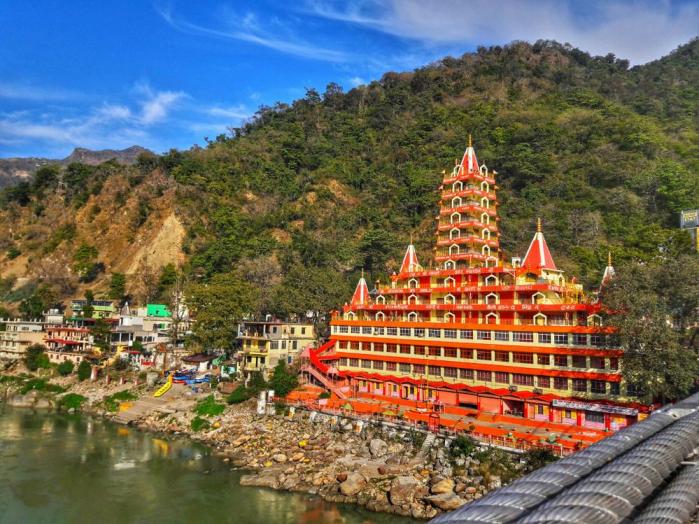
Tourism in Rishikesh bounces after the Covid-19 pandemic
- Jan 27,2021
- The Financial Express
Rishikesh in Uttarakhand has seen a flurry of travellers over the past couple of months since Covid-19 restrictions have been eased and people have picked up the confidence to venture out for vacations as infections decline steadily. On weekends, hostels and hotels are nearly full and despite the fact that there are no foreign tourists, these places are not feeling the pinch. Long a spiritual town, Rishikesh, in the Himalayan foothills on the banks of the Ganges, has also become famous for river rafting and got a luxury touch with a number of upmarket hotels opening up. Rishikesh is also benefitting because people feel safer going for holidays in their own vehicles since the pandemic, and the town is within comfortable driving distance of places like Delhi. Dr. Shagun Sabbarwal and his wife from Yamunanagar in Haryana chose to spend their first holiday after the lockdown in Rishikesh this month. “We are here for the weekend to celebrate our anniversary,” he tells us. “We came to Rishikesh because it was a change from the usual crowded hill stations and we wanted some peace of mind.” With a new railway station opening this year, more people are likely to make their way to this town. Earlier the closest railway station was Haridwar but now the Yog Nagri railway station is operational with a few special trains. Over the years as Rishikesh became popular for rafting and as a centre for yoga, many foreigners and backpackers made their way here. To cater to them, a number of popular hostels have cropped up such as Zostel, Hashtag, goSTOPS and Moustache. Recently Leisure Hotels launched The Hideaway Bedzzz, a boutique hostel-cum-hotel – as it offers both bunk beds as well as rooms. Despite the fact that foreigners are no longer coming, most of the hostels are reporting high occupancies, as people cooped up for months decide to venture out. But the premium traveller is also lured to visit this scenic town and hence many luxury hotels have opened up in the past couple of years. Taj Rishikesh Resort & Spa, The Roseate Ganges, Lemontree Premier, Sterling Palm Bliss are some of them. Some of these hotels have opened slightly away from the main town on the Rishikesh-Badrinath Road but business is good for them because luxury travellers prefer to be away from the buzz of the town. At the The Roseate Ganges in Rishikesh, there has been an upswing in occupancies month on month since its reopening in July last year and by October, it was sold out on all weekends. For such hotels targeting micro markets is the key now. “International travel cannot resume immediately hence there is a need to tap the domestic market where there is more than enough,” says Namit Agnihotri, Area General Manager, Roseate Hotels & Resorts. He adds that access to the private beach and clean air, water and environment have enticed Indian visitors, making domestic tourists a hallmark for the resort. The Glasshouse on the Ganges, a Neemrana hotel, is about 20km ahead of main Rishikesh. It has seen good business since it revamped and opened in mid-December. “People are driving down from Delhi, Punjab, Haryana and Gurgaon,” says hotel manager Makrand Bhardwaj. “In addition to this, we have people coming from Mumbai and Bangalore because they have direct flights to Dehradun. Fifty percent of the guests have come from metro cities.” They are looking forward to a good season from February onwards. The hotels also feel that as upmarket domestic tourists can no longer travel overseas, they are willing to spend money in luxury hotels in scenic destinations providing them with brisk business.
Read more