Thailand prepares to reopen five islands to tourists

Five of Thailand’s popular islands are slated to welcome international visitors in August: Phuket, Koh Phi Phi, Koh Samui, Koh Tao and Koh Phangan. Thailand allowed international flights (though not for leisure travel) from 1 July, after imposing a ban on 3 April to help curb coronavirus contagion. Thailand is among the 15 countries that the European Union just marked as safe travel destinations for their low infection rate and adequate social distancing measures. Domestic tourism is expected to pick up this month with incentives including flight and hotel discounts, as the country enters the fifth phase of easing its lockdown. More destinations will open up for international visitors based on how these five islands in the provinces of Phuket, Krabi and Surat Thani fare with domestic travellers this month. Across the country, hotels and restaurants are now open, with bars and alcoholic sales permitted only until midnight; patrons are expected to use the government-backed Thai Chana app to check in and out of these establishments. Shopping malls, stores, exhibition centres, sauna and massage establishments can operate until 10pm. Currently, the country reports a handful of new cases, and overseas travel is permitted for business travellers, skilled workers, relatives of Thai residents and visitors for medical treatment (barring coronavirus). The government has introduced a new Safety and Health Administration (SHA) certificate that recognises tourism businesses including hotels, spas and eateries that follow the government’s COVID-19 guidelines. Apart from using masks, washing hands frequently and refraining from hugging vulnerable populations, visitors are encouraged to say hello with the Wai greeting, similar to the Indian namaste. Nearly 40 million foreign tourists were expected to visit Thailand this year; the anticipated arrivals are now pegged at eight million.

Read more

India in talks with US, Canada, others on establishing air travel bubbles: AAI

Civil Aviation Minister Hardeep Singh Puri had on June 20 said the government will start thinking on the resumption of scheduled international passenger flights in mid-July, when it expects the domestic air traffic to reach 50-55 per cent of the levels before the coronavirus. India is in talks with the US and Canada and the countries in European and Gulf regions on establishing individual bilateral bubbles which will allow airlines of each country in the pact to operate international flights, said Arvind Singh, Chairman, Airports Authority of India (AAI), on Thursday. The Ministry of Civil Aviation (MOCA) had on June 23 said India is considering establishing “individual bilateral bubbles” with the US, the UK, Germany and France. Singh said, “This morning, I took a brief from the key point person (from the MOCA) who is negotiating with the countries, and he said that we are in constant touch. We are working on a consensus to restart the international flights. This is going to be through air bubbles.” “Talks are mainly going on between India and the US, India and Canada, India and Europe and India and the Gulf countries to start flights in these bubbles,” he said at a webinar called “Reposing the faith in flying” organised by the GMR group. Scheduled international passenger flights remain suspended in India since March 23 due to the coronavirus pandemic. Singh said the MOCA official has informed him that the discussion with the countries is at a “very advanced” level and the effort is to restart international flights at the earliest. “I am sure there would be a positive outcome of the talks with the US, Canada and with the Gulf countries and the negotiations are going on,” he noted. The EU has presently banned the flights from India as the number of coronavirus cases are rising in the country, Singh said. Civil Aviation Minister Hardeep Singh Puri had on June 20 said the government will start thinking on the resumption of scheduled international passenger flights in mid-July, when it expects the domestic air traffic to reach 50-55 per cent of the levels before the coronavirus. After nearly two months of suspension to combat the coronavirus outbreak, the government resumed scheduled domestic passenger flights on May 25. However, it had then allowed the airlines to operate the maximum 33 per cent of their pre-COVID flights. The MOCA increased the limits on June 26 from 33 per cent to 45 per cent. The MOCA on June 23 had said, “As we contemplate further opening up in response to demands, we are looking at the prospect of establishing individual bilateral bubbles, India-US, India-France, India-Germany, India-UK. These are all destinations where demand for travel has not diminished. Final decisions pursuant to negotiations are expected to be taken soon.” “We have received requests from authorities in several countries including the US, France, Germany among others requesting that their air carriers be allowed to participate in the transportation of passengers along the line being conducted by Air India under Vande Bharat Mission. These requests are being examined,” it added. Air India started international chartered flights under the Vande Bharat Mission from May 6 to help people stranded due to the pandemic reach their destinations. The MOCA’s June 23 statement had come after the US Department of Transport (DOT) said on June 22 that it appears that Air India may be using its passenger repatriation charter flights as a way of circumventing the government of India-imposed prohibition of all scheduled international services. “We are taking this action (of allowing only those Air India flights from July 22 that have DOT’s approval) because the Government of India has impaired the operating rights of the US carriers and has engaged in discriminatory and restrictive practices with respect to the US carrier services to and from India,” the DOT had said.

Read more

Indian Railways begins process for entry of ‘private trains’

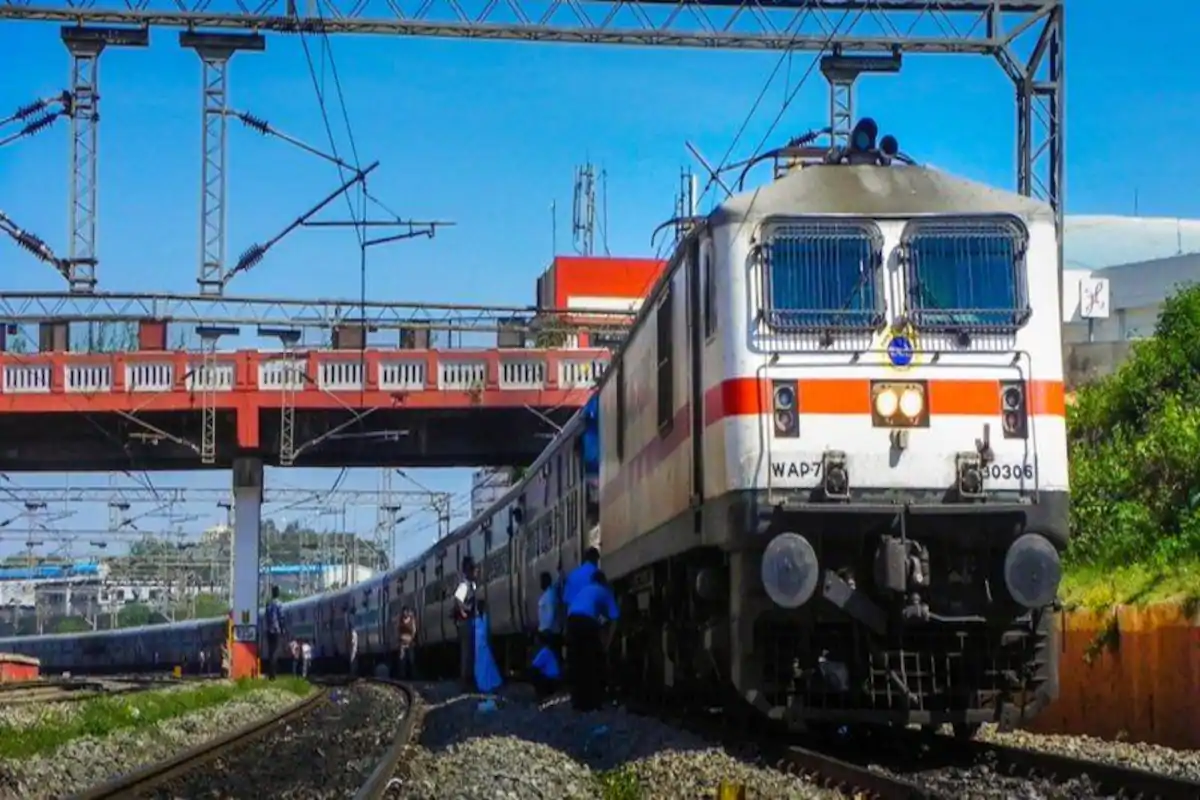
The Indian Railways on Wednesday kick-started the process to allow private players to operate certain trains on its network by inviting Request for Qualifications (RFQ) for operation of passenger train services on over 100 routes with 150 modern trains. The Ministry of Railways said this is the first initiative of private investment for running passenger trains over the Indian Railways network and will attract investments of about ₹30,000 crore. “Ministry of Railways has invited RFQ for private participation for operation of passenger train services over 109 Origin Destination (OD) pairs of routes through introduction of 151 modern Trains...Each Train shall have a minimum of 16 coaches,” the national transporter said in a statement. It added that the objective of the initiative was to introduce modern technology rolling stock with reduced maintenance, reduced transit time, boost job creation, provide enhanced safety, provide world class travel experience to passengers, and also reduce demand supply deficit in the passenger transportation sector. The Delhi-Lucknow Tejas is the first train that is not operated by the Indian Railways, as Railways geared up to allow private train operators. The Indian Railway Catering and Tourism Corporation(IRCTC), which is a public sector undertaking, was entrusted with running the train, in addition to the Mumbai-Ahmedabad Tejas and the Kashi Mahakal Express (between Varanasi and Indore). The Railways said “majority” of trains will be manufactured in India and the private entity will be responsible for financing, procuring, operation and maintenance of the trains, which will be designed for a maximum speed of 160 kmph. “There would be a substantial reduction in journey time. The running time taken by a train will be comparable to or faster than the fastest train of Indian Railways operating in the respective route,” the Railways said. The “Concession Period” for the project will be 35 years, and the private entity will pay to Indian Railways fixed haulage charges, energy charges as per actual consumption, and a share in gross revenue determined through a transparent bidding process. These trains will be operated by drivers and guards of the Indian Railways. “The operation of the trains by the private entity shall conform to the key performance indicators like punctuality, reliability, upkeep of trains, etc. Operation and maintenance of the passenger trains would be governed by standards & specifications and requirements specified by Indian Railways,” it said. With traffic earnings dropping by a whopping 58% in the pandemic scenario, the Indian Railways, as part of an elaborate cost-cutting plan, has decided to allow sponsorship of trains and stations, and the use of Corporate Social Responsibility (CSR) funds for cleaning activities. “Sponsorship with suitable branding of trains/stations and use of CSR for cleaning activity may be explored for resultant savings in expenditure. If NGOs want to adopt stations for cleaning activity, it may be permitted by Divisional Railway Managers with the condition that it should result in savings…suitable display of their name, logo. etc may be allowed similar to that permitted in the CSR policy,” the advisory said. In a strategy to control expenditure and enhance earnings, the Ministry of Railways has already rolled out austerity and cost control measures last month, which included a ban on creation of new posts, reduction in Over Time/Travelling Allowance by 50%, pruning computerised passenger reservation counters, grounding of all diesel locomotives that are more than 31 years old through sale/export, fuel savings, energy audit and closure of uneconomical railway lines to the extent possible. A couple of days ago, an advisory was sent to General Managers of all Zonal Railways to review the cost of housekeeping of trains and stations. The note said that with the outbreak of COVID-19 pandemic, passenger carrying trains were likely to have lesser occupancy. However, the requirements of frequent cleaning and disinfection could increase. Maintenance officials were told to link the number of cleaning staff in each shift at railway stations to the footfalls. Automatic Coach Washing Plants were to be deployed more to rationalise manpower requirements. Though the existing criteria was that all trains, except purely night trains (10 p.m to 6 a.m) would be eligible for coverage under the On Board Housekeeping Services (OBHS), the time limits need not be rigidly applied in each case, the directive said. If need be, some trains left out of OBHS could be provided additional time for cleaning in en route stations. Authorising General Managers to enhance the price of platform tickets to regulate rush, the advisory said entry to railway station premises should be restricted to bonafide passengers/platform ticket holders. To convey a clear message to the public, enforcement of Indian Railway (Penalties for activities affecting cleanliness at railway premises) Rules, 2012 (Anti-littering Rules) may be intensified.

Read more

Malaysia selected to host prestigious virtual Asia-Pacific travel fair

Malaysia has been selected to host a virtual travel experience by the Pacific Asia Travel Association (PATA) in conjunction with the Dream to Travel Festival. — Tourism Malaysia via The Star KUALA LUMPUR — Malaysia has been selected to host a virtual travel experience by the Pacific Asia Travel Association (PATA) in conjunction with the Dream To Travel Festival. The virtual event takes place between June 22 and July 17. Malaysia is one of the four countries that have been nominated by the PATA secretariat to host the virtual event along with Thailand, Nepal and Macau. Tourism Malaysia director-general Datuk Musa Yusof said the nomination to host the event is timely as the country’s tourism landscape slowly recover from the Covid-19 pandemic. “As part of Tourism Malaysia’s initiative to gain ‘quick wins’ in our recovery efforts for the tourism industry, we are honoured to be given the opportunity to put the spotlight on Malaysia in this timely virtual collaboration with PATA,” he said. Malaysia is featured on the second week from June 29 until July 3. The program schedule covers six components: Forum, digital showroom platform, Malaysian cuisine cooking demonstration, live storytelling on underwater freedive experience and dark tourism in Malaysia, promotional videos and games. Over 50 industry players – comprising 26 product owners, 10 hotels and 14 travel agents from states across Malaysia – will showcase exciting products and services during the digital showroom session. PATA is a non-profit travel trade association serving government tourism offices, hotels, airlines, and other travel-related companies in Asia Pacific. The virtual event can be accessed for free at www.dreamtotravel.pata.org/join-the-community. Malaysians looking to go on a holiday around the country can also look out for a virtual travel fair organized by the Malaysian Inbound Tourism Association (Mita).

Read more

Goa to open for domestic tourists today: Read the guidelines

After months of lockdown, Goa will open for domestic tourists from today, July 2. Over 250 hotels will resume operations in the state, Goa Tourism Minister Manohar Ajgaonkar said. These hotels were granted permission by the tourism department with the standard operating procedures put in place by the state government. "We have decided to allow domestic travellers to enter Goa from July 2 onwards provided they comply with certain norms," Ajgaonkar said. The decision was made in a state cabinet meeting chaired by Chief Minister Pramod Sawant. The state, a large part of whose economy is driven by tourism, was closed for tourists since March 25 when the nation-wide lockdown was imposed. There are certain guidelines that tourists travelling to the state will have to follow. Read below to know what these are: 1. Tourists have to carry a COVID-19 negative certificate within a stipulated 48-hour window or get mandatorily tested in the state. 2. Tourists will be sent to the respective hotel which they have booked themselves into where they will be tested. They will have to stay put in a hotel until they are tested and results are declared. 3. People who test positive will be given the option of returning to their respective states or staying back in Goa for treatment. 4. Tourists have to mandatorily pre-book their stay at hotels which have received the tourism department’s approval. 5. Hotels and homestays that have not registered with the department to reopen business will not be allowed to entertain guests or offer online bookings, Ajgaonkar said. 6. There would be a crackdown on hotels and guest houses which are not registered with the tourism department but are offering stay facilities via app-based room aggregators, the minister said. 7. Tourists who used to illegally stay in non-registered hotels booked through app aggregator services or in guesthouses will not be allowed. It will be deemed illegal, he added.

Read more

Thailand reopens to international flights, but only some tourists can visit

Thailand is reopening to international passenger flights from Wednesday, July 1. The commercial flight ban that has been in place across the kingdom since April 3 will be lifted from Wednesday, July 1. Commercial passenger flights will be allowed to operate flights landing at international airports across the country, including Bangkok, Samutprakarn, Chiang Mai and Phuket. Restrictions on who can fly into the country remain in place, according to the Civil Aviation Authority of Thailand. Commercial flights carrying Thai nationals and their family members, residents, students, medical and wellness tourists and those with special permission to enter the country will be allowed to land in Thailand. All other passengers will not be allowed entry as authorities work to prevent the spread of Covid-19. Anyone entering the country must adhere to screening procedures in place at all airports and follow mandatory 14-day quarantine procedures at their own cost. Medical tourists can enter the country on the basis that they go directly to quarantine at hospitals and health centres. Thailand is ranked fourth in the world for its medical tourism industry, which is worth about $600 million (Dh2.2 billion) annually, according to the International Medical Travel Journal. Thai authorities are keen to revive this carefully regulated travel sector to help rejuvenate at least part of the country's crippled tourism industry. Medical and wellness visitors typically account for nearly 10 per cent of Thailand’s 35 million annual tourists, and the UAE is a key market says the Tourism Authority of Thailand. The three most requested medical treatments in Thailand overall are medical check-ups, plastic surgery and orthopedic surgery. Cargo, repatriation and humanitarian flights were never banned from entering Thailand and can continue to fly in and out of the kingdom.

Read more