Relief for tourism sector likely in Himachal

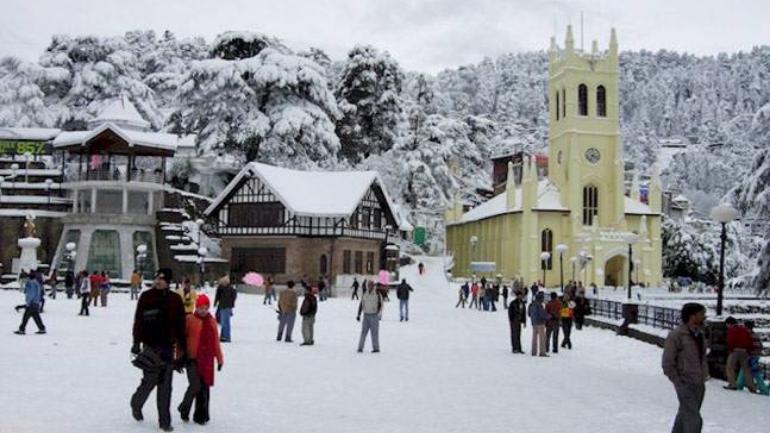
With clouds of uncertainty and gloom looming over the tourism industry, the government could come out with a relief package, including disbursal of soft loans, for hoteliers and other stakeholders. A decision in this regard is likely to be taken by the Cabinet at its meeting scheduled for June 25. Despite the state giving the go ahead for non-commercial opening of hotels for guests from within the state, none of the hoteliers were keen to start operations in view of Covid. Various departments concerned, including law, finance and tourism, are jointly trying to formulate a relief package for hoteliers and other stakeholders associated with the hospitality sector. “The endeavour is to cover up for the bare minimum loss that the tourism industry has suffered for the summer season, which attracts the highest number of tourists,” said an official. The Tourism Department will hold a meeting with all stakeholders, including hoteliers and organisers of adventure sports and other activities, on June 26. The new SOPs will be framed in consultation with these people who are directly associated with the hospitality sector. The hoteliers, on their own, are keen to prepare and train their staff for post-Covid operations. An awareness and training programme is scheduled to be held for 100 hotel and restaurant owners here in the state capital on June 24. The government is worried as the tourism sector contributes 7.3 per cent to the state GDP and in terms of money, this works out to be about Rs 8,100 crore. Every year, this contribution has been on the rise and so has the influx of tourists, both domestic and international.

Read more

Europe leads cautious restart of tourism

Restrictions on travel, introduced in response to the COVID-19 pandemic, are slowly being eased, allowing tourism to restart in a growing number of destinations. The latest research by the World Tourism Organization (UNWTO) shows that 22% of all destinations worldwide (48 destinations) have started to ease restrictions, with Europe leading the way. At the same time, however, 65% of all destinations worldwide (141 destinations) continue to have their borders completely closed to international tourism. As the United Nations specialized agency for tourism, UNWTO has been monitoring responses to the pandemic since the start of the current crisis. This latest update, the fifth edition of COVID-19 Related Travel Restrictions: A Global Review for Tourism, shows that the sector is slowly restarting, though this restart is significantly more pronounced in some global regions. UNWTO Secretary-General Zurab Pololikashvili said: “The restart of tourism is of vital importance – for livelihoods, for businesses and for national economies. This latest overview of global travel restrictions shows that growing numbers of destinations are beginning to ease the restrictions they introduced in response to the COVID-19 pandemic. This is being done in a responsible and measured way. However, this crisis is not over. UNWTO will continue to work with our Member States around the world to mitigate the impact of the pandemic and to ensure that, when the time is right, tourism can help drive a responsible and sustainable recovery.” International travel within Europe restarting while other regions remain closed: According to UNWTO, as of 15 June, 22% of all destinations (48 destinations) have now eased restrictions on travel, up from just 3% (7 destinations) on 18 May. Destinations that have eased travel restrictions for tourists include: - 37 destinations in Europe, including 24 of the 26 Schengen Member States - 6 destinations in the Americas, including 5 Small Island Developing States - 3 destinations in Asia and the Pacific, including 2 Small Island Developing States - 2 destinations in Africa At the same time, the COVID-19 Related Travel Restrictions report makes clear that many destinations are maintaining a cautious approach to lifting or easing restrictions on travel. As of 15 June, 24% of all destinations worldwide (51 destinations) have had travel restrictions now in place for 19 weeks and 37% (80 destinations) for 15 weeks. In total, 65% of destinations worldwide (141 destinations) continue to have their borders completely closed. In Africa, the proportion of destinations where borders remain closed to tourists stands now at 85%. In the Americas, 76% of destinations maintain full border closures, as do 67% of destinations in Asia and the Pacific and 92% of destinations in the Middle East. In Europe, these full border closures are reduced now to 26% of all destinations.

Read more

Dubai to welcome tourists from July 7

Dubai has released a new set of protocols that all residents and citizens travelling into or out of the emirate must abide by, besides also confirming that tourists will be allowed to return to Dubai starting July 7. The new directives were announced on Sunday night. The Supreme Committee of Crisis and Disaster Management said that foreign nationals possessing residency visas issued in Dubai can return to the emirate beginning Monday, June 22.Dubai will also allow citizens and residents to travel to any foreign country starting Tuesday, June 23, provided the destination countries agree to receive them, Dubai Media Office confirmed in a press statement. Guideline for returning UAE residents Residents holding Dubai-issued visas are permitted to return to the emirate from June 22 by pre-booking flights on any airline on the condition that they obtain an approval coordinated between the General Directorate of Residency and Foreigners Affairs (GDRFA Dubai) and the airline. Residents must fill a ‘Health Declaration Form’ before embarking on their journey to confirm they do not have Covid-19 symptoms. The airline has the right to refuse boarding if the passenger displays any Covid-19 symptoms. Upon arrival at Dubai airports, all residents will have to undergo a PCR test to screen for Covid-19. They should register their complete details in the Covid-19 DXB smart app available online on arrival and before leaving the terminal. Residents entering Dubai should not leave their house until they receive their Covid-19 test result. If they test positive, they will have to isolate themselves at home for 14 days. Residents sharing homes or living in high-density housing facilities will be isolated at an institutional facility if they test positive. The resident’s employer should make arrangements for the isolation facility in accordance with guidelines approved by the Covid-19 Command and Control Centre or bear the costs of a paid isolation facility provided by the government. Guidelines for citizens and residents travelling abroad There will be no restrictions on the overseas destinations that citizens and residents can travel to starting June 23. The latest announcement comes after a spokesperson for the UAE’s National Emergency Crisis and Disaster Management Authority (NCEMA) said last week that all countries would be classified into three categories: low-risk, medium-risk and high-risk, with travel to high-risk nations banned. According to the directives issued on Sunday night, travellers are now required to fill in a ‘Health Declaration Form’ before embarking to confirm they do not have any Covid-19 symptoms. They must also comply with protocols followed in the countries they are travelling to.

Read more

Hotel Experiences Are Going To Be Completely Different: Ritesh Agarwal

The hospitality industry is one of the most affected sectors in the current crisis led by COVID-19 pandemic. While the economy is slowly opening up and so is the hospitality industry, the pandemic will leave a long trail of disrupted methods, which cannot be reversed. “Hotel experiences are going to look completely different from how they were earlier,” Ritesh Agarwal, founder and CEO of OYO Rooms, told Entrepreneur India during a webinar. The existing strategies need to be remodeled to plan for the future. The new fundamentals should not only help the industry adapt to the new normal but also help mitigate the long-term destruction caused by the virus to drive quicker upturn. Agarwal said patrons of OYO Rooms are going to see circles and markings when they enter any of the properties of OYO, or any other hotel. “You will see that the receptionist and everybody else will have the same warmth, but their smiles will be behind the masks. They will avoid touching almost everything. When you enter your room besides the basket of fruits you will see a sanitizer bottle,” he said. People keen to travel will do so domestically more and probably restrict to their states or nearby cities, Agarwal said. “Goa will be the next Thailand or Europe because I believe that if people need to really go on a holiday, instead of taking a flight, they will think it better to just take a car drive.” Agarwal is confident that the hospitality industry will bounce back again just as it did after SARS in 2003 when hotel bookings and international tourism fell by 50 per cent. Here are some of the new trends that he believes will usher in post the pandemic in the hospitality sector. Embracing Cloud Technology Shifting towards “touch-less” experiences, investment in hygienic apparatuses, adopting telehealth and continuing physical distancing are the major foreseeable trends. The probable applications and integration of robotic machinery would be required and leaders will have to meticulously think about the balance between the roles of technology and human staff. Physical Redesign Identifying new technical skills, technology and patterns should be integrated in the future layouts of hotels with least human contact. Communal places on hotel property should be heavily screened and guarded with installation of sensor systems for lighting and essential functioning to level up the sanitation levels. Commitment of Safety Researches form various geographical regions across the world have found diverse trending behavioral results regarding traveling. While leisure travel may be less, business travel will see enhanced emphasis on safety. Therefore customizing experience for everyone from different parts of the world will be the key. Precautions and Training Healthcare workers and other hotel staff should be persistently trained for cleaning protocols and exercising safe physical distance for customers to have a safe, satisfying and care-free experience. Use of anti-viral cleaning means on all demanding surfaces, personal shielding process and instruments for cleansing crews will rise. There would be hand sanitizing stations outside and inside rooms, elevators and wipes in rooms. Change in Approach A new world comes with new approaches are the old world outlook is unserviceable now. Restructured business models will be encouraged. Reimagining current scenarios and finding a niche with good intentions to serve the community would go a long way to ensure bankable profits.

Read more

India sets two conditions for resumption of international flights

India will restart international flights only once its domestic traffic reaches 50-60% of pre-Covid-19 levels, and that other countries loosen travel restrictions, India’s civil aviation minister has said. “We can start regular international flights when our domestic traffic reaches about 50-60%, [and] other countries open up to international traffic without present conditionalities,” said Hardeep Singh Puri in a 21 June tweet. “Once the situation evolves in that direction we will consider a calibrated opening.” The Indian government currently restricts airlines to operating at up to 30% of pre-pandemic capacity. In a CNBC-TV18 interview that was published on 15 June, Indian budget carrier IndiGo’s chief executive Ronojoy Dutta urged the government to “move that 30% cap up to 50%”. He added that it is “time to reduce the international restrictions”. Civil aviation minister Puri also tweeted that on 20 June, the 27th day since domestic operations restarted in India, the country’s airports handled 70,552 passengers. India resumed domestic flights on 25 May, after a two-month suspension, when India entered into its first coronavirus lockdown. International passenger flights remain banned. Meanwhile, India’s neighbour Bangladesh resumed international flights on 21 June after a three-month suspension.

Read more

Shillong tourism push with ‘isolated cottages’

SHILLONG: Under the new normal that the pandemic has given rise to and keeping in mind ‘social distancing’, Meghalaya chief minister Conrad K Sangma has recently inaugurated ‘isolated cottages’ called Orchid Log Houses, overlooking the beautiful hills of Mawdiangdiang in New Shillong Township, funded under the Swadesh Darshan programme of the Union ministry of tourism. “The idea is to adapt ourselves to the changing situation arising out of Covid-19,” he said. “It is important that we have cottages like these, which are isolated and at the same time have good infrastructure. Those hosting the tourists should be trained so that the visitor has a good experience of staying here,” he added. The CM said they have started a soft skill training programme for those who are part of the tourism industry. Sangma informed that around 25-30 youth would be trained in the next 15-20 days. The idea is to “really improve their overall qualities and train them in what is required for better tourism and improve the experience of the tourists”, he said. The canopy walkway and the log houses would be big tourist attractions, said Sangma. Later, the CM visited the scenic Golf Links in the city, where he held a meeting in the open air with health and family welfare minister Alaxendar Laloo Hek and officials of the Shillong Golf Club to discuss ways and measures to strengthen infrastructure facilities. Sangma also inspected the construction work of a new building of the Meghalaya Legislative Assembly at Mawdiangdiang and expressed satisfaction over the progress. The work has resumed after 18 years. “The civil work construction can be expected to be completed in the next 12 months,” the CM said. “The interior work would take another 12 months,” he added.

Read more