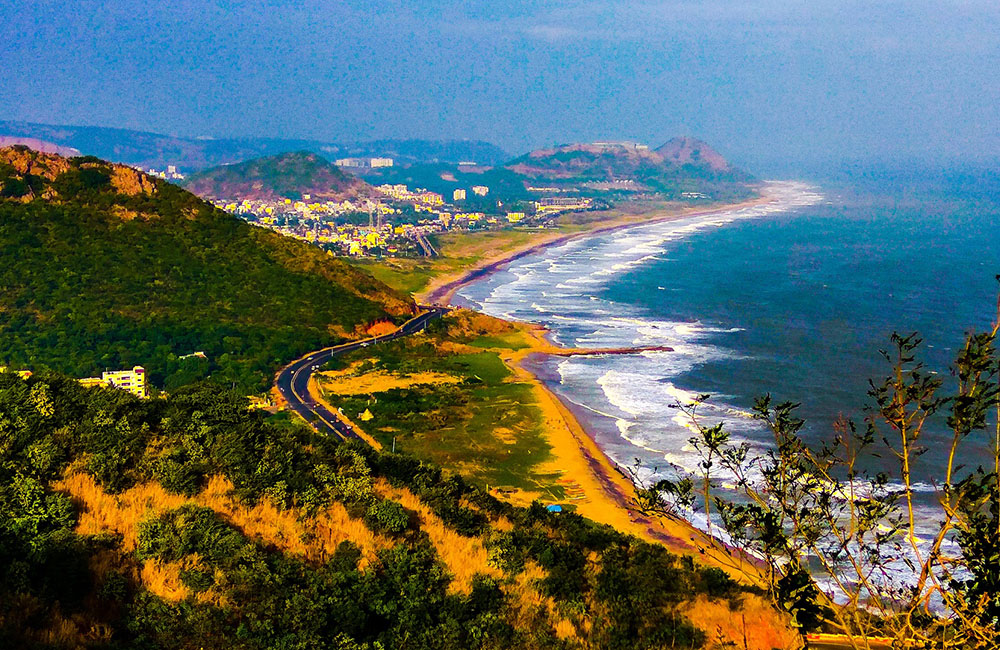
List of Cities You Can Fly to From May 25

New Delhi: All airlines, including Air India, started ticket booking for May 25 and onwards as the civil aviation department has given a go-ahead to airlines to resume domestic air activities from May 25. Bookings started from May 22 after the directorate general of civil aviation approved the schedule of the airlines. According to the approved schedule, these are the cities you can now fly to. The flight services are beginning after a gap of two months as all flights were cancelled from March 25 onwards owing to the total lockdown announced by Prime Minister Narendra Modi. According to reports, the Tamil Nadu government is not keen to allow domestic traffic inside the state and has urged the Centre to not resume operations to the state until May 31 — the official date when lockdown 4.0 is scheduled to end. However, going by the schedule approved by the DGCA, Chennai is there as one of the destinations. It will be decided later whether Chennai will be taken off the list. But bookings have started. The following is the List of Cities: Ahmedabad Amritsar Bagdogra Bangalore Bhubaneshwar Chandigarh Chennai Delhi Dibrugarh Goa Hyderabad Jammu Kochi Kolkata Leh Lucknow Mumbai Pune Raipur Srinagar Trivandrum Udaipur Varanasi Agartala Aizawal Bhopal Guwahati Imphal Jaipur Nagpur Patna Port Blair Silchar Vadodara Vijayawada Amritsar Coimbatore Dehradun Gorakhpur Indore Kannur Kolhapur Imphal Kozhikode Madurai Mangalore Rajahmundry Ranchi Shirdi Surat Tirupati Trichi Tuticorin Udaipur Vadodara Vizag Adampur Belgaum Dharamsala Durgapur Gwalior Jabalpur Jharduguda Kishangarh Kandia Kanpur Porbandar On May 20, the civil aviation ministry announced that domestic flight operations would begin from May 25. A day later, the Airport Authorities of India issued a standard operational protocol for the airports across the country to ensure social distancing and contactless screening. The ministry, too, released guidelines for airlines and passengers to be adhered to for the upcoming flights.

Read more

Turkey hopes 'healthy tourism' scheme will conquer coronavirus slump

ISTANBUL (Reuters) - At a luxury hotel in Istanbul, staff in gloves and masks space out and disinfect tables as they prepare for a scheme which Turkey hopes will rescue part of its $35 billion tourism industry from the ravages of coronavirus. The “healthy tourism certificate” programme aims to convince travellers that despite the global pandemic, Turkey’s beaches and historic treasures will be safe to visit this year, with rigorous checks on airlines, local transport and hotels. “The more transparent and detailed information we give, the more we will earn the confidence of tourists,” Tourism Minister Mehmet Ersoy told Reuters, setting out plans to open at least half of Turkey’s hotels this year. Turkey ranks sixth globally in tourist arrivals and tourism accounts for 12% of an economy now facing its second recession in two years. Figures released on Friday showed the pandemic slashed foreign arrivals by 99% last month. [nA4N2AA022] With so much at stake, the government is intensively lobbying 70 countries to convince them that Turkey will be a safe destination as it gradually eases its domestic lockdown. The new certificates set criteria for health and hygiene in airlines, airports and other transport, as well as hotels, restaurants, bars and cafes. They will be awarded by international institutions and information will be sent to tour operators and will be accessible to tourists. At Istanbul’s Four Seasons hotel, general manager Tarek Mourad said the scheme would help reassure visitors, adding that Turkey’s robust healthcare infrastructure, major new airport and far-reaching flag carrier Turkish Airlines were also assets. “If you put all these together we create a better chance for Turkey to recover faster,” Mourad said on a terrace overlooking Hagia Sophia, once Christendom’s foremost cathedral and then a mosque before becoming a leading tourist attraction as a museum. Travel company TUI said it had offers for travel from June 15. Leisure airline Corendon hopes to launch a summer package in late June, whereby Dutch holidaymakers will be tested for the virus before flying and will remain restricted to hotel grounds. UNCERTAIN PROSPECTS Ersoy said COVID-19 testing centres were being set up at airports. “Those guests who come without having been tested in the last 72 hours will all be tested,” he said. Passengers in terminals will be required to wear masks, and temperatures will be taken with forehead thermometers. The project has drawn support from the tourism sector but there are worries about the level of international interest. “We have to be realistic, this will be a slow process. The opening of 50% (of hotels) in July would be a big success in my opinion,” said Erkan Yagci, chairman of the Mediterranean Touristic Hoteliers and Investors Association. Turkish Travel Agents Association Chairman Firuz Baglikaya said the main foreign arrivals would not be until September-October, and Russia, the leading market, which sent seven million tourists last year, would start later than others. Foreign currency earnings from tourism may fall 60-70% this year, with the domestic market halving in size, he said. The initial test from the end of this month will be the resumption of domestic tourism, but the real prize in terms of visitor numbers and revenues is foreign tourists. In the Mediterranean tourism hub of Antalya, domestic tourists made up less than 20% of some 100 million annual overnight stays, according to the owner of a holiday complex in the region who declined to be named. “The rest is ... foreign visitors. Without them, there is no point in opening,” he said.

Read more

Tourism sector in Himachal seeks bailout package from Centre

Senior Congress leader Sudhir Sharma on Thursday demanded the Centre and state government should provide a bailout package to the tourism industry which has been adversely hit due to Covid-19 pandemic. In a statement issued here, Sharma said that the tourism sector is a key contributor to the economy of the state. “Even as finance minister Nirmala Sitharaman ended her epic saga of relief and reform packages to revive the economy, nothing was announced for tourism and hospitality industry,” he said. The former urban development minister said that as per estimates, the tourism industry employs 38 million people in the country and in Himachal Pradesh more than 7 lakh people are directly or indirectly dependent on the industry for livelihood. The tourism sector contributes more than 6.6% to the state GDP, he said adding that travel restrictions after the Covid-19 lockdown have badly hit the industry in the state. The state government banned the entry of tourists in mid-March which left the industry paralysed. “There are 3,350 hotels, 1,656 homestays and 2,912 travel agencies in the state which are struggling to stay afloat,” said Sharma adding that not only hoteliers but guides, adventurer sports operators and taxi drivers too have been affected adversely. He said that the industry has been demanding a financial stimulus for its revival but the Centre and state government have failed to support the industry for its revival. He said that the state government could at least waive off or cut the electricity and water bills of hotels and restaurants as well as reduce the property tax for the next two years. He said that the state government recently announced an urban employment guarantee scheme and financial assistance scheme for one lakh registered workers but no relief was granted to the worst-hit sector.

Read more

11 EU Countries Agree on Coordinated Approach for Restoration of Free Movement and Travel

The Foreign Ministers of 11 Europen Union Member States believe that the freedom of travel and movement across Europe is an essential part of the European project, and as such, they have agreed on a common approach to its restoration. The Foreign Ministers of Bulgaria, Germany, Greece, Italy, Croatia, Malta, Austria, Portugal, Slovenia, Spain and Cyprus meet this week through a video conference to discuss a coordinated approach to the restoration of free movement and travel in the European Union. Throughout the conference, the ministers reiterated their common goal is to restore freedom of movement for all citizens, regardless of whether they travel for professional, educational or simply private purposes, on the basis of proportionality and non-discrimination. According to a press release of the German Ministry of Foreign Affairs, the Ministers welcomed the guidance published by the European Commission on May 13, 2020, towards the restoration and rebooting of tourism and transport for 2020 and beyond. As a result, the ministers agreed on several principles. “We believe that a process in stages that the EU-Conciling Member States with each other is the best way to normalize cross-border travel gradually. It will be crucial to explore how travel can be made possible without the risk of an increase in infections getting out of control,” the press release reads. The ministers also agreed that it is essential for the EU citizens to return home safely and not only to travel within the EU freely, therefore urging close coordination between the member states regarding the conditions for lifting restrictions and quarantine regulations and restoring transport services. “We believe that the restoration of cross-border free movement can take place gradually if the current positive trends continue to lead to epidemiologically comparable situations in the home and target countries. The reopening of border crossings and thus the situation of cross-border commuters deserve special attention,” the press release of the German Foreign Ministry reads. It further adds that the ministers also called on tourism companies and relevant private actors to use the coming weeks to take reasonable precautions to protect travellers as soon as freedom of travel and movement is restored. During the meetings, Polish Minister Jacek Czaputowicz informed his interlocutors that Poland supports the approach proposed by the European Commission, which envisages a gradual lifting of internal border controls based on objective criteria, noting that the assessment of the current epidemiological situation remains crucial. Only this week, Members of the European Union Parliament have raised their concerns regarding the imposed border controls between the Schengen Area members states amid the Coronavirus pandemic, as a way to deal with the number of infections. The Parliament has called for a coordinated effort to restore a functioning Schengen zone as soon as possible, after free travel in the EU was interrupted in the last two months for most Europeans due to the closing of internal borders in most parts of Europe.

Read more

7 Fare Bands For Domestic Flights; Ticket Prices Between Rs 2,000-18,600

New Delhi: Air tickets will be capped between Rs 2,000 and Rs 18,600 in seven bands depending on flight duration for the next three months, the government said on Thursday, as it announced details of resuming domestic air travel after a two-month suspension because of the coronavirus crisis. Flights under 40 minutes will have a lower and upper limit of Rs 2,000 and Rs 6,000, the Directorate General of Civil Aviation (DGCA) said. For flights with duration between 40 and 60 minutes, there will be a lower and upper fare limit of Rs 2,500 and Rs 7,500, the agency said. Tickets on flights between 60 and 90 minutes should be priced between Rs 3,000 and 9,000. Flights between 90 and 120 minutes, like the Delhi-Mumbai route, will have a lower and upper fare limit of Rs 3,500 and Rs 10,000, the DGCA said. Flights between 120 and 150 minutes, like the Delhi-Bengaluru route, will have a lower and upper fare limit of Rs 4,500 and Rs 13,000. Flights between 150 and 180 minutes, like the Delhi-Imphal route, will have a lower and upper fare limit of Rs 5,500 and Rs 15,700, the regulator said. Flights between 180 and 210 minutes, like the Delhi-Coimbatore route, will have a lower and upper limit of Rs 6,500 and Rs 18,600, it added. Besides the pricing restrictions, protective suits and goggles for flight attendants and no food served on board planes were among the rules proposed by the Civil Aviation Ministry on Thursday. After a two-month COVID-19 shutdown, airlines will be allowed to resume flights with about a third of operations from Monday, but on domestic routes only. The regulations, in effect until August. 24, include full body protective gear for airline crew, temperature checks, face masks and shields for all passengers and the fare band, the ministry said. The gradual opening up of air travel comes as the number of recorded cases of the novel coronavirus in India crossed 1.12 lakh , the Health Ministry said, increasing by 5,609 from the previous day - one of the highest single-day rises in recent weeks. Deaths stood at 3,435. Countries around the world are setting rules for flying as coronavirus lockdowns ease in many places. India's Civil Aviation Minister Hardeep Singh Puri told reporters the decision to regulate fares based on the flight's duration was to prevent ticket prices from spiking as there is pent-up demand. "We are dealing with an extraordinary situation. If you don't fix it, it is entirely conceivable that fares would have sky-rocketed... We have to draw a balance between the requirements of the consumer and the viability of airlines," Mr Puri said. Airlines are allowed to sell all seats on board, however, 40 per cent of the seats on a flight must be priced less than 50 per cent of the price band, the minister said.

Read more

Bhutan Ready To Welcome Back Tourism Following Zero COVID-19 Deaths

Bhutan has proven to be a real success story with the lowest reported cases of Coronavirus in the Indian sub-continent. The country reported its first case on March 6 when a 76-year-old American tourist tested positive for the virus and was immediately quarantined. 73 direct contacts were also traced and quickly moved into quarantine areas. The Kingdom of 750,000, shares vulnerable borders with India and China and has been a popular tourist destination for both Indian and Chinese travelers who are desperate to escape their overcrowded countries. When the Bhutanese people helped out by donating crops and food to those in need, and hotels offered up their properties as quarantine facilities, the true Bhutanese spirit shined through and it worked. When the Covid-19 pandemic completely shut down the tiny Himalayan nation of Bhutan, it created a devastating blow to a region dependent on visitors. In the wake of such loss, the Tourism Council of Bhutan is using this opportunity to make tourism more efficient by making entry procedures easier. According to Tourism Director General Dorji Dhradhul, this is one of the major complaints from tourists. The tourist has to book through a local operator and pay in advance, which proves frustrating in making plans. In the future, it will be made easier by adding online booking options and credit cards rather than complex wire transfers as were often used in the past. In a long-range discussion with Mr. Dhradhul, it is apparent that the country is ready to begin welcoming tourists once the borders are open with other countries. How will you safely restart tourism to the area? Bhutan opening its borders for travelers is, of course, dependent on positive developments globally. So far, Bhutan has been blessed. With only a limited number of COVID-19 cases, all imported and none local transmission, Bhutan has withstood the storm well. (Currently, Bhutan has no tourists after the only tourist, an American woman who tested positive for Covid-19 on March 20 left the country.) A clear result of an effective nation-wide effort lead by His Majesty The King and embraced by all Bhutanese. The restart of tourism to Bhutan is likely to be easier than it will before other travel destinations. This as due to our longstanding tourism policy of “High Value, Low Volume,” aptly put by His Majesty during one of the Royal Addresses in 2019. “… when Bhutan opened to foreign tourists in the 1970s, our leadership resisted the temptations to harness the quick fortunes from mass tourism and instead was prescient to formulate a visionary policy of High Value – Low Volume tourism. The wisdom of our tourism policy has led to the emergence of a strong Brand Bhutan – an exclusive destination…” This resulted in Bhutan, over the last five decades, becoming the destination for the experienced traveler looking for a place with pristine nature and unique culture while avoiding the crowds that flood other destinations. As well-being will be the overarching theme of the so-called new normal post-COVID-19, Bhutan plans to restart its tourism by introducing the travel world to Bhutan as a wellness and well-being destination. Joining our well-known tagline, “Happiness is a place”(#happinesisaplace), we now are also using the new tagline “Happiness is a space” (#happinessisaspace). Referring to the ease of physical distancing in Bhutan, and as such, allowing for everyone’s safety and also the combination of body, mind, and spirit experiences that create a sense of well-being for all those visiting Bhutan. We are planning several campaigns to our main target markets around the world, including the United States, where we receive many of our high-end travelers from. As people love to have something to look forward to, and even more so these days, we join the worldwide campaign of #plannowtravellater. For many travelers, Bhutan is a destination they have always wanted to visit, and to encourage them, we are now in the process of improving and updating the services, systems, and procedures including the travel booking to a 21st-century standard. Will it become easier for tourists to book a trip to Bhutan? We fully intend to make planning travel to Bhutan easier, and the in-country experience more adjustable, by the time global travel resumes again. Of course, we have no real influence on when other countries once again open their borders for leisure travelers. And as Bhutan has limited international gateways (Thailand, India, Singapore, Nepal, and Bangladesh), this is something that concerns us. Already before COVID-19 stopped the world in its tracks, we were exploring additional direct connections, for example, by adding a Middle Eastern and Far East country to the mix. What restrictions could stay in place for visitors? Our tourism policy of “High Value, Low Volume” will remain in place as it promotes sustainable tourism based on the carrying capacity of our nature, and our socio-cultural, and infrastructural reality. Under this unique policy, since the start of tourism in the 1970s, all tours in Bhutan are guided, which becomes even more relevant today when quarantine practice is becoming a new norm. In addition, we might need to add certain measures as set by the World Health Organization and our own Ministry of Health. Potentially rapid test kits and contact tracing apps will prove to be a relatively easy way of adjusting to the requirements of a new reality. Currently, a contact tracing app is already in use. What can tourists expect when they visit in the future? An experience unlike any other. I feel the take-away for tourists to Bhutan can be both on a personal level as well as from a worldview perspective. The take-away on a personal level is, as expected, personal. Some get new inspiration and feel rejuvenated from having been in Bhutanese nature, being surrounded by majestic mountains, traversing our scenic valleys with winding rivers and encounters and conversations with happy Bhutanese people. All the while, breathing in the fresh mountain air. Others find their inspiration in the social fabric of Bhutan, where family ties and a sense of community is still very strong. And where the people keep the age-old traditions and values alive in everyday life despite the pressure of the rapidly changing reality. Others again experience a sense of spiritual awakening in Bhutan. Not just because of the monasteries dotting the landscape at every turn, the smell of incense in the air, and the ever-present monks and nuns chanting their mantras. It is something truly more intangible, which is all-encompassing from the moment the plane makes its final descent into the Paro Valley, to the final goodbyes to their guide and driver after a journey unlike any other. Looking more from a worldview perspective, I would say that Bhutan can be an inspiration to a world that has seen more pervasive and invasive changes in just the last decades than ever before in world history, recent events notwithstanding. With its continuous pursuit to combat climate change, its holistic view on the nation’s development, and its people’s well-being, all within the realm of the philosophy of Gross National Happiness and extraordinary leadership of our Kings, Bhutan is trying her best to lead by example. Bhutan is already a carbon-negative country, the only one in the world. What message can be sent to the world about promoting health and well-being opportunities in Bhutan? Up until now, Bhutan has mainly promoted itself as a destination with a unique culture and a pristine nature. While this still remains true today, Bhutan has even much more to offer. In the last decade, a worldwide growing trend of wellness/well- being travel could be seen. Especially in the wake of COVID-19, this travel trend will grow only more, as people worldwide will reflect on their lives, what truly matters to them, and most likely seek ways to improve their mental and physical well being. Bhutan, called ‘Menjong – The Land of Medicinal Herbs’ in its olden days, with its Gross National Happiness, its peaceful surroundings make a great destination for these travelers to reflect, relax and reset. Bhutan’s well-being offer is increasing yearly. From yoga and meditation to Buddhist philosophy teachings, from traditional medicine treatments to other unique spa experiences, from retreats to pilgrimages. All to be experienced in a serene and spacious environment. And while it may feel contradictory, with the new practice of physical distancing, allowing you to truly connect to yourself and your surroundings. Do you currently have any COVID-19 cases in the country? To date, we have 21 COVID-19 cases, all of which are imported, so there has not been any local community spread. 5 of those 21 patients have already recovered, and we are thankful that we have had no loss of life so far.

Read more