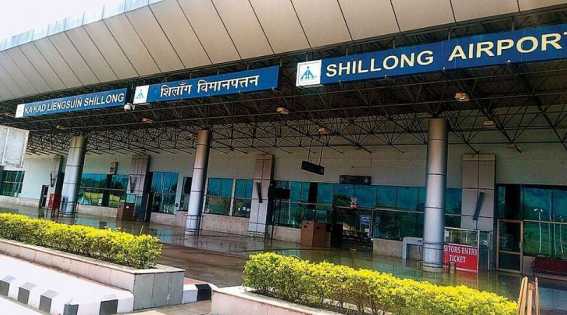
Domestic flight services to resume from Monday, New Rules & Regulations

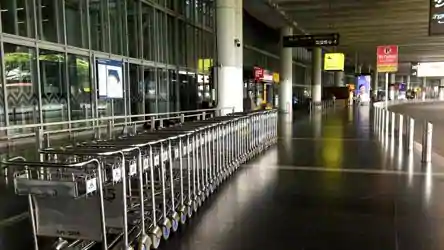
The Centre on Wednesday said domestic flight services would resume from Monday in a “calibrated manner”, laying the ground for gradual resumption of scheduled commercial flight operations that have been shut since March 25. “Domestic civil aviation operations will recommence in a calibrated manner from Monday May 25, 2020. All airports and air carriers are being informed to be ready for operations from May 25. SOPs for passenger movement are also being separately issued by the Ministry of Civil Aviation,” Union Minister Hardeep Singh Puri tweeted. All domestic passenger flight operations have been suspended for the 54-day lockdown period that began on March 25. However, cargo flights, medical evacuation flights and special flights approved by the aviation regulator DGCA were allowed to operate. The development comes despite some state governments, including West Bengal and Tamil Nadu, expressing concern on resuming flight operations during the meeting between Prime Minister Narendra Modi and chief ministers. In addition to this, certain state governments have been apprehensive of allowing people from locations highly impacted by Covid-19 to enter their borders. A number of new rules and regulations are expected to be put into place that will change the flying experience. These include mandatory social distancing at airports, revisions in the way security procedures are conducted to ensure minimal contact, use of face masks and personal protective equipment by passengers and employees, among others. A variety of new health checks may also be instituted that could result in longer queues at airports and increased wait times. Earlier this month, in a communication to airport managers across the country, the Airports Authority of India (AAI) asked all airports to be in preparedness to handle flight operations. Issuing a set of standard operating procedures, AAI’s directorate of operations said: “Once the lockdown period is declared to be over, airports shall be facilitating limited domestic/international scheduled flights in phases, to start with, may be at 30 per cent capacity to facilitate required social distancing”. It added initially, airline operations may be limited to Tier-l cities and major Tier-ll cities. The Centre is looking at the option of making the Aarogya Setu app mandatory for flyers to have it installed on their phones while taking any flight. “If the proposal is approved in the Aviation ministry, passengers who do not have the app on their phone would not be allowed to board their flight,” PTI quoted an official as saying.

Read more

Tourism & hospitality industry begins layoffs

New Delhi: Failing to get any financial assistance from the government under the ₹20-lakh-crore package, many jobs in the travel services, tourism and hospitality space in India are likely to get axed in the next three months, industry insiders familiar with the developments said. After waiting in vain for government aid and following multiple lockdown extensions restricting hotels, restaurants and air travel operations, the travel service providers, hospitality companies and tour operators have begun laying off staff. As per the last Ministry of Home Affairs (MHA) order, international and domestic air travel was to stay suspended in phase four, but on Wednesday, civil aviation minister Hardeep Singh Puri tweeted domestic flight operations will recommence in a calibrated manner from May 25. Nevertheless, travel services providers are not expecting a full recovery till next year. Overall job loss estimates for the entire tourism value chain — including hotels and restaurants, airlines, tour operators, transport providers and all other allied businesses — battered by the Covid-19 pandemic, may lie between 38 million and 50 million as per industry body FAITH and CII. Mandeep Lamba, president, South Asia, at hospitality consultancy HVS Anarock, said with an all India hotel occupancy rate of 11% and revenue per available room dropping by 87% in April, the sector is .. Sources familiar with the matter said on Sunday, sister companies Thomas Cook and SOTC sacked close to 350 employees with more job cuts likely to follow at the two companies. Thomas Cook did not respond to ET’s queries and requests for comment till the time of going to press. Global travel management services provider FCM Travel Solutions is said to have sacked over 200 people so far besides benching 15% of their staff without pay. Rakshit Desai, MD of the company, confirmed the lay-offs but declined to share exact numbers. He said the company employed 2,000 people prior to the lockdown. “We are looking at least three months of zero revenue. So, some opex rationalisation had to be done. We don’t have the capacity. Not many businesses can't withstand months and months of zero revenue. I would be hugely surprised if there are other companies in our sector that are not in the same situation,” he added. Dhruv Shringi, CEO of Yatra.com, said the company has undertaken cost cuts which are not restricted to only salaries, but did not respond to the query on lay-offs. Pronab Sarkar, president of the Indian Association of Tour Operators (IATO), a body representing more than 1,700 tour operators, said his members had begun laying off staff.

Read more

Greece to restart tourism June 15, international flights July 1

ATHENS: Greece will restart its tourism season on June 15 in a key boost to the economy after the virus lockdown, Prime Minister Kyriakos Mitsotakis said Wednesday, adding that international flights would resume on July 1. “The tourism period begins June 15, when seasonal hotels can reopen, and direct international flights to our tourist destinations will gradually begin July 1,” Mitsotakis said in a televised address. With Greece suffering fewer than 170 COVID-19 deaths over two months into the pandemic, Mitsotakis said the country’s prompt response to the virus would be a “passport of safety, credibility and health” to attract visitors. “We will win the economy war just as we won the health battle,” Mitsotakis said. Tourism Minister Harry Theocharis said a list of nations resuming flights to Greece would be announced by the end of May, noting that Athens would focus on reviving a travel front “from the Balkans to the Baltic.” Bulgarians and northern Europeans including Germans will be among the first visitors, the minister said, in addition to Israelis and Cypriots. Incoming travelers will not be required to undergo virus testing or quarantine, but sample tests will be carried out in tourist areas, the minister said. Theocharis added that 600 beds would be specifically set aside for coronavirus care on Greek islands. The country, which is still recovering from a decade-long debt crisis, badly needs tourism income that directly and indirectly accounts for over a fifth of its economy. According to the tourism ministry, Greece last year had 33 million visitors and tourism revenue of 19 billion euros ($21 billion). To increase Greece’s appeal, tax on all transport will be reduced to 13 percent from the current 24 percent for the coming five months, the prime minister said.The Greek finance ministry earlier on Wednesday noted that without support measures for businesses, the country could face an economic contraction of up to 13 percent this year.

Read more

Europe thinks of ways to welcome people safely

Sunbathing on a packed beach is off the cards this summer, as the future of European travel is set to adapt to some changes. Countries across Europe are trying to figure out ways to entice tourists to come back despite coronavirus remaining a threat. Europe was at one point the epicentre of the COVID-19 outbreak, with more than 1.3 million cases and 156,000 recorded deaths across the continent. But in places where tourism accounts for much of the economy, officials are considering changes to how hotels, resorts and nightclubs can operate under the world's new way of life. Here are some of the countries making new tourism rules... Cyprus The Mediterranean island of Cyprus is considering asking tourists to take a COVID-19 test prior to their arrival. Travellers could also be asked to disinfect their luggage and reception desks may be put behind screens, while cleaning staff could be dressed in full protective gear. The island's deputy minister for tourism, Savvas Perdios, said south Cyprus will look to bring tourists from nearby countries that have controlled the virus well, including Greece, Israel and the United Arab Emirates. Portugal Southern European tourist hotspot Portugal will likely award hotels a "Clean&Safe" seal to help tourists safely choose accommodation. The seal will indicate that the establishment, be it a hotel, restaurant or other venue, has enacted recommended hygiene and safety procedures to protect against the virus. Other changes being adopted include hotel guests not being able to check in to their rooms until 24 hours after the last occupant has checked out, allowing time for thorough cleaning and airing of the space. Some hotel guests may get exclusive use of their own sunbed and buffets are unlikely to be offered, though room service is expected to thrive. And on the beach, sunbathers will be told to stay 1.5 metres apart with umbrellas at least three metres apart. There will also be new signs and an app using a traffic light system of red, yellow and green indicating which beaches are full, partly full, or have few people. Paddle boats and water slides will be completely prohibited. The Portuguese government said hotels intend to start opening from 1 June, but discos will be the last places to open. Greece Direct flights to Greece from the UK are due to resume on 1 June, with some domestic flights and ferries operating. Travel to Evia and Crete from the mainland will be permitted, while all other islands are restricted, and all arrivals must self-isolate for 14 days. Tourists will be expected to wear masks in shops and on public transport and taxis will only take two people at a time. Large gatherings such as sporting events and festivals are unlikely to return this summer. Spain Hard-hit Spain will likely have to wait until late June to welcome holidaymakers back, despite having a tourism-dependent economy. Prime Minister Pedro Sanchez is preparing to ask parliament to extend a state of emergency until 27 June, with the strict lockdown measures so far helping to limit infections and COVID-19 related deaths, which stand at 27,709. Spain has made some changes, lifting a ban on direct flights and ships from Italy which have been imposed since 11 March. However tourism restrictions and a 14-day quarantine for inbound travellers remain in place. Italy Once the active centre of the European coronavirus outbreak, Italians are slowly regaining their freedom and have enjoyed being able to sit down at a café or restaurant, shop in all retail stores, and attend church this week. However, travel restrictions remain firmly in place and they will not be able to travel outside their regions except for work or other strict necessities until next month as lockdown rules are slowly eased. International travel to Italy will be possible from 3 June, with EU visitors allowed in with no requirement to self-isolate. People can also start moving freely across the country's regions on the same day. France Emergency measures in France are currently set to be in place until at least 24 July, with the government banning non-essential trips and requiring overseas visitors to self-isolate. Talks are ongoing to negotiate how the border crossing between the UK and France would work to ensure the spread of COVID-19 is contained. Borders with Switzerland and Germany are due to reopen from 15 June, but no date has been announced for borders reopening to non-essential travel by UK nationals.

Read more

Railways to introduce 200 non-AC trains from 1 June

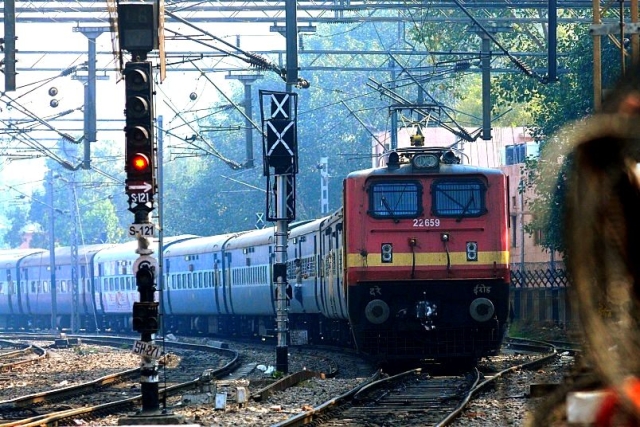
New Delhi: The Ministry of Railways on Tuesday said it will introduce 200 non air-conditioned (AC) trains from 1 June. This will be in addition to the Shramik Special trains and 30 special trains flagged off earlier this month. Tickets for these trains can only be booked online, the ministry said, adding that bookings for such trains will begin soon. "Trains will be non-AC. No tickets will be sold at any railway station and prospective travellers should not come to the railway station to buy tickets," an official statement said. All passenger train services across the country were suspended due to the imposition of a nationwide lockdown. Last week, the ministry said it plans to restart train operations in a graded manner after a gap of nearly two months. On 11 May, it launched 30 special AC trains to and from New Delhi. The national transporter has already ferried more than 21.5 lakh migrant workers to their home states through Shramik Special trains since May 1. Indian Railways also plans to double the number of Shramik trains to bring more relief to migrants stuck at various cities and their workplaces, an official statement said.

Read more

Kerala could be most valuable destination post COVID

Especially after the 2018 floods, Kerala Tourism seemed to have acquired, to use a pop culture analogy, the imposing aura of a superhero who made short work of cosmic dangers thrown at him by supernatural forces. There was first the deadly Nipah outbreak in 2018, and soon after, the devastating deluge. The tourism sector in Kerala but netted revenues of Rs 36,528 crore in 2018-19, an increase of Rs 2,874 crore from 2017-18. In 2019, the floods struck once again, with almost the same intensity. But after the second deluge, the tourism sector in Kerala posted a growth of 17.2 per cent, the highest in a quarter century. By the end of 2019, revenues swelled to Rs 45,000 crore. Adversity, it looked, was some kind of a magic potion for the sector. Rat-like menace But in just the blink of an eye, an industry that was gathering itself into a mighty force that could not be touched by the worst calamities was felled by an invisible microscopic virus. Like a rat, Sars-CoV-2 ate into the wires of the very engine of tourism growth: travel. With all means of travel taken off the air, rails and roads, the tourism sector, its destinations and attractions, has been left to rot and rust. A fallen civilisation, in the first stages of ruin, now spreads the whole of Kerala. Unofficial estimates peg the losses accumulated between February and April at over Rs 15,000 crore. Official figures say that over 15 lakh people are either directly or indirectly dependant on the sector for their livelihoods. Near eternal travel ban “It was tourism that COVID-19 had impacted first, and the sector will be the worst and the longest hit,” said Jose Dominic, the CEO of CGH Earth, a chain of popular experience hotels. “It has literally pushed tourism off the cliff,” the patriarch of CGH Earth said. E M Najeeb, the founder and chairman of Air Travel Enterprises, one of India's biggest tour operators, too said tourism would be the last to stand up after the COVID-19 threat receded. “From where will travellers come and where do we travel to? All our main source markets and the places we prefer to go on a vacation – Britain, America, Germany, France, Spain, the Middle East and South East Asia – have been affected,” Najeeb said. Travel within the national boundaries is also fraught with risk. “Kerala might be safe but this cannot be said of other states. And just because we are safe does not mean we can allow people from other states to visit Kerala,” the ATE chairman said. Forced hibernation, for how long For the moment, tourism will have to be put on hold in the interests of safety. Jose Dominic said according to very generous estimates, the sector would begin to stir by the end of 2020. “However, realistically speaking we expect the sector to liven up only by December 2021,” Dominic said. The managing director of Tourism India Publications and Tourism Advisory Board member K V Ravishankar said it took two years for tourism to rebound in China, Thailand and Indonesia after the Sars outbreak in 2002. Conditional wanderlust But even the bounce back will depend on a number of variables. “Travel is a basic human instinct, as basic as a child crawling out of her cradle. But COVID is all set to re-shape this instinct,” said K C Chandrahasan, the managing director of Kerala Travels Interserve, one of the oldest and reputed tour operators in India. The economic uncertainty triggered by COVID is one factor that could alter the nature of travel. “With salary cuts and the withdrawal of perks becoming the norm, travel decisions will depend on what is left after meeting essential needs,” Chandrahasan said. There will be no money to be squandered and, therefore, destinations will henceforth be chosen with utmost care. Only unique experiences, like Ayurveda for instance, can bring back travellers asking for more, Chandrahasan said. COVID-induced behavioural change Already, the COVID-19 lockdown has taught people to adapt. Virtual meetings, made popular by apps like Zoom, have shown business executives across the world that they could get together easily at virtually no cost without even stepping out of their homes. “The MICE (meetings, incentives, conferences and exhibitions) segment used to bring in huge revenues for Kerala. Now, they have realised that online meetings are almost as effective. Companies will now try to cut down on travel,” said K V Ravishankar, Tourism Advisory Board member. Flight fares would be the other decider. “Already the fares to Kerala are high. If it is jacked up even higher, it could spell trouble for Kerala,” he said. G Sudhiesh Kumar, patron of Kerala Hotel and Restaurants' Association (KHRA) and the managing director of Sea Face resort in Kovalam, predicts a “new normal” in the post-COVID phase. “The insistence on social distancing norms even in our kitchens may force us to cut staff. Pre-cooked food or microwave-heated food will become he norm,” Sudhiesh said. Zero income, full pay There are immediate survival concerns, too. More than 95 per cent of the 15,000-odd tourism entrepreneurs in Kerala are in the MSME (micro small and medium enterprises) sector. “Virtually all of them operate on loans. If there is no bailout package, I don't think it will be easy for them to hold out for long,” Ravishankar said. The burden of supporting jobs is also sitting heavy on the sector, like a brood of children on an undernourished mother. “The government has done a fantastic job to save lives and now it has to intervene to save livelihoods,” said Jose Dominic. “We had a series of Zoom meetings with the Planning Board and the Chief Minister. We have told them about the situation. The sector supports over 15 lakh people. March salaries have been paid but it does not look likely for April and the sector has to go through to at least October this year without any revenue,” he said. The labour department has asked the industry to keep paying wages. “But you only pay what you have. From zero you can only pay zero,” Jose Dominic said. Subsistence pay The industry has now proposed what is called “subsistence disbursements”, a basic income of Rs 9000 a month, so as to enable basic necessities like food for people dependent on tourism for livelihood. “The Chief Minister said the state did not have the resources to meet the requirement. But at least give us half,” Jose Dominic said. ATE's Najeeb said there was a point beyond which the sector cannot protect jobs. “If no subsistence or loan package is announced, there could be huge layoffs especially in the MSME sector,” Najeeb said. KHRA's Sudhiesh said it was by now clear that there will not be business as before. “Even otherwise, it is not looking good. Lot of payments we have to get from our buyers, some domestic, some international, is not coming. They are not willing to talk about money now. Now we have to keep paying the salaries and also maintain our properties, keep our walls and air-conditioners and furniture in order, at a fairly high cost,” Sudhiesh said. Time to go hyper-local It will take a while for the sun to shine on the tourism industry, but industry leaders are agreed on one thing: immediately after the locks are off, the best way to revive tourism is to become hyper local. “Now that going out and coming in are loaded with uncertainty, Kerala's tourism potential lies within itself as we have done a fantastic job in containing the spread of the virus,” Jose Dominic said. He called it “local immersive experiential travel”. “I am a man of Kochi and I would love to walk through the exotic Jew Town street, experience the Chinese fishing nets or go up to the Hill Palace in Thripunithura. I don't want to take any risk nor would I prefer to meet people coming in from dangerous zones,” Dominic said. Sudhiesh wants the government to promote local travel by increasing leave travel concession (LTC) for government staff. Kerala advantage This is but a stop-gap money spinner, a warming up before the skies open up. It is felt that as the fear of the virus gradually fades, the commendable way in which Kerala had handled COVID-19 will work to its advantage. “Safety from disease would be the new tourism mantra and here Kerala would score. Now, in tourism circles, it is said Vietnam and Kerala, both of which had reined in the virus quite effectively, are the two safest destinations in he world,” Najeeb said.

Read more