Goa tourists will need COVID-19 certificate even after lockdown is lifted

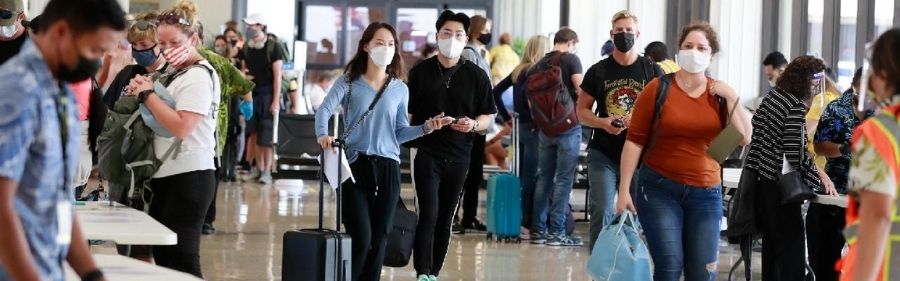
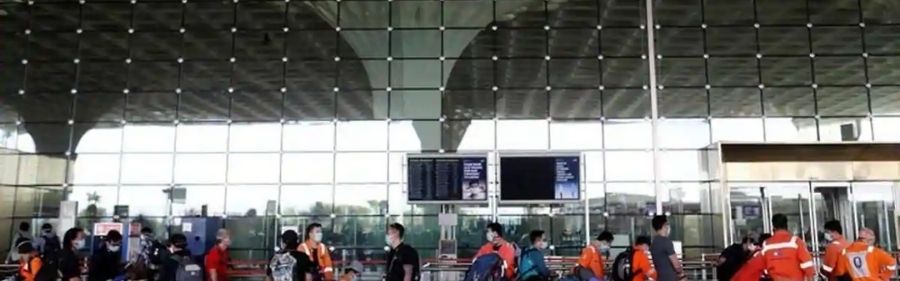
PANAJI : Goa Health Minister Vishwajit Rane on Tuesday said air travellers will not be allowed to enter the coastal state without a health certificate, after the Centre opens up airports once the COVID-19 lockdown is eased or lifted. Speaking to PTI, Rane said he had already urged Chief Minister Pramod Sawant to take up the issue with the Union Civil Aviation ministry to not allow air travellers to enter the state without a COVID-19 certificate. The Civil Aviation Ministry can inform the airlines about this condition. "Each state has powers to enforce its own rules to contain the spread of COVID-19," he said. Even if all COVID-19 patients in Goa are cured of the infection, the authorities will not relax, he said, adding that the state plans to ramp up its testing facilities in talukas to widen the scope. As many as 10 rapid testing booths will be set up at industrial estates and state borders, the health minister said. "Even if the number of positive cases comes to zero in the state, the challenge will not end. In keeping with the guidelines of the Epidemic Act, we will make masks compulsory in public spaces," he said. Goa may not detect new cases, but this lean period will be used to ramp up testing facilities, he said. Rane further said that he had directed the health secretary to formulate a protocol for random testing. "We have to ensure that the guidelines of the Indian Council of Medical Research are followed," he added.

Read more

Paytm Travel to offer free cancellation on bus ticket bookings post lockdown

Paytm, India’s largest digital payments and financial services company, has today announced that it will offer free cancellation on bus ticket bookings after the lockdown period ends. The company’s online travel booking vertical, Paytm Travel owns a significant market share and is the country’s fastest growing platform for booking air, train and bus tickets. Free cancellation feature is the latest among several initiatives taken by Paytm to support its customers during the ongoing Coronavirus crisis. In a statement, Paytm Travel confirmed that customers will be able to pre-book bus tickets as soon as the lockdown ends. In case of any change in plans, they will be allowed to cancel the tickets upto few hours before the scheduled travel time, without paying a single rupee. This free cancellation period will vary for different operators, and will be mentioned on the Paytm app. The company has already partnered with over 200 bus operators to offer free cancellation service. Abhishek Rajan, Sr. Vice President at Paytm Travel said, “This is an unprecedented crisis for our country and country-wide lockdown is necessary to stop the spread of Coronavirus. However, there are millions of people stuck in different towns & cities, far away from their families & friends. We understand that they would want to travel as soon as this lockdown is lifted and therefore we are working to provide them an option to book bus tickets in advance without worrying about the loss of money in case of a change in their plans.” Paytm entered the online bus ticketing space in 2015 and attained a dominant position in the industry within a very short span of time. It currently offers bus tickets across 62000+ routes through its integrations with 2000+ private Bus operators. It also offers online ticketing for all major state run road transport corporations like APSRTC, TSRTC, GSRTC, UPSRTC, MSRTC, TNSTC, UPSRTC, etc.

Read more

TAAI enumerates on its efforts to seek government relief for ‘Road to Recovery’

With the travel & tourism industry facing an existential crisis globally due to the travel curbs and border restrictions because of Covid-19 pandemic, the Travel Agents Association of India (TAAI) under the leadership of its dynamic President, Jyoti Mayal organised an online panel discussion to discuss the ‘Road to Recovery’ for the future. This discussion was organised in association with TravelBiz Monitor. Welcoming TAAI members and the agent fraternity, Mayal said that the industry is going through a crucial phase. “We got together here to let you know what we are doing for our members and the industry at large," Mayal said. Mayal informed that TAAI has already reached out to the Prime Minister, Finance Minister, Ministry of Civil Aviation, Ministry of Tourism and the Reserve Bank of India. "We have urged the various departments of the government to take relief measures against the backdrop of coronavirus pandemic, and help the industry to survive. The issues we raised right from GST exemption, loan waiver, refunds to agents from airlines and IATA, etc. The dialogue with the government is ongoing.” She reiterated that going forward businesses will face many challenges. "We are looking for a bailout package from the government to pay salaries and restart business from scratch." Talking about IATA, she said that TAAI has made strong presentations in dealing with the aviation body. "We have already informed MoCA about our issues on air ticket cancellation payments. We have requested IATA to not suspend any airline otherwise it will complicate the refund process for us, and we won’t be able to survive after the twin defaults of Jet Airways and Kingfisher Airlines.” Moreover, Mayal stated that they are in regular touch with low-cost airlines. “We are looking for a favourable way out. Low-cost airlines are also looking into the issue and assisting us. This is rightfully our money and we must get it," she emphasised.

Read more

PH travel group asks for help as coronavirus paralyses tourism

Philippine Travel Agencies Association (PTAA), which has 500 members, suggested a recovery program for the tourism sector bludgeoned by the coronavirus pandemic. In a letter to Tourism Secretary Bernadette Romulo-Puyat, PTAA president Ritchie Tuaño wrote, “As you are already aware, the travel agents and tour operators have been badly affected. We are bleeding, and we will continue to bleed for an undetermined length of time with all the uncertainties.” The proposal also pushed a deferment of corporate income tax payments for their members to April 2021 and tax holidays for this year, which includes corporate income tax, value-added tax, and withholding tax on salaries and professional fees. PTAA also seeks for subsidies of 50% to 75% on the salaries of their members’ employees until the end of the year, as well as waivers on both employers’ and employees’ contributions to the Social Security System, Home Development Mutual Fund or Pag-IBIG Fund, and the Philippine Health Insurance Corp. without sacrificing benefits to their employees. Furthermore, the group asks for a waiver or discounts on office rental space until the end of the year, 30% in utilities payments, soft loans payable in two years and moratorium on bank loan payments until the end of the year. The group also asks the Department of Finance to provide tax yield incentives to all DoT-accredited tourism enterprises After the quarantine period, PTAA suggested a recovery program with a stimulus package from the government, which would include the reinstatement of the standard travel agency commission, which is 9% of the gross fare from airlines and pushing the tourism department to stage a travel expo event that will stimulate the appetite for travel once the community quarantine is lifted.

Read more

IndiGo to resume operations with 65 planes post Lockdown

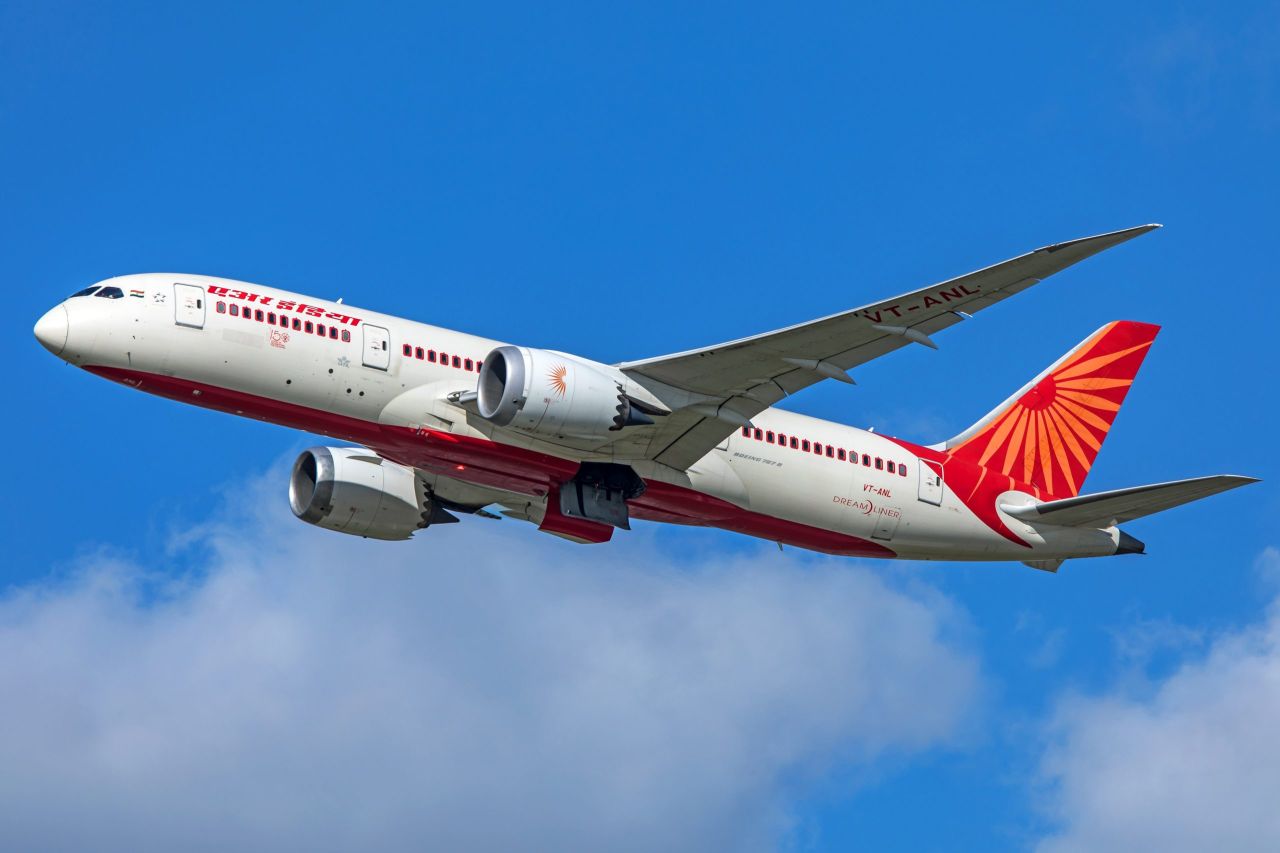
The largest domestic airline company IndiGo today said that it doesn't expect to restart operations with 100 per cent capacity after the lockdown gets over at the midnight of May 3. Instead, the carrier is expecting that just 25 per cent capacity would come into the market post the lockdown period. To put it in layman's language, if the airline was flying 261 planes just before the lockdown, that number is likely to fall down to about 65 planes. In a Zoom conference organised by TAAI (Travel Agents Association of India), IndiGo's chief strategy & revenue officer Sanjay Kumar said that nobody knows when the recovery will happen but the airline is making new business cases almost every day. "We will come out with a lot of measures, including revised boarding process. After every plane landing, we will require additional 20 minutes of time to disinfect the planes so that we will be able to bring the travellers' confidence back. Post the lockdown, this is going to be the new normal," said Kumar. In an official statement, IndiGo's CEO Ronojoy Dutta has said that the airline will restart flight operations on vital corridors of air traffic from May 04, 2020. "We will begin operations for domestic only and then gradually ramp it up further, to commence operations on some international routes as well. Our singular focus will be on ensuring the health of our customers and our employees," he said. IndiGo expects the recovery in the domestic market to take three-six months whereas the international segment could take much longer - 9-12 months. Within international, long-haul destinations such as Europe, and the US would take longer than Middle East. "Domestic tourism will play a vital role in recovery process. We will have to focus on building local trade, including working closely with travel agents. Indians typically have short-term memory. A good example is 26/11 terror attacks," said Kumar. In India, domestic travel segment is the largest contributor to the overall tourism sector which is followed by outbound and inbound travellers. To some extent, Indian tourism sector is in much better situation than other countries which are more dependent on foreign tourist arrivals. IndiGo says that it has always been focussed on the domestic market. For instance, if the airline was flying 1,700 flights in January this year, almost 82 per cent of them were within the country. As per the February data of DGCA (Directorate General of Civil Aviation), IndiGo's market share - 48 per cent -was over three times higher than the next rival (SpiceJet at 15.3 per cent). Though parameters like market share, passenger load factors, and passenger yields are set to change after the airlines restart operations. Surprisingly, the domestic demand is so robust that even after IndiGo starts taking bookings from April 15 onwards, it could fill up 70 per cent of the seats on the domestic routes. This is despite the rising number of coronavirsus cases in the country. Last week, Dutta had reportedly informed the airline's employees that it will fill only 50 per cent of the seats, and would discontinue the meal service for a short period in an effort to beef up safety and hygiene standards. After the prime minister Narendra Modi's announcement of extending the lockdown, the ministry of civil aviation decided to suspend all domestic and international flights, except some cargo flights, till May 3. Like many other global carriers, IndiGo is offering credit shells to the passengers for cancelling their tickets in the recent weeks as the airline remains unsure of the future scenario. Following the suspension of the operations, IndiGo's revenues have stopped but it has paid full salaries for March. "If not V-shaped recovery, we are likely to see U-shaped recovery in the days ahead," said Kumar.

Read more

World Tourism Council Proposes Plan To Save The Travel Sector

The World Travel and Tourism Council (WTTC) proposed a plan to rescue the sector, badly hit by the health emergency that produced the coronavirus covid-19. Due to the weight of the tourism business at the global and local level, the WTTC suggested that the governments of the affected countries, including Costa Rica, launch a three-point plan that prevents the complete collapse of the activity. In an open letter to ALL governments in the world, signed by Gloria Guevara, President & CEO, the WTTC said now is the time to take action, proposing three vital measures, which in addition to recovery funds, will protect the survival of the millions of people who rely on Travel & Tourism for their livelihoods and welfare in the turbulent weeks and months ahead: -Financial help must be granted to protect the incomes of the millions of workers in the sector facing severe economic difficulties. -Governments must extend vital, unlimited interest-free loans to global Travel & Tourism companies as well as the millions of small and medium sized businesses as a stimulus to prevent them from collapse. -All government taxes, dues and financial demands on the travel sector need to be waived with immediate effect at least for the next 12 months. Costa Rica President Carlos Alvarado has not yet announced a package of measures to re-incentivize the tourism sector once the COVID-19 respiratory disease pandemic is overcome. The Instituto Costarricense de Turismo (ICT) – Costa Rican Tourism Board – has only said that it will continue promoting the country as a destination, especially in Europe and the United States. However, the WTTC considers that the implementation of actions to protect tourism companies is urgent to prevent economic collapse due to the significant weight tourism has on the gross domestic product of nations that depend on the activity. In the case of Costa Rica, in 2016 the tourism industry accounted for 6.3% of Gross Domestic Product (GDP), according to data from the Central Bank of Costa Rica. Last year alone, the tourism business brought almost US$4 billion in foreign currency to the country. “The WTTC estimates that 75 million jobs globally are at risk from the health emergency. Due to the effect of the coronavirus pandemic, an average of one million jobs are lost daily in the tourism sector,” it warns. Council data indicates that more than 100 countries in the world have implemented specific measures to protect their travel industry. These include, in addition to interest-free loans, the elimination of certain taxes, as well as assistance for workers in the sector. In Costa Rica, according to ICT, the tourism industry generated 8.8% of the country’s jobs, more than 200,000, during 2019. The restaurant sector, which depends in part on tourism activity, had laid off at the end of March 109,000 people for the closure of bars and restaurants. WTTC figures show Travel & Tourism represents 10.3% of global GDP and supports 330 million jobs on the planet, or 1 in 10 jobs, making it a critical driver of economic growth and the backbone of many economies around the world. “With the right measures in place to support the sector, we can, and will be a vehicle to drive recovery when we enter this next phase. “We are calling upon the world to take urgent and immediate action to prevent this global health crisis from becoming a worldwide economic catastrophe. Doing nothing is not an option. “We implore every government to take drastic and decisive action now to preserve and protect the contribution of the travel & tourism sector, on which more than 320 million people and their families depend on for their livelihoods. “Travel & Tourism companies are playing their part to protect their employees,” said the WTTC in a letter send to Governments last month. The latest research from WTTC estimates that up to 75 million jobs are at immediate risk. The research reveals a potential Travel & Tourism GDP loss of up to US$2.1 trillion in 2020. WTTC also estimates that a staggering one million jobs are being lost every day in the Travel & Tourism sector due to the sweeping effect of the coronavirus pandemic. A WTTC analysis of previous major viral epidemics shows that the average recovery time for visitor numbers to a destination was 19.4 months, but with the “right response and management” could recover in as little as 10 months.

Read more