

Delhi airport becomes Asia Pacific’s first carbon accredited airport
- Nov 24,2020
- Times Of India
Delhi’s Indira Gandhi International (IGI) Airport has become Asia Pacific’s first Level 4+ (Transition) accredited airport under ACI’s Airport Carbon Accreditation program. This has been informed by the GMR Group, which operates and owns the airport. The announcement was made by Airport Council International (ACI) recently during its Europe annual assembly and Congress, which stated that the airport is a pioneer in sustainability in their region and is now setting its climate goals in alignment with the ambition of the Paris Agreement. As such, the Delhi International Airport has achieved a major goal by becoming the first airport in Asia Pacific region to get Level 4+ accreditation for 'sustainability' under ACI’s Airport Carbon Accreditation (ACA) program. The ACA, launched in 2009, adheres the global standard for carbon management in the airport industry, which aims to enable and encourage airports and its stakeholders to device best practices in Greenhouse Gas (GHG) management to achieve emission reductions. Reportedly, the Delhi airport achieved ‘Level 3+, Neutrality’ in 2016, i.e., the first Carbon Neutral Airport in the Asia Pacific region, a spokesperson from Delhi International Airport Limited (DIAL) stated. Referring to the latest achievement, Director General of ACI Asia Pacific Stefano Baronci stated that Delhi’s IGI Airport is raising the bar in Asia-Pacific by becoming one of the world’s first airports to obtain the new important Airport Carbon Accreditation Level 4+ Transition accreditation. As per the reports, the ACI this year revised the programme’s levels and added two new levels — Level 4 (Transformation) and Level 4+ (Transition). These levels have been introduced to ensure that the objectives of the said programme are in line with the Paris Agreement, and to aim that the global average temperature does not exceed 1.5°C.
Read more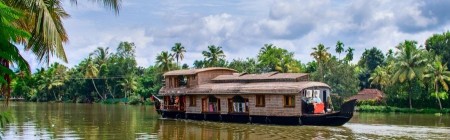
Kerala prepares INR 188 cr master plan for Thalassery Heritage project
- Nov 23,2020
- Travel biz Monitor
Kerala Tourism’s ambitious Thalassery Heritage project aims at enhancing the popularity of the heritage town in Kannur district and giving tourists an experience that reflects the culture, festivals, art, architecture, history and heritage of the state, reports Anil Radhakrishnan in The Hindu. To be executed using plan funds and aid from the Kerala Infrastructure Investment Fund Board (KIIFB), the INR 187.70 crore master plan prepared for the overall development of the circuit will have Harbour Town, Pazhassi, Folklore and Cultural Circuits. The project also aims at conserving and exhibiting all important heritage sites at Thalassery, one of the most historically significant locations in the Malabar region. Thalassery town will be the epicentre of the project and destinations in Mananthavady in Wayanad district and Vadakara in Kozhikode district will also be part of the circuits. Under the master plan prepared by m/s Space Art and approved by the government, the Harbour Town Circuit will get INR 27.49 crore, Pazhassi Circuit INR 82.32 crore, Folklore Circuit INR 15.62 crore and Culture Circuit INR 30.34 crore for taking up various works. Conservation of the Thalassery pier; development of a food street, sculpture park at Pier Road, old fire tank and a performance centre and heritage street at Thazhe Angadi; and reuse of Gundert Bungalow as a language museum and German study centre will be taken up. In the Harbour Town Circuit, the story of the buildings in the town, remnants of the old bustling trading centre and various historical monuments that stand as reminders of the colonial era will be showcased. The Cultural Circuit will cover virtually every important aspect of life, from architecture to folk arts to tales of mighty warriors and their kingdoms to temples and to the glorious past of handloom. The Folklore Circuit will project the folk arts and culture of Malabar, with special focus on Kalarippayattu, which is said to have inspired art forms such as Theyyam, Kathakali, Koothu and Koodiyattom. Pazhassi Circuit is spread over Kannur and Wayanad, covering 21 destinations that include palaces, temples, museums, and forest areas which played a significant role in Pazhassi Raja’s life and struggles. The Kerala Irrigation Infrastructure Development Corporation (KIIDC) is the special purpose vehicle for the project. Tourism authorities and planners say the project will enhance the tourism experiences and open up an entirely new region for economic development
Read more
Ministry of Tourism organises a webinar on “India’s Hidden Gems”under Dekho Apna Desh Webinar Series
- Nov 23,2020
- India Education Diary
New Delhi: The Ministry of Tourism’s Dekho Apna Desh Webinar series titled “India’s Hidden Gems” on 21stNovember 2020 focused on hidden gems of India. India is truly like a kaleidoscope, where every twist and turn will present you with a different pattern of landscape, colour, cuisine and culture. This also inspires the spirit of Ek Bharat Shreshtha Bharat. The best way to experience this is by traveling to destinations that are not popular on the internet, and as much as you can, by road. The webinar was presented by Ms. Bindu Menon, an expat relocation manager, an intercultural trainer and a brand communications specialist by profession, a linguaphile, an India enthusiast, an avid traveler and writer by passion. Bindu has delighted in presenting India to the world at every given opportunity. She started her presentation with a quote “Life is more exciting when one treads away from the everyday path, seeking bold new horizons”. The travel journey started from Amarambalam, Nilambur, which lies in the North of Kerala. Nilambur is a small town on the banks of the Chaliyar river in Mallappuram district, Kerala. This place is renowned for ‘Conally’s Plot’ or the oldest teak plantation in the world. The first railway line in Kerala was introduced to transport teak. Tourists can enjoy a wonderful train rides from Shornur to Nilambur. This place also has a hanging bridge at the Chaliyar river. New Amarambalam forest was declared as reserved forest in the Western Ghats and it is home of the indigenous Cholanaickan tribes. Environment enthusiast can also enjoy Amara wildlife Sanctuary which is the 18th wildlife sanctuary of India. Great Hornbill resorts – Owned by a retired banker and his son, this property is located in Amarambalam, Nilambur, Kerala. Great Hornbill (Vezhambal) is also the official bird of Kerala. It is a bio diversity hotspot over 7 acres placed prettily between two mountains wrapped on three sides by the forest. With the mighty mountains as the backdrop, the Amarambalam forest that is home to the Cholanaikar tribe, a perennially gushing fresh water stream with medicinal properties, hundreds of butterflies, a million fireflies and exotic plants all around, a completely sustainable vegetable garden and much more, this is certainly a secret paradise. It is a great experience of nature surrounding the soul bringing calmness and peace. From Amarambalam, Ms. Bindu Menon took us virtually to Dudhsagar Plantation. Dudhsagar can be described as a 4 tiered falls located on the Mandovi river gushing down like gallons of milk. This can be best viewed from Amravati Express. The property owned and managed by Malkarnekars. He bought a piece of barren land located in the Eastern part of the State towards the Western Ghats. Now what we find is a green oasis inside Goa. Dudhsagar Plantation, Goa is a 50-acre property with cashew plantations, a spice garden, a tropical palm garden, a nature trail and a unique natural pool. The Malkarnekars who own and manage the property ensure their guests experience the pleasure of rustic life in the midst of nature. Important tourist attractions are Bhagwan Mahavir wildlife sanctuary, Braganza House, 12thcentury temple- Tambdi-Surla temple etc.
Read more
Singapore Airline’s India venture Vistara eyes direct flights to US
- Nov 23,2020
- Hindustan Times
Vistara, an Indian full-service airline owned by Tata Group and Singapore Airlines, is considering starting direct flights to the United States as the Covid-19 pandemic increases demand for non-stop travel, a senior executive said on Friday. While the specific timeframe and aircraft requirements are yet to be finalised, Vistara is studying various scenarios for direct flights, Vinod Kannan, chief commercial officer, told Reuters in an interview. Covid-19 brought air travel to a grinding halt earlier this year as nations imposed travel bans. While travel has resumed to some extent, passenger numbers remain far below previous levels and a full recovery could take years. Vistara has seen a rise in demand for non-stop flights, as passengers try to avoid stopovers to reduce the risk of getting infected - a trend it expects will continue in the future. Flag carrier Air India is the only Indian airline currently offering direct flights to the U.S. “This means there is definitely an opportunity...to fly direct to the U.S., and it is an opportunity we are looking at,” Kannan said. The airline, which started international flights last year, currently operates two Boeing Co widebody planes and has four more on order but Kannan said the specifications and layout were not suited for direct flights to the United States. Whether Vistara would look at ordering new planes or leasing them is under discussion. “In today’s situation it is much easier to lease a widebody compared to one year ago. Those opportunities and scenarios are being worked on,” Kannan said. Prior to Covid-19, the airline flew to destinations like Bangkok and Singapore and had plans to start flying to Japan and Europe. Its international flights are now limited to destinations like London and Dubai with which India has a bilateral “air bubble” arrangement to operate direct flights. It is in talks to start flights to Paris and Frankfurt under the same bilateral agreement, Kannan said. By mid-2023, Vistara expects 20% to 30% of its total seat capacity to be deployed on international routes, up from less than 10% last year. It expects to expand its fleet to 70 planes - a mix of Airbus’ narrow-body planes and Boeing widebodies - from 47 or 48 planes by the end of the current fiscal year. While Vistara continues to negotiate with vendors on costs and delays taking delivery of some planes, it is starting to see some recovery in domestic business and leisure travel. “It has not been an easy year and it will affect my break-even point and push it back,” Kannan said.
Read more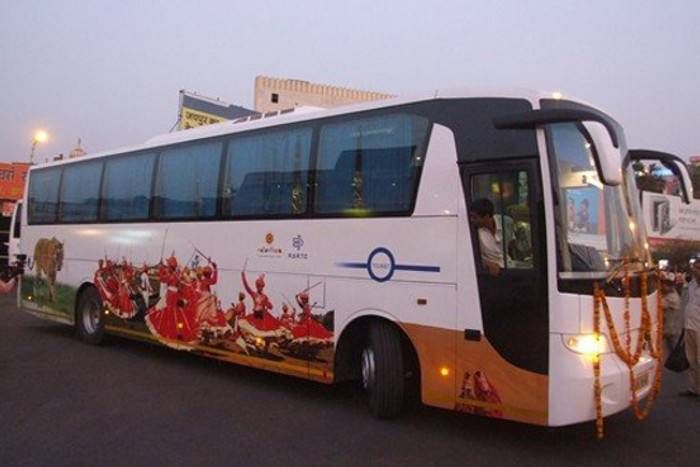
Roadways slashes fare on super deluxe buses on Delhi-Jaipur route
- Nov 23,2020
- Times Of India
Jaipur: Rajasthan roadways has slashed fares of its super deluxe bus service on Delhi- Jaipur route from Rs 900 to Rs 700. The new fare will be effective from November 23 to December 31. Roadways CMD Rajeshwar Singh said the decision was taken on Thursday to make the roadways buses more competitive in comparison to private operators on this route. The super luxury bus service on the Delhi-Jaipur route has been a popular option with the public. But with the launch of daily double-decker train services between Delhi and Jaipur in the morning and evening and shifting of the deluxe depot in Delhi from Bikaner House had hit its business. Besides, the service had been facing stiff competition from private buses which charge much less fare. Singh said, “The decision was taken on an experimental basis. He said if the step helps to attract travellers to roadways buses and increase its revenue, we will continue with the decision.” He said the decision was taken in the light of the upcoming marriage season and for candidates appearing for various competitive exams. Singh said the roadways now runs about 2,800 buses and soon 280 contract buses will also join the fleet. He said the situation is fast returning to pre-Covid level. Pre-Covid we used to earn a revenue of around Rs 5 crore and now the revenue has reached around Rs 4.25 crore and passenger load is also returning to normal. Electric buses Singh said the proposed electric deluxe bus service on Delhi -Jaipur route is expected to commence from April next year. He said according to the plan, 48 buses will be launched on this route in phases. He said charging stations will be set up in various places and a detailed plan was being worked out.
Read more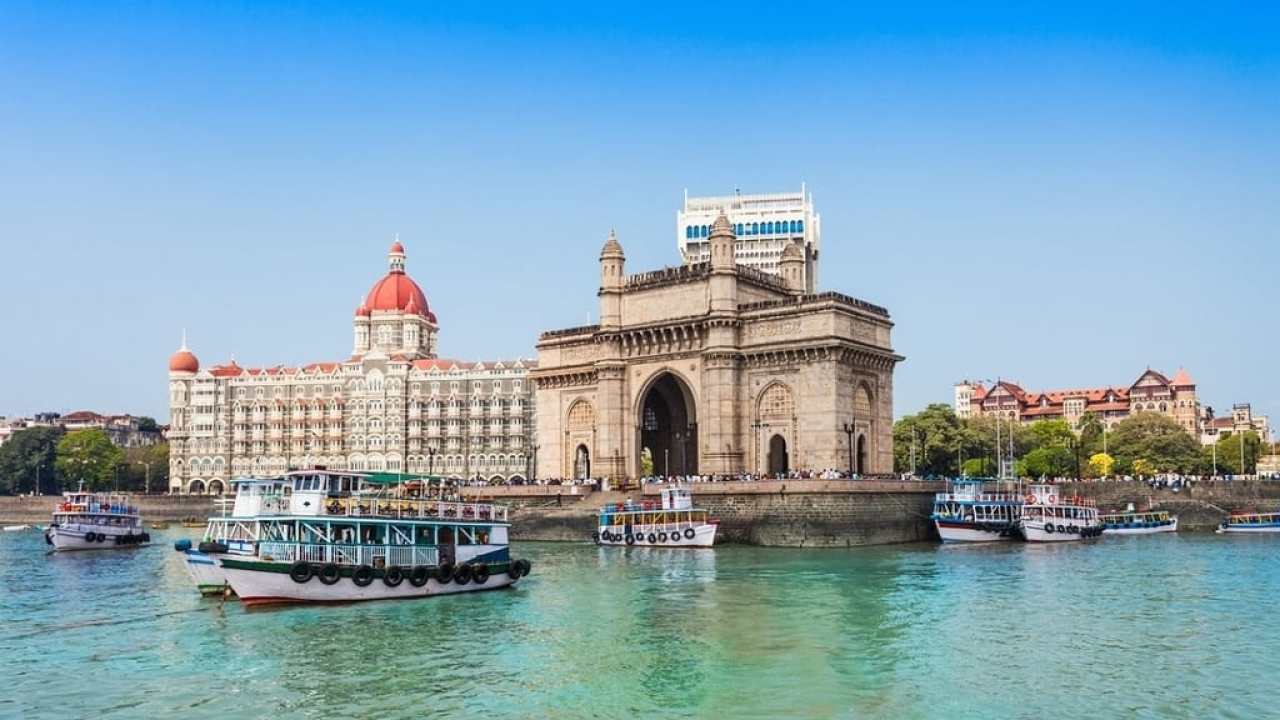
Maharashtra brings out new initiatives for tourism sector
- Nov 21,2020
- Economic Times
The tourism sector which is still reeling under the stress caused by the outbreak of COVID-19, witnessed a sense of relief in Maharashtra where the government came out with different policies to uplift the sector in the state. Tourism is one of the fastest-growing and largest employment generators in the state. To continue with the same trend, when the governments across states and the central government are busy tackling the COVID-19 situation, the Maharashtra government went a step ahead and continued to support the other sectors with policies that were long-awaited. State tourism minister Aaditya Thackeray in an urge to uplift the urban and rural tourism in Maharashtra has come out with different initiatives like Caravan services, Agro-tourism, industry status, and reducing the license requirement for setting up a new establishment. With all these initiatives the government has aimed to create a balance between urban and rural development. This in turn will help promote the rural economy by promoting entrepreneurship and employment in the rural areas. The reduction in-licenses from 70 to 10 to open a business was aimed towards bringing ease of doing business and reducing the time to set up a new establishment under the tourism sector. To keep up with the changing trends, MTDC in association with Motohom (Moving hotels on Wheels) has launched the caravan services. The initiative is primarily focused on those who like to spend their holidays outdoors and independently. This will allow people to explore the wilderness that Maharashtra has to offer. The agro-tourism policy of Maharashtra will invigorate the rural sector and agricultural practitioners with a steady source of an alternative income and alternative employment through tourism like farm stays, local cuisines, and cultural aspects. Though the agro-tourism policy has been across multiple countries already, Maharashtra has taken a lead in India to implement such a policy. Individual farmers, agriculture cooperative societies, agriculture research centers, agriculture universities, or farmer companies can set up agro-tourism centers. The Tourism Department will certify these centers after which they can be eligible for loans and other tax benefits. The requirements to register under the policy include owning an area of two to five acres with residential arrangements and facilities for meal supply. The much-awaited industry status provided for the tourism sector will ensure a reduction in operational cost which can in turn act as one of the best support provided by the government during these times. In the first phase of developments, the industry status will provide a rebate in the property taxes, electricity charges as well as water charges. The tourism sector contributes nearly 10 per cent to the GSDP of Maharashtra and is one of the biggest employment generators for the state. The move of the state government will ensure the hospitality sector sails out smoothly from the rough patch that it currently is in.
Read more