India Becomes 2nd Largest Source of Air Travelers to Thailand.

India has moved up to take Thailand’s second spot in international air passengers for summer 2025, after languishing in sixth position before the launch of the Covid-19 pandemic. This transition underscores the growth in India’s outbound tourism, in part due to the expanding middle class and increasing disposable incomes in India. With demand for travel from China and other major markets ebbing and flowing, India’s growing sway over Thailand’s tourism industry came as a much-needed fillip. With new direct flight networks and an expansion of the number of seats offered on flights between leading Indian cities and popular Thai destinations, such growth reflects India’s leading role in the revival of Southeast Asia while shifting regional air travel dynamics Overall, this signals that not only has demand returned for one of the world’s favorite travel destinations, but travelers have a strong interest in stepping foot beyond Bangkok as we slowly re-enters the tourism market.

Read more

France and EU Nations Warn UK Tourists: 5 Key Entry Denial Risks.

France, along with Spain, Germany, Italy, the Netherlands, Romania, and other Schengen Area countries, has issued travel alerts for UK travelers, highlighting five common reasons they might be denied entry. This move comes as these nations seek to ensure travelers meet the updated entry requirements post-Brexit, which include valid travel documents, compliance with visa regulations, and adherence to new border control systems. UK travelers planning trips to France, Spain, and other countries may be denied entry if they don’t acquire the necessary travel permit. Following Brexit, new regulations stipulate that individuals holding a British passport must obtain this permit before entering any of the 25 EU countries and four non-EU nations that make up the Schengen area. EU officials have announced the introduction of the European Travel Information and Authorisation System (ETIAS), a new travel permit designed to enhance security and tighten the borders of the Schengen area. Although the initiative has been delayed several times, the latest update reveals that UK travelers will not be required to obtain the permit for EU visits until at least April 2027.

Read more

Greece Introduces 3 New Rules for UK Visitors Amid EU Border Changes.

Starting in October 2025, UK tourists heading to Greece will encounter significant changes in the entry process due to a major overhaul of EU border regulations. The new rules, which include fingerprint registration, facial image capture, and passport stamping, are designed to enhance security and streamline border management. These changes aim to improve traveler experience while ensuring stricter control over non-EU nationals entering and exiting the country. Starting in October 2025, UK travelers visiting European Union countries, including Greece, will face new entry requirements under the updated Entry/Exit System (EES). This system aims to enhance border security and streamline the entry process by capturing biometric data from non-EU nationals traveling to EU countries. UK travelers will now need to register their fingerprints, capture facial images, and have their passports stamped as part of the new regulations. The EES is a comprehensive overhaul of border control processes, designed to provide a more efficient and secure way to monitor the movement of non-EU nationals. As part of this update, travelers will be required to provide biometric data, which includes fingerprint scans and facial recognition, when entering and exiting European countries. This information will be electronically stored and tracked in the system, facilitating faster and more accurate border checks.

Read more

Portugal Joins Global Effort to Crack Down on Tourist Misconduct.

Portugal has teamed up with the US, Mexico, Brazil, Saudi Arabia, Singapore, Greece, Italy and Spain and others to launch a fresh drive against bad tourist behaviour. The global alliance is coming in response to growing frustration of public decency breaches, environmental damage, and their bad behavior by tourists in hotspots. These countries wish to preserve cultural sites and the environment, maintain a positive and respectful experience for both locals and visitors, and reduce pollution and waste caused by such activities. This crackdown demonstrates a joint commitment to encouraging responsible tourism and respecting the authenticity of tourist destinations globally. With the rise in tourism numbers, certain behaviors such as public drunkenness, inappropriate attire, littering, and environmental damage have become more widespread. This misconduct is putting pressure on local communities, damaging reputations, and harming the environment. In response, Portugal and other countries have stepped up to impose regulations to ensure responsible and respectful tourism.

Read more

Aruba’s Tripod Bridge: A Natural Wonder Worth Protecting

Tucked away on Aruba’s rugged northern coastline lies one of the island’s most breathtaking natural wonders: the Tripod Bridge. This incredible formation, shaped by centuries of wind, water, and time, stands as a testament to the raw beauty and power of nature. Fragile, pristine, and remarkably unique, it’s a must-see destination for travelers seeking to explore Aruba beyond its well-known beaches and resorts. But while this incredible sight is a photographer’s dream and a nature lover’s paradise, it’s crucial that visitors approach with care and respect to preserve this stunning feature of the island’s coastline. A Hidden Gem in Aruba’s Rugged Terrain The Tripod Bridge, located along the island’s less-visited northern coast, remains somewhat off the beaten path for most tourists. Many visitors to Aruba are familiar with the famous Eagle Beach or the vibrant capital city of Oranjestad, but those who venture to the northern edge of the island are rewarded with something truly special. Aruba’s northern coast, characterized by its jagged cliffs, powerful waves, and sweeping vistas, offers a stark contrast to the bustling resorts on the island’s southern beaches. This natural bridge, formed from rock, looks like it’s been sculpted by an artist, with three large stone arches standing tall and framing the turquoise waters below. The bridge itself is not the only striking feature in this part of Aruba; the surrounding coastline, with its dramatic rocks and pounding surf, adds to the allure of this untouched destination. However, unlike the more commercialized parts of the island, the Tripod Bridge remains fragile and should be treated with care to ensure its preservation.

Read more

Greek Officials Visit Cyclades to Push Sustainable Tourism

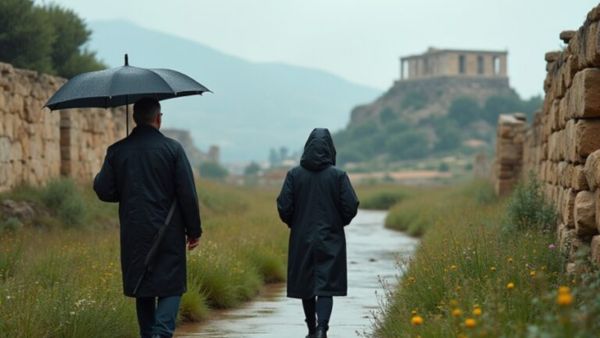
The aim is to show how we can improve the cooperation between the local community with the local authorities and what the benefits will be if we all move on that way and “work” for the same purpose.” Kefalogianni said as she visited Santorini, Sikinos, Folegandros and Anafi within the framework of an extensive tour of the Cycladic islands in Greece. Establishment of DMMOs (Destination Management and Marketing Organizations) Minister Kefalogianni’s visit follows the signing of a milestone deal in June for the formation of Destination Management Organizations (DMOs) in five island municipalities: Thira, Anafi, Sikinos, Ietos, and Folegandros. This is to enable better synchronisation of sustainable tourism initiatives which are suitable for each individual island’s characteristics and customs. Taking off from Santorini, Minister Kefalogianni toured the recently renovated Archaeological Museum of Thira. The premier show at the museum, “Kykladitisses: Untold Stories of Women in the Cyclades,” shines a light on the local women of the Cyclades, whose role in history often goes untold, from the time of prehistory to the 19th century.

Read more