

Visakhapatnam to get India’s longest glass Skywalk Bridge
- Nov 20,2024
- Times Of India
In a bid to boost tourism in the region, Visakhapatnam is all set to get India's longest cantilever glass skywalk bridge! The grand attraction will span 50 meters and offer stunning views of the sea and the hills. Set close to the Titanic Viewpoint at Kailasagiri, this glass bridge will provide an unforgettable experience for both adventure enthusiasts and nature lovers. The project, which is expected to cost around ₹6 crores, is set to begin construction on November 18, 2024. Let’s have a look at 10 interesting facts about the longest Glass Skywalk Bridge: India’s Longest Glass Skywalk: Visakhapatnam will soon be home to India’s longest cantilever glass skywalk bridge, spanning an impressive 50 meters. It will offer an unparalleled walking experience high above the ground, with stunning views of the sea and surrounding hills. Kailasagiri: The glass skywalk bridge will be located near the Titanic Viewpoint at Kailasagiri, one of Visakhapatnam's most popular tourist spots, known for its panoramic views and lush greenery. The bridge is part of a INR 6 Crore project: The development of the bridge, which is expected to cost around INR 6 crores, is part of a broader effort to boost tourism and adventure activities in the region, making it a top attraction for visitors. Built as a Public-Private Partnership: The project is being developed under a public-private partnership (PPP), with the Visakhapatnam Metropolitan Region Development Authority (VMRDA) collaborating with RJ Adventures, a partnership of SSM Shipping & Logistics and Bharat Mata Ventures. Can hold up to 40 people: The glass bridge is designed to hold up to 40 people at a time, ensuring both safety and excitement for those walking on it, while taking in the mesmerizing views of the landscape below. Thrilling Zip-lines and Sky-Cycling Tracks: In addition to the skywalk, the project includes two thrilling zip-lines and sky-cycling tracks, each stretching 150 meters. These activities will allow visitors to glide over the scenic hills and cycle high above the ground for a truly adventurous experience. INR 2 Crores for Zip-line & Sky-Cycling Additions: The zip-line and sky-cycling tracks, which will add even more excitement to Kailasagiri, are being developed at an additional cost of INR 2 crores. They are set to provide an adrenaline rush while complementing the glass skywalk. Will leave Kerala’s Vagamon Glass Bridge behind: Once completed, the Kailasagiri skywalk will surpass Kerala's Vagamon Glass Bridge, which currently holds the title for India’s longest cantilever glass bridge at 40 meters, making Visakhapatnam’s new bridge a national record-holder.
Read more
Meghalaya And Tamil Nadu Unite To Boost Tourism Opportunities
- Nov 19,2024
- Travel And Tour World
Meghalaya and Tamil Nadu are collaborating to strengthen tourism and healthcare ties. Meghalaya seeks to adopt Tamil Nadu’s successful healthcare practices while showcasing its scenic destinations to Tamil Nadu’s travelers. Enhanced air connectivity and upgraded infrastructure are in the works to streamline travel and boost visitor numbers between the two regions. The government of Meghalaya is preparing to partner with the Tamil Nadu government to enhance tourism and foster stronger inter-state connections. A key focus of collaboration lies in enhancing healthcare efficiency. Meghalaya has implemented innovative practices from the Tamil Nadu Medical Services Corporation (TNMSC) to optimize its medical supply chains, reducing waste and preventing the expiration of medicines. Furthermore, an agreement enabled the training of 100 doctors from Meghalaya in Tamil Nadu, significantly strengthening the healthcare capabilities of the state. In the tourism sector, Meghalaya is working to draw travelers from Tamil Nadu to its picturesque locations, including Shillong and other breathtaking destinations. Efforts are underway to promote Meghalaya’s attractions specifically to Tamil Nadu residents. Sangma emphasized the deep ties between the two states, pointing out that many young people from Meghalaya travel to Chennai for education and medical treatment. He also mentioned plans to enhance Shillong Airport in Umroi, aiming for direct flights to major cities like Chennai, thereby reducing dependency on Guwahati for air travel. Meghalaya is actively promoting MICE (Meetings, Incentives, Conferences, and Exhibitions), along with music, eco-tourism, and adventure tourism, to enhance its attractiveness as a destination. Sangma highlighted the significance of building strong ‘sister-state’ partnerships, emphasizing the need for increased collaboration between states while maintaining robust connections with the central government.
Read more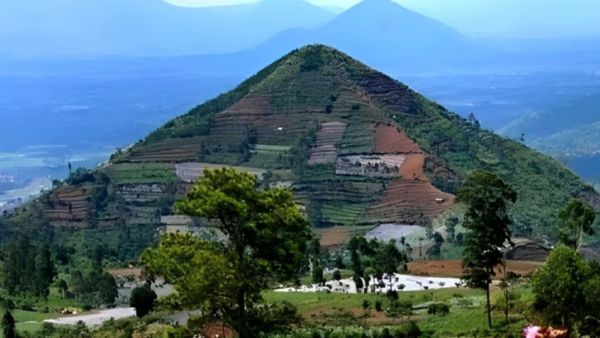
Gunung Padang: Could this be the world’s oldest pyramid?
- Nov 19,2024
- Times Of India
The archaeological wonder Gunung Padang, which is located on the Indonesian island of Java, has generated a great deal of controversy among experts. This is because the structure, which is around 100 miles from Jakarta, has been hailed by some scholars as probably the world's oldest pyramid, possibly existing more than 10,000 years before Egypt's Step Pyramid of Zoser. The origins and purpose of Gunung Padang, which was discovered in 1890, are still unknown, making it an intriguing topic for both history buffs and archaeologists. Although the Guinness World Records officially recognises Egypt's Djoser Step Pyramid, dating to around 2,630 BC, as the world's oldest pyramid, a paper published in October suggested that one layer of the Gunung Padang pyramid in Indonesia could date back to as early as 25,000 BC. However, this claim has since been met with skepticism, raising doubts about whether the structure was ever constructed by humans. A Palaeolithic pyramid? On top of a hill, Gunung Padang looks like a multi-layered pyramid. Its construction is made up of precisely positioned stone slabs that archaeologists have discovered, and the site has fascinating passageways and underground rooms. Despite being from a far older era—the Palaeolithic period—these features are strikingly similar to the Egyptian pyramids. According to some research, the location may be as old as 16,000 years, making it the planet's oldest pyramid. Controversy surrounding its origins In October 2023, a study was published claiming Gunung Padang as a prehistoric pyramid. However, this assertion was met with skepticism. While the study was retracted, the debate over the site's true nature continues. Supporters of the pyramid theory argue that its anthropogenic origins are evident, while others are of view that it may simply be a geological formation. Unsolved mysteries There are still many unsolved questions regarding Gunung Padang despite a great deal of investigation. How were these enormous stones moved and positioned throughout the glacial era? What was the purpose of the pyramid? The site resists easy explanations because of its deep caverns and stone layers covering its lava core. Gunung Padang’s enigmatic origins and bold claims as the world’s oldest pyramid make it a fascinating destination for history buffs and adventurers. Whether a natural formation or an ancient human achievement, this site offers a tantalising glimpse into a prehistoric era long forgotten.
Read more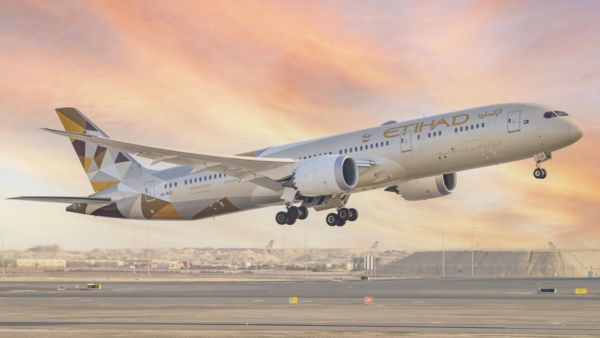
Etihad Airways To Announce Ten New Destinations This November
- Nov 19,2024
- Travel And Tour World
Etihad Airways is set to unveil ten new destinations on November 25, expanding its network to 93 cities and boosting travel options to and from Abu Dhabi. Abu Dhabi, UAE – Etihad Airways is embarking on one of its boldest ventures yet, preparing to unveil ten new destinations in a single day. Set for November 25, this milestone announcement underscores the airline’s dedication to growth and exceptional customer service. With 83 destinations already on its roster, the addition of these ten cities will expand Etihad’s network to 93, offering travelers even more choices and boosting tourism to Abu Dhabi. Antonoaldo Neves, Etihad’s Chief Executive Officer said: “We’re almost ready to announce the new destinations which will excite and delight our customers. “We have already unveiled three new destinations for 2025 – Prague, Warsaw and Al Alamein, but now we are taking it to another level. Etihad is accelerating its growth strategy with an impressive announcement of 10 new destinations on a single day. “This bold move highlights the airline’s commitment to delivering an outstanding customer experience, marked by authentic Emirati hospitality and convenient travel options. We are dedicated to meeting our guests’ needs by offering the destinations they desire, at the times and frequencies that best suit them.” To build excitement, a TikTok teaser campaign launched today, with more hints promised in a special video debuting on Friday, November 22. This gives eager fans the weekend to speculate before the grand reveal.
Read more
Kerala boosts tourism with 10 New Namo Bharat Trains
- Nov 19,2024
- Times Of India
In a bid to boost tourism in Kerala, the Indian Railways has shared its plans for the Vande Bharat sleeper trains. The plan is to increase passenger capacity while keeping the overall project cost unchanged. Earlier, the plan was to develop 200 Vande Bharat trains, each with 16 coaches. But, the new agreement talks about development of 133 trains, each with 24 coaches. Major highlights Earlier this year, a contract for building 120 sleeper trains was awarded to CJSC Transmashholding from Russia and Rail Vikas Nigam Ltd (RVNL). However, under the revised terms, the number of trains to be delivered by this consortium will be reduced to 80. Similarly, Bharat Heavy Electricals Ltd (BHEL), in partnership with Titagarh Wagons, was initially tasked with constructing 80 trains but will now deliver only 53. The changes are part of the railways’ strategy to deploy these trains on long-distance routes, where the additional coaches will help spread the operational costs over more passengers. According to Harshit Kapadia, Vice President at Elara Securities, increasing the number of coaches is a practical solution for long routes. Each coach will accommodate approximately 80 passengers, which means around 600 more passengers per train. This higher capacity will help reduce the cost per passenger, making long-distance train travel more affordable. The Vande Bharat Express, which was launched in February 2019, is part of Indian Railways' broader modernization efforts. It is available in three versions: chair car, sleeper, and metro. While the chair car version serves shorter routes, the sleeper version is designed for longer journeys between 800 to 1,200 kilometers. The sleeper version was initially designed with 16 coaches, including AC three-tier, two-tier, and first-class compartments. Railways Minister Ashwini Vaishnaw recently unveiled a prototype of the Vande Bharat sleeper coach, marking a significant step toward launching these trains for long-haul travel. Trials for 10 trains, each with a 16-coach configuration, are expected to begin soon, with passenger services likely to start by December 2024. While there have been delays, the revised contract will not affect the timeline or budget, ensuring the continued rollout of modern, passenger-friendly trains across India. This project reflects Indian Railways' commitment to enhancing long-distance travel by optimizing resources and offering more comfortable, cost-effective travel options for passengers.
Read more
Mumbai Airport records 4.42 million travellers this Diwali
- Nov 19,2024
- Times Of India
During the Diwali festivities in October 2024, Mumbai's Chhatrapati Shivaji Maharaj International Airport (CSMIA) experienced a surge in passenger traffic, handling over 4.42 million travellers. This bustling airport, one of India’s busiest and most efficient travel hubs, saw a notable rise in both domestic and international travel as people flocked to celebrate the festival of lights with their families and loved ones. Domestic and International traffic Mumbai Airport reported handling a total of 3.16 million domestic and 1.25 million international passengers during the Diwali period. The airport’s efficient infrastructure and expansion of travel options played a significant role in managing this increase in air traffic. In October alone, the airport managed 19,848 domestic and 7,222 international Air Traffic Movements (ATMs), showcasing its capacity to accommodate high volumes of air traffic. The peak day for travel was October 26, when 939 flights were recorded, marking it as the busiest day of the month, with the highest number of ATMs. This surge in air traffic reflects the growing preference for air travel during the festive season, driven by the desire to visit family, attend celebrations, or simply escape to popular holiday destinations. Popular destinations Among domestic destinations, Delhi, Bengaluru, and Goa emerged as the most popular choices for Mumbai-bound travellers. Delhi, as the top destination, saw 0.58 million passengers flying to and from the capital city during the festive period. Goa, with its serene beaches and vibrant Diwali celebrations, also attracted a significant number of travellers, along with Bengaluru, known for its tech hubs and cosmopolitan lifestyle. These cities saw increased air traffic, further highlighting the role of Mumbai as a major connecting point for domestic travel. International destinations International travel from Mumbai Airport also saw a substantial rise, with the Middle East, Europe, and Asia being the top regions driving the demand. The Middle East accounted for the largest share of international traffic, making up 51% of all international flights, followed by Asia with 23% and Europe with 17%. Popular international destinations included Dubai, London, and Abu Dhabi, which continued to dominate passenger flow during Diwali. Additionally, the introduction of new routes, such as Nok Air’s flights to Don Mueang, Thailand, and Virgin Atlantic’s services to London, boosted passenger traffic to Asia and Europe. CSMIA's ability to efficiently handle the surge in passenger volumes during the Diwali season underscores its growing importance as a global aviation hub. With its world-class infrastructure and improved connectivity, Mumbai Airport is set to maintain its position as a vital international gateway, offering seamless travel experiences to millions of passengers in the final quarter of 2024. As the airport continues to thrive, it remains at the forefront of connecting India to the world, showcasing its ability to adapt to increasing demand while ensuring a smooth travel experience for passengers across the globe.
Read more