
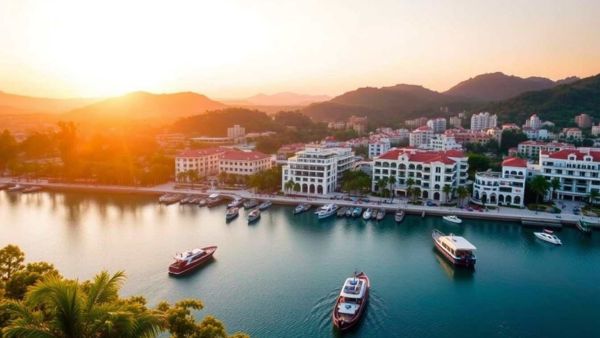
Luxury Travel Market Set For 8.9% CAGR Growth, Reaching USD 1650.5 Billion By 2031
- Sep 06,2024
- Travel And Tour World
The luxury travel market is rapidly growing, driven by rising incomes, new tech, and a demand for unique experiences, with Asia-Pacific leading the growth. The global luxury travel market has experienced rapid growth in recent years, fueled by the rising interest in unique and exotic holiday destinations. Although luxury travel remains a niche segment, its share in the overall travel industry is steadily increasing due to factors such as higher disposable incomes and improved living standards. Additionally, the growing number of high-net-worth individuals (HNIs) in emerging markets has significantly contributed to the expansion of the luxury travel sector. One of the key drivers behind the surge in luxury travel demand is the integration of new-age technologies by luxury travel companies. These advancements are transforming the travel experience, offering state-of-the-art facilities to guests. Technologies such as the Oculus Rift virtual reality device, Amazon Echo artificial intelligence, GoPro wearable technology, and DaVinci 3D printing are just a few examples of innovations designed to enhance travelers’ experiences. The market’s growth is also being driven by the increasing population of HNIs and the aspirations of wealthy millennials. Baby boomers and Generation X are the primary consumers of luxury travel, particularly in the Asia-Pacific region. There is a growing demand for experiences that allow travelers to connect with local cultures and explore lesser-known destinations. To meet this demand, market players are offering customized trips that provide an immersive travel experience. Luxury travel market analysis categorizes this segment by tour type, age group, traveler type, and region. Tour types include customized vacations, adventure and safari, cruise expeditions, and culinary travel, among others. The celebration and special events segment, which focuses on trips centered around milestones like weddings or anniversaries, holds a significant share and is expected to grow at a CAGR of 9.5% during the forecast period. Generation X, in particular, is a substantial contributor to the luxury travel market. This group, consisting of individuals aged 35-50, spends significantly on vacations, with an average of $627 per day, which is 20% higher than millennials. Their preferred destinations include Chile, Mexico, Canada, Argentina, Australia, and New Zealand, with a focus on adventure and family-oriented trips. Accessible luxury is another emerging segment, expected to reach $207.3 million by 2031. This form of luxury travel caters to those seeking high-end experiences on a more moderate budget. Travelers in this segment often opt for short holidays to nearby destinations, prioritizing unique, off-the-beaten-path experiences. Regionally, the Asia-Pacific market is expected to grow at a CAGR of 11.1%, driven by the rising middle class and increased disposable incomes. The LAMEA region, encompassing Latin America, the Middle East, and Africa, is also projected to experience significant growth due to its developing economies. Key players in the luxury travel market, such as Abercrombie & Kent, Cox & Kings, and TUI Group, are leveraging product launches and business expansions to capture more market share and remain competitive. By offering personalized and exclusive travel experiences, these companies are capitalizing on the growing demand for luxury travel across the globe.
Read more
Surat awarded with the prestigious ‘Swachh Vayu Survekshan 2024’ title
- Sep 06,2024
- Times Of India
In a recent feat, Surat in Gujarat has been awarded with the ‘Swachh Vayu Survekshan (SVS) 2024.’ The ceremony was organised by the Union Ministry of Environment. Also known as the ‘Diamond City of India’, Surat is already known for earning the title of India’s cleanest city twice. The recent milestone definitely speaks a lot about the city’s exceptional progress in improving air quality, surpassing 131 other competing cities in the nationwide survey. As per the Surat Municipal Corporation (SMC), the city has successfully reduced its PM10 pollution levels by 12.71% compared to the previous year. Apparently In the SVS 2023, Surat was ranked 13th, with Indore leading the list. But this year, surprisingly Surat has made an impressive jump to achieve the top position, scoring 194 out of 200 possible points. The city's PM10 score has improved significantly, dropping from 130 last year to 103 this year. For achieving this exceptional title, Surat in September will be honored as the ‘National Clean Air City’. It will happen at the National Mission for Clean Air event in Jaipur. The trophy will be received by the city's mayor, Daxesh Mavani, and Municipal Commissioner, Shalini Agarwal. They will also receive a certificate, and a prize money of INR 1.5 crore at the ceremony. Municipal Commissioner Agarwal said, "Our progress is the result of better coordination among departments, advancements in construction practices, increased use of electric public transport, and a focus on renewable energy". About Swachh Vayu Survekshan The Swachh Vayu Survekshan was introduced back in 2019. It evaluates cities on their efforts to enhance air quality and reduce particulate matter. The assessment works on parameters such as solid waste management, road dust control, construction waste management, vehicular and industrial emissions, awareness programs, and overall air quality improvements, among others. Surat’s efforts Surat has invested nearly INR 5000 crores in air quality improvement projects in the past five years. These initiatives include deploying mechanical sweepers to remove 4,200 metric tonnes of dust annually, integrating 35% electric vehicles into the garbage collection fleet—which has led to a reduction of 7000 metric tonnes of carbon dioxide emissions per year—and establishing 50 electric vehicle charging stations. Additionally, with support from the World Resources Institute, Surat has undertaken 280 clean construction projects, which focus on minimising the use of natural resources and managing construction and demolition waste. Of the 600 electric buses planned for the city, 580 are already operational, contributing to an annual reduction of 66 metric tonnes in emissions.
Read more
Discover Prayagraj from a New Perspective: Mini Cruise Service
- Sep 05,2024
- Travel And Tour World
The Uttar Pradesh State Tourism Development Corporation is set to launch a mini cruise service in Prayagraj, alongside catamaran and cruise services in Ayodhya and Kashi. This initiative comes as part of the state’s efforts to enhance its tourism offerings and improve the overall experience for visitors. According to Uttar Pradesh Tourism and Culture Minister Jaiveer Singh, these services are expected to resume after the rainy season, offering tourists unique water-based experiences across the region. Last month, the Inland Waterways Authority of India (IWAI) delivered state-of-the-art catamaran boats to Ayodhya and Kashi, and electric boats to Prayagraj. The fully air-conditioned catamaran in Ayodhya has a seating capacity of 50 passengers, while the mini cruise boats in Prayagraj each have a capacity of 30. Six motorboats and two rescue boats have also been provided to further enhance the tourist experience. These boats will be operated under a public-private partnership (PPP) model, with tenders already issued for this purpose. Tourism Growth and Infrastructure Development Uttar Pradesh has seen significant growth in tourism, emerging as one of the top travel destinations in India. In 2023, the state recorded over 48 crore visitors, and expectations are even higher for the 2025 Mahakumbh, where more than 40 crore tourists are anticipated to visit. To meet this growing demand, the government is focusing on enhancing infrastructure, particularly in the areas of religious, rural, and water sports tourism. Minister Jaiveer Singh highlighted the importance of offering tourists an unforgettable experience in Uttar Pradesh. “In response to the increasing tourist influx in Ayodhya, two additional solar-powered boats, each seating 30 people, will be added,” he said. These boats will be provided by the New and Renewable Energy Development Agency (NEDA) to ensure eco-friendly travel options for tourists. A Sustainable and Memorable Tourist Experience The addition of solar-powered boats aligns with Uttar Pradesh’s commitment to sustainability, ensuring that the state can cater to its growing number of visitors while maintaining its natural and cultural heritage. “The government aims to ensure that tourists leave with a pleasant experience and share their positive feedback about Uttar Pradesh’s infrastructure and facilities,” Singh added. With these new offerings, Uttar Pradesh is set to strengthen its position as a leading tourism destination in India, offering visitors a blend of rich cultural experiences and modern, sustainable travel options. As Uttar Pradesh gears up for the Mahakumbh in 2025, the introduction of mini cruise services and catamaran boats in Prayagraj, Ayodhya, and Kashi marks a significant step in enhancing the state’s tourism infrastructure. These services not only offer unique travel experiences but also demonstrate the state’s commitment to sustainability and visitor satisfaction.
Read more
Wi-Fi in the air: Air India to launch Wi-Fi on its flights soon
- Sep 05,2024
- Times Of India
In a major update from the aviation industry, Air India is all set to introduce Wi-Fi on its flights. Soon, passengers on Air India flights will be able to scroll through their social media platforms and do other important work which requires internet connectivity. As per reports, the A350 aircraft on the Delhi to London Heathrow route will be the first one to serve its passengers with Wi-Fi services. On September 2, Air India informed that it has begun services between Delhi and the UK's London Heathrow airport with the A350-900 plane. The airline called it an "ambitious transformation journey" in the statement and said that the flight will operate two times a day on the route. When it comes to Air India's A350, the aircraft has 28 private suites. All these suites are replete with full-flat beds in business. Whereas there are 24 seats in premium economy and 24 seats in economy class. Owned by Tata Group, Air India started inducting the Airbus A350 aircraft into its fleet earlier this year. As of now, there are several flights providing in-flight Wi-Fi for passengers. It is also expected that nearly all airlines will offer this service in the future to meet growing passenger demand and expectations. How Wi-Fi works on planes? There’s always a curiosity amid people to know about how Wi-Fi works on airplanes. So, basically it depends on the airline and aircraft: air-to-ground and satellite Wi-Fi. The air-to-ground method works like your phone's internet connection. Cell towers on the ground send Wi-Fi signals up to the planes flying above. The other method uses satellites. Planes are equipped with antennas on top that receive signals from satellites to provide Wi-Fi for passengers. This technology is relatively new, but many airlines are starting to use it. There are several airlines now offering Wi-Fi to passengers. Some of the most prominent ones are JetBlue, Norwegian Air, Philippine Airlines, Air New Zealand, China Eastern Airlines, United Airlines, Virgin Atlantic, British Airways, and Lufthansa, among others. This amenity helps improve connectivity and passenger comfort during flights.
Read more
India Emerges As A Tourism Powerhouse, Rapidly Beating China And U.S.
- Sep 05,2024
- Travel And Tour World
The global tourism industry is currently witnessing a noticeable deceleration, with some of the world’s largest markets, such as China and the United States, experiencing significant slowdowns. This trend is raising concerns among industry stakeholders, as these markets have traditionally been strong drivers of global tourism growth. Various factors, including economic uncertainties, shifting consumer behaviors, and ongoing geopolitical tensions, are contributing to this sluggishness. These challenges are reshaping the landscape of the tourism industry and prompting businesses to reassess their strategies to attract travelers. In the United States, the International Monetary Fund (IMF) has forecasted a slowdown in economic growth. The cooling of the U.S. labor market, alongside reduced consumer spending and the gradual tightening of fiscal policy, is expected to contribute to this trend. According to the IMF’s projections, U.S. economic growth is anticipated to decelerate to 1.9% by 2025. These economic conditions are likely to have a direct impact on domestic and international travel demand, as consumers may become more cautious about discretionary spending, including travel and leisure activities. Research conducted by Northeast Securities highlights the ongoing challenges facing the U.S. hotel industry. Since April of last year, the occupancy rates in U.S. hotels have shown a slight year-over-year decline, remaining approximately 5% below the levels observed during the same period in 2019. This persistent downward pressure on occupancy rates suggests that the industry is still grappling with the aftermath of the pandemic, coupled with evolving travel preferences and economic uncertainties. The hotel industry is thus faced with the task of innovating and adapting to these new realities to maintain and boost occupancy rates. China, another major player in the global tourism market, is facing similar headwinds. The country’s hotel sector is experiencing a downturn, with key performance indicators reflecting these challenges. In the second quarter, the Revenue per Available Room (RevPAR) for major hotel chains like Marriott and IHG in the Greater China region saw declines of 4% and 7%, respectively. Wyndham Hotels & Resorts faced an even more significant drop, with RevPAR plunging by 17%. These figures indicate that the Chinese market, despite its vast potential, is currently struggling to regain its pre-pandemic momentum. Furthermore, India’s rise in the tourism sector is also driven by its appeal as a hub for wellness and spiritual tourism. With its ancient practices of yoga, Ayurveda, and meditation, India attracts visitors seeking holistic health and spiritual rejuvenation. Wellness retreats, yoga centers, and Ayurvedic resorts are flourishing, drawing both international and domestic travelers looking for a unique blend of relaxation and cultural experience. This focus on wellness tourism not only differentiates India from other destinations but also capitalizes on the growing global trend towards health and wellness in travel. The rapid growth of India as a tourism powerhouse is a testament to its diverse offerings and the effective promotion of its cultural and natural wealth. As the world’s perception of travel evolves, India’s emphasis on unique, authentic experiences resonates with the preferences of modern travelers. By continuing to enhance its tourism infrastructure and marketing efforts, India is well-positioned to become a leading destination in the global tourism market, even as traditional giants like China and the U.S. face challenges in sustaining their growth.
Read more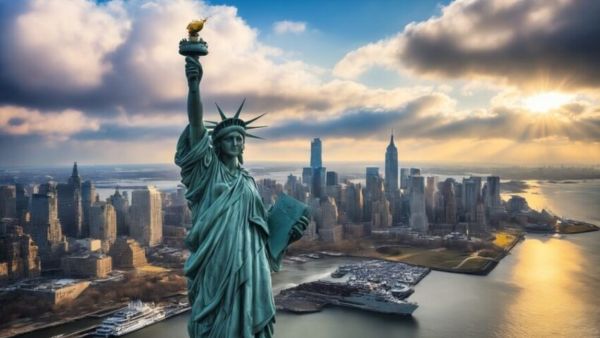
U.S. Endures as the World’s Most Dominant Travel & Tourism Sector
- Sep 05,2024
- Travel And Tour World
The World Travel & Tourism Council (WTTC) has just launched its 2024 Economic Impact Trends Report, revealing the U.S. as the world’s most powerful Travel & Tourism market, contributing an unparalleled $2.36 trillion to its economy in 2023. Despite slow spending recovery from international visitors, the U.S. remains a dominant force, with nearly double the economic contribution of its nearest competitor. China’s Resurgence and Global Rankings China ranked second, contributing $1.3 trillion to its economy in 2023. This rebound is particularly impressive given the late reopening of its borders. Germany, Japan, and the United Kingdom round out the top five, while India saw a significant leap, rising from 10th to 8th with a contribution of $231.6 billion. Notably, India is forecasted to reach 4th position by the next decade. Global Growth and Shifts in the Market WTTC predicts China will become the largest Travel & Tourism market in the world within the next decade, with India continuing its upward trajectory. Emerging markets like Saudi Arabia (+91.3%), Türkiye (+38.2%), and Egypt (+22.9%) are showing significant growth in international spending post-pandemic. Julia Simpson, WTTC President & CEO, said: “As we look forward to a record-breaking 2024, it’s clear that Travel & Tourism is not only back on track, but also set to achieve unprecedented growth. “We will continue to prioritise sustainability and inclusivity, ensuring that this growth benefits everyone and protects our planet for future generations. The sector’s resilience and potential for innovation continues to drive us forward.” Investment and Sustainability in Focus Global Travel & Tourism investment surged 13% in 2023, reaching over $1 trillion, with a return to pre-pandemic levels expected by 2025. However, the report emphasizes potential challenges due to rising interest rates and underscores the importance of collaboration between public and private sectors to sustain investment growth. The report also stresses the sector’s commitment to sustainability, showcasing how growth is increasingly decoupling from greenhouse gas emissions and promoting inclusion for women, youth, and marginalized communities. Moreover, AI and technology advancements are set to revolutionize the travel experience, further fueling growth in the years to come. TTW Editor in Chief Mr. Anup Kumar Keshan said: “The World Travel & Tourism Council’s (WTTC) 2024 Economic Impact Research (EIR) demonstrates a record-breaking year for the U.S. Travel & Tourism sector, contributing an impressive $2.36 trillion to the nation’s economy, up 7% from the previous year and surpassing the previous record by $100 billion. This growth is particularly noteworthy given the slower recovery of international visitor spending, which remains 26% below 2019 levels at $156.1 billion. He continued, Domestic visitor spending, however, surged to $1.37 trillion, an increase of more than 9% from the 2019 peak. Additionally, 656,000 new jobs were created, bringing the total to a record 18 million jobs across the country, surpassing the previous high of 17.4 million.
Read more