

Smritivan Earthquake Memorial Museum in Gujarat shortlisted for UNESCO’s Prix Versailles Award 2024
- Jun 17,2024
- Times of India
In a recent update, Gujarat’s Smritivan Museum has been shortlisted for UNESCO’s prestigious Prix Versailles Award 2024. The place holds memories from the past which gives it an emotional angle. The building is a symbol of human resilience, preserving memories and offering hope as it is dedicated to Gujarat’s eventful earthquake that claimed hundreds of lives. The Smritivan Earthquake Memorial Museum in Gujarat has earned a place among seven remarkable museums competing for the esteemed Prix Versailles Award, an annual UNESCO competition since 2015 showcasing outstanding modern architectural projects globally. Spread across 470 acres, Smritivan pays homage to those affected by the devastating 2001 earthquake in Bhuj, which claimed about 13000 lives. The museum features seven thematic blocks—Rebirth, Rediscover, Restore, Rebuild, Rethink, Relive, and Renew—symbolise the journey from tragedy to recovery. This nomination highlights Smritivan's architectural brilliance and cultural significance, positioning it as a global model for disaster memorials. Its innovative design integrates harmoniously with nature, promotes sustainable practices, and celebrates cultural heritage, aligning perfectly with the award’s criteria. Read more: Mysterious 4000-year-old structure unearthed in popular Greek island Crete The winners of the 2024 Prix Versailles Awards—recognising excellence in architecture, interiors, and exteriors—will be announced at UNESCO headquarters in late November. Established to promote architectural projects that blend economic, cultural, and ecological dimensions, the Prix Versailles celebrates structures that enhance societal well-being and environmental stewardship through design. The devastating earthquake that struck Gujarat on January 26, 2001, with its epicenter near Bhuj, remains a tragic chapter in India's history. Registering a magnitude of 7.7, the quake claimed approximately 13000 lives and left over 167,000 injured, devastating homes, infrastructure, and livelihoods across the region. The aftermath saw a massive humanitarian response, with national and international aid pouring in to assist in rescue and relief efforts. The disaster prompted significant reconstruction and resilience efforts, leading to improved disaster preparedness and recovery strategies in the affected areas.
Read more
IMD forecasts increased rainfall in Goa, Karnataka and Maharashtra
- Jun 17,2024
- Times of India
The IMD has announced a notable increase in rainfall activity along the coastal regions of Karnataka and Maharashtra starting June 8. According to the forecast, heavy rainfall is expected to impact several states. Goa, Karnataka, Assam, Meghalaya, West Bengal, and Sikkim are all anticipated to experience heavy rain until June 10. In Kerala, heavy rainfall is forecasted for June 9, with the IMD issuing an orange alert for Kozhikode, Wayanad, Kannur, and Kasargod districts today. Additionally, a yellow alert is in place for Alappuzha, Ernakulam, Idukki, Thrissur, Palakkad, and Malappuram districts. Andhra Pradesh and Telangana are expected to experience rainfall on June 9 and 10. Madhya Pradesh will witness rainfall and strong winds in some parts. An orange alert has been issued for Barwani, Khargone, Khandwa, Indore, Dewas, Dhar, Betul, Ujjain, Jhabua, and Alirajpur districts. Meanwhile, Delhi will have a partly cloudy sky with chances of dust storms or thunderstorms, accompanied by light rain. A yellow alert has been issued for the national capital, with maximum and minimum temperatures expected to be around 42°C and 29°C, respectively. The weather change is due to a fresh western disturbance, providing relief from the recent heatwave. In Mumbai, residents will experience a partly cloudy sky with light rain and thunderstorms. The IMD forecasts maximum and minimum temperatures of approximately 35°C and 29°C, respectively. The city is poised to see the onset of the monsoon between June 9 and 10, marking a significant change in the weather pattern. Heatwave conditions are predicted in several regions, prompting the IMD to issue alerts. Northeast Madhya Pradesh and Jharkhand will experience isolated heatwave conditions from June 8 to 11, while Bihar is expected to face heatwave conditions on June 9 and 10. Similar conditions are forecasted in Odisha, Punjab, and Haryana from June 9 to 11. In Uttar Pradesh, certain regions will face heatwave to severe heatwave conditions from June 8 to 11
Read more
Indians choose Southeast Asia for short vacations
- Jun 15,2024
- Travel Biz Monitor.com
Bali emerged as the top destination in the OYO Global Summer Vacations Travelopedia 2024 survey, with 38% of respondents favoring it. Pattaya, Bangkok, and Dubai followed closely behind. According to OYO, relaxed visa norms have made Southeast Asian destinations like Indonesia and Malaysia increasingly popular. The survey, which analyzed the travel behavior of 4,000 Indian tourists, found that Europe and the United States are the top choices for long-haul destinations, with Indian tourists typically staying for 10-15 days or more. “With improved air connectivity, visa facilitation, and a wide range of travel options, it has become more convenient than ever for Indian travellers to explore Southeast Asia. Our ongoing program to increase the number of premium properties in the region will provide Indian tourists with a variety of stay options at all popular holiday destinations,” said Ritesh Agarwal, founder and CEO, OYO. The survey also highlighted the rise of remote work among Indian travellers, with Indonesia and Malaysia attracting “digital nomads” who seek to combine work and travel. “The affordable cost of living, reliable internet connectivity, and picturesque locales in these countries make them attractive destinations for digital nomads,” the survey noted. Relaxed visa norms for Indian tourists in several Southeast Asian countries, including Malaysia and Indonesia, have further boosted the region’s popularity. Additionally, Dubai’s introduction of a five-year multiple-entry visa has made travel between India and the Gulf region easier. Countries offering visa-on-arrival for summer holidays include: Maldives: Offers a tourist visa-on-arrival valid for 30 days to Indian citizens. Indonesia: Known for its beaches, diverse culture, and history, with opportunities to explore ancient temples, hike through lush rainforests, and relax on beautiful beaches. Thailand: A key destination featuring monasteries, temples, beaches, flea markets, and shopping arcades. Sri Lanka: Situated on the southern tip of the Indian subcontinent, it offers a tropical experience with its cuisine, beaches, tea plantations, and more, providing visa-on-arrival to Indians.
Read more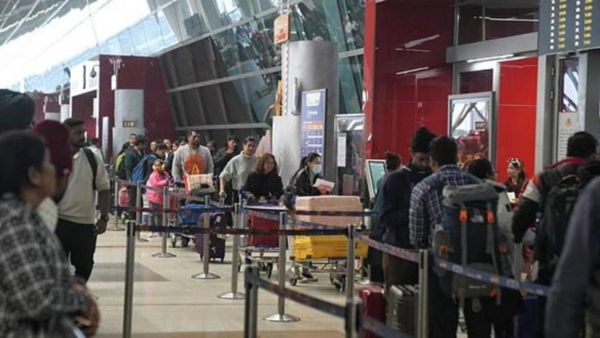
BackBack Air travel: International footfalls from India are not growing as fast as domestic— here is why
- Jun 15,2024
- Live Mint
Indian domestic aviation recorded its highest-ever single-day traffic on Sunday, April 21. This comes on the back of record numbers in the financial year ending March 2024 and the calendar year 2023, along with the highest-ever profits by IndiGo in the last financial year. The financial year ended with 37.64 crore footfalls for both domestic and international passengers in India. A staggering 81.5 per cent of passengers were domestic, with the rest being international. This was the first full year of operations without any restrictions since the onset of COVID. The traffic saw a growth of 15 per cent over the previous financial year and the growth was 9.2 per cent as compared to pre-COVID times. However, the growth was uneven with the domestic segment seeing a growth of 11.5 per cent, while there was no growth recorded for international. The international footfalls for FY24 were 6,96,38,262 which was only two lakh more than FY19 when 6,94,80,768 passengers were recorded on international segments, which includes both arrivals and departures. For a sample month of January this year, the Indian carriers were offering only 12 per cent more seats on international routes as compared to January 2020 - a few months before COVID hit India. The more surprising part is that the domestic offering is down 8 per cent when compared to the same months, yet the traffic has grown. Foreign carriers saw a dip of 2.2 per cent, but the overall change isn't such that it will impact capacity in the market. Where is the international traffic? International footfalls showed a better recovery in FY24 than domestic, growing 22.3 per cent, while domestic growth was 13 per cent, on a YoY basis. However, when compared to pre-COVID times, international growth is next to nil while domestic has been 11.4 per cent. This is even while SpiceJet has shrunk and Go Air (later Go FIRST) went down in May last year. How did the traffic not grow? The growth has been on the edge for a while until countries enticed Indians with visa-free travel or visa on arrival, which has been the case with Thailand and Malaysia. While travel to South East Asia has been on the rise, largely led by increased connectivity, travel to Europe and North America is yet to see its heydays. Europe has seen an ongoing war since 2022, along with the delay in issuing Schengen visas. The non-stop flights to the United States and Canada have taken a beating, again thanks to the reciprocal non-use of Russian airspace by American carriers. This has gone down well for Air India, but the overall traffic remains impacted. The visa situation with the United States is no different than Schengen, if not worse. International expansion: Is it a double-edged sword? Airlines in India have focused on international expansion for the last year. Air India group is working towards shifting some flights from Air India mainline to low-cost carrier Air India Express, while it works towards expansion. New horizons like Indonesia, Vietnam, and countries in Central Asia and Africa are now on the radar for Indian carriers for further expansion. Is this a double-edged sword for the airlines when international traffic isn't growing? Both IndiGo and Air India have talked about international being their core focus area in the years to come. IndiGo had earlier given specific growth targets for the international side of operations, where it still deploys less than 15 per cent of its departures and capacity. If the traffic does not grow, how does it bode well with the plan? The data indicates that this is more of a blip than a pattern, and it has taken longer for international traffic to recover after the pandemic. IndiGo’s confidence seems to be high, especially after placing the order for 30 A350s. With a larger middle class, the growth rate of international traffic could well be higher in the next few years as compared to domestic growth. For growth to continue, capacity has to be inducted, and that seems to be the biggest challenge right now as airlines across the world battle supply chain issues.
Read more
Greece: Mysterious 4000-year-old structure unearthed in popular Greek island Crete
- Jun 15,2024
- Times Of India
As per the latest development, a monumental ancient structure has been unearthed in the Greek island of Crete, a popular tourist hot spot in Greece. If reports are to go by, this discovery will likely halt the construction of a new airport. As regarding the structure, it dates back to the Minoan civilisation, which was primarily in use between 2000 and 1700 BCE, thereby coinciding with the era when Crete's iconic palaces at Knossos and Phaistos were constructed, reports suggest. Despite its significance, the purpose of this building remains a mystery, sparking considerable archaeological interest and speculation. Described by experts that the structure resembles ‘a huge car wheel from above,’ the structure has a diameter of 157 ft and covers an area of 19,000 sq ft. With regard to this, the Greek Ministry of Culture released a statement stating certain features of the structure bear similarities to Minoan tombs, such as its circular stone rings and intricate design. However, the discovery of numerous ancient animal bones nearby complicates researchers’ understanding of the site. The Ministry's statement suggests that the structure may have been periodically used for ritual ceremonies involving food, wine, and possibly offerings. As archaeologists continue to excavate and study this site atop Papoura Hill near Kastelli, they are facing challenges due to its proposed future use as a radar station for Crete’s new international airport. Scheduled to open in 2027, this airport will serve Heraklion, Crete's capital and largest city, as well as numerous cultural and archaeological sites across the island. If reports are to go by, the airport is expected to handle 18 million passengers annually, reflecting the demand for modern infrastructure to support tourism to Crete's well-preserved historical sites. However, the influx of tourists sometimes threatens the integrity of these ancient sites, prompting protective measures, such as limiting visitor numbers to the Acropolis in Athens. Excavations in the area have revealed at least 35 other archaeological sites, highlighting the challenge Greek authorities face in balancing development with heritage preservation as they build the new airport and its connecting road network. Culture Minister Lina Mendoni describes the structure as a unique and highly significant find. She indicates that the Greek Government and airport officials will explore alternative locations for the radar station to ensure the preservation of this archaeological site. “It’s possible to go ahead with the airport while granting the antiquities the protection they deserve,” Mendoni says. Her comments inspire hope that Crete's rich past, vibrant present, and promising future can be harmoniously reconciled.
Read more
Boost to Halal Tourism as Visa-Free Travel To Malaysia Now A Reality for Qatar, Saudi Arabia, UAE as well as India and Indonesia
- Jun 15,2024
- Travel and Tour World
Halal tourism, also known as Muslim-friendly tourism. For Muslim travelers, the appeal of vacationing in a halal-friendly locale is unmatched. Such destinations eliminate the risk of inadvertently adopting a pescatarian diet, provide easy access to prayer facilities, and eliminate the need for travel shattafs. As the fastest-growing faith globally, Islam constitutes the second-largest religious group, with Indonesia leading as the country with the highest Muslim population, followed by Pakistan, India, Bangladesh, Nigeria, Egypt, Iran, and Turkey. This segment also includes other variations like Shariah Tourism and Ziyarah Tourism, which cater to specific religious or cultural preferences. Islam is the world’s most rapidly expanding religion, currently accounting for approximately 24.9% of the global population, with over 1.9 billion adherents. This positions Muslims as the second largest religious group globally the majority reside in Asia. In Southeast Asia, Islamic tourism is gaining momentum, notably in Brunei, Indonesia, and Malaysia, prompting initiatives like the Joint Seminar on Islamic Tourism (JoSIT). This seminar facilitates bilateral discussions and cooperation on Islamic tourism sustainability, with industry experts from Southeast Asia sharing insights and best practices. The Muslim Travel Intent Tracker (MTIT) and the Muslim Traveler Responsible Tourism Framework. Explore top destinations, the GMTI Performance Matrix, and projections for Muslim traveler arrivals and expenditures. The GMTI 2024 offers critical insights and introduces the RIDA framework, highlighting the recovery of Muslim international visitors, expected to surpass pre-pandemic levels in 2024. The GMTI 2024 report, released on May 30, also recognized Malaysia as the “Top Muslim-Friendly Destination of the Year by the Organisation of Islamic Cooperation (OIC)” in Singapore. These achievements generated RM14.70 billion in revenue for Malaysia last year. As international borders have reopened, a significant expansion is expected in the Muslim travel market. The terminology surrounding Halal travel is diverse, often encompassing terms like Halal Tourism, Muslim Friendly Travel, and Islamic Travel, among others. To clarify these terms, Crescentrating has released the first-ever glossary detailing travel-specific terminology for the Muslim/Halal travel sector, including insights into Islamic core values and culturally specific travel practices. Malaysia not only offers a full suite of high-standard healthcare facilities at very affordable prices, but we also provide insurance and Halal, Muslim-friendly medical facilities. These three factors position them exceptionally well to promote medical tourism. Additionally, tourists seeking spiritual and Halal food will find these available, making them very comfortable, especially in GCC countries. Hence it deserves to be too preferred nation. In an Exclusive Interview TTW Editor Mr. Anup Keshan with Nader El Biblawi, Chairman of the Egypt Travel Agent Association. TravelandTourWorld proudly supports this event as an official media partner. Key features of halal tourism include: Halal Hotels: These establishments prohibit alcohol and gambling, serve halal food only, and provide Qurans, prayer mats, and Qibla-direction indicators in each room. The layout of rooms ensures that beds and toilets do not face Mecca, and prayer rooms are available. Halal Transport (Airlines): Airlines catering to Muslim passengers maintain cleanliness, offer non-alcoholic beverages, and provide publications that are compatible with Islamic teachings. Halal Food Premises: Restaurants must serve halal-certified food, with all meat slaughtered according to Islamic law, and alcohol is strictly prohibited. Halal Tour Packages: These packages are designed around Islamic themes, including visits to mosques, Islamic monuments, and events during Ramadan. Halal Finance: Financial operations in the tourism sector must comply with Islamic principles, which advocate for profit and loss sharing and prohibit interest. The Ministry aims to position Malaysia as a regional ‘Umrah Hub,’ enhancing the travel experience for Muslim tourists from regions including China, by offering diverse attractions in conjunction with their Umrah pilgrimage. This initiative coincides with the 50th anniversary of China-Malaysia diplomatic ties, marked by a special Familiarization Trip for 36 Imams, underlining the cultural exchange and mutual appreciation between the two nations. As 2024 unfolds, collaboration between the Islamic Tourism Centre (ITC) and the Malaysian Inbound Chinese Association (MICA) is expected to foster further industry partnerships, capitalizing on the growing Muslim tourism market. This collective effort is geared towards a prosperous and successful 2024, contributing significantly to the tourism sector’s recovery. Here’s a breakdown of commonly used terms: Muslim Tourism: Muslims traveling primarily for tourism. Halal-conscious Travelers: Muslim travelers seeking to meet their faith-based needs without compromise. Penang has recently initiated the Muslim-Friendly Tourism and Hospitality (MFTH) program to educate and integrate Muslim-friendly practices into local businesses such as accommodations, spas, and travel services. Responding to Malaysian Prime Minister Anwar Ibrahim’s call for enhanced focus on Muslim-Friendly Tourism, the Ministry of Tourism, Arts and Culture (MOTAC), through the Islamic Tourism Centre (ITC), has launched an ambitious strategy to attract Muslim tourists, backed by a RM350 million budget in 2024 as part of broader tourism recovery initiatives. In a separate but related context, the Hajj pilgrimage, commencing on June 14, 2024, anticipates over 1.5 million foreign pilgrims, approaching pre-pandemic levels. Saudi Arabia continues to expand its tourism offerings beyond religious visits, with the 2023 pilgrimages drawing substantial international tourist numbers, indicating robust growth in its religious tourism sector. The rapid pace of globalization, driven by advancements in communication and information technology, has significantly influenced various sectors, including tourism. Notably, the development of halal tourism has emerged as a significant trend worth monitoring. This type of tourism caters specifically to Muslim travelers by adhering to Islamic principles throughout all aspects of the travel experience, from food and accommodation to activities. Consumer surveys reveal a growing sensitivity among Muslim consumers towards ensuring that products and services are free from practices forbidden in Islam. This shift has heightened the demand for halal-certified goods and services not only in predominantly Muslim countries or those part of the Organization of Islamic Cooperation but also in non-member states like Japan, Singapore, and Thailand. These countries have been recognized by the Global Muslim Travel Index (GMTI) for their efforts in accommodating Muslim travelers, making them popular destinations within the halal tourism market. Citizens of GCC countries, including Saudi Arabia, Bahrain, Kuwait, Oman, Qatar, and the UAE, can now visit and stay in Malaysia for up to 90 days for tourism or business purposes. This visa-free policy for GCC nations enhances Malaysia’s appeal as a destination for international tourism and business travel. Countries such as Singapore and Thailand, members of the ASEAN Economic Community, have effectively capitalized on this trend, attracting Muslim tourists from nearby nations such as Indonesia, Malaysia, and Brunei. The United Kingdom, with its historical ties to various Muslim-majority regions during its colonial past, also remains a favored destination for travelers from Commonwealth countries. Singapore is further expanding its tourism offerings to include not only halal services but also MICE (Meetings, Incentives, Conventions, and Exhibitions) and cruise markets. Malaysia has solidified its status as the preferred destination for Muslim travelers, leading the sector thanks to its Halal-friendly environment, stunning beaches, vibrant culture, and exceptional shopping. The Islamic Tourism Centre (ITC) revealed that in 2023, Malaysia attracted over 4.5 million Muslim international visitors, maintaining its top ranking for the ninth consecutive year in the Mastercard-Crescentrating Global Muslim Travel Index (GMTI) 2024, released on Thursday (May 30). Looking ahead, the Asia Islamic Tourism & Trade Expo (AITEX 2024) is scheduled to take place in Kuala Lumpur from August 23rd to 25th, 2024. This major event, which will be held at the prestigious Sunway Resort Hotel, aims to highlight the latest in Islamic finance, tourism, and trade. The Shariah Finance Expo, a key component of AITEX, will gather industry leaders and experts to discuss innovations and opportunities in Islamic finance. In terms of global travel, while Japan and Singapore boast the strongest passports in 2021 according to the Henley Passport Index, with Malaysia at 13th, the vast Muslim-majority Indonesia offers numerous tranquil spots for reflection, from mall prayer rooms to local mosques. Malaysia, an early adopter of Islamic tourism, continues to enhance amenities for Muslim families. The UAE presents what could be the closest experience to a halal Michelin-star dining. Meanwhile, Saudi Arabia, the epicenter of Islam, welcomes scores of Muslim travelers, particularly in the holy cities of Makkah and Madinah, where visitors can revere at sites like the Kaaba and the mosques of Masjid Al Haram and Masjid Al Nabawi. Surprisingly, despite its small Muslim demographic, Japan ranks sixth among non-OIC nations on the GMTI 2023 list, reflecting its significant commitment to accommodating Islamic travelers with prayer spaces, halal-certified eateries, and tours in cities like Tokyo, Osaka, and Kyoto. This year alone, international arrivals of Muslim travelers are projected to hit 168 million, which would exceed pre-pandemic figures by as much as five percent. The halal tourism sector is projected to grow significantly, with an estimated increase to $300 billion by 2026.
Read more