UP Tourism signs key MoUs to boost rural tourism; 229 villages identified for development

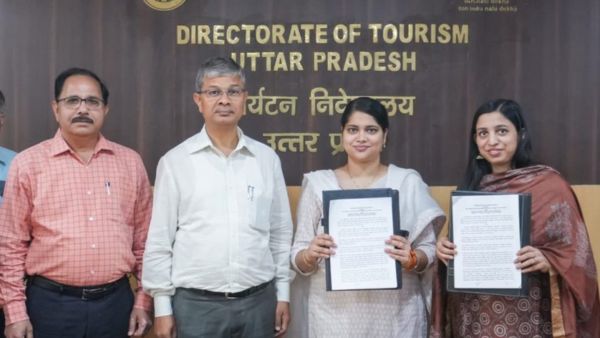
The Directorate of Tourism will focus on identifying and addressing infrastructure gaps in selected villages, developing tourism infrastructure, mobilising communities for tourism activities, organising capacity-building programs and promoting homestays. In a significant step towards enhancing rural tourism and sustainable livelihoods in Uttar Pradesh, two Memorandums of Understanding (MoUs) were signed today at the UP Tourism Directorate in Lucknow. The first MoU was signed between the Directorate of Tourism, Uttar Pradesh, represented by Mukesh Kumar Meshram, and the State Rural Livelihood Mission (UPSRLM), represented by Deepa Ranjan, Mission Director. This five-year agreement aims to promote tourism and develop tourism infrastructure while empowering rural communities through sustainable livelihood development and improved access to financial services. Under the MOU, the Directorate of Tourism will focus on identifying and addressing infrastructure gaps in selected villages, developing tourism infrastructure, mobilising communities for tourism activities, organising capacity-building programs and promoting homestays. Short term training programs will be run for various beneficiaries including Self-help Groups, homestay owners, tourist guides and more. They will also work on social media management, content creation, and familiarisation trips. Meanwhile, UPSRLM will identify potential Self-Help Groups (SHGs), mobilise communities, and build the capacity of SHG members through training programs. They will also support village cleanliness, promote tourism villages through social media, share relevant data with the DoT, and maintain tourism infrastructure as required. The second MoU was signed between UPSRLM and Manyawar Kanshiram Institute of Tourism Management, Department of Tourism, Government of Uttar Pradesh. This partnership aims to develop a sustainable model for promoting food service enterprises in the state. UPSRLM will develop replicable models of sustainable food service enterprises with technical support, including capacity building, from the Institute. Through strategic initiatives and partnerships, UP Tourism aims to transform the state’s tourism landscape and create a vibrant tourism ecosystem that benefits both tourists and local communities. Promoting rural tourism will significantly boost local economies, provide diverse livelihood opportunities, and enhance infrastructure to host a variety of tourism experiences. These initiatives aim to offer tourists an authentic taste of village life while uplifting rural communities across Uttar Pradesh. To this end, 229 villages have already been identified for tourism development. These efforts will empower rural communities through skill development training and promoting their art, craft, culture, and cuisine, to give them the recognition and support they deserve. “These MOUs are a proof of our commitment for elevating the entire tourism ecosystem of Uttar Pradesh. By encouraging rural tourism, we are not only boosting the local economies but also providing rural populations with various means of livelihood and employment,” said Jaiveer Singh, Minister of Tourism and Culture, Uttar Pradesh. Mukesh Kumar Meshram, Principal Secretary, Tourism and Culture, Uttar Pradesh, added, “Our collaboration with UPSRLM and Manyawar Kanshiram Institute is a significant stride towards sustainable tourism and community empowerment. This initiative will enhance facilities and infrastructure, offering tourists an authentic experience of rustic village life.” “This partnership will empower rural communities by integrating them into the tourism value chain. It will create new opportunities for economic growth and sustainable development in the villages,” said Deepa Ranjan, Mission Director, UPSRLM. Eesha Priya, Special Secretary, Tourism, mentioned, “We are focused on developing a comprehensive tourism strategy that benefits all stakeholders. The synergy between tourism development and rural livelihood enhancement is crucial for the holistic growth of our state.”

Read more

How much should I tip in: Europe, Africa, Asia, Latin America, Australia and New Zealand

To tip or not to tip – and how much – is a question on many American travelers’ minds as they venture abroad this summer. The U.S. is known around the world for its generous tipping culture, but that standard, as much as 20% on some bills in some cities, hasn’t exactly been exported to other locations. In fact, according to Justin Chapman, a travel expert who specializes in safaris at Go2Africa, tipping in some locations may actually be seen as offensive. Here are his rules of thumb depending on where you’re visiting this summer. How much to tip in Europe It varies from country to country, but in general visitors don’t need to leave a huge tip in most of Europe. In some countries it’s becoming increasingly common for a 10-15% service charge to be included in the bills in places like restaurants, while in others, it’s up to the visitor’s discretion. How much to tip in Africa In most of Africa, Chapman said, a 10-15% gratuity on restaurant bills is customary, as are tips equivalent to $10-20 per day for staff at your lodging or any tour guides you may do business with. How much to tip in Central and South America A 10-15% tip is customary in most restaurants in Central and South America, but tips are even more important for tour guides, who Chapman said rely heavily on the extra income. In Colombia, he said, $10-20 per day is appropriate for guides, while $5-10 is alright in most of the rest of the region. Chapman said it’s especially important to tip generously for guides in Brazil. Taxi drivers across the region don’t necessarily count on tips, but rounding up to the nearest whole currency amount is often appreciated. How much to tip in Asia Tipping is not widely expected in Asia, and can actually be seen as offensive in some countries, particularly in China and Japan. In Southeast Asian countries like Thailand and Vietnam, tipping is becoming more common and around 10% is generally seen as an acceptable gratuity there. How much to tip in Australia and New Zealand Tipping isn’t generally expected in Oceania, but Chapman said 5-10% or rounding up to the nearest Australian or New Zealand dollar can be appreciated, especially in high-end establishments. Travel tipping advice If you’re planning to tip but aren’t sure of the etiquette, Chapman said here are some key things to keep in mind: Tip in cash whenever possible Consider the cost of living: more expensive areas, or places with high tourist traffic, are more likely to expect higher tips Ask a local if you’re not sure what the regional custom

Read more

More rail lines, Vande Bharat tenders, to be immediate agenda for Vaishnaw

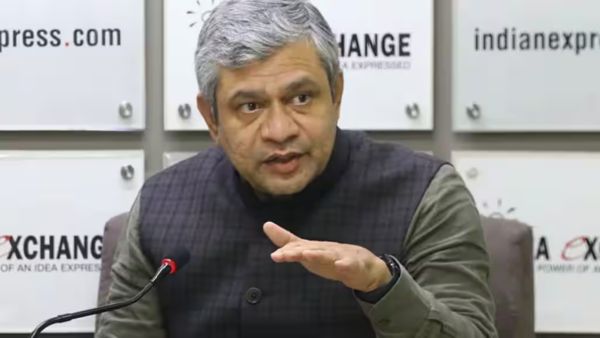
The task is cut out for Ashwini Vaishnaw, who retained the railways portfolio. The transporter that virtually runs an operational deficit is hugely dependent on Budget funds and borrowed monies for its capital expenditure. While the Narendra Modi 2.0 government did not let the capex growth slow, unless the project financing models are rejigged and the railway’s own finances are improved with additional increases in passenger traffic, the investment pace will stagger. It is important to get the public private partnership project going in more segments of railway infrastructure Over the last six months, the speed of projects had slowed down considerably in the run up to the general elections. “Whether it’s tenders for Vande Bharat trains or network augmentation, we expect the ministry will swing into action pretty quickly,” said Harshit Kapadia, VP (Consumer Durable & Electrical and Capital Goods) at Elara Securities. For instance, it’s likely that the ministry will float tenders for about 100-200 Vande Bharat trains besides coming out with another set of tenders for the Vande Bharat Sadharan trains, which are regular speed trains offering experience similar to semi high-speed Vande Bharat trains. “Some of the tenders in the pipeline will come out. The focus will be on Vande Bharat sleeper class,” said an analyst. The ministry is likely to speed up the infrastructure development which includes doubling of lines, adding new lines and gauge conversion. In the interim budget 2024-25, nearly 30% of the allocations were made to the network augmentation out of the total railways budget. “They will be adding around 5,500 kms of new lines,” said the analyst quoted above. Another major focus area for the new minister will be the ramping up of Kavach system. Earlier, just three companies were competing in the market. But because the government has plans to cover about 5,000 kms of rail tracks with Kavach every year (by 2025-26), up from about 1,500 kms annually now, it allowed (in last November) two more players — Germany’s Siemens and Japan’s Kyosan — to install Kavach system on the rail network. That’s not that. Even though the indigenously-developed Kavach system will remain in focus, the ministry will keep on experimenting with other safety mechanisms. Experts said that the ministry will fast-track the ambitious HSR (high-speed rail) project between Ahmadabad and Mumbai. “More HSR corridors could be announced in the first few months, including Ahmadabad-Delhi, Delhi-Chandigarh, Amritsar-Jammu, Delhi-Varanasi and Varanasi-Howrah. This is part of the BJP’s manifesto, so this will be a priority area for the ministry, ” said Elara’s Kapadia.

Read more

IRCTC launches seven-day tour package to Sri Lanka

Bringing cheer to those who are planning a trip to Sri Lanka, the Indian Railway Catering Tourism Corporation (IRCTC) has rolled out a weeklong travel package from July 14 to the teardrop-shaped island. The tour will be a golden opportunity to walk through the trails of the ancient epic Ramayana and explore other tourist spots in Sri Lanka. The package will take the tourists from Colombo to the snow-capped Nuwara Eliya mountains. The flight from Kochi, which departs at 10.20 am, will reach Sri Lanka at 11.30 am on July 14. The tourists will first visit the Manavari Munneswaram Temple, which is on the way to Dambulla, where they will stay for the night. The second day kicks off with a tour of the Sigiriya Fort and the Dambulla Cave Temple. Later, the travellers can offer prayers at the Thiru Koneswaram Temple and the Sree Lakshmi Narayana Perumal Temple. The visitors can explore Kandy on the third day. First, they will be taken to the Royal Botanical Gardens and Peradeniya. The itinerary includes a visit to the Kandy cultural exhibition and the Temple of the Sacred Tooth Relic. The fourth day of the package starts by offering prayers at the Bahiravakanda Buddha Statue. The afternoon is packed with visits to the Ramboda Hanuman Temple and the tea factory in Nuwara Eliya. The fifth day is dotted with trips to Gayatri Peedam, Sita Amman Temple, Gregory Lake and the Divurumpola Temple. After visiting the Pinnawala Elephant Orphanage, the tourists will travel to the capital city of Colombo where they will visit the Panchamukha Anjaneya Temple and the Kelaniya Buddha Temple. As part of the Colombo city tour, the tourist will get an opportunity to see the Clock Tower Light House, Galle Face, Colombo Harbour, Beira Lake, Independence Square, National Museum and Nelum Pokuna Theatre and Town Hall. The next day the tourists will board the flight to Kochi. During the seven-day tour, the travellers can visit all the tourist spots and the spiritual and pilgrimage centers associated with the ancient Indian epic Ramayana. The package includes round-trip air tickets, food, three-star accommodation, AC vehicles, entry tickets, visa expenses, an English-speaking tour guide, travel insurance and tax. The package starts from Rs 66,400 and for more details contact IRCTC at 8287932082.

Read more

Infrastructure upgrade work at Sealdah station complete, train services to normalise soon

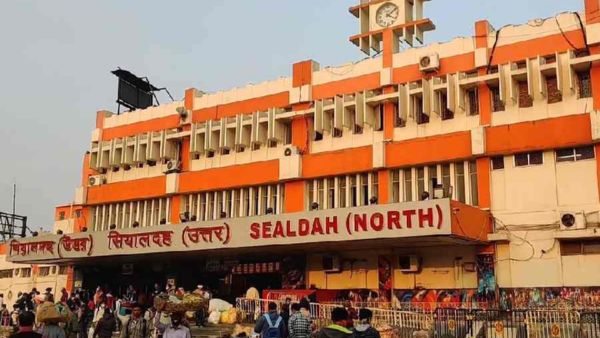
Work on the ongoing infrastructure upgrade at Sealdah station in Kolkata is now complete and train services are likely to be normal soon, an official said on Sunday. The modernisation activities started from the early hours of Friday, which resulted in several suburban trains being cancelled or short-terminated in the last three days. "To accommodate the operation of 12-coach EMU trains on the Sealdah Main section, we implemented several infrastructural modifications, including modernising the interlocking system. Consequently, platforms 1 to 5 at Sealdah station were closed from last Friday until 2 pm today, as per the planned schedule,” Eastern Railway spokesperson Kausik Mitra said. “However, the work was completed two hours ahead of schedule, allowing EMU train operations to commence on all platforms 1 to 5 from noon today. Although train services have resumed, some trains may experience slight delays," Mitra said. Meanwhile, several passengers complained of hardships for the third consecutive day on Sunday, claiming lack of information regarding long-distance trains, which were delayed but not cancelled. Sealdah station remained crowded since Saturday night with passengers affected by the cancellation and short-termination of trains. Another official said that out of the 21 platforms at Sealdah, operations in only five were suspended for the infrastructure upgrade work.

Read more

New Sleeper Trains Cut Travel Time From Hong Kong To Beijing & Shanghai By Half

Hong Kong has just launched a brand new high-speed sleeper train service that will significantly cut down travel time between Hong Kong, Beijing, and Shanghai. Starting June 15th, travellers can zip from Hong Kong to Beijing in just 12.5 hours, compared to what was previously a full day trip. The journey to Shanghai is similarly streamlined, going from a lengthy 19.5 hours down to a much more manageable 11 hours, as announced by MTR Corp, Hong Kong’s mass railway operator. This initiative is a major step forward in strengthening ties between Hong Kong and mainland China. The convenient sleeper train format allows passengers to maximise their travel time. As per information available online, the overnight trains will operate from Fridays to Mondays, offering a limited schedule for now. While the new high-speed sleeper trains offer a unique travel experience, price might be a deciding factor for some. Travellers can expect to pay as low as HK$937 (around $120 USD) for a sleeper berth to Beijing and HK$682 (around $87 USD) to Shanghai. Sleepers will likely cost more. For budget-conscious travellers, it's important to note that flights between these cities are significantly cheaper. In mid-June, you can find flights from Hong Kong to Beijing for around $100 USD (taking only 3.5 hours) and even cheaper flights to Shanghai, sometimes as low as $78 USD (under 3 hours). For those who prefer a daytime journey, existing long-haul train services will continue to operate, catering to different travel preferences.

Read more