

How no-frills flying might be air travel’s painful, greener future
- Jan 31,2024
- The Hindu
Densely packed aircraft, little legroom, and no free drinks. It is starting to look like the uncomfortable reality of global air travel for more and more passengers as airlines race to decarbonise. The spartan cabins and fuss-free service of low-cost carriers appeared half a century ago, a makeover that made flying affordable to the masses. Since Southwest Airlines Co. first took off from Dallas in 1971, dozens of budget peers including Ryanair Holdings Plc, AirAsia Bhd., and India’s IndiGo have emerged to take on more pricey legacy carriers. With global air travel almost completely recovered from the pandemic, cutting emissions is once again the industry’s No. 1 challenge. The low-cost, low-luxury business model that democratised air travel in recent decades has now become an unlikely template for reducing pollution. That is because budget airlines’ obsession with lowering weight in order to save fuel—by installing paper-thin seats, ripping out business-class thrones and ditching heavy extras like booze and blankets—also happens to produce the best emissions metrics in the skies. The five airlines in the world that emit the fewest pollutants per passenger are all low-cost carriers, according to data from carbon-reduction advisory firm Envest Global. Wizz Air Holdings Plc, the Hungary-based carrier that mostly serves Europe and the Middle East, leads the pack. Major brands including Delta Air Lines Inc., Cathay Pacific Airways Ltd., and British Airways, which is owned by IAG SA, belch out almost twice as many emissions for every passenger they carry, the data show. It is grim news for those accustomed to turning left as they board their flights, the traditional path to roomy premium seats. With a 2050 deadline looming for aviation to reach carbon neutrality, the emissions data suggest that airlines need to jam more passengers onto their aircraft, give them less space, and cut back on food and drink in order to make flying sustainable. “This low-cost model is aligned with the central elements of a low-carbon strategy,” said Envest Global Chief Executive Officer David Wills, who is based in Sydney. “Everything is designed to minimise fuel cost per passenger.” Without an overhaul, aviation will not achieve its mid-century emissions-reduction goals. Its share of CO2 output is set to balloon as other segments decarbonise—to an estimated 22 per cent by 2050 from about 2 per cent today if emissions are not cut fast enough. The aviation industry is “not on track” to hit its net zero target, the International Energy Agency says on its website. Looming threats Airlines that fail to take sufficient action risk fines and tighter regulation. Fuel levies are already being rolled out in Europe, a jurisdiction that is leading efforts to make flying kinder to the environment. Seats in the business and first-class sections of aircraft cabins generate larger carbon footprints for their occupiers because they take up more space and are heavier than economy berths. For example, a passenger in coach flying from Hong Kong to Singapore in an Airbus SE A350 would wrack up 170 kg of emissions, according to the International Air Transport Association’s carbon calculator. The same trip in business class generates 682 kg. A ride in premium economy produces 256 kg. Every extra passenger that airlines can squeeze into the plane, and every kilogram they can strip from the cabin, helps cuts each customer’s individual carbon emissions. Budget carriers have turned this ruthless science into an art-form. Ryanair in 2009 explored the idea of tearing out seats to create a standing cabin where more people could be packed in. Before the pandemic, Philippines budget carrier Cebu Air Inc. was moving kitchens and bathrooms on some of its new Airbus SE A330neos to cram in a record 460 seats. Low-cost carriers routinely fit out planes with non-reclining seats sans entertainment screens to cut down the weight of materials. Dirty downside It may be fuel efficient, but the budget flight movement has also driven a boom in air-travel demand because of the bargain ticket prices. Low-cost carriers were responsible for almost 90 per cent of growth in fuel use and CO2 emissions from US airlines between 2005 and 2019, according to the International Council on Clean Transportation (ICCT). Fuel-efficiency improvements by budget carriers just could not keep pace with their passenger growth, the ICCT said. Comparisons based on emissions per passenger also overlook the cargo that full-service carriers are more likely to haul. Still, the task facing airlines, regulators, and governments is to harness more widely the fuel efficiency of low-cost carriers while keeping a grip on demand-driven emissions, according to the ICCT. Burning smaller volumes of dirty fuel is critical because the aviation industry’s plan to switch to sustainable fuel is far from assured. Current production capacity of this cleaner-burning power source is barely 1 per cent of aviation’s global fuel requirements, and passenger numbers are projected to double from 2019 to over 8 billion in two decades. “How can we nudge more airlines to adopt low-cost carrier efficiency measures while ensuring that lower fares don’t turbo-charge demand?” said Dan Rutherford, director of research at the ICCT. Demand for seats in business class and premium economy has surged since the pandemic, partly because travellers flush with cash or loyalty points are relishing their return to the skies. But the potential need for more austerity at 30,000 feet raises questions about the longevity and affordability of luxury air travel. It is time for more punitive measures, according to Rutherford. There is “clearly” a need for policies such as a tax on frequent fliers or a price on carbon, he said.
Read more
India nominates ‘Maratha Military Landscape’ for UNESCO tag
- Jan 31,2024
- Times Travel
As per the latest development, the Ministry of Culture has put forward the 'Maratha Military Landscape' for consideration in the UNESCO World Heritage List for the 2024-25 cycle, encompassing a total of 12 components in this submission. These including iconic forts such as Salher Fort, Shivneri Fort, Lohagad, Khanderi Fort, Raigad, Rajgad, Pratapgad, Suvarnadurg, Panhala Fort, Vijay Durg, Sindhudurg in Maharashtra, and Gingee Fort in Tamil Nadu. These components, spread across diverse geographical and physiographic regions, serve as a testament to the strategic military prowess of the Maratha rule. Developed between the 17th and 19th centuries, the 'Maratha Military Landscapes of India' represent an exceptional fortification and military system, integrating the distinctive landscapes of the Sahyadri mountain ranges, Konkan Coast, Deccan Plateau, and the Eastern Ghats in the Indian Peninsula. Having been included in the Tentative List of UNESCO World Heritage Sites in 2021, this nomination is a distinctive cultural property. The forts, carefully selected from the more than 390 forts in Maharashtra, reflect a diversity of hierarchies, scales, and typological features. Notably, eight of these forts are protected by the Archaeological Survey of India (ASI), including Shivneri fort, Lohagad, Raigad, Suvarnadurg, Panhala fort, Vijaydurg, Sindhudurg, and Gingee fort. The 'Maratha Military Landscapes of India' spans various categories of forts, such as hill forts like Salher Fort, Shivneri Fort, Lohagad, Raigad, Rajgad, and Gingee fort, a hill-forest fort like Pratapgad, a hill-plateau fort like Panhala, a coastal fort like Vijaydurg, and island forts like Khanderi fort, Suvarnadurg, and Sindhudurg. The inception of Maratha military ideology dates back to the 17th century during the reign of Maratha King Chhatrapati Shivaji Maharaj in 1670 and continued through subsequent rules until Peshwa rule until 1818. The nomination aligns with three criteria: To bear a unique or at least exceptional testimony to a cultural tradition or civilization that is living or has disappeared. To be an outstanding example of a type of building, architectural or technological ensemble, or landscape that illustrates significant stages in human history. To be directly or tangibly associated with events or living traditions, with ideas or beliefs, with artistic and literary works of outstanding universal significance. Currently, India is home to 42 World Heritage Sites, with 34 being cultural sites, seven natural sites, and one mixed site. In Maharashtra, six sites have earned UNESCO recognition, including Ajanta Caves, Ellora Caves, Elephanta Caves, Chhatrapati Shivaji Maharaj Terminus, Victorian Gothic and Art Deco Ensembles of Mumbai, and the Western Ghats of Maharashtra, Karnataka, Tamil Nadu, and Kerala. This latest nomination further emphasizes India's rich cultural and historical tapestry, adding to the global acknowledgment of its heritage.
Read more
Budget 2024: Promoting domestic destinations, investments, more Vande Bharat routes among expectations of travel industry
- Jan 31,2024
- Business Today
Interim Budget 2024: In order to boost domestic tourism, the travel and hospitality sector is expecting Finance Minister Nirmala Sitharaman, who will present the Interim Budget on February 1, to focus on boosting investments, enhancing infrastructure and relaxing visa norms for foreign tourists. Vishal Suri, Managing Director, SOTC Travel said that they are advocating for a multi-pronged approach. Suri said that the government should coalesce the TCS rate on outbound tours into a single 5 per cent slab to reduce the advantage enjoyed by international rivals, remove deterrent to technology that comes in the form of the current TDS levied on automated bookings, expedite infra development such as the Udan Yojana and Vande Bharat routes, enhance connectivity to remote but viable tourism areas, and incentivise sustainable travel and tourism. Thomas Cook India Executive Chairman, Madhavan Menon, underscored the travel and tourism sector’s impact across its allied sectors, as well as employment generation and foreign exchange receipts. Menon also highlighted the importance of the government’s focus on infrastructure with the setting up of new airports, expansion in rail, road and waterways, as well as development of high-growth areas such as religious circuits and underleveraged hidden gems, such as Lakshadweep. He also emphasised on the focus on inbound tourism. Reducing income tax levels to provide more disposable income to boost travel and tourism spends, exempting LTA annually, standardising TCS at 5 per cent of foreign travel packages, allowing GST input credit facility, simplifying compliance mechanism in fling GST reports, reconciliations and audits are some of the other requirements of the travel and hospitality sector highlighted by Menon. Chirag Agarwal, co-founder and CEO of TravClan, said, “India is bestowed with natural resources along with a very rich history. However, a lot of our tourism-friendly locations require proper development and channelisation.” Agarwal said that a lot of investment is required for this development, which the private sector alone might not be able to provide. “The government should provide financial and policy support - it will improve the scale and pace of development. The government can fast-track development/ investments in airport infrastructure and road connectivity projects. Some of our infrastructure will reach its peak capacity soon. Traveller experience mustn't be impacted as we boost tourism. Additionally, initiatives like Digiyatra are a welcome move by tourists and the industry. It is a global first. The government should continue to adopt & invest in technology that can improve the traveller experience,” said Menon. Saurabh Gahoi, Vice President, India of Ramee Group of Hotels, said that they are expecting a transformative Budget 2024 targeting skill development. “Along with tax reforms, continued support for infrastructure development, and streamlined regulations to ease the burden on businesses, the industry looks forward to robust financial support, acknowledging the challenges posed by recent global events and focusing on inbound travel.” Pranav Rungta, co-founder and Director of Nksha Restaurant and Vice President of NRAI Mumbai, said that the restaurant industry, one of the worst hit during the pandemic, has displayed resilience and is on the path to recovery. Rungta said that the key areas of focus include restoration of GST Input Tax Credit, reinstating the Service Export from India scheme, establishing a dedicated food services ministry, reducing GST on eco-friendly materials, addressing GST on commercial rentals, rationalising licences and NOCs, ensuring equitable e-commerce policies, extending operating hours, implementing targeted subsidy schemes for SMEs, and introducing an employee welfare plan. Balasubramanian A, Vice President, TeamLease Services, batted for promotion of domestic tourism with initiatives such as ‘Swadesh Darshan’ and infrastructure development, simplifying visa processes and targetted marketing campaigns for foreign tourists, supporting MSMEs in the hospitality sector with financial assistance and skill development programmes, and focusing on sustainable tourism by promoting eco-friendly practices and responsible tourism.
Read more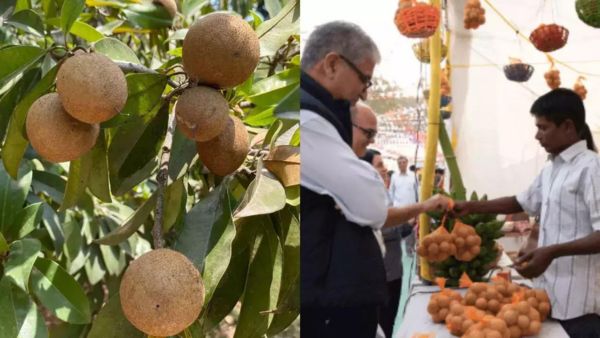
Chikoo Festival Is Coming Back To Bordi, Maharashtra With Its 10th Edition On Feb 10 & 11
- Jan 31,2024
- Curly Tales
Did you know about the Chikoo Festival in Maharashtra’s Bordi village? This little hamlet is known for its chikoos and they have been hosting a unique festival dedicated solely to this fruit since 2013! In its 10th year, the Chikoo Festival is coming back to Bordi this February and it’s going to be an exciting affair. Scroll on to unveil all the details about this fun festival. About 160 kilometres from Mumbai, lies a small village called Bordi that is known for its juicy and delicious chikoo. This region has been awarded with the prestigious Geographical Indication (GI) for the quality of chikoo production. Since 2013, the Rural Entrepreneurship Welfare Foundation has been organising Chikoo Festival to celebrate the local produce of the area. This festival is dedicated to chikoo to celebrate the orchards in the area and boost its sales. The fruit is seen as a symbol of prosperity and economic vitality for the locals here. This year, they’re celebrating their 10th edition on February 10 and 11 and it’s something you would want to travel for! The festival not only celebrates chikoo but also promotes art, and hosts food stalls, cultural events, and lots more. In fact, this area is home to the legendary Warli tribe. You can come across various paintings and artworks from them at this festival too! From chikoo ice creams and kulfis to dried chikoo chips and milkshakes, get ready to experience it all at the Chikoo Festival. Apart from sampling a variety of chikoo products, there will be various food and beverage stalls that you can try. There will also be chikoo orchard visits and picking tours at this festival. You can also enjoy folk dance performances, live music, and various workshops including the opportunity to learn Warli art here. Located in Maharashtra’s Palghar district, while you’re attending the festival, don’t forget to check out the pristine Casuarina-lined beaches, ancient temples, and forts in the area. When: 10th & 11th February Where: SR Camping Ground, Bordi, Palghar, Maharashtra
Read more
World’s Most Welcoming Cities List Is Out And This Is The Only Indian City To Be On It
- Jan 31,2024
- Booking.com
Travelling to a new city can be quite exciting and truth be told, it’s also pretty nerve-wracking. After all, you don’t know the kind of people you might encounter during your travel. And so, if you are also always on the lookout for places that are known for being welcoming, then you will be pleased to know that Booking.com has announced the Top 10 Most Welcoming Cities on Earth. At the 12th Annual Traveller Review Awards, it revealed the Top 10 Welcoming Cities on the basis of more than 309 million verified customer reviews. Take a look! In the list of the 10 Most Welcoming Cities on Earth by Booking.com, Jaisalmer in India has also found a place. In fact, Jaisalmer which is a city in the state of Rajasthan has been given the ninth spot on the list. These cities have been identified based on the share of accommodation providers that received Traveller Review Awards 2024. As several countries and regions are being recognised for their hospitality with the Traveller Review Awards 2024, 13,348 are in India. In fact, Italy continued with its streak of the highest number of award recipients at 1,81,012, for the seventh year in a row. The nation was followed by Spain, France, Germany, and the UK. In case you’re wondering about the top 10 names, the most welcoming cities on earth or as follows. Arraial d’Ajuda, Brazil Ermoupoli, Greece Viana do Castelo, Portugal Daylesford, Australia Grindelwald, Switzerland Moab, United States Uzès, France Mazatlán, Mexico Jaisalmer, India Fujikawaguchiko, Japan This is truly a moment of immense pride for Indians as the Golden City is certainly a charming destination for a holiday. Known for its beautiful architecture and friendly atmosphere, the charming city has a vibrant culture that is worth experiencing. So, if you are also looking to take a much-needed vacation, don’t forget to keep the top 10 welcoming cities in mind. And while you’re at it, do start your journey with Jaisalmer!
Read more
Delhi fog: Poor visibility disrupts life and travel in Indian capital
- Jan 31,2024
- BBC News
Dense fog has caused travel chaos in India's capital Delhi, with dozens of flights and trains affected. Report say 50 flights and at least two dozen trains have been delayed. According to the flight tracking app flightradar24, hundreds of departing flights were delayed by 25 minutes on an average and flight arrivals were delayed by eight minutes. But passengers have been complaining of being stranded for hours at the airport. Delhi airport authorities had issued a flight advisory on Monday, asking passengers to contact their airlines to check for updated flight information. "While landings and take-offs continue at Delhi airport, flights that are not CAT III compliant may get affected," the advisory read. CAT III runways make it possible for planes to land during poor visibility. In December, fog and poor visibility in the city had resulted in more than 100 flights being delayed. The airport witnessed massive travel chaos in January too, with dozens of people taking to social media to complain about delays and cancellations. Dense fog causes travel chaos in Delhi North India shivers as cold wave intensifies On Wednesday morning, videos and photos from different parts of Delhi and suburbs showed a blanket of fog covering many roads and obscuring buildings. The Indian Meteorological Department (IMD) said the visibility had dropped to zero in several localities. The IMD has predicted light rains or thundershowers, accompanied by gusty winds, on Wednesday. The department has also predicted moderate fog for the next few days. Dense fog is common in Delhi and the rest of north India during winters, but the cold in Delhi this season has tumbled many records. An IMD report says Delhi has experienced the coldest January in 13 years with maximum temperature recorded at 17.7C. The second coldest January was nine years ago - in 2015 - when a maximum temperature of 17.9C was recorded in the city. Nights too have been coldest this year after 2013, the report adds.
Read more