

Dubai named ‘No.1 global destination’ in Tripadvisor Travellers’ Choice Awards
- Jan 18,2024
- Breaking Travel News
Dubai has secured the coveted No.1 global destination ranking in the Tripadvisor Travellers’ Choice Best of the Best Destinations Awards for an unprecedented third successive year – becoming the first city to achieve the milestone. Dubai’s latest top international ranking was announced by Tripadvisor®, the world’s largest travel guidance platform, in its Travellers’ Choice Awards for 2024: Best of the Best Destinations. The accolade carries further significance due to the winners being selected based exclusively on the reviews of millions of global travellers in the Tripadvisor community. The awards factor in the quality and quantity of Tripadvisor reviews and ratings for hotels, restaurants and experiences in each destination over a period of 12 months between 1 October 2022 through 30 September 2023. Issam Kazim, Chief Executive Officer of Dubai Corporation for Tourism and Commerce Marketing (Visit Dubai), said, “Travellers from around the world seeking a safe, secure and easily accessible destination, have embraced Dubai’s diverse offerings for all segments, from families and thrill seekers to business visitors and cultural explorers, recognising the unique experiences that can only be found in the city.” “As consumer demands and trends further evolve, and aided by the feedback we receive through Tripadvisor and other digital platforms, as well as directly from tourists within the city itself, we will continue to work to maintain the highest standards across the city’s offerings and services, and ensure visitors have an unrivalled experience in Dubai.” The top Tripadvisor award is the latest in a series of global accolades for Dubai. In 2023, the city was ranked the No.1 city in the world to relocate to in a report by financial services provider Remitly, and was ranked the best city in the world for remote workers by property consultancy Savills in its top 20 list of the 2023 Executive Nomad Index. Dubai was also named the world’s No.2 city destination in Euromonitor International’s Top 100 City Destinations Index 2023 and ranked one of the top 10 cities in the Global Power City Index, in a report issued by the Mori Memorial Foundation’s Institute for Urban Strategies in Japan. The UAE was also named the second safest country in the world in 2023, according to findings revealed by Numbeo, the world’s largest database of user-contributed data about cities and countries worldwide. This recognition strengthens Dubai’s attractiveness as a top global liveability hub that provides a unique lifestyle to the 200 different nationalities that call the city home, underpinned by high safety and security standards that allow travellers to visit with peace of mind.
Read more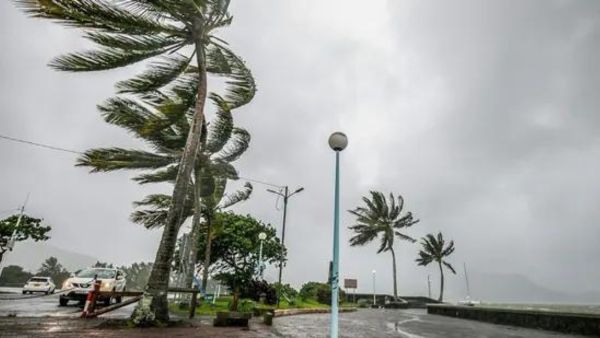
Tourism hub Mauritius lifts maximum cyclone alert after storm Belal wreaks havoc, flights cancelled
- Jan 18,2024
- Hindustan Times
Mauritius lifts cyclone red alert; faces power outages, traffic chaos and tragic loss after tropical storm Belal strikes Mauritius on Tuesday removed a maximum cyclone alert warning as it assessed the devastation wrought by tropical storm Belal to the Indian Ocean island nation. Belal has claimed the life of one person in the remote paradise island, left thousands without power, and caused traffic chaos with numerous cars submerged under floodwaters or piled up on streets. The Mauritius Meteorological Services (MMS) said a "safety bulletin" was now in force as Belal was moving away from Mauritius, three hours after announcing it was raising its alert to four, the maximum level. The government on Monday had ordered inhabitants to stay indoors, but the restriction was eased on Tuesday, with the MMS instead saying in a 0610 GMT update that the public was "strongly advised to maintain precaution and stay in safe places". The National Emergency Operations Command warned that winds of 80 kilometres (50 miles) an hour were expected, and waves of up to seven metres (23 feet), posing a risk of flooding in low-altitude areas. Police said the body of a motorcyclist was found on a flooded highway, the victim of a road accident. Prime Minister Pravind Kumar Jugnauth, in a statement on national television on Monday, confirmed one fatality. Belal had already battered the French overseas territory of Reunion, leaving one person dead. The authorities there announced that its red alert would be lifted on Tuesday. The international airport in Mauritius was closed on Monday until further notice and Air Mauritius announced that several flights scheduled for Tuesday, including to France and South Africa, had been cancelled. In its update, the MMS said Belal was about 210 kilometres (13 miles) off Blue Bay, which lies on the southeast of Mauritius. "It is moving away from our region in a general east south-easterly direction at a speed of about 18 km/h. Hence, there are no longer any risks of having cyclonic conditions over Mauritius but other environmental risks exist." In his address on Monday, Jugnauth criticised the meteorological agency and announced that its director had submitted his resignation. "I have to admit that the country has had a difficult time because of Cyclone Belal," he said, adding that all decisions made by the government had depended on information from the MMS. "I am surprised that the arrival of the heavy rains was not anticipated by the weather services. I share the anger of many Mauritians. Those responsible will have to assume their responsibilities." The Central Electricity Board said 8,400 people in Mauritius, which has a population of almost 1.3 million, were without power. Before the Covid-19 pandemic, tourism accounted for almost a quarter of Mauritius' GDP, with tourists wooed by its spectacular white beaches and turquoise waters. About a dozen storms or cyclones occur each year in the southwest Indian Ocean during the November-April season. In February last year, Mauritius was lashed by heavy rains and high winds from Cyclone Freddy, which caused a wave of death and destruction in southeastern Africa including Malawi, Mozambique and Madagascar.
Read more
Celebrities' go-to spots in India
- Jan 18,2024
- Times Travel
India, with its diverse culture and picture perfect landscapes, is not only a favorite among locals but also a hotspot for celebrities seeking a break from their hectic lives. Let's explore some of the celebrity-favorite spots in India where the stars love to unwind. Goa: When celebrities want to escape the hustle and bustle, they often head to Goa's sandy shores. The vibrant nightlife on beaches and laid-back atmosphere makes it a perfect getaway for stars looking for a relaxing retreat. From film shoots to private vacations, Goa captures the hearts of many celebrities. Manali: Manali in Himachal Pradesh is the go-to destination or those seeking calm among the peaks. The lush green valleys, snowy mountains, and fresh mountain air attracts Bollywood. It's a perfect escape for those wanting a break from the glitz and glam of city life. Udaipur: Known as the "City of Lakes," Udaipur in Rajasthan has been a favorite spot among celebrities for its royal charm. The palaces, historic architecture, and lakes provide a backdrop fit for royalty. Many celebrities choose Udaipur for their grand weddings or simply to experience the luxury of its heritage hotels. Rishikesh: When celebrities need a spiritual recharge, Rishikesh in the foothills of the Himalayas is their choice of place. Known as the "Yoga Capital of the World," Rishikesh offers required peace and a chance to connect with nature. The Ganges river, lush forests, and yoga places makes it an ideal spot for those seeking inner peace. Ooty: Replacing Mumbai on our list is the hill station of Ooty in Tamil Nadu. Situated in the Nilgiri Hills, Ooty has lush tea gardens, scenic landscapes, and a very pleasant climate. Celebrities often choose Ooty for its ambiance and a perfect blend of nature and colonial charm. Kashmir: Celebrities often find solace in the picturesque landscapes, lakes, and snow-covered mountains of Kashmir. The houseboats on Dal Lake and the Mughal Gardens provide an enchanting experience for those seeking a peaceful and scenic vacation.
Read more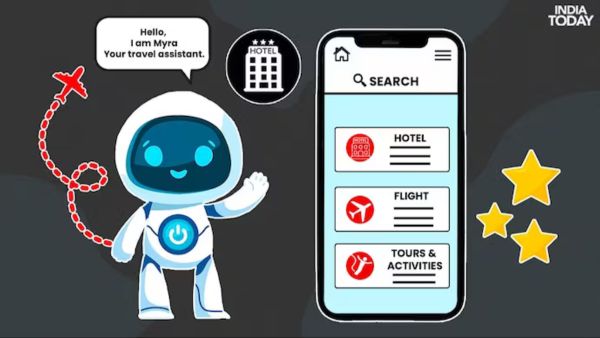
Can AI assistants solve your travel woes? Yes, but...
- Jan 18,2024
- India Today
The fight over who is going to set up the perfect itinerary, book the hotels and flights before a trip is inevitable, be it with your family or friends. After all, this is one of the most cumbersome parts of a trip (yes, more than the exhaustion of travelling itself). Enter AI travel assistants Now that AI has taken over most industries (at least the mundane, thankless parts), why should travel be any different? The integration of Artificial Intelligence (AI) into the travel industry has revolutionised the way we plan and experience our journeys. AI assistants, in particular, have emerged as a significant tool for tailoring travel experiences to individual preferences. Otherwise, planning a trip all by yourself would mean checking different websites, comparing ticket prices and zeroing in on the one flight that suits your budget and time. Besides, booking a hotel in an unknown location is always tricky. It would mean talking to friends who have been to the destination already. In case you don’t have an acquaintance to help you with that, you are at the mercy of numerous travel videos/vlogs that might or might not provide the desired information. Several travel portals, airlines and even top hotel brands have started incorporating AI chatbots to make customer interaction easier and swifter. They are touted to deliver personalised, relevant, and contextual experiences. However, like any technology, they come with their own set of advantages and disadvantages. What does an AI travel assistant do? An AI travel assistant is a tool that uses artificial intelligence to enhance the travel experience. It acts as a comprehensive companion for travellers, streamlining the planning process by consolidating tasks such as creating itineraries, making reservations, and providing real-time updates. These assistants use advanced technologies like natural language processing and machine learning to interact with users in a human-like manner, offering personalised advice and recommendations. They are capable of generating custom and budget-friendly travel plans, even conversing in various languages. Travel portals using generative AI Online travel portal MakeMyTrip has launched an AI ecosystem on the platform to help travellers book flights through audio-based instructions. You can give voice instructions in English or Hindi; and the AI chatbot ‘Myra’ will be ready with a response. India Today spoke to MakeMyTrip about Myra, and this is what they had to say: “AI-driven algorithms, and voice-generating AI are enhancing personalised travel recommendations and enabling native language conversations between travellers and virtual assistants. We have already launched an AI ecosystem on the platform to help travellers book through audio-based instructions. This helps users based in the remotest corners of the country who have trouble engaging with an app-environment or mobile keypad, get solutions in a conversational language. The feature is available in English and Hindi for our flights and holiday funnel.”
Read more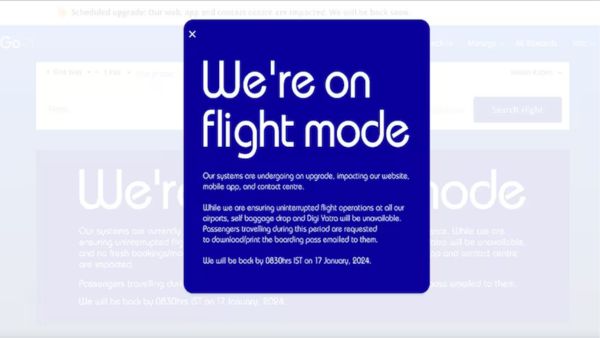
IndiGo schedules system upgrade on website, app amid travel disruptions
- Jan 18,2024
- Business Standard
IndiGo, a major player in the Indian aviation sector, announced a scheduled system upgrade set to take place from 11 pm on January 16, 2024, until 8:30 am on January 17, 2024 that would temporarily make key services unavailable on its website and app. The airline assured uninterrupted flight operations at all airports during this period, however, it comes during a time when severe travel disruptions have occurred at the Delhi airport due to dense fog and low visibility. The airline informed passengers that services such as self-baggage drop and Digi Yatra facilities would not be accessible during the upgrade. Additionally, services related to IndiGo's website, mobile app, and contact centre would be impacted. In a statement, IndiGo said, "To provide improved customer experience, our systems will be upgraded from 2300hrs IST on January 16, 2024 till 0830hrs IST on January 17, 2024. While we will ensure uninterrupted flight operations at all our airports, self-baggage drop and Digi Yatra will be unavailable, and our website, app and contact centre will be impacted. Please complete your web check-in, print/download your boarding pass, and make modifications to your booking in advance." To mitigate inconvenience for passengers, IndiGo strongly advised completing web check-in, printing or downloading boarding passes, and making any necessary modifications to bookings ahead of the scheduled system upgrade. This system upgrade follows recent travel delays and disruptions that caused chaos at the Delhi airport from Saturday evening onwards. Delhi airport, which handles nearly 1,200 flights a day, faced several delays which disrupted flight plans pan India. IndiGo, which holds over 60 per cent of the domestic market share in air travel, faced the brunt of challenges with travel disruptions and passenger dissatisfaction. In an incident on Sunday, an IndiGo pilot was assaulted by a passenger while announcing delays, leading to a viral video of the assault. While netizens initially called for action against the violent outburst, since then, many co-passengers have spoken about the alleged unprofessional treatment of the flight staff. One passenger stated that, while they did not condone violence, the IndiGo flight crew had withheld information and the assault came after the pilot tried to blame the passengers for the delays. Passengers from other IndiGo flights have also complained about mismanagement, long queues and lack of support from the airlines during this time. Complaints include crew not providing food or water to passengers who were made to wait for hours in grounded flights that were delayed. Similarly, videos of rude passengers have also flooded social media platforms. The Ministry of Civil Aviation (MoCA) has issued show-cause notices to IndiGo and Mumbai International Airport following a video showing passengers eating on the tarmac amid flight delays. The ministry expressed dissatisfaction with both entities for not proactively anticipating the situation and making appropriate facilitation arrangements for passengers. IndiGo and MIAL were cited for not considering passenger convenience, security norms, and operational issues in planning and executing flight operations during the incident. At the time of publishing the airline website was still down.
Read more
Intercontinental airfares falling but hotel rates continue to rise, says Advito
- Jan 18,2024
- Business Travel
Intercontinental airfares originating in Europe are decreasing in early 2024 but domestic and regional European airfares are up three per cent while hotel rates continue to rise globally, according to business travel consultancy Advito's quarterly price index report. The index, which compares historical pricing data with future shopping data for the current quarter, showed that intercontinental economy airfares in the first quarter of 2024, originating from Europe, are down nine per cent year over year, while business class fares are down six per cent YoY. Domestic and regional European airfares are up three per cent in both business and economy class, YoY. Globally, Advito noted that frequencies on North Atlantic routes have had "solid growth,” while the only regions with YoY increases in intercontinental airfares for the first quarter are Africa, where both business and economy fares are up one per cent YoY, and Latin America, where economy fares are up one per cent – though business fares are down two per cent. Advito notes several hotel markets around the world are seeing "significant" rate increases because of a combination of inflation and strong, though slowing, leisure travel demand, with global average daily rates up seven per cent YoY in the first quarter. However, average daily rates are down compared to 2022. On a regional basis, the biggest YoY average daily rate increases for the first quarter of 2024 are in Latin America and Europe, each up 11 per cent, according to the report. ADRs are up four per cent in Asia, up three per cent in both North America and Africa and up one per cent in both the Middle East and the Southwest Pacific.
Read more