
Paris Is Going to Be More Expensive for Travelers in 2024 — Here's Why
- Jan 17,2024
- Travel and Leisure
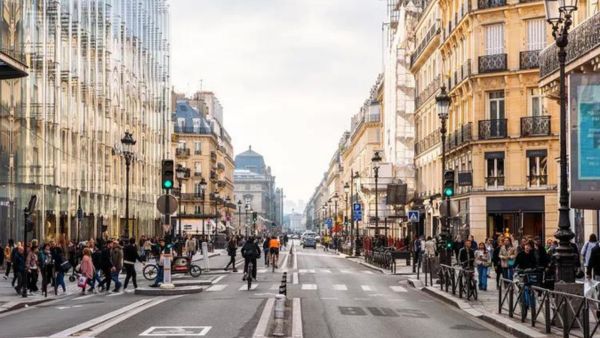
Visiting Paris is about to get a bit more expensive as the city raised taxes on hotels and other accommodations at the beginning of the year. The increase, which went into effect on Jan. 1, charges travelers up to nearly 200 percent more in nightly tax to stay in 2024, Atout France, the country’s tourism development agency confirmed to Travel + Leisure. The tax increase varies based on the type of accommodation. The largest increase is for travelers staying in “palaces.” Those tourists will have to pay a nightly tax of €14.95 ($16.38), a 199 percent increase compared to the 2023 rate of €5 ($5.48). Travelers in 5-star accommodations will have to pay a nightly rate of €10.73 ($11.75), a 186 percent increase compared to the 2023 rate of €3.75 ($4.11), and travelers in 4-star hotels will have to pay a new rate of €8.13 ($8.91), a 182 percent increase compared to the 2023 rate of €2.88 ($3.15). Travelers staying in 1-star hotels, holiday villages, guest rooms, or hostels will have a more modest increase with the new rate of €2.60 ($2.85), compared to the 2023 rate of €1 ($1.10). The decision to raise taxes comes months ahead of the much-anticipated Paris Olympics. Hotel prices have been on the rise leading up to the games, averaging more than 300 percent higher than normal for this summer. Overall, Paris expects more than 11 million visitors to head to the city for the event, which kicks off July 26. Paris is also not alone in raising taxes. Amsterdam similarly approved a city tourist tax increase for this year, requiring visitors to pay 12.5 percent. The tax will apply to both travelers staying overnight and visiting on cruise ships. Some destinations are adding new taxes for travelers, like Iceland, which will start charging travelers in an effort to support the country’s climate and sustainability goals, and Venice, which plans to implement a fee for day trippers this spring in addition to the tax it already charges overnight guests.
Read more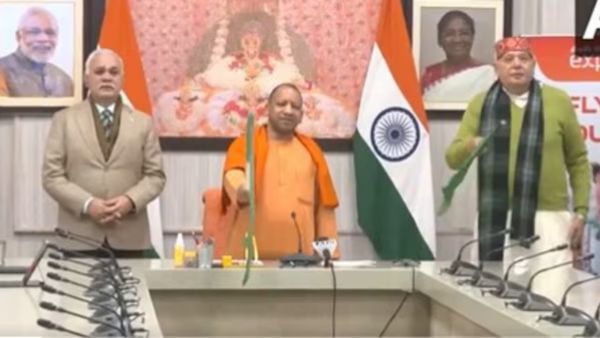
UP CM Adityanath, Aviation Minister Scindia flag off first Air India Express flight to Ayodhya
- Jan 17,2024
- Live Mint
Union Civil Aviation Minister Jyotiraditya Scindia and Uttar Pradesh CM Yogi Adityanath on Wednesday flagged off the first Air India Express flight between Bengaluru, Kolkata, and Ayodhya. They both received the boarding pass for the first flight between Kolkata and Ayodhya. “In the last nine years, not only new airports have come up in Uttar Pradesh but with four international airports, Uttar Pradesh has become an important state in the field of air connectivity. PM Modi inaugurated the Maharishi Valmiki International Airport in Ayodhya on 30th December…," Adityanath said. Scindia also highlighted that the development of Uttar Pradesh is reaching new heights. “If we look at the population of Uttar Pradesh, almost 70% of the population of the US is in Uttar Pradesh. Half of Europe's population is in Uttar Pradesh," the aviation minister said. “We celebrated Diwali last November, the second Diwali was on 3rd December when the election results were declared and not for the entire country but for the entire world the third Diwali is going to be celebrated on the coming 22nd," he added. Prime Minister Narendra Modi inaugurated the Maharishi Valmiki International Airport in the temple city of Ayodhya after inaugurating the Ayodhya Railway Station on December 30. The Airports Authority of India undertook the development of Ayodhya Airport as per the MoU signed with the Government of Uttar Pradesh in April last year. The state-of-the-art airport has been developed at a cost of more than ₹1,450 crore. The airport's terminal building has an area of 6,500 square metres and is equipped to serve about 10 lakh passengers annually. The facade of the terminal building depicts the temple architecture of the upcoming Shri Ram Mandir of Ayodhya. The interiors of the terminal building are decorated with local art, paintings and murals depicting the life of Bhagwan Shri Ram. Unlock a world of Benefits! From insightful newsletters to real-time stock tracking, breaking news and a personalized newsfeed – it's all here, just a click away!
Read more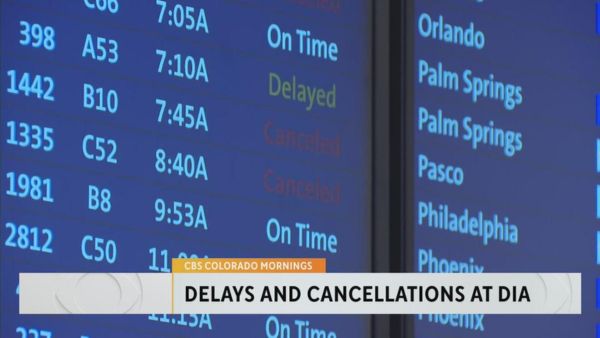
Another rough day for travelers as airlines cancel more than 2,200 flights
- Jan 17,2024
- CBS News
Widespread flight cancellations continued Tuesday as a winter storm pummeled the eastern U.S., causing headaches for thousands of travelers. As of 4:20 p.m. Eastern Time, airlines had scratched more than 2,200 scheduled U.S. flights, while roughly 6,800 flights were delayed, according to tracking service FlightAware. Thousands more trips were canceled or delayed over the weekend as harsh winter weather, including freezing temperatures, snow and strong winds, enveloped states in the Midwest, Northeast and South. Among the hardest hit airlines is Southwest Airlines, which on Tuesday scrapped more than 400 flights, or 11% of its daily schedule, while another 909 were delayed. Cancellations were also high at Alaska Airlines and United Airlines as they continued to deal with concerns over the safety of some Boeing 737 Max 9 jets following a mid-air incident last week in which a "door plug" fell off an Alaska Airlines plane. Unlike in 2022, when airline mismanagement and staffing shortages affected holiday travel, bad weather is the main culprit behind the current woes. "The winter weather is the primary catalyst, but the big challenge is that this weather has been so intense and extensive," airline Henry Harteveldt, president of Atmosphere Research Group, told CBS MoneyWatch. The schedule disruptions are severe enough that staffing is starting to run thin across airlines, while de-icing fluid was also in short supply Tuesday, Harteveldt added. "When you've got delays at major airports, everything just gets spread out across the entire aviation network and there's a waterfall effect," he said. Travel industry expert Scott Keyes said the true test of airlines' readiness will be in how they rebound once the weather eases in the coming days. "For now the cancellations and delays are understandable and forgivable. In the next days, when the weather improves, all eyes will be on airlines to see if they are able to bounce back quickly or if they suffer from more cancellations that are the result of a lack of preparation," he said. By contrast, airlines will have to consider future investments to preserve their operational efficiency in the face of worsening winter storms. "Once airlines and airpots get through this latest bout of bad weather, they need to really sit down and think about how they prepare for a future where bad winter weather storms may be more frequent, last longer and potentially have even greater temperature and weather extremes than we have seen," Harteveldt said. In airlines' favor on the staffing front is the fact that this weather event is occurring in the middle, not the end, of the month. Federal law caps the total number of monthly hours that crews can work, including flight attendants and pilots. If it were closer to the end of the calendar month, crews could be at greater risk of maxing out their hours. For example, time spent waiting for aircraft to be de-iced before takeoff is applied toward employees' schedule caps. "I am concerned if we see bad weather happen again that this could have a cascading effect and we could see worse problems later in the month," Harteveldt said. When bad weathers occurs, travelers should download their carrier's app and pay attention to airline updates, he noted. If checking bags is a must, keeping essentials in a carry-on is advisable in case you end up stuck at the airport.
Read more
South Korea’s two new visa programmes; know what it means for Indian tourists
- Jan 17,2024
- Times Travel
South Korea is responding to the global interest in its culture, driven by the success of K-pop and K-dramas, by introducing two new visas in 2024—the digital nomad visa (workation visa) and the K-culture training visa (Hallyu visa). The goal is to attract millions of foreign tourists this year, and transform South Korea into a preferred international tourist destination. If reports are to go by, South Korea is implementing reforms to streamline travel within the country. The introduction of foreign mobile payments and a traveler mobility app aims to facilitate shopping and easy transportation for international visitors. English versions of navigation systems are also in the works. All these will collectively contribute to South Korea's vision of offering a more accessible and enjoyable experience for tourists. What are the two new visa programmes all about? - South Korea’s Digital Nomad Visa or the Workation Visa South Korea recently introduced the workation visa that encourages extended stays for foreign nationals. This visa combines work and travel, allowing visitors to stay for up to one year, in contrast to the 90-day limit on tourist visas. To qualify, applicants need one year of work experience in their industry, affiliated with international companies. The visa is open to families, except for children turning 18 or older, and requires applicants to earn double South Korea's gross national product, maintain personal medical insurance, and secure home evacuation coverage exceeding 100 million won ($7,750) in case of emergencies. Workation visa holders cannot engage in profit-making activities or work for local companies as it requires a separate visa for such endeavors. Applications can be submitted at Korean Embassies, and visa changes are possible for those on limited stays who meet necessary conditions. - K-culture training visa or Hallyu visa South Korea’s Hallyu visa or the K-culture training visa will allow foreign individuals enrolled in cultural academies to stay for a maximum of two years. The visa aims to provide candidates who are passionate about Korean culture, K-pop, and related fields, with firsthand knowledge from experts in Korean music, drama, film, animation, and gaming industries. This extensive, hands-on training program offers insight into the inner workings of the Korean entertainment scene and content creation. The Hallyu visa, unlike the E-6 visa, which requires trainee contracts with Korean entertainment firms, simplifies the process by requiring applicants to register at approved Korean institutes under the Ministry of Culture, Sports, and Tourism.
Read more
Venice entry fee tickets go on sale. Here’s how they work
- Jan 17,2024
- CNN
Finally, the time has come: it’s time for Venice to charge for entry. From April 25, the floating city will implement the much discussed entry fee for day trippers. The fee has been under discussion for years. Although it is expected to expand in scope, for 2024’s pilot run it will only be applied on certain days during the high season, between April 25 to July 14. It’s not just day trippers who need to worry, though. Although people staying overnight in the city won’t have to pay the charge, if they’ll be in town on those dates, they will still need to register for an exemption. On January 16, the city council unveiled its online platform to process bookings and exemptions. So how do you register to pay the fee if you’re just coming for the day? And how do you register an exemption if you’re staying overnight? We booked some of the first tickets when they were released today. Here’s what to know. When will the entry fee be in force? The access fee will be due on 29 days between April 25 and July 14. The dates are as follows: • April 25-30 • May 1-5 • May 11-12 • May 18-19 • May 25-26 • June 8-9 • June 15-16 • June 22-23 • June 29-30 • July 6-7 • July 13-14 The fee is charged for day visits between 8.30 a.m. and 4 p.m. For 2024, it’s a flat 5 euros ($5.45) per person per day. For 2024, the city has exempted the fee for those traveling to most of the lagoon islands, including visitor hubs Murano and Burano, as well as the Lido, home to the city’s beaches. However, most visitors to Murano and Burano will have to pay the fee anyway, since most arrive by taking vaporetto ferries from the city center. People transiting through Piazzale Roma (the bus terminus), Tronchetto or the Stazione Marittima (where small cruise ships still dock) will be exempt, as long as they don’t cross into the “Old City.” How to pay if you’re a Venice day tripper The Venice council has launched an online platform allowing you to prepay if you’re visiting for the day, here. Click on pay the fee – you’ll then be taken to a landing page run by Venezia Unica, the city’s official tourism site. Select your date, and then the number of people, including children under 14 (who don’t pay – see below). Enter the names of the adult travelers – in other words, those who need to pay the fee. You’ll then have 10 minutes to pay. Fully paid up? You’ll be emailed an A4-sized document, listing your initials, your booking code, the day(s) you’ve booked and a QR code. You can print it off or show it on your phone when questioned. The “ticket” also advertises various city passes you can buy, and flags the fines payable for banned behaviors, such as picnicking and swimming in canals. Be aware that it’s written in Italian, even though the application can be done in English. Not to worry – the only details you need to check are your initials, the number in your party and the date (written European style, as in day-month-year). The number of people does not include children – we applied for one adult and two under 14s, and our ticket showed one person. All too complicated? In “exceptional” circumstances you will also be able to pay on arrival at two entrance points: Piazzale Roma, the bus terminus, and the train station Venezia Santa Lucia. Expect there to be long lines, though. If you want to cancel, you can do so up to 11.59 p.m. on the day before your booked visit.
Read more
Indigo to dominate Indian Aviation Market 2024
- Jan 17,2024
- CNBC TV18
2024 seems to be on track to become the best year for Indian aviation. With the provisional estimates of more than 150 million domestic and 68 million international passengers taking to the sky in 2023, the total air passenger traffic is predicted to be well north of 225 million in the coming year. Yields continue to be strong and a confluence of factors notably consolidation within the airline sector, significant weakness of competitors and OEM supply chain challenges means that there is strong demand chasing limited supply. The euphoria will only be tempered by input costs, VISA processing times, operational challenges and overseas competition. For the year ahead, all data and patterns point to the fact that travel demand will continue to be strong, and the outlook for air travel out of India looks extremely strong. Domestic travel – dominance of metro’s to continue Domestic travel in 2024 will continue to be dominated by the six metropolitan cities of Delhi, Mumbai, Bengaluru, Chennai, Hyderabad and Kolkata. Together these account for more than 55% of all passengers with Delhi leading the charge followed by Mumbai and Bengaluru. The economy class passenger dominates the skies with business and premium economy together accounting for less than 5% of the total travel demand. Interestingly Tier2 and Tier3 cities will continue to see an increase in premium demand and in associated bookings. If 2023 patterns are to be followed, the cities of Kochi, Lucknow, Bhubaneshwar, Srinagar, Udaipur witnessed consistent demand for premium offerings (business class and premium economy) through the year. With newer destinations like Ayodhya already being included in domestic networks and enhanced airport capacity in Goa, Port Blair and Tiruchirappalli – the domestic traveller is set to have a better travel experience (albeit a more expensive one). For now, with only two airlines – namely, Vistara and Air India - with a business class offering, the ability to capture the premium will continue to be dependent on schedule. Interestingly both airlines are owned by the Tata group and set to merge and in time this could also open up space for a domestic competitor with a similar offering. Airline-wise the market for 2024 will continue to be dominated by Indigo which ended 2023 with an average market share north of 60%. This was followed by the Tata owned airlines namely Air India, Vistara, AIX Connect (erstwhile AirAsia India) with a market share of 26%. Challenges with capacity driven by supply chain challenges impacting OEMs, engine issues on the Pratt and Whitney engines, the insolvency of GoFirst (yet to be resolved) and the weakness at SpiceJet are forecast to continue. Together these mean a variance of almost 150 aircraft from planned capacity. But the capacity shortfall is likely help keep yields strong. That too in an election year. And in a year where the travel base is only forecast to return stronger. International travel – Middle East and N. America traffic to drive revenue International travel trends may have significant surprises in store. Starting with the sheer volume of travel to the shape of travel to the patterns of demand. As has been the case for several years, the Middle East will continue to dominate the traffic flows with upto 47% of all India originating international traffic headed to the region. Within the Middle East region, Dubai will continue to be a clear leader capturing almost 12% - 14% of the traffic. For 2023, Dubai had a confluence of factors aligning including VISA policies, hotel capacity, costs and an exponential growth in events. Compare this to London and Singapore, which attracted 4% - 5% of the total international travel demand but the reasons were much different. For Singapore, it was a combination of point to point and onward traffic mostly towards Australia and Oceania while for London it was driven by diaspora demand. These patterns are forecast to continue. The international traveller is likely to see additional offerings as Indigo and the Tata owned airlines led by Air India expand their international networks, Akasa starts its international operations and SpiceJet counters with offerings of its own. Air India will also continue to revise its offerings and the jury is out on Indigo and whether its newer aircraft will have a dual configuration, leveraging its position to service premium demand. Looking at the traffic spread across continents, and forecasts for 2024, Europe will continue to be dominated by London with upto 30% of traffic originating in India and flying to Europe headed there followed by Paris capturing 10% of the Europe bound traffic. The United States will continue to be dominated by New York followed by San Francisco each capturing 10% of the Indian originating traffic headed to the USA and newer cities like Dallas which have seen a growing Indian diaspora population are likely to be included in airline networks. India originating traffic headed to South East Asia will continue to be dominated by Singapore and Bangkok with the former capturing 30% of the traffic and the latter approx. 22%. Similar to last year, countries like Vietnam and Nepal will likely continued to attract significant traffic due to a combination of pricing, policies and popularity. Finally, looking at overseas hubs and traffic originating in India connecting via hubs, Dubai again is likely to lead followed by Doha and Abu Dhabi. Majority of the traffic connecting via these hubs has traditionally been bound to N. America. The weakness of the European hubs with regards to traffic originating from India is slowly but surely coming to the forefront. And with Air India focusing on an international strategy that effectively bypasses hubs and with Indigo increasing point to point international flying, the share of India originating traffic flown by Indian carriers is set to increase. The premium segment: lots of work ahead The most fascinating aspect of air travel demand and perhaps the most perplexing will continue to be the premium segment. In the domestic segment, this continues to be very small and AT-TV estimates that the premium demand (including premium economy) is less than 5% of total demand. But due to the pricing this commands and the impact on revenue this cannot be overlooked. In the year ahead, the premium demand in the international segment will continue to be driven by specific routes. On a total capacity basis this demand is less than 10% of total demand. But on specific routes, the flown premium demand can be north of 15%. This is both a function of capacity, traveller profiles on the route and pricing. Given the potential that this segment holds the rewards in the future will accrue to airlines that can develop and position a product fit for purpose. And in 2024, as Air India starts to ramp up its product offering, a competitive response from overseas airlines is all but certain. Into this mix will also be enhancements to frequent flyer programs, to complimentary offerings and most importantly to the growing premium economy segment.
Read more