
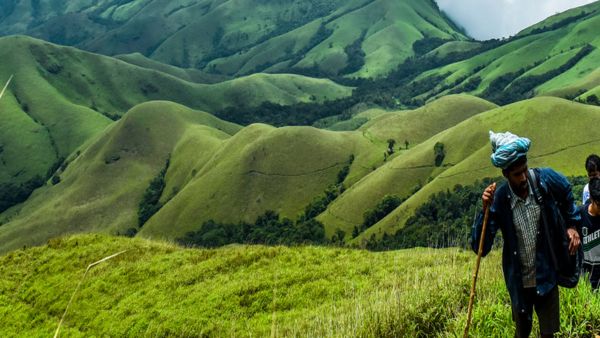
Best trekking destinations in Karnataka to escape the biting cold of the north
- Jan 16,2024
- Times Travel
If you live and breathe adventure, and are wondering how to spend the rest of the winter days, we suggest a visit to the ever-exciting state of Karnataka. The state boasts a diverse topography that is perfect for adventure seekers and nature lovers alike. From dense forests to lofty peaks, the state is a treasure trove of trekking destinations, offering breathtaking landscapes and challenging trails. Whether you're an adrenaline junkie or a nature lover seeking tranquillity, the state has something for everyone. Even if you are not up for challenging treks, and just want a nice and peaceful holiday surrounded by great views, these places in Karnataka are perfect for you. Mullayanagiri in Chikmagalur: For those seeking the thrill of scaling the highest peak in Karnataka, Mullayanagiri is the place for you. The trek to Mullayanagiri peak offers a moderate challenge, and a mesmerising journey through lush landscapes. Kumara Parvatha in Coorg: Kumara Parvatha is one of the highest peaks in Karnataka. Located in the picturesque Coorg, Kumara Parvatha, also known as Pushpagiri, is a trekker's paradise. The trail takes you through dense Shola forests, verdant meadows, and rocky terrain. Here you are surrounded by the Western Ghats from the summit. Kudremukh in Chikmagalur: When in Kudremukh, one can’t ignore the gorgeous Kudremukh National Park. It is one of the most stunning treks in India.The mist-laden hills and rolling grasslands will quickly make you forget the struggle while doing this moderately challenging trek.Kudremukh trek is also easily one of the most photogenic treks in India. Tadiandamol in Coorg: Situated in the Coorg district, Tadiandamol is one of the highest peaks in Karnataka. The trek winds through thick forests, coffee plantations, and pristine streams, offering a refreshing experience for nature enthusiasts. The summit rewards trekkers with a spectacular view of the surrounding Western Ghats. Brahmagiri in Coorg: Also located in Coorg, this beauty of a destination straddles the border between Karnataka and Kerala. Brahmagiri is a trek that combines natural beauty with cultural significance. The trail leads through the Brahmagiri Wildlife Sanctuary, where trekkers come face to face with diverse flora and fauna, the best of the Western Ghats.
Read more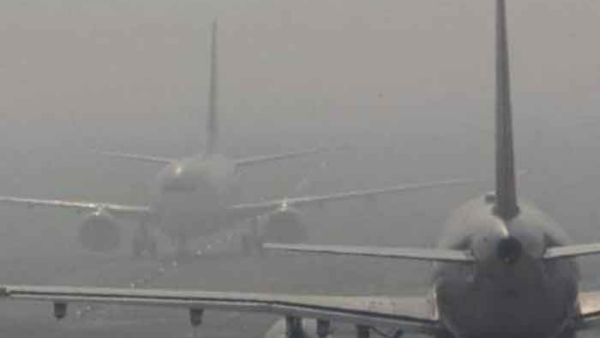
100 flights, 22 trains delayed as dense fog engulfs Delhi
- Jan 15,2024
- Yes Punjab
Delhi-NCR on Sunday woke up to a thick blanket of fog that led to over 100 flights and 22 trains getting delayed due to poor visibility. The national capital recorded a minimum temperature of 3.5 degrees Celsius, four notches below the seasonal average, the India Meteorological Department (IMD) said. Delhi on Sunday morning was blanketed by dense fog with lowest visibility at zero at Safdarjung at 8 a.m. while the Palam also recorded zero visibility at 5 a.m. The IMD classifies fog intensity into four types: shallow, moderate, dense and very dense fog. The visibility ranges from 999 m to 500 m, 499 m to 200 m, 199 m to 50 m and less than 50 m, respectively. According to Indian Railways, a total of 22 trains were running late by hours due to fog and cold wave. The traffic on the roads was extremely slow as fog reduced the visibility to a few feet. Meanwhile, several areas in Delhi were experiencing ‘severe’ air quality, prompting the weather office to issue a red alert due to the prevailing cold and fog conditions. The IMD forecast indicated dense fog to persist in Delhi until Tuesday. On January 12, the city encountered the first cold wave day of the season, with temperatures dropping to 3.9 degrees Celsius. Saturday marked the coldest night so far, recording a season-low temperature of 3 degrees in Aya Nagar, the last village on the Mehrauli-Gurgaon Road in Delhi.(Agency)
Read more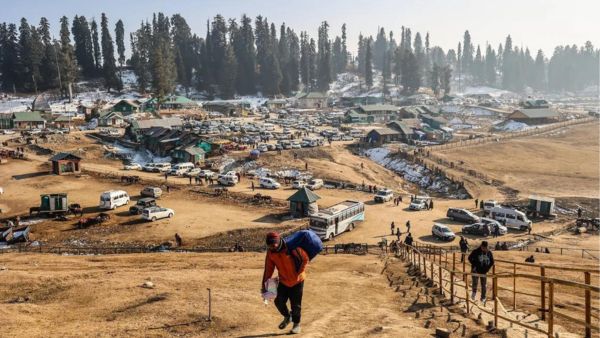
It’s one of the world’s highest ski resorts. So where’s all the snow?
- Jan 15,2024
- CNN
At this time of year, the slopes of Gulmarg are normally packed with snowboarders and skiers, all taking advantage of the fresh January powder that annually blankets the Himalayas. But as with many popular winter ski destinations right now, this resort town in Indian-administered Kashmir is facing a snow shortage due to unseasonably dry weather, disappointing both travelers and tourism operators. The Gulmarg Ski Resort – one of the highest in the world – sits in the Pir Panjal Range of the Himalayas just over 50 kilometers from the city of Srinagar and about 20 kilometers from the Line of Control” (LoC), the de facto border that divides this disputed region between India and Pakistan. The resort offers over 1,330 vertical meters (4,363 feet) of skiable terrain and is most famous for the Gulmarg Gondola, which ascends to an elevation of 3,980 meters (13,057 feet). Despite the lack of snow, a staff member of the Gulmarg Ski Resort reached by phone who did not wish to be named told CNN Travel their hotels have been experiencing very high occupancy rates in recent days. While acknowledging the dry spell, she said there are still things for tourists to do in Gulmarg, including ride the gondola, which offers great views of snowy peaks. But with dry slopes, those who make a living catering to the annual influx of ski and snowboard enthusiasts, like 23-year-old Asif Ahmad Bhat, are out of work. The Gulmarg local, who teaches snowboarding to kids and adults, says the area typically welcomes two types of people. “The first kind are the ones who are here only for tourism purposes with family and friends,” he says. “Then there is a second kind who come here for the sport adventure activities like skiing and snowboarding. The latter are our clients and we have told them not to come to Gulmarg.” ‘We are really disappointed’ Bhat says he had to cancel four bookings in December and another 23 bookings over the period leading up to January 21. “We do not want them to come and be disappointed,” he says, adding that temperatures have risen so much that most of the existing snow has also melted away. “Let’s see if there is snow towards the second half of January. We will reach out to our clients then.” Gulmarg local Sahil Ahmed Lone, 25, has been a snowboarding instructor for five years. He says there was a lot of optimism that January would bring heavy snowfall. “We are really disappointed,” he tells CNN Travel. “We did many bookings from our clients, but we are saying no to them. This is definitely affecting the tourism sector.” Lone says he’s already canceled five bookings and has five to seven more lined up that may need to be axed as well. The instructor adds that he had to take one client who had already traveled to Gulmarg to snowboard 10-12 kilometers away, near the border, where there is snow. “But they were not happy with it as there was not much snow and there were rocks,” Lone says, noting that they’ve been advising clients not to come at all. “What would they do here without the snow?” ‘The demand is still there’ In the summer months, Gulmarg – whose name means “Meadow of Flowers” – draws trekkers and nature lovers. The town welcomed a record-high 1.65 million tourists in 2023, according to various media reports citing government officials. This has led to optimism that 2024 will be an even stronger year. Raja Yaqoob, tourism director of Indian-administered Kashmir, feels the ski season is still salvageable. Though it’s been delayed by 10-15 days due to the dry spell, he says they “are expecting a good bump of snow in the coming days. So the loss of snow (will also be) compensated.” Yaqoob notes that the snowfall season in Gulmarg is traditionally from November to February-March. “This time there was snowfall one/two times in December, but the snowfall expected in January has not happened yet,” he says, adding that El Nino is behind the delay. “This is not unique to Kashmir but is also happening in Leh, Ladakh, Uttarakhand and other places in the Himalayas. With regard to occupancy in hotels, there continues to be 95-100% occupancy everywhere so the demand is still there and tourists are not backing out yet. With the snow coming in soon the situation will improve.”
Read more
Travel Smart, Spend Less: Budget-Friendly Hacks For Every Adventurer
- Jan 15,2024
- Outlook India
Traveling is a soul-enriching experience that rejuvenates the mind and broadens perspectives. However, the allure of exploration often comes with a hefty price tag. The good news is that with a dash of creativity and a pinch of resourcefulness, you can embark on memorable journeys without burning a hole in your pocket. So, here are some budget-friendly travel hacks that will transform your wanderlust dreams into a frugal reality. Plan and Research The foundation of any budget-friendly trip lies in meticulous planning and thorough research. Start by setting a realistic budget and stick to it. Utilize travel websites, blogs, and forums to gather information about affordable destinations, accommodation options, and local attractions. Be flexible with your travel dates, as choosing off-peak seasons often translates to lower prices. Embrace Alternative Accommodations While luxury hotels offer comfort, they can be a major drain on your budget. Consider alternative accommodation options like hostels, guesthouses, or vacation rentals through platforms like Airbnb. These choices not only offer cost savings but also provide a more immersive experience into the local culture. Master the Art of Public Transportation Opting for public transportation over taxis and rental cars is a game-changer for budget-conscious travelers. Most destinations have well-connected and efficient public transportation systems that are not only affordable but also provide an authentic experience of the local way of life. Research and plan your routes to save time and money. Eat Like a Local Eating out at touristy spots can be expensive. Instead, explore local markets, street food stalls, and neighborhood eateries to savor authentic cuisine at a fraction of the cost. Engaging in this culinary adventure not only saves money but also allows you to mingle with locals and discover hidden gems. Take Advantage of Free Activities Every destination has its share of free or low-cost activities. Research local festivals, community events, and museums that offer free entry on specific days. Nature lovers can explore parks, beaches, and hiking trails without spending a dime. Engaging in these activities not only enriches your travel experience but also keeps your budget intact. Travel Rewards and Loyalty Programs Make the most of travel rewards and loyalty programs offered by airlines, hotels, and credit cards. Accumulate points and miles through strategic spending and utilize them to offset travel expenses. Many loyalty programs also offer perks like free hotel nights, complimentary upgrades, and priority boarding, enhancing your travel experience without additional costs. Pack Smart Packing efficiently can save you money and hassle. Bring versatile clothing that can be mixed and matched, and pack only the essentials. Avoid excess baggage fees by packing light and choosing airlines with more generous baggage policies. Additionally, carry a reusable water bottle and snacks to avoid unnecessary expenses during your journey. With these strategies, you're ready to unlock the magic of affordable travel and create lasting memories without compromising your financial well-being. Bon voyage!
Read more
“Goa doesn’t aspire to be tech centre, but a creative hub”
- Jan 15,2024
- Financial express
Rohan Khaunte, minister for tourism and IT, bets big on the revamped regenerative tourism for attracting more domestic and foreign tourists to the urbanised, coastal state. The policy change will help increase the share of tourism to the state’s gross domestic product (GDP) to rise by three times over the next few years, he tells Priyansh Verma Q.To what extent will the newly launched regenerative tourism model improve tourist footfalls in the state? A. Regenerative tourism is a concept that has been adopted by Goa in the past, in terms of festivities, infrastructure, and policies, but it has never been finetuned and stitched together. Once we talk about ‘Goa beyond beaches’, a tourist who comes to the state gets to explore the state in a much better and deeper way. We aim to align tourism with spirituality and cultural nationalism. The tourists coming to Goa should feel that they are going through Tourism 2.0, where rural areas of the state are also accessible to them for exploration. We expect that post the launch of this model, the contribution of tourism to Goa’s GDP, presently around 16%, will increase by about 4-5% over the coming years. But right now, our focus is primarily on building quality, the numbers will improve with time. Q. Why the special focus on rural tourism? A. When we talk about home-stay tourism policies, they are linked to the rural belt. Tourism has to be inclusive, in the sense that it should empower the local communities, specifically women. That can happen, through the concept that we are now promoting. Moreover, at times, we see Goa becomes a costly destination because of several factors that are not directly related to the state…airfares, hotel rates, and other logistics all get expensive suddenly. We don’t want that to happen. We are in talks with the Centre to ensure that Goa becomes a destination where tourists are willing to explore all areas, and not just beaches. Q. Are there any concerns of Goa losing tourists to Lakshadweep, post prime minister Narandra Modi’s recent visit to archipelago? A. Prime Minister Narendra Modi’s attempt to push Lakshadweep tourism is a welcome step. Lakshadweep and Goa are both part of India. We are not separate, and we want tourism to grow in the country as a whole. After the PM’s pitch, the tourism in Lakshadweep will increase…and those who visit the union territory will also visit Goa. Q. With the announcement of new co-working spaces, can we see Goa becoming a new technology hub in India? A. We don’t want to be a technology hub – in the sense, we don’t want to be like Bangalore, Hyderabad, Pune etc. We want to be a ‘creative hub’. We need to first ensure that brain drain in the state stops. And at the same time we need to create opportunities for investors to invest in the state, and subsequently create employment for Goa’s people. Work for Home (WFH) is an area unexplored by many states in the country. During Covid, we saw that for many individuals WFH became Work from Goa. This has now caught the attention of many tech professionals – who are also called ‘digital nomads’ (freelancers). As of now, we have around 10,000-12,000 digital nomads in the state. We expect this number to increase going forward, of both domestic and international nomads. Q. To boost tourism, are you speaking to airline companies to increase their fleets in the state? A. After talking to Indigo, we have already connected many Tier-2 cities of India such as Nasik, Amritsar, Guwahati, Varanasi, Ranchi, and others to Goa. Post the start of operations in the new airport in Mopa – airlines fleet has already increased. Globally, a direct flight has recently been started (in June) between Goa and Abu Dhabi. We are now looking at more carriers who are having an ‘open sky policy’ with Goa to increase their presence. We’re talking to several South Asian countries to connect a direct flight between Goa and their cities. We’re talking to Malaysian airlines to increase their fleets in the state. We would like to connect to South Korea and Japan via Malaysian airlines.
Read more
South Korea launches 'workation' visa for foreigners: All you must know
- Jan 15,2024
- Economic Times
South Korea has introduced a new visa for foreigners allowing them to visit the country on a working holiday or workation. According to local reports, its pilot project started on January 1. According to Yonhap News Agency, the "digital nomad" or "workation" visa will be given by South Korea's justice ministry to those having a work experience of over a year in one industry and are eligible for remote work. The visa will also be allowed to the families of these employees. The country has said that the visa is being issued to revitalise the local economy and promote South Korea's tourism. Who is eligible for South Korea's 'workation' visa? According to reports, foreign nationals with annual income twice as much as South Korea's per capita gross national income will be eligible to apply for the visa. Last year, the country's GNI was $33,002. Moreover, the applicants must also have medical insurance of over 100 million won and must cover medical treatment and repatriation fees. Can people with 'workation' visas take jobs in South Korea? The people who are awarded this visa cannot be hired by any company in South Korea to work or undertake any profit-making activity. For how long will the visa be issued? The visa will be valid for one year and can be extended for up to two years. It will be issued at South Korean embassies. Moreover, the people who are currently living in South Korea on temporary visas will also be able to apply for it. Earlier, the only way to work remotely from South Korea was a tourist visa.
Read more