

Submerged Secrets: Diwali 2024 marks the launch of ‘Submarine Tourism’ in Dwarka; Know everything about it
- Jan 16,2024
- Financial express
Dwarka, an ancient city submerged beneath the sea, is poised for a revival with the introduction of submarine tourism, offering visitors a unique glimpse into its marine wonders. The Gujarat government has formalized this endeavor by signing a Memorandum of Understanding (MoU) with Mazgaon Dockyard Limited (MDL) to collaborate on this groundbreaking tourism project. Set against the backdrop of Bet Dwarka, a small island off Dwarka’s coast — the city associated with Hindu Lord Krishna — and the submerged lost city of Dwarka in the Arabian Sea, this initiative aims to combine adventure, spirituality, and cultural exploration. Inspired by submersible expeditions like the exploration of the Titanic shipwreck in the Atlantic Sea, this project represents India’s inaugural venture into submarine-based tourism. Dwarka, believed to be founded by Lord Krishna, holds significant spiritual and mythological importance in Gujarat. Presently, the Dwarkadhish Temple, also known as Jagat Mandir, serves as a cultural and religious landmark. The submarine project is poised to enrich tourism in the region by introducing elements of marine biodiversity and archaeological discovery. Scheduled to open its hatches to visitors by Diwali 2024, the submarine, weighing approximately 30 tonnes, will accommodate 30 passengers at a time, providing a mesmerizing view 100 meters below sea level. With seating arranged in two rows for 22 passengers, each visitor will have a window view. The vessel will be operated by two seasoned pilots and a professional crew, contributing to employment, investment, and tourism development in the area. An official announcement unveiling details about Dwarka’s submarine tourism project is expected at the Vibrant Gujarat Global Summit scheduled for January 10, 2024. This initiative promises to combine history, spirituality, and adventure, making Dwarka a must-visit destination for enthusiasts of underwater exploration and cultural discovery.
Read more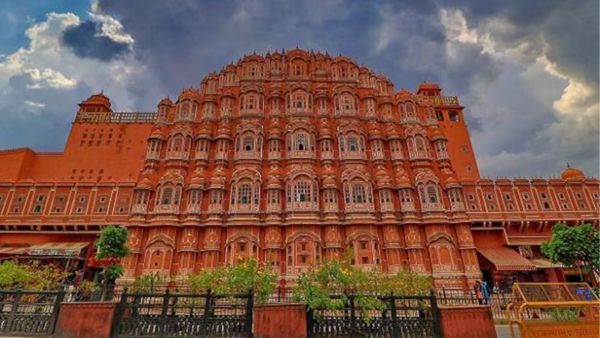
Rajasthan govt likely to seek PM Narendra Modi's help to promote tourism
- Jan 16,2024
- Business Standard
Officials in the Rajasthan government may seek help from Prime Minister Narendra Modi to promote heritage tourism in the state, according to sources in the know. “Heritage tourism of Rajasthan is quite famous and rural tourism is also increasing. In such a situation, if PM Modi promotes tourism here, it would be quite beneficial,” said Karan Singh, who runs a travel agency. According to the plan, marketing, branding, and showcasing heritage sites may be undertaken in a big way. Gajendra Luniwal, president, Jaipur Hotel Association, said that it is appreciable that the state government plans to boost heritage tourism as it is full of heritage buildings, arts, and culture. “This will not only boost tourist arrivals but will also generate employment opportunities in the state,” he added. Luniwal pointed out that if Rajasthan's tourism sector grows, everyone from those selling goods on the streets to hotels and markets will benefit. Tour operator Sanjay Kaushik said that Rajasthan is very famous for its heritage and the state has the highest number of heritage properties in the world. He said that the state has beautiful forts, palaces, and museums and it offers distinctly unique architecture. The state heritage sites are full of stories, folklore, and tales and these stories of chivalry, palaces, and havelis attract tourists from all over the world. According to the state government figures, over 108.5 million of tourists visited Rajasthan in the calendar year 2022, whereas in the first eight months of 2023, the number of domestic and foreign tourists increased substantially and touched over 130 million. The trade experts estimate tourist footfall this year to be 40-50 per cent more than last year and hotel occupancy – between October to March – to be between 80-85 per cent. The tourism growth this year can be gauged from the fact that more than 150,000 tourists came to the capital Jaipur during Diwali week from 9-15 November.
Read more
‘Lakshadweep ecologically fragile’: MP says as island sees tourist interest, calls for ‘controlled way of tourism’
- Jan 16,2024
- Live Mint
Since Prime Minister Narendra Modi visited Lakshadweep and his call to visit the island, the surge to visit the island has grown among the tourists. However, local MP Mohammad Faizal Padippura in an interview with NDTV has said that the amount of tourists must be managed due to the island's delicate environment and said that Lakshadweep is “very sensitive and ecologically very fragile." that has been propped up by a rulebook that lays down the number of tourists the islands can contain each day. He said, “You cannot imagine Juhu beach or a Goa type of tourism in Lakshadweep. " He rather told NDTV that the tourist inflow they envisage is a ‘controlled way of tourism.’ “We have declared a carrying capacity for any person to come here, how many tourists can be accommodated in a day. Secondly, the tourists who are coming to Lakshadweep have to give their consent towards our environment," he told NDTV. As a result, an "integrated Island management plan" has been developed by the Supreme Court-appointed Justice Ravindran Commission. “This IIMP is a broader outline or a ‘Bible’ for for development of tourism, constructing buildings, roads, jetties, headquarters," he told NDTV. He further added, that the commission's "widely accepted" plan also indicates the carrying capacity of the island maximum number of visitors it can accommodate. “We want tourism to develop and we are looking for tourism destination as a high-end low volume tourism," he said as quoted by NDTV. Explaining the reason for the high-end low volume tourism, he told the daily that this comes due to water scarcity, and limited ground water facility which is for the people living on the island.
Read more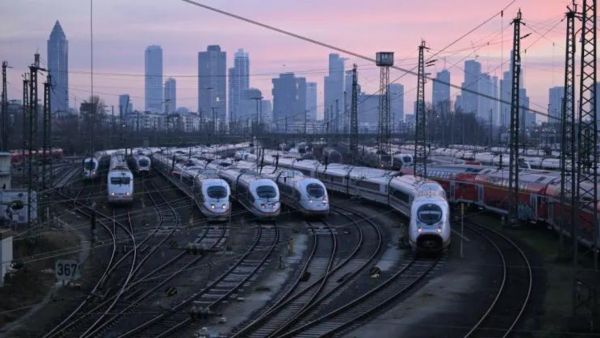
Europe’s biggest economy hit by travel disruption in what ‘looks increasingly like a general strike’
- Jan 16,2024
- CNBC TV18
Germany is in the grip of major travel disruption. A three-day nationwide strike called by train drivers from Wednesday to Friday evening has added to travel chaos in Europe’s biggest economy, which was already reeling from ongoing farmer protests. A walkout by the GDL train drivers’ union has brought rail travel in Germany to a near standstill, with national rail operator Deutsche Bahn only running a pared back emergency timetable for commuters. Meanwhile, the head of the German farmers’ association DBV on Wednesday reportedly pledged to ratchet up protests, which started earlier this week when hundreds of tractors and trucks parked up by Berlin’s Brandenburg Gate. In scenes more familiar to neighboring France, farmers in Germany have been blocking roads and highways with convoys of tractors and marching through major cities in a bid to pressure the government to scrap all plans to cut farmer’s subsidies. “It really looks increasingly like a general strike. We haven’t had a general strike in Germany since 1906,” Carsten Nickel, deputy director of research at advisory firm Teneo, told CNBC’s “Squawk Box Europe” on Thursday. “It is new in Germany. This concerted action and the level of political violence … the economy minister narrowly escaped, let’s say, physical altercations with a really angry mob of protesters last weekend. Those are scenes that we haven’t seen in Germany before,” Nickel said. “We are obviously going into a crucial election year, right? Three regional state elections and the European Parliament elections so I don’t think that really bodes well,” he added. In a sign of elevated political tensions over the budget crisis, German Economy Minister Robert Habeck was blocked from disembarking from a ferry on returning from a private vacation last week. As many as 300 farmers were said to have blocked the ferry from docking in the north of the country, German broadcaster Deusteche Welle reported on Jan. 5, in a protest that was condemned by lawmakers and the DBV agricultural lobby group. What’s going on in Germany? Germany’s coalition government, led by Chancellor Olaf Scholz, had sought to repurpose tens of billions of euros in unused pandemic funds to transform the economy and address the climate crisis. The budget plans were thrown into disarray in November, however, when it was ruled that the reallocation of emergency funds was unconstitutional. The government has since walked back some of its plans for the agriculture sector, saying last week that tax exemptions for agricultural vehicles would continue and subsidies for fuel would be gradually phased out rather than fully axed imminently. The German Famer’s Association has said these steps do not go far enough and vowed to continue with protests. “There was this constitutional court verdict [in November]. The government responded with a series of cuts, cutting back among other things, on those agricultural subsidies and that seems to have been the thing that has triggered these protests,” Teneo’s Nickel said. “Interestingly, the government already in December reacted and rowed back on some proposals for earlier agricultural cuts,” he continued. “So, I think there is also an element where these farmers potentially have the idea that ‘well if we keep pushing perhaps the remaining stuff also gets canceled’ and that is ultimately due to a government that is politically and also due in terms of style and communication internally very divided.” Asked at a regular news conference on Wednesday whether there could be any further developments regarding farmers’ demands over subsidy cuts, government spokesperson Steffen Hebestreit replied, “I can’t see any buckling there,” according to a Google translation.
Read more
Religious tourism takes center stage in India; Ayodhya, Ujjain, Badrinath among top searched destinations
- Jan 16,2024
- CNBC TV18
As the date for consecration ceremony of the Ram Temple in Ayodhya comes closer, travel portals in India are seeing a jump in searches and bookings not just for Ayodhya but across religious places. In one such striking revelation, MakeMyTrip Insights unveils a remarkable 97% surge in searches for spiritual destinations on its platform over the last two years (CY 23 Vs CY 21). Among the celestial hotspots, Ayodhya emerges as the reigning star, experiencing an astonishing 585% growth in searches. However, Ayodhya is not the only destination that people have on their minds; it's part of a broader surge in pilgrimage interest. The top 10 destinations witnessing substantial growth in searches include Ujjain (359%), Badrinath (343%), Amarnath (329%), Kedarnath (322%), Mathura (223%), Dwarkadhish (193%), Shirdi (181%), Haridwar (117%), and Bodh Gaya (114%). The inauguration announcement acted as a catalyst for Ayodhya's soaring popularity, with on-platform searches skyrocketing by an astronomical 1806% since the Ram Temple inauguration announcement. The crescendo reached its peak on December 30th, coinciding with the day of the airport's inauguration. The platform data also suggests that Ayodhya's allure extends globally. International searches for Ayodhya showcase a diverse audience, with the USA leading at 22.5%, closely followed by the Gulf region at 22.2%. Canada, Nepal, and Australia contribute significantly at 9.3%, 6.6%, and 6.1%, respectively. This surge in spiritual tourism not only signifies a growing interest in India's sacred sites but also underscores Ayodhya's newfound prominence on the global spiritual map.
Read more
How to Book a Flight That (Likely) Won’t Get Canceled
- Jan 16,2024
- Nerd Wallet
A canceled flight can easily ruin your trip. Airlines in the U.S. are obligated to refund you if they cancel your flight and you don't accept their offer to rebook you on a future flight, but that's only for airfare. Airlines are not legally required to refund any prepaid hotel reservations, cruises or tours you might have missed because your flight was canceled. Given that, it can be good practice to simply book flights less likely to get canceled. After all, air travel chaos like the massive Southwest Holiday Meltdown during the week following Christmas 2022, or the Federal Aviation Administration’s temporary shutdown a few weeks later, is not uncommon. So how do you improve your odds of traveling on a flight that arrives in good time? And how have flight delays and cancelations become so prevalent? How to improve your chances of avoiding airline cancellations? - Know which airlines actually arrive on schedule While past performance doesn’t guarantee future performance, it’s at least a good indicator. NerdWallet analyzed BTS arrival data between January and March 2023 for the 10 largest U.S. airlines by passenger miles to determine each airline’s on-time arrivals rate. If timeliness is a priority, consider booking Delta or Hawaiian, which arrived on time 82% of the time. Skip JetBlue, which only landed on schedule 60% of the time. Air carrier problems — meaning the issue was due to circumstances within the airline's control, such as maintenance, cleaning, baggage loading or fueling delays — were the top cause of late arrivals for the first four months of 2022, accounting for nearly 8% of delays. - Book the earliest flight in the day The second most common cause of delays: The aircraft arrived late from its previous destination. It’s not uncommon for the aircraft flying an evening flight to have already made a couple of trips earlier in the day. If one of the earlier flights was delayed, there’d likely be a snowball effect. For example, the aircraft’s first flight of the day may have been fine, but if the second flight had maintenance problems and arrived late, then the third flight would probably run behind schedule, which could in turn affect any subsequent flights. You can try to avoid the snowball effect by booking the day’s first flight. - Avoid layovers Sadly, it doesn’t do you much good for the first leg of your flight to arrive on schedule if the second leg is delayed. Who wants to sit twiddling their thumbs in a layover city or airport? It’s potentially even worse if the second leg of your journey departs on time, but you miss it because your incoming flight was delayed. Mitigate this risk by booking nonstop flights. Even if the airfare is more expensive, it could be worth it to avoid the headache of missing a connecting flight. If a layover is unavoidable, it’s almost always better to book the entire journey with the same airline on a single itinerary, as opposed to booking with separate airlines for each leg of the trip. That way, if your first flight ends up being delayed, the airline may work with you to adjust your connecting flight, provided that the delay was its fault. If you book the two legs of your trip on different airlines, you likely won’t get that kind of consideration. - Choose an airline with multiple flights per day If your flight is canceled, most airlines will rebook you on their next flight with available space for no additional charge, according to the U.S. Department of Transportation. If your airline runs multiple flights on the same route per day, you may only have to wait a few hours. Sure, having to take a later flight would be annoying, but it likely wouldn't ruin your trip. As an example, let's say you’re flying from Los Angeles to Las Vegas, a route that United usually flies four times per day. But you choose to take JetBlue, which typically only flies that route two times per day. If your ticket is for the single afternoon flight — and it then gets canceled — there’s a good chance you won’t be able to get to Vegas that day, period. And no, you likely won't be able to persuade JetBlue to pay for one of United's remaining flights, as there are no federal regulations requiring airlines to put you on another airline's flight or reimburse you for another airline’s tickets. - What to do after booking Even if you follow our advice to decrease the chances of your flight getting canceled (say, by booking the first, nonstop flight of the day on Delta — one of the most on-time airlines), you could still hit a patch of bad luck. These next steps might save you some headaches: - Check your flight status To stay informed, opt-in to receiving flight status updates by email, text or push notification, a feature of some airline apps. Or, simply plug your flight number into a search engine to get real-time flight data. If your flight is canceled, you might decide you’re better off staying put and booking a new flight from home rather than scrambling to do so at the airport. If your flight is delayed, you might simply head to the airport at a more leisurely pace. Just be sure to keep an eye on the flight status, because a flight marked delayed can sometimes revert back to being on time. - Don’t pack a checked bag (but do pack your patience) If your initial flight gets canceled and you have to book a different airline’s last-minute flight, it might be difficult to retrieve a suitcase that’s still in the first airline’s hands. Traveling with a carry-on lets you move more nimbly between flights. There is one thing you can pack that won’t take up any luggage space: patience. The gate agent likely isn’t responsible for the delay, so be kind — and they might be more likely to help book you on another flight. Additionally, consider joining an airport lounge membership program like Priority Pass. (Membership is sometimes free with certain credit cards.) Lounge amenities — which sometimes include luxuries like nap suites, Peloton bikes, showers and buffets — can usually make it easier to stomach a long delay. - Understand your rights If your flight is delayed or canceled, know what compensation you’re entitled to (as airlines sometimes compensate you for delays or cancelations, but not always). Sadly, it’s not much when it comes to delays; there are no federal laws requiring airlines to provide passengers with compensation for delayed flights. Some airlines offer vouchers, such as meal vouchers or hotel vouchers to stranded passengers, but that's uncommon among budget airlines. Airlines are not required to reimburse you for non-air expenses, such as a prepaid hotel room or a missed cruise departure. For canceled flights where you opt not to be rebooked on another flight, you are entitled to a refund of the airfare, even if you bought nonrefundable tickets. - Have a backup plan Given that airlines aren’t legally required to do much to help you, understand how to help yourself. If your flight already has been canceled at the last minute, follow these steps. For everyone else, you can plan in advance for a potential flight cancellation: Map out nearby airports or alternative transportation: For example, if your in-state flight from Burbank to Oakland, California, gets canceled, you might be able to hail a cab to the airport in Los Angeles or Long Beach and catch a different flight. Look beyond airports too; you might give up on flying completely and hop on a train up north. Book refundable travel: You may be able to book a refundable ticket if you're willing to pay extra. Otherwise, as long as you book a non-basic economy fare, you'll probably at least get a voucher to use on the airline toward another flight if you decide to change or cancel the flight due to itinerary changes. Consider trip insurance: Travel insurance might help you get money back if a trip is canceled or delayed. It might also fund expenses incurred by delays, like an extra hotel room night. This can be helpful, say, if a hurricane prevents you from flying home from your Caribbean vacation, forcing you to book an additional night at your resort. Read the fine print, as many policies exclude delays caused by the airline. Some credit cards offer complimentary travel insurance benefits. If you don't have one of these cards or want higher limits, you can buy a policy. Why are so many flights being canceled? There are several reasons why there's been an uptick in flights being canceled, and there’s currently a lot of finger-pointing, too. Contributing factors include: Airline issues, like not having enough staff. Mechanical issues and delays may be compounded by staffing shortages. The Federal Aviation Administration is also experiencing staffing issues. While a shortage isn’t to blame, the agency is still managing backups in training new air traffic controllers quickly enough. National Aviation System delays, such as heavy traffic volume or air traffic control challenges, account for about 5% of delays. Weather. This issue is minor; weather delays have accounted for less than 1% of late arrivals so far this year. Increased travel demand. If one aircraft previously flew two flights a day with a six-hour buffer between flights, the second flight wouldn’t be impacted, even if the first flight was delayed three hours. Now, if that same aircraft has increased its flight numbers to three a day with less downtime, even a short delay can severely impact future flights. How to book better flights On-time arrival rates haven’t been this bad since 2014. Unless you’ve got a crystal ball, there’s no way to guarantee you won’t book a flight that gets delayed. But even without one, a thoughtful booking strategy can better ensure you get to your destination on schedule. In general, avoid layovers. Book the earliest flight in the day. And of course, book the airlines that have the best track record of on-time performance (or otherwise book with larger airlines that run multiple flights per day).
Read more