Airlines to increase fleet by 25% in a year as passenger number rises

Indian airlines will add about 150 aircraft during the next 12 months, which will be the highest fleet addition in recent times India’s airlines will grow their fleet capacity by nearly 25% during the next 12 months, which will help feed rising passenger numbers and fill the void created by Go First’s grounding, data sourced from various airlines showed on Tuesday. Airlines will add about 150 aircraft during the next 12 months, which will be the highest fleet addition in recent times. The previous highest was 72 aircraft added in FY20. According to the data available, Indian airlines have around 600 operational aircraft, excluding over 150 planes grounded for several reasons, including engine issues, and the Go First fleet. Among airlines, Air India will add 92 aircraft during the year, followed by IndiGo at 35. Akasa Air will add 18 aircraft during the period. “From October 2023 to October next year, Air India group will add 92 aircraft, of which 42 will be by Air India alone and the rest will be by its subsidiary AI Express,” Campbell Wilson, chairman and managing director (MD) of Air India, said in an interview. Air India currently has an operational fleet size of 120 aircraft. Officials from the country’s largest airline IndiGo, which currently has 334 planes in its fleet, have maintained that it aims to add one aircraft every week. “IndiGo aims to add one aircraft every week in 2024, starting January, however, since some leased aircraft will be returned, the net addition will be around 35 next year,” an airline official said. Similarly, India’s newest airline, Akasa, got the delivery of its 20th aircraft in August this year. Airline officials said that the company is set to get two aircraft deliveries this month. Asked about the number of aircraft it plans to induct next year, an airline official said, “The airline will induct 18 aircraft to its fleet from January to December next year.” Aviation consultancy firm CAPA India recently said Indian carriers have at least 150 aircraft that are grounded, which will cross 200 by the end of March 2024. A 25% addition in fleet will help recover losses and also the decline in capacity due to the grounding of Go First from May this year and will be in sync with the double-digit passenger growth being registered by the aviation industry. However, analysts say that the grounding of planes, mainly of IndiGo, due to engine issues will be a major challenge. Pricing and fares have been a point of concern for travellers. Airfares are affected by many factors, most important being the increase in demand on certain routes and a rise in cost of operations. Despite high fares, domestic traffic hit a record of 459,526 passengers carried on November 20. However, they said that the net addition of aircraft in the calendar year will be around 35, thereby qualifying for international flight operations. The airline is expected to commence its international operations soon Analysts say that the addition is not enough and fares will continue to remain high. Some experts remain sceptical about the capacity situation. Mark Martin, head of Martin Consultancy, said, “We need at least 300 aircraft so that the industry is able to function without any hiccups. The actual grounding of aircraft across the airlines currently stands at 250 and not the numbers that are being claimed by the airlines. Adding 150 aircraft will not at all cater to the growing passenger numbers. Airfares too will severely go up, ultimately causing trouble for passengers.” The travel industry, however, feels that the induction will fuel demand. “The growth in the increasing passenger demand has led to this and it also drives the decision to induct more aircraft and open many more routes. There has been a significant surge in passenger demand and as the president of TAAI (Travel Agents Association of India), we are hopeful that this trend of increased demand will continue in the latter part of the year as well,” Jyoti Mayal, president of TAAI, said.

Read more

Air India to start direct flights between Mumbai & Bhuj from March 1

Air India will be launching a direct daily service between Mumbai and Bhuj from March 1, 2024. Air India will be offering a comfortable and convenient connection between the two cities to meet a long-standing demand of the local residents. Operated by an A320 family single-aisle aircraft, flight AI 601 will take off from Mumbai at 07:05 hrs to arrive in Bhuj at 0820 hrs. The return flight AI602 will depart Bhuj at 08:55 hrs to land in Mumbai at 10:10 hrs. The new service will also offer convenient international connections to passengers to destinations in the UK, the North Americas and also to Dubai and Singapore. It will also provide connections to around 20 cities in the domestic sector.

Read more

Go cashless, travellers! Buses and trains to have QR codes. Details inside.

Soon, you will be able to travel by MTC buses utilizing a QR-based common ticketing system or pay for tickets using UPI via mobile apps. According to an RTI response from CUMTA, the Tamil Nadu Infrastructure Development Board (TNIDB), chaired by Chief Minister M. K. Stalin, is developing a full feasibility report and tender to adopt a QR-based ticketing system. Travellers can recharge their accounts via a smartphone app, and the QR code can be used not only on MTC buses but also on metro trains and suburban trains. QR scanners will be put at all bus and rail entry and exit points, and passengers will be able to show them as proof. According to the TOI, a senior CUMTA official said that the revenue produced will be divided between MTC and other commuting organizations based on the distance travelled by passengers. Similarly, MTC intends to implement the UPI payment method. QR codes will be plastered throughout the buses, and commuters will be able to pay using Gpay, PhonePe, Paytm, and other services. S. Anbalagan, a transportation activist, welcomed this and stated that such digital payment options are already available in Bengaluru and other states. However, the problem will be in handling UPI frauds. Recently, there have been mobile apps that can fake UPI payment receipts, and some scammers tend to misuse them to siphon off funds. Officials should ensure that the method is foolproof, he said.

Read more

Finland's new Schengen Visa rules: How Indians will be impacted

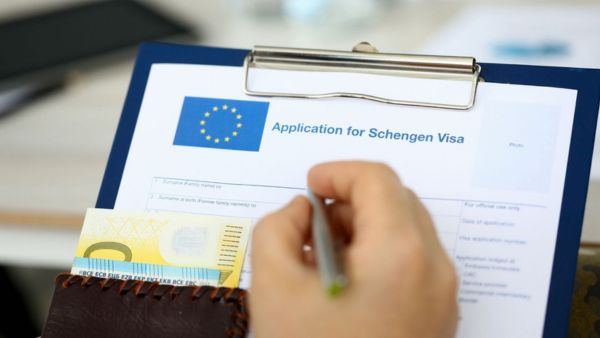
As of January 1, those planning to travel to Finland and requiring a Schengen visa, will now need to provide details of more funds to qualify. As per the latest reports, the Ministry for Foreign Affairs in Finland has implemented new regulations that will affect short-stay travellers seeking Schengen visas. This notable change involves increased financial requirements, wherein travellers will now be obligated to show a minimum of 50 euros for each day spent in Finland. This represents a significant uptick of 20 euros from the previous amount, which involves a substantial 66% increase. If reports are to go by, the adjustment has been attributed to the rising living costs in the country. A Schengen visa holds significance as it functions as an entry permit for individuals intending short-term or temporary visits, facilitating travel within the Schengen area. This region encompasses numerous European countries, including 23 out of the 27 EU member nations, along with the associated neighbours, such as Norway, Switzerland, Iceland, and Liechtenstein. In line with the augmented financial prerequisite, Finland has also introduced a novel proof of sponsorship or accommodation scheme. Hosts will be mandated to complete a sponsorship form, which must be included with the rest of the visa application. This measure has been designed to enhance the transparency and accountability of financial arrangements for those seeking short-term stays in Finland. It is noteworthy that the Schengen area is set to expand from March, granting visa holders the ability to visit two additional countries during their trip to Europe - Bulgaria and Romania. This development broadens the scope of travel possibilities for those holding Schengen visas. Furthermore, it’s also important to note that the Schengen visa fees, particularly for Indian nationals, is set at 80 EUR. However, do note that there is a complete waiver of the Schengen visa fee for children under the age of six. For children aged between six and 12 years, a reduced visa fee of 40 EUR applies, making provisions for families travelling with younger members. These fee structures contribute to the overall framework governing the issuance of Schengen visas for various age groups.

Read more

Tourism Taxes: What Travellers Need to Know for 2024

Travellers are expected to pay higher tourism taxes to several European destinations in 2024 as national economies try to boost local economies and support sustainability. According to a 2020 report by Group NAO and GDS-Movement, more countries are imposing tourism taxes lately, especially in the US and Europe, SchengenVisaInfo.com reports. Guy Bigwood from the Global Destination Sustainability Movement says that more destinations are creating sustainability initiatives, and by imposing such fees, they can generate more funding to reach their green goals. He also suggests that as tourism rates are returning to pre-pandemic levels, authorities are considering taxes and assessments as tools to control numbers. In Greece, a hike in an existing hotel tax will help fight natural disasters caused by climate change. In Dubrovnik, a tariff imposed on cruise ships will help improve the ancient city’s infrastructure. Here is a list of destinations that will impose new tourism taxes in Europe. Amsterdam, Netherlands Amsterdam, which already imposes Europe’s highest tourism tax, plans to increase the prices in 2024. The city will raise the hotel room tax from seven to 12.5 per cent, and the tariff for cruise-ship passengers will jump from €8 to €11 per person per day. According to Hester van Buren, Amsterdam’s deputy mayor for finance. the increased revenue will be allocated to combat the consequences of over-tourism, maintain cleanliness, and solve neighbourhood issues. Barcelona & Valencia, Spain Barcelona is set to increase its municipal tourism tax in April 2024, focusing on attracting high-value tourism over mass tourism. The tax, currently €2.75 per night, will rise to €3.25, while Valencia will also introduce a tourist tax, which varies from 50 cents to €2 per night. The tax is applicable to all of the regions of Valencia. Iceland It is confirmed that Iceland will introduce a tourist tax in 2024, but the exact amount is yet to be determined. Prime Minister Katrín Jakobsdóttir says that the fee will be reasonable and contribute to sustainability programs, aligning with Iceland’s goal to become carbon-neutral by 2040. Olhão, Portugal Olhão, the largest fishing port in Portugal’s Algarve region, started charging a tourist tax in June 2023, with half of the revenue allocated to combat the negative impact of tourism. According to the measure, visitors will have to pay €2 per night during the high season and €1 during the rest of the year. Venice, Italy Tourists to Venice may face a €5 fee in 2024 on 30 non-consecutive days, as the city is dedicated to managing mass tourism. The fee applies to visitors over 14 years old and will be implemented through a digital portal with a downloadable QR code. Denmark Denmark plans to introduce a “passenger tax” for flights in 2025, charging air travellers around €8.4 for flights within Europe, €32 for medium-distance flights, and €51 for long-distance flights by 2030. The revenue will be allocated for the use of 100 per cent sustainable fuels on domestic flights. European Union Starting in 2025, non-EU residents entering Europe without special visa requirements will need to register through the European Travel Information and Authorization System (ETIAS), costing about €7 per person. This electronic visa waiver aims to strengthen border security and protect EU citizens.

Read more

UK’s new visa rule will now permit people on tourist visa to work in the country

As per the latest development, starting from January 31, the United Kingdom is all set to implement substantial changes to its visa regulations. These changes will open up new avenues for business endeavours for individuals holding visitor visas. As per the latest updates, tourist visa holders will now be granted permission to engage in work-related activities with clients and undertake remote work while visiting the UK. It’s expected that this move will provide a considerable boost to both business and tourism within the country. If reports are to go by, the UK Government has also released an update to its immigration rules, allowing expanded activities on Visitor Visas, with the changes slated to come into effect from January 31, 2024. So, here are some of the key points of the revised rules: - Employees of companies with branches in both the UK and internationally can engage in client work abroad, provided it constitutes a small portion of their overseas responsibilities, which is crucial for a project or service by their UK branch, and is not directly delivered to a UK client by the overseas employer. - While visitors can work remotely from the UK, the primary purpose of their stay should not be remote work. - Scientists, researchers, and academics are permitted to conduct research in the UK, with certain exceptions for academics applying for a 12-month visit visa or seeking permission extensions within the country. - Lawyers will be allowed to engage in additional activities, such as providing advice, acting as an expert witness, participating in legal proceedings, and teaching. - The Permitted Paid Engagement (PPE) Visitor route will be integrated into the Standard Visitor route, eliminating the need for a separate visa for those involved in paid engagements, though they must still plan the activity within 30 days of arrival. Earlier, Chancellor of the Exchequer Jeremy Hunt announced the UK Government’s commitment to expand business visitor rules, allowing business professionals to participate in a wider array of approved activities and paid engagements starting from January 2024. These changes, particularly the allowance for remote work, are expected to have a positive impact on both business and tourism in the United Kingdom. Additional changes to the regulations for business visitors are expected in 2024.

Read more