Budget policies in 2024 could boost Indian hospitality industry's prospects

Interim Budget: India's diverse offerings - from cultural heritage to niche tourism like adventure and wellness - continue to lure global travelers. Despite a pandemic setback, the multi-billion-dollar travel sector is resurging, driven by domestic tourism. Government initiatives like Swadesh Darshan and international events like India's G20 presidency bolster the country's reputation as a top leisure, business, and MICE tourism destination. Union Budget: India, as a land of diversity, architectural wonders, and vast and varied landscapes, makes for an ideal destination for leisure and business tourism. Travellers seek the country not only for cultural and heritage tourism but also on offer is a varied portfolio of niche tourism products - river cruises, adventure, medical, wellness, sports, MICE, eco-tourism, film, rural, and religious tourism. For a few years, the sector was marred by the pandemic, but has now made a massive comeback and holds great potential for growth and contribution to the Indian economy. The travel and hospitality industry in India is a multi-billion diverse sector driven by factors like disposable income and has attracted the attention of global investors. Recently domestic tourism has been extremely buoyant. Indians are traveling across the length and breadth of their vast country for leisure tourism, for events and weddings and to experience spirituality. Government schemes like Swadesh Darshan, PRASAD and promotion campaigns like Dekho Apna Desh have aided the strengthening of domestic tourism in the country. On the other hand, there have been efforts to improve inbound tourism by hosting international events. India’s G20 presidency of 2023, and the Cricket World Cup 2023 among other events have contributed to marketing India globally as a preferred destination for leisure, business, and MICE alike. The potential of Inbound international travel is huge. It is heavily dependent however on the attractiveness of a destination and how it is perceived by the discerning traveller. This requires a well-curated marketing and promotion plan in target source markets. International travel is becoming more regional and fewer people are going in for long-haul travel. India would therefore do well to promote itself more aggressively in the Asia Pacific region. Incentivising travel could be one way. Several countries are wooing Indian traveller through hassle-free and complimentary visas and similar incentives.

Read more

Brazil postpones visa requirements for US, Canada, Australia citizens to April 10

Brazil still finalising the new visa system and avoid implementing it close to carnival festivities in February, which attract tens of thousands of tourists. Brazil postponed for the second time the reintroduction of requirements to obtain tourist visas for citizens of the US, Australia and Canada, officials said. Former president Jair Bolsonaro scrapped the visa requirements in 2019 to support the tourism industry, but the three countries continued to demand visas from Brazilians. The South American country requires visas from travelers based on principles of historical reciprocity and equal treatment. The government initially postponed the visa implementation on Oct. 1. President Luiz Inácio Lula da Silva in September then set Jan. 10 as the new deadline. On Thursday night, Brazil's presidency said it would be postponed yet again till April 10. The statement said the government was still finalising the new visa system and wanted to avoid implementing it close to the high season, mainly during the New Year's celebrations and Carnival festivities in February, which attract tens of thousands of tourists. Lula reinstated the visa requirements after he took office one year ago. The countries in question initially included Japan but the east Asian nation struck a deal with Brazilian authorities in September to ease travel provisions between the two, keeping its citizens off of the new list.

Read more

Kenya says first 'visa-free' tourists arrive in country

Last year, President William Ruto announced that Kenya would become a "visa-free country" and existing requirements would be waived come January. Kenya said Friday it had welcomed the first batch of foreign tourists who arrived under a simplified entry system it hopes will encourage more visitors. The government's immigration services department said the "maiden visa-free arrivals" landed in Nairobi from Ethiopia's capital Addis Ababa and more were expected to touch down in coming days. Immigration and Citizen Services Principal Secretary Julius Bitok said visa requirements would be waived for all travellers to Kenya regardless of nationality. Under the new system, travellers apply online for an electronic travel authorization (ETA)and pay a $30 "processing" fee. "Right now... all countries around the world including Africa, Asia, America, Australia, and all over the world, are able to come in visa-free," he said at the launch of the scheme at Nairobi's Jomo Kenyatta International Airport. Last year, President William Ruto announced that Kenya would become a "visa-free country" and existing requirements would be waived come January. Even so, as recently as last Tuesday the Kenyan Civil Aviation Authority warned the new ETA system was "in the process of development and implementation." The number of tourist arrivals in 2022 rose to 1.54 million, still below pre-pandemic levels, according to tourism ministry figures. Kenya Tourism Board chair Francis Gichaba voiced hope in November that the figure could top two million in the latest financial year, surpassing the 2019 figure of 1.9 million.

Read more

Flight cancelled or delayed? Find out if you are eligible for compensation

Due to dense fog conditions in cities like Delhi and Chandigarh, there have been many abrupt flight cancellations earlier this week, and the condition will likely remain the same for some time. And because of abrupt flight cancellations, travel plans and onward journeys of numerous passengers heading for vacations or business meetings have been disrupted. Many videos have been circulating on social media platforms, depicting passengers expressing frustration with ground staff after experiencing delays at several airports nationwide. Given the increased likelihood of weather-related disruptions, obtaining travel insurance is advisable, as airlines cannot be held responsible for compensating customers in the event of weather-related issues or other extraordinary circumstances referred to as 'Force Majeure.' With regard to this, Air India recently launched the ‘Fog Care’ initiative, which allowed affected passengers to reschedule or cancel their flights without incurring additional charges. The Union Ministry of Civil Aviation has urged airlines and operators to ensure fairness to passengers who have been facing cancellations and delays due to fog and other operational issues. During a meeting with senior officials, including representatives from airlines and operators, Aviation Minister Jyotiraditya Scindia emphasised the strict adherence to Civil Aviation Requirements (CAR) regarding flight cancellations, delays, and refund policies. In December 2022, the government issued guidelines outlining compensation for air passengers affected by flight cancellations and delays. While general guidelines exist, specific policies may vary among airlines.

Read more

Top 8 travel trends for 2024

As we step into a new era of exploration, the world of travel is evolving with exciting trends that promise to redefine the way we experience and engage with destinations. In 2024, several travel trends will shape the industry in unique ways, and will offer travellers unique opportunities and immersive experiences. Sustainable travel. This trend will take the centre stage. In 2024, sustainability will not just remain a buzzword, but will be a guiding principle for many travellers. Conscious efforts to reduce carbon footprints, support eco-friendly accommodations, and engage in responsible tourism will become a norm. Travellers are increasingly seeking destinations that prioritise environmental conservation and ethical practices. Rise of remote work retreats With the normalisation of remote work, the concept of ‘workations’ has gained popularity. Travellers are opting for destinations that offer a perfect blend of work and leisure. From beachside villas to mountain retreats, remote work retreats cater to those seeking a change of scenery while fulfilling professional responsibilities. Tech-enhanced experiences Advancements in technology will continue to revolutionise travel experiences. Augmented reality (AR) and virtual reality (VR) are being incorporated into guided tours and museum visits, providing travellers with interactive and immersive adventures. Smart travel apps that offer personalised recommendations and real-time updates are becoming indispensable tools for modern explorers. Wellness trend The wellness travel trend is evolving beyond spa retreats. Travellers are prioritising holistic well-being, seeking destinations that offer a balance of physical activities, mental health retreats, and rejuvenating natural environments. From yoga retreats in serene landscapes to wellness-focused culinary experiences, travellers are embracing a holistic approach to health. Cultural immersion Experiential travel that fosters authentic cultural immersion is gaining momentum. Travellers are moving away from traditional tourist hotspots, opting instead for off-the-beaten-path destinations where they can engage with local communities, participate in cultural exchanges, and savour authentic culinary delights. Micro-cations and weekend getaways Short getaways, often referred to as micro-cations, are on the rise. Travellers are embracing the idea of frequent, shorter trips to explore nearby destinations and make the most of weekends. This trend aligns with the desire for more accessible and manageable travel experiences. Adventure Adventure travel is extending beyond traditional boundaries. From immersive wilderness experiences to extreme sports in unconventional locations, adventure enthusiasts are seeking adrenaline-pumping activities in unique and lesser-explored destinations. Personalised travel experiences Customisation will remain the key in 2024. Travellers are seeking personalised itineraries and curated experiences that align with their interests and preferences. Travel agencies and platforms are leveraging technology to tailor trips, ensuring that every journey is a reflection of the individual traveller's desires.

Read more

Ministry of Tourism conducts training in Bhitarkanika National Park, Odisha under Amrit Dharohar Capacity Building Scheme

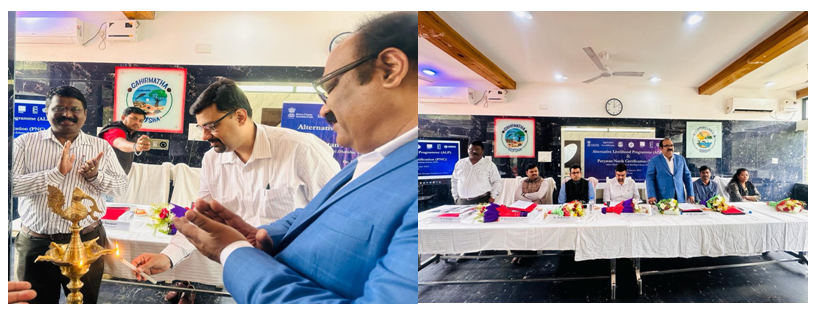
Ministry of Tourism (MoT) in collaboration with Ministry of Environment, Forest & Climate Change (MoEF&CC) launched the fourth training programme under the Amrit Dharohar Capacity Building Scheme on 5th January 2024 for local community members, boat owners, and Forest department officials of Bhitarkanika National Park in the presence of Dr Sagnik Chowdhury, Regional Director (East), Ministry of Tourism, Dr. M Ramesh, Scientist ‘E’, MoEF&CC, Dr. Md Sabir Hussain, Nodal officer and Head, IITTM Bhubaneswar, Mr Sudarshan Gopinath Jadhav, IFS, DFO, Mangrove Forest Division (WL), Rajnagar, Odisha, and other officials from Forest Department, Govt of Odisha. Under this initiative, two training programmes of 15 days each namely Alternative Livelihood program (ALP) and Paryatan Navik Certificate (PNC) will be conducted. With the help of the Odisha State Wetlands Authority (OSWA) and Mangrove Forest Division, Rajnagar a total of 60 participants (30 for each course) were identified from the local communities in and around Bhitarkanika to impart trainings and subsequently certifying them as nature-guides. This is part of the ongoing effort of enhancing livelihood opportunities for local communities through harnessing the nature-tourism potential of the Ramsar Sites across the country under the Amrit Dharohar Initiative of the MoEF&CC. In the first phase of this programme, five priority Ramsar sites were identified namely Sultanpur National Park, Sirpur wetland, Yashwant Sagar, Bhitarkanika National Park, and Chilika Lake. The first three training programmes for Sultanpur National Park, Sirpur wetland, and Yashwant Sagar have been successfully completed in December 2023.

Read more